Clun Castle
Clun Castle stands as a remarkable example of a Norman motte-and-bailey fortress strategically positioned in the town of Clun, Shropshire, England. Constructed shortly after the Norman Conquest of 1066, it played a crucial role in securing the volatile borderlands between England and Wales. The castle’s origins trace back to Robert de Say (Picot), a Norman lord who established the stronghold to consolidate control over this frontier region.
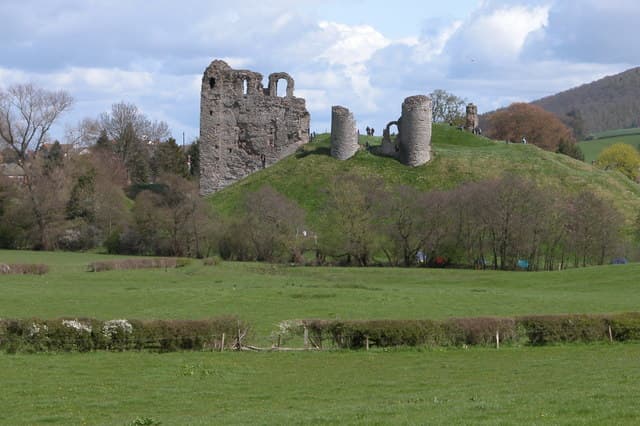
The castle’s design centers on a large motte—a natural rock outcrop that was skillfully shaped and steepened to enhance its defensive capabilities. Surrounding the motte are several smaller mounds and an enclosed bailey, forming a complex defensive system typical of early Norman fortifications. This layout allowed for both military defense and administrative control over the surrounding lands.
Historical significance defines Clun Castle’s story, as it was initially held under the Earl of Shrewsbury until 1102, when political upheaval led to its direct control by the English Crown. Throughout the 12th century, it served as a vital defensive bastion against Welsh incursions, with King Henry I instituting a castle-guard system that required local knights to provide military service. This system was supplemented by professional mounted and foot soldiers, reflecting the ongoing tensions along the border.
The FitzAlan family and architectural evolution
The castle’s ownership transitioned to the powerful FitzAlan family through the marriage of Isabella de Say to William FitzAlan, uniting two significant lordships: Clun and Oswestry. This union marked the rise of the FitzAlans as dominant regional lords. William FitzAlan II notably commissioned the construction of the imposing Norman keep, a four-storey rectangular stone tower that remains the castle’s most prominent feature.
The great Norman keep
The keep measures approximately 21 by 13 meters and rises about 24 meters high. It is built slightly off-center on the motte to ensure stability on the uneven rock foundation. Architecturally, the keep features pilaster buttresses reinforcing its thick walls and round-arched windows characteristic of Norman style. Internally, the ground floor served as storage, while the upper three floors were residential, each equipped with a large open fireplace and multiple windows for light and warmth. Interestingly, many of the arrow slits on the keep are decorative rather than functional, and the structure was vulnerable to mining attacks aimed at undermining its foundations.
Medieval military role and later transformations
In the 13th century, Clun Castle was actively involved in border conflicts, including resistance against Welsh princes like Llywelyn ap Iorwerth. It also played a part in the political unrest during King John’s reign, enduring several sieges and changing hands multiple times. Despite these challenges, it remained a critical defensive stronghold.
Following King Edward I’s conquest of North Wales in the late 13th century, the castle’s military importance declined. Reflecting this shift, the FitzAlan family adapted Clun Castle into a more comfortable residence with leisure features such as pleasure gardens and hunting grounds. The castle was briefly confiscated by King Richard II but was later restored to the FitzAlans. During the early 15th century, it was reinforced again for defense during the Glyndŵr Rising, a significant Welsh rebellion against English rule.
Decline and conservation efforts
By the 16th century, Clun Castle had largely fallen into disuse and decay. After the English Civil War, orders were given in 1646 to slight the castle, deliberately damaging it to prevent further military use. Over subsequent centuries, the property changed hands several times, including ownership by Robert Clive in later years.
In 1894, Henry Fitzalan-Howard, 15th Duke of Norfolk, a descendant of the FitzAlan family, acquired Clun Castle and initiated efforts to stabilize and conserve the ruins. Today, it is recognized as a protected historical monument, attracting visitors interested in medieval military architecture and border history.
Architectural features and castle remains
Motte and defensive earthworks
The castle’s motte is a prominent feature, formed from a natural rock outcrop that was carefully shaped and scarped to create steep defensive slopes. This elevated position overlooks a bend in the River Clun, which provides natural protection on the north and west sides. Surrounding the motte are smaller mounds integrated into the overall fortification system.
Gatehouse, towers, and outer defenses
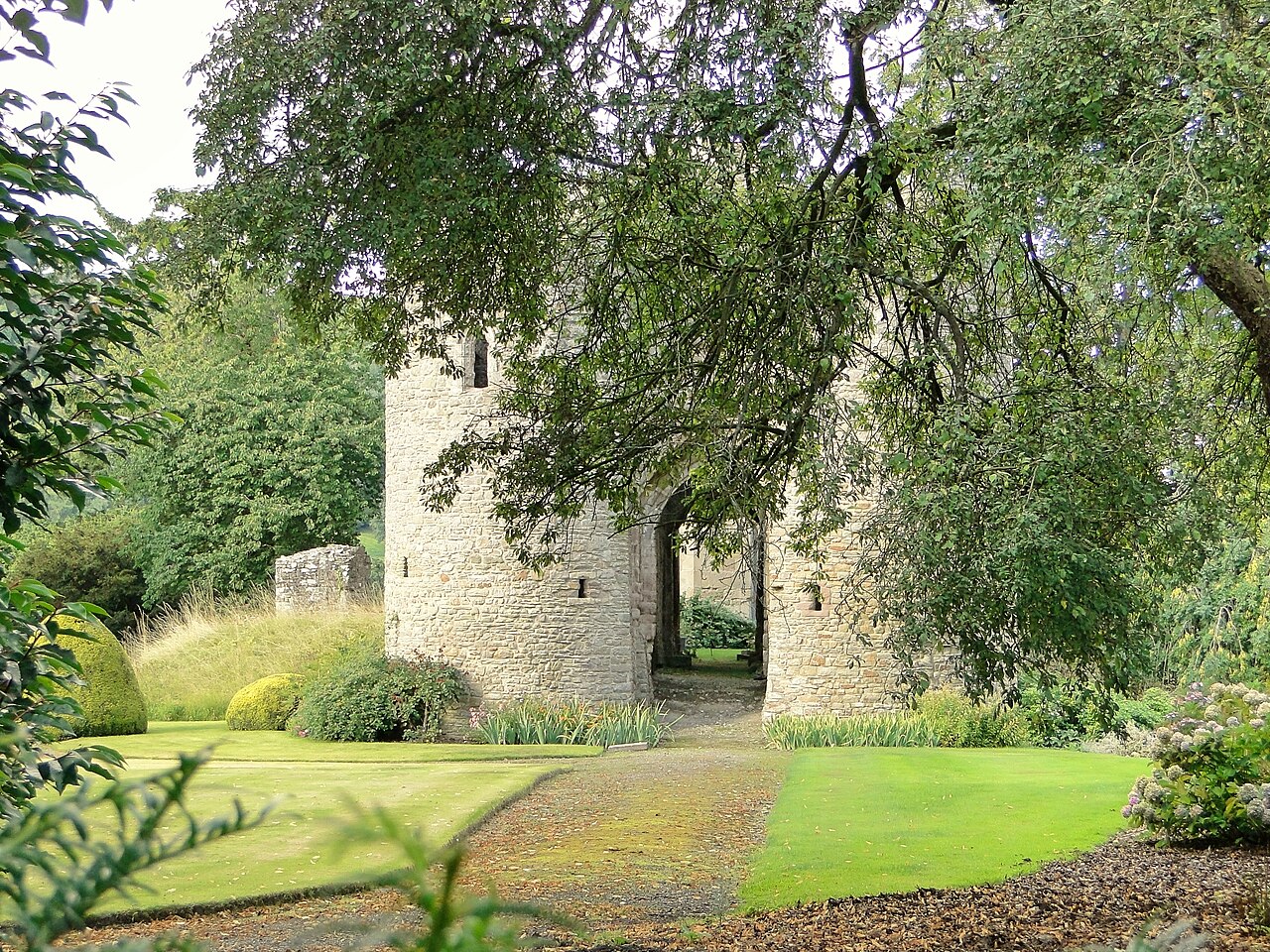
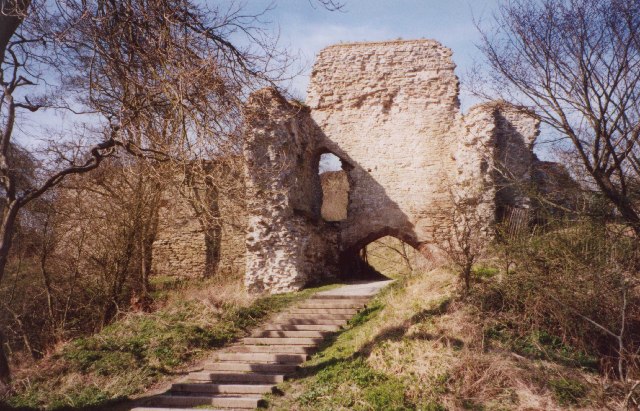
Remains of an early gatehouse lie to the south of a bridge that once connected the main motte to a south-west mound, which likely served as the main entrance to the adjacent town. Nearby stands the base of a large round tower, part of the outer defenses. Along the west front, two surviving turrets show architectural influences from the late 12th-century Château Gaillard in Normandy, indicating the castle’s connection to broader Norman military architectural trends.
Bailey and domestic buildings
Within the main bailey, archaeological excavations have revealed the foundations of domestic structures such as a grange (farm or storage building), stables, and a bakehouse. Earthworks on the eastern side suggest the presence of additional defensive walls, indicating a complex system of enclosures designed to protect both military and domestic functions.
Landscape and water management
The castle grounds extend beyond the fortifications, with evidence of extensive landscaping. A pleasure garden was located west of the river, while to the northeast, remains of a fishpond connected to the river by a sluice demonstrate sophisticated water management practices. These features provided fresh food supplies and leisure opportunities for the castle’s inhabitants, reflecting its evolution from a purely military fortress to a noble residence.
Clun Castle today
Today, Clun Castle remains a compelling historical site that offers insight into Norman military architecture and the complex history of the Anglo-Welsh borderlands. Its well-preserved Norman keep and surrounding earthworks provide visitors with a tangible connection to medieval England’s turbulent past. The castle’s location, architectural features, and historical significance make it an important destination for those interested in medieval fortifications, Norman history, and heritage conservation.
Frequently asked questions (FAQ)
- How do I get to Clun Castle?
- Clun Castle is located in the picturesque village of Clun in Shropshire, UK. You can reach it by car via the A488 road, and there is limited parking available nearby. If you're using public transport, the closest bus stop is just a short walk from the castle.
- What is the historical significance of Clun Castle?
- Clun Castle dates back to the 11th century and is a significant example of a Norman motte-and-bailey castle. It played a crucial role in the defense against Welsh invasions and was an important stronghold during the medieval period. Today, it stands as a testament to the architectural and military history of the region.
- When was Clun Castle built?
- Clun Castle was originally constructed shortly after the Norman Conquest of England in 1066. The castle was built to establish control over the Welsh border and underwent several modifications over the centuries. Its ruins reflect the evolution of military architecture throughout the Middle Ages.
- Can I visit Clun Castle year-round?
- Yes, Clun Castle is open to visitors all year round, allowing you to explore its historic grounds at your convenience. However, it’s always a good idea to check for any seasonal events or maintenance closures before planning your visit. The best time to explore is during the spring and summer months when the weather is more favorable.
- Why is Clun Castle a popular tourist attraction?
- Clun Castle attracts visitors for its rich history and stunning views of the surrounding countryside. The charming village of Clun adds to its appeal, offering quaint shops and local eateries nearby. Its well-preserved ruins provide a fascinating glimpse into medieval life, making it a must-visit for history enthusiasts.
- Is it possible to take guided tours of Clun Castle?
- While Clun Castle does not offer formal guided tours, visitors can explore the site at their own pace with helpful information boards available throughout the grounds. Local volunteers often provide insights during peak seasons, and you can also find informative brochures at the castle entrance. Self-guided exploration allows for a personal experience as you uncover the castle's history.
- What are the opening hours for Clun Castle?
- Clun Castle is open to the public from dawn until dusk, allowing ample time for exploration. During the summer months, the days are longer, providing more time to enjoy the site. Always check local resources for specific opening times during holidays or special events.
- Are there any nearby attractions to visit while in Clun?
- Yes, the village of Clun itself is charming and offers several attractions, including the historic St. George's Church and beautiful walks along the River Clun. Additionally, nearby attractions include the Clun Valley and the Shropshire Hills Area of Outstanding Natural Beauty, perfect for hiking and enjoying nature. Combining these visits with your trip to Clun Castle makes for a delightful day out.
- What are the ticket prices for Clun Castle?
- Clun Castle is free to enter, making it an accessible destination for all visitors. Donations are welcomed to help with the maintenance and preservation of the site. This allows everyone to enjoy the historical significance of the castle without any financial barriers.
Photo gallery

Information
Website
Visit websiteSources & official resources
Verify the information above using these authoritative references.
Loading map...
Visitor reviews
No reviews yet. Been here? Write the first review and help other travelers!
Write the first reviewVisited this castle? Share your experience
Your review helps other travelers and adds first-hand knowledge to our encyclopedia.