Dolforwyn Castle
Dolforwyn Castle stands as a significant monument in Welsh medieval history, representing the last major fortress constructed by Llywelyn ap Gruffudd, also known as Llywelyn the Last, the final native Prince of Wales recognized by the English crown. Erected between 1273 and 1277, this castle was strategically placed on a wooded ridge overlooking the upper Severn Valley, symbolizing Llywelyn's assertion of power in the region and his resistance against English encroachment.
The castle's location near Abermule, Wales, allowed it to command vital routes into the heartlands of Wales, particularly after Llywelyn's conquest of the districts of Cedewain and Ceri. These territorial gains were recognized formally under the Treaty of Montgomery in 1267, which acknowledged Llywelyn as Prince of Wales. However, his efforts to consolidate power by building Dolforwyn Castle without the approval of King Edward I of England escalated tensions, culminating in the castle's siege and capture in 1277.
Architectural design and layout
Dolforwyn Castle exemplifies a distinctively Welsh approach to castle construction during the High Medieval period, differing notably from contemporary English fortifications. The castle was built on a large rectangular platform hewn directly from the rock, measuring approximately 240 by 90 feet. The initial fortifications included a rectangular keep at the southwestern end and a circular tower at the northeastern end, connected by defensive ramparts that formed a roughly rectangular enclosure.
A prominent feature is the D-shaped tower on the northern wall, which alongside the other towers, provided strategic vantage points for defense. The enclosed courtyard was divided into two wards by a natural rock-cut ditch, enhancing the castle's defensive capabilities. Against the northern wall of the inner ward stood a two-storey stone building, likely serving domestic or administrative functions.
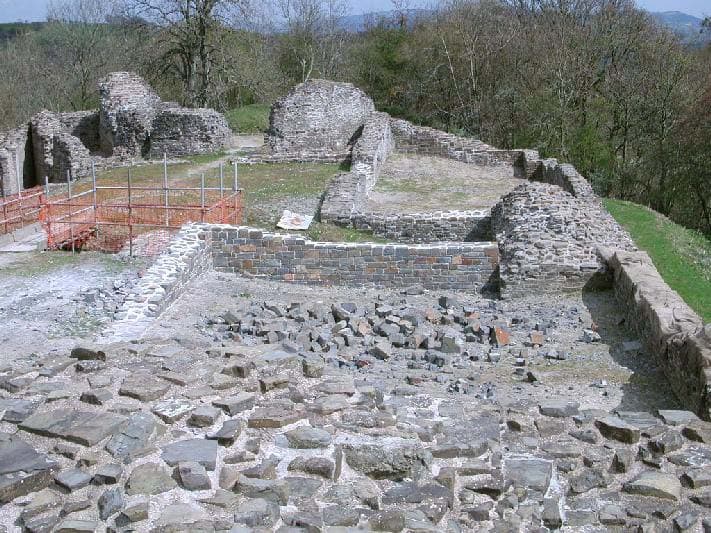
The main entrance was located on the western wall, with a smaller gate on the southern side that was later blocked following the castle's capture by English forces. Archaeological excavations have revealed a stone-lined hall within the castle grounds, suggesting communal or official use, as well as a wheat-drying oven and a cistern or cellar well about six meters deep, reflecting efforts to secure water supply after the initial siege revealed vulnerabilities.
Historical context and significance
The castle's construction was a direct response to Llywelyn's expanding influence in mid-Wales and his desire to control the Severn Valley, a key strategic corridor. By establishing Dolforwyn Castle, Llywelyn sought to solidify his authority over newly conquered territories and to challenge English dominance, particularly that of Montgomery Castle, an English stronghold nearby.
Despite its strategic importance, Dolforwyn Castle's defenses were compromised by the absence of a well, a critical oversight during its hurried construction. In 1277, English forces led by Roger Mortimer, Henry de Lacy, Earl of Lincoln, and Otto de Grandson laid siege to the fortress. The defenders, deprived of water, surrendered after a brief siege, marking a pivotal moment in the conflict between the Welsh princes and the English crown.
Following its capture, the castle underwent modifications by its new English owners. The southern gate was sealed, new buildings were constructed within the courtyard, and a well was dug to ensure a reliable water supply. Ownership passed through the Mortimer family until the early 14th century, during which time detailed inventories recorded a variety of functional spaces including an armoury, pantry, buttery, kitchen, brewhouse, bakehouse, chapel, hall, lady's chamber, and grain storage granges.
Later history and decline
Dolforwyn Castle remained occupied into the reign of Richard II (1377–1399), but by 1381 it was already described as being in poor repair. By 1398, contemporary records referred to the castle as 'ruinous and worth nothing,' signaling its decline and abandonment. Over the subsequent centuries, the castle fell into obscurity and was largely forgotten.
The castle's ownership eventually transferred to the Earls of Powis before being acquired by the grandfather of the antiquarian John Davies Knatchbull Lloyd. In 1955, the site was entrusted to Cadw, the Welsh historic environment service, which undertook extensive archaeological excavations between 1981 and 2002 under the guidance of Dr Lawrence Butler. These investigations significantly enhanced understanding of the castle's construction, layout, and historical use.
Preservation efforts have been ongoing, including a masonry consolidation project initiated in 2009, aimed at stabilizing and protecting the remaining structures. Today, Dolforwyn Castle is accessible to the public and stands as a testament to Welsh medieval resilience and architectural ingenuity.
Archaeological discoveries and features
Excavations at Dolforwyn Castle have uncovered numerous artifacts and structural details that illuminate its historical context. Among the finds are a fragment of a leather book cover, a small gaming die, and a silver coin from the reign of Edward II. These items provide insight into the daily life and status of the castle's occupants.
The site also yielded many stone catapult balls, directly connected to the 1277 siege, offering tangible evidence of the castle's military engagements. Variations in mortar and masonry reveal the phases of construction and repair, distinguishing the original Welsh work from later English modifications.
The castle's position on a ridge about 214 meters above sea level afforded commanding views of the surrounding landscape, an essential feature for defense and surveillance. The natural rock platform and the castle's layout demonstrate a practical adaptation to the terrain, characteristic of Welsh castle-building traditions.
Visiting Dolforwyn Castle today
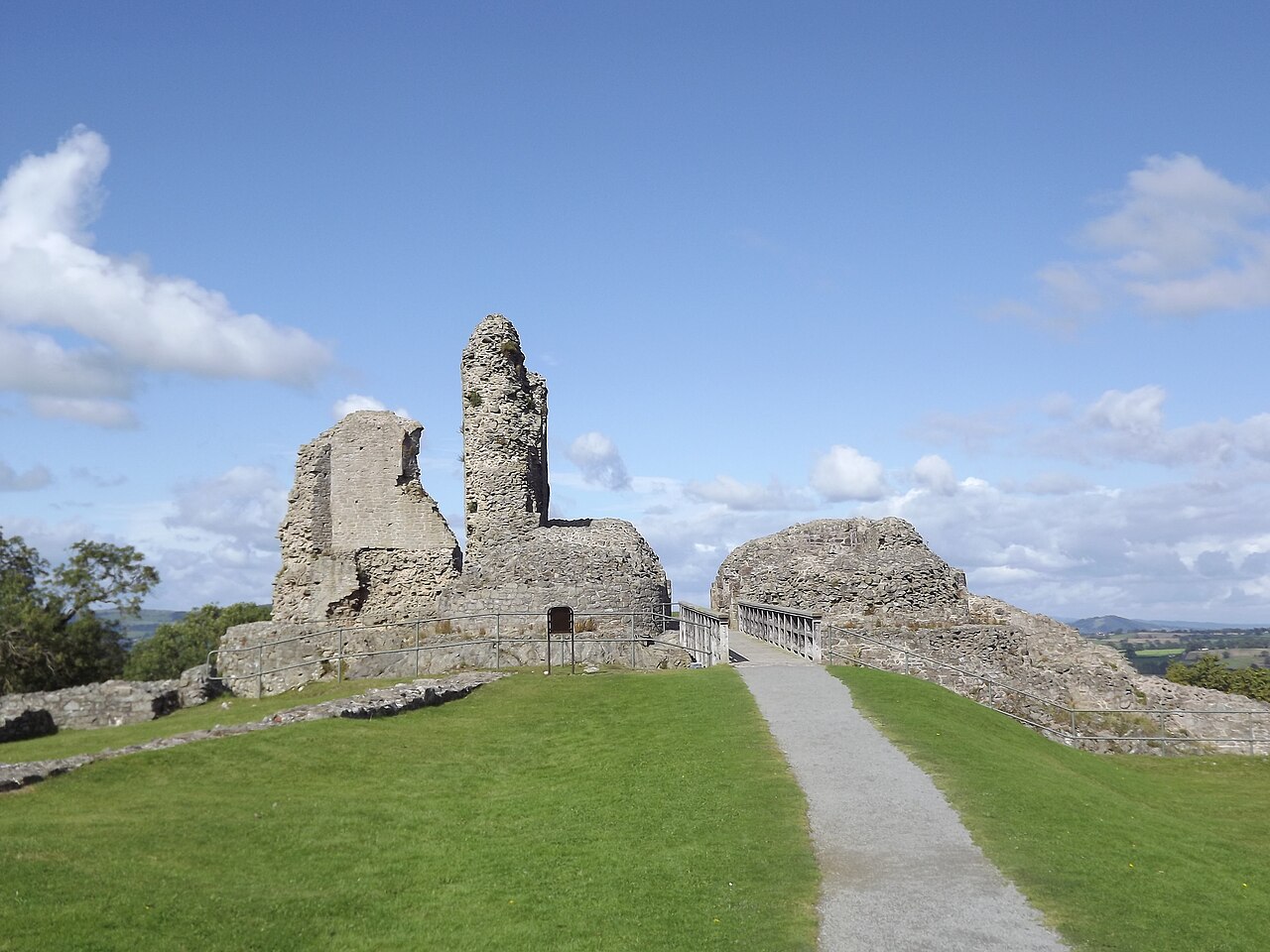
Visitors to Dolforwyn Castle can explore the well-preserved ruins set amidst a wooded ridge, experiencing firsthand the strategic location and architectural features that defined this 13th-century fortress. The site offers a unique glimpse into the history of Welsh resistance and the complex dynamics between native princes and English monarchs during the medieval period.
Interpretive signage and guided tours provide context for the castle's construction, siege, and subsequent history. The ongoing conservation work ensures that Dolforwyn remains a valuable cultural and historical asset, attracting scholars, history enthusiasts, and tourists alike.
Frequently asked questions (FAQ)
- What is Dolforwyn Castle?
- Dolforwyn Castle is a historic Welsh castle located near Abermule in Powys, Wales. Built in the late 13th century by the Welsh prince, Llywelyn ap Gruffudd, it served as a strategic stronghold during the conflicts between the Welsh and the English. The ruins of the castle offer visitors a glimpse into the medieval architecture and the turbulent history of the region.
- When was Dolforwyn Castle built?
- Dolforwyn Castle was constructed around 1270 and was completed shortly thereafter. It was built during a time of conflict between the Welsh and the English, reflecting the political landscape of the era. The castle played a significant role in the struggles for Welsh independence.
- Can I visit Dolforwyn Castle?
- Yes, Dolforwyn Castle is open to visitors throughout the year. The site is accessible for exploration, allowing guests to wander through the ruins and enjoy the scenic views of the surrounding countryside. Be sure to check local guidelines for any visitor restrictions or requirements.
- What are the opening hours for Dolforwyn Castle?
- Dolforwyn Castle typically opens to visitors from April to October, with varying hours depending on the season. During peak months, the castle may remain open from 10 AM to 5 PM. It's advisable to check the official website or local tourist information for the latest updates on opening times before your visit.
- Is there an entry fee for Dolforwyn Castle?
- Yes, there is a nominal entry fee to visit Dolforwyn Castle, which helps with the maintenance and preservation of the site. Ticket prices are generally affordable, making it accessible for families and individuals. Discounts may be available for children, students, and seniors, so it's worth inquiring upon arrival.
- What is the best time to visit Dolforwyn Castle?
- The best time to visit Dolforwyn Castle is during the spring and early autumn months when the weather is mild and the surrounding landscape is vibrant. This period allows for pleasant walking and exploring the ruins without the summer crowds. However, each season offers its unique charm, so visiting in winter or summer can also provide a different experience.
- Is Dolforwyn Castle accessible for everyone?
- Dolforwyn Castle has certain accessibility features, but due to its historic nature and uneven terrain, it may be challenging for visitors with mobility impairments. There are some paths and areas that are more accessible, but it's best to contact the site ahead of your visit for specific accessibility options and assistance. Planning ahead can ensure a more enjoyable experience for all visitors.
- What nearby attractions can I visit while in Abermule?
- While visiting Dolforwyn Castle, you can explore other nearby attractions such as the picturesque village of Montgomery, which boasts charming shops and cafes. Additionally, the Shropshire Hills Area of Outstanding Natural Beauty is just a short drive away, offering stunning landscapes and walking trails. Consider spending some time in the local area to fully appreciate the rich heritage of this region.
Photo gallery

Information
Website
Visit websiteSources & official resources
Verify the information above using these authoritative references.
Loading map...
Visitor reviews
No reviews yet. Been here? Write the first review and help other travelers!
Write the first reviewVisited this castle? Share your experience
Your review helps other travelers and adds first-hand knowledge to our encyclopedia.