Thirlwall Castle
Thirlwall Castle stands as a remarkable example of a medieval hill castle located near Greenhead in Northumberland, England. Constructed originally in the 12th century by the Anglo-Norman society, this fortress was strategically positioned to oversee the surrounding landscape close to the River Tipalt. Its elevated location at approximately 142 meters above sea level provided commanding views and defensive advantages, characteristic of hill castles built during the High Medieval period.
Early history and construction
The initial establishment of Thirlwall Castle reflects the typical Norman approach to fortification following the conquest of England, emphasizing control over key routes and borders. The castle's construction utilized local materials, notably incorporating stones repurposed from the nearby Hadrian's Wall, the ancient Roman frontier built in the 2nd century AD. This reuse of Roman masonry not only provided durable building blocks but also symbolically connected the medieval stronghold with Britain's earlier imperial past.
Strengthening and ownership under the thirlwall family
By the early 14th century, around 1330, significant enhancements were made under John Thirlwall, a prominent member of the family that gave the castle its name. These improvements likely included reinforcing the defensive walls and possibly adding towers or gatehouses to adapt to evolving military technologies and threats typical of the border regions between England and Scotland.
The Thirlwall family maintained ownership of the castle for several centuries. Historical records indicate that by 1542, under Robert Thirlwall, the castle remained well-maintained and functional. The family's involvement in regional politics and conflicts is exemplified by Sir Percival Thirlwall, who notably served as the standard-bearer for King Richard III at the Battle of Bosworth in 1485. His death in battle supporting the Yorkist cause underscores the castle's connection to significant national historical events.
Decline and transition of ownership
By the 18th century, Thirlwall Castle ceased to serve as a residence. The final family member to occupy the estate, Eleanor Thirlwall, married into the Swinburne family by 1738. Subsequently, in 1748, the castle and its lands were sold to the Earl of Carlisle. Following this transition, the castle gradually fell into disuse and ruin, a fate common to many medieval fortifications that lost their strategic or residential importance in the modern era.
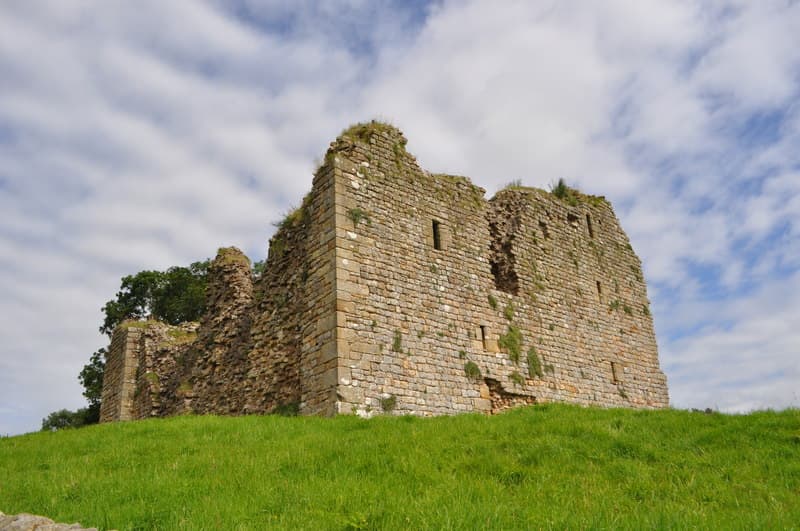
Over the centuries, the site suffered structural damage, including notable masonry collapses recorded in 1832 and again in 1982. Despite this, the ruins have retained enough of their original form to convey the castle's defensive character and historical significance.
Architectural features and remains
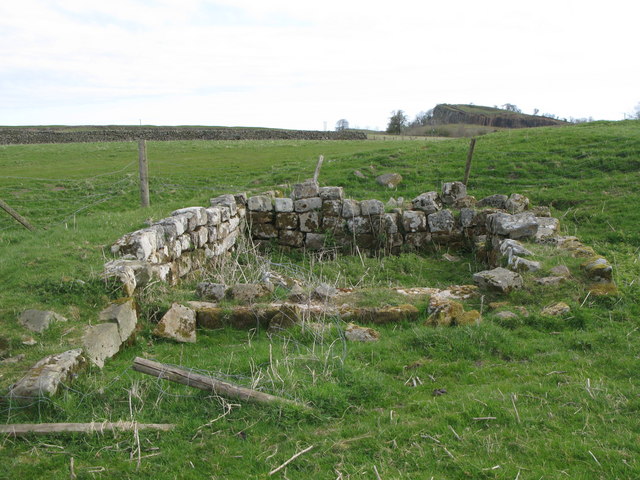
The surviving ruins of Thirlwall Castle reveal a strong defensive layout typical of medieval hill castles. The structure includes remnants of thick stone walls, which were enhanced by the reuse of Roman stones from Hadrian's Wall, a unique archaeological feature that links the castle physically and symbolically to Britain's Roman heritage. The castle was likely surrounded by a curtain wall with towers and a gatehouse, though much of these features now exist only as ruins.
Set within a rural and sparsely populated landscape of grassland and woodland, the castle's isolation has contributed to its preservation as a historic ruin. Natural vegetation has partially reclaimed the site, adding to its atmospheric quality. The castle's position in a valley oriented east to west further emphasizes its strategic siting, controlling access routes and providing surveillance over the surrounding territory.
Modern preservation and cultural significance
Since 1999, the castle grounds have been managed by the Northumberland National Park Authority, ensuring its protection and conservation as a significant heritage site. Thirlwall Castle holds the status of a Grade I listed building and a Scheduled Ancient Monument, reflecting its importance as a cultural and historic landmark.
Today, visitors to Thirlwall Castle can explore the evocative ruins and appreciate the layers of history embodied in its walls—from its Norman origins through medieval fortification enhancements to its decline and preservation. The castle's reuse of Roman stones remains a distinctive feature, offering a tangible connection to Britain's layered past and the enduring legacy of its frontier defenses.
Architectural context and significance
Thirlwall Castle exemplifies the hill castle typology, characterized by its elevated position and robust stone construction designed for defense and control. Its architectural evolution reflects broader trends in medieval military architecture, including adaptation to changing warfare tactics and the political volatility of the Anglo-Scottish border region.
The castle's integration of Roman materials highlights an early example of architectural recycling, common in medieval Britain, which served both practical and symbolic purposes. This practice illustrates the continuity of occupation and the layering of historical narratives within the landscape.
Historical events and notable figures
The castle's history is intertwined with significant historical figures and events. The Thirlwall family's involvement in border conflicts and national battles situates the castle within the wider context of English medieval history. Sir Percival Thirlwall's role at the Battle of Bosworth connects the site to the dramatic conclusion of the Wars of the Roses and the end of the Plantagenet dynasty.
Visitor experience and accessibility
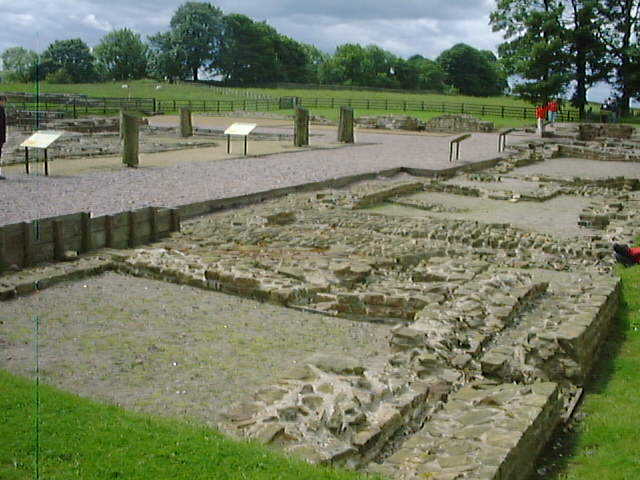
While the castle exists today as a ruin, it remains accessible to the public under the stewardship of the Northumberland National Park Authority. Visitors can explore the site, enjoy the scenic surroundings, and learn about the castle's historical significance through onsite information. The remote location offers a peaceful setting, ideal for those interested in medieval architecture, history, and archaeology.
Preservation efforts continue to maintain the structural integrity of the remaining walls and to prevent further deterioration, ensuring that Thirlwall Castle endures as a valuable educational and cultural resource.
Frequently asked questions (FAQ)
- What is the historical significance of Thirlwall Castle?
- Thirlwall Castle is a 13th-century fortress located in Northumberland, England, known for its strategic position near the border with Scotland. It played a vital role in the border conflicts between England and Scotland during the medieval period. The castle's ruins reflect the turbulent history of the region and offer insight into the architectural styles of the time.
- When was Thirlwall Castle built?
- Thirlwall Castle was constructed in the late 1200s, specifically around 1260, by the de Thirlwall family. The castle was designed to serve as a defensive structure during the ongoing conflicts of the era. Over the centuries, it underwent various modifications, showcasing the evolution of medieval military architecture.
- Can I visit Thirlwall Castle?
- Yes, Thirlwall Castle is open to the public for visits. Guests can explore the castle ruins and enjoy the scenic surroundings of the Northumberland countryside. However, it is advisable to check the opening hours and any potential restrictions before planning your visit.
- What are the opening hours for Thirlwall Castle?
- Thirlwall Castle typically opens to visitors from March to October, with hours varying by season. During peak months, the castle generally opens from 10 AM to 5 PM. It's recommended to check the official website for the most current hours and any special events that may affect access.
- Is Thirlwall Castle accessible for visitors with mobility challenges?
- Thirlwall Castle has some accessibility challenges due to its historic structure and uneven terrain. While there are pathways leading to the site, visitors with mobility issues may find it difficult to navigate the castle ruins. It is best to contact the site in advance to inquire about specific accommodations or assistance.
- What is the best time to visit Thirlwall Castle?
- The best time to visit Thirlwall Castle is during the late spring and summer months, when the weather is milder and the gardens are in full bloom. Additionally, these months often feature more events and guided tours. Visiting during weekdays can also provide a quieter experience away from larger crowds.
- Are there any nearby attractions to visit alongside Thirlwall Castle?
- Yes, there are several nearby attractions worth exploring, including the scenic Northumberland National Park and the historic town of Hexham. Visitors can also discover the beautiful Hadrian's Wall, a UNESCO World Heritage site, just a short drive from the castle. These sites offer a rich blend of natural beauty and history.
- What are the ticket prices for Thirlwall Castle?
- Ticket prices for Thirlwall Castle are generally quite reasonable, with discounts available for children and seniors. Family tickets are also often offered to make it more affordable for groups. It's best to check the official website for the latest pricing information and any special offers.
Photo gallery

Information
Website
Visit websiteSources & official resources
Verify the information above using these authoritative references.
Loading map...
Visitor reviews
No reviews yet. Been here? Write the first review and help other travelers!
Write the first reviewVisited this castle? Share your experience
Your review helps other travelers and adds first-hand knowledge to our encyclopedia.