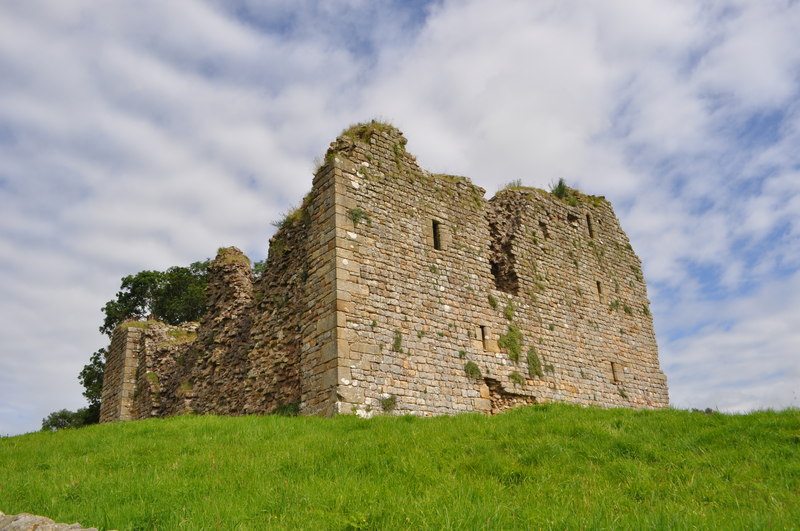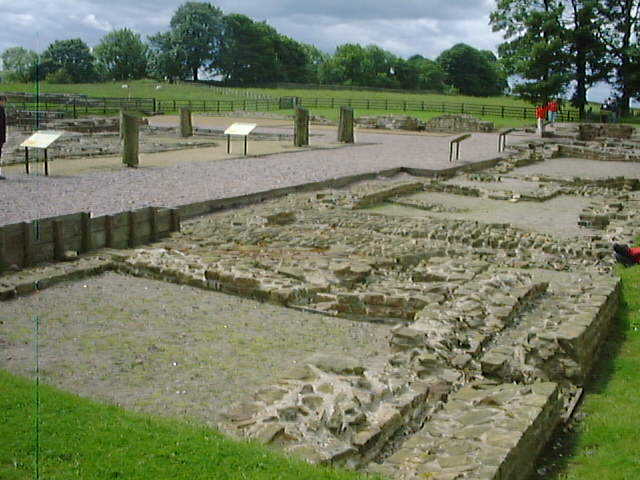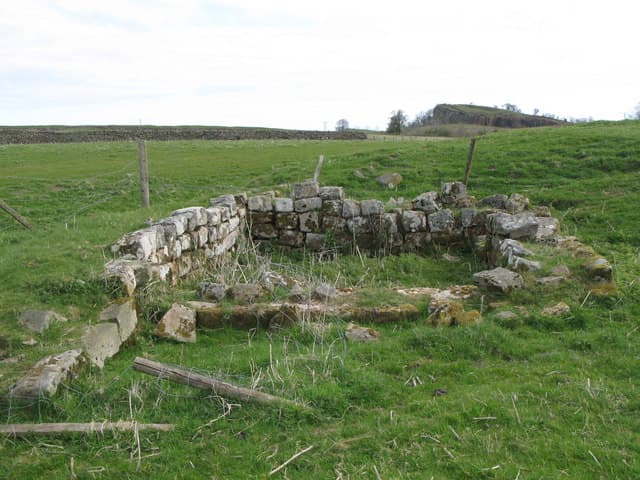
Magna Roman Fort, also known as Magnis or Carvoran Roman Fort, is a significant archaeological site located near Carvoran in Northumberland, northern England. This fort was an important military installation of the Roman Empire during its occupation of Britain, strategically positioned near the famous Hadrian's Wall. It stands as a well-preserved example of a Roman auxiliary fort, reflecting the military organization and frontier defense strategies of the Roman army in the 2nd century AD.
Historical context and location
Magna was constructed along the Stanegate frontier, a key Roman road and military boundary established before the construction of Hadrian's Wall. The Stanegate linked two major Roman settlements: Coria (modern Corbridge) in the east and Luguvalium (modern Carlisle) in the west. This road served as a vital communication and supply route for Roman forces stationed in northern Britain.
The fort was built to control movement along this frontier and to house a garrison of auxiliary troops tasked with maintaining security and order in the region. Its location near the future line of Hadrian's Wall highlights its strategic importance in the Roman defensive network.
Architecture and layout
The fort is classified as a bastioned fortress, typical of Roman military architecture designed to maximize defense and control. It features a rectangular layout with robust stone walls and bastions at the corners or along the walls to provide flanking fire against attackers. The walls were constructed using local stone, and the fort included gates, ramparts, and towers.
Inside the fort, there were barracks for soldiers, granaries for food storage, workshops, and a headquarters building (principia). The principia served as the administrative and religious center of the fort, often containing a shrine to the standards and the commanding officer's office.
The fort's design reflects standard Roman military engineering principles, emphasizing functionality, defense, and the accommodation of a sizable garrison.
Military significance and garrison
Magna was garrisoned by auxiliary troops, likely including cavalry and infantry units recruited from various parts of the Roman Empire. These troops were responsible for patrolling the frontier, engaging in reconnaissance, and defending against incursions by local tribes.
The fort's position on the Stanegate road enabled rapid deployment of forces between Coria and Luguvalium, enhancing the Roman military's operational flexibility in northern Britain. Its proximity to Hadrian's Wall, constructed later in the early 2nd century AD, further integrated Magna into the broader defensive system designed to secure the empire's northern boundary.
Archaeological remains and museum
Today, the remains of Magna Roman Fort are partially preserved and form an important archaeological site. Excavations have revealed the fort's walls, gates, and internal buildings, providing valuable insights into Roman military architecture and frontier life.
The site now hosts the Roman Army Museum, which offers visitors an extensive collection of artifacts, reconstructions, and educational displays related to the Roman army and its presence in Britain. The museum enhances understanding of the fort's role and the daily lives of its garrison.
Visiting magna roman fort
Visitors to Magna Roman Fort can explore the archaeological remains and enjoy the exhibits at the Roman Army Museum. The site provides a tangible connection to the Roman past and serves as a key destination for those interested in Roman Britain and military history.
The fort's location in Northumberland places it within a region rich in Roman heritage, including nearby Hadrian's Wall and other forts along the frontier, making it an essential stop for history enthusiasts.
Frequently asked questions (FAQ)
- What is the historical significance of Magna Roman Fort?
- Magna Roman Fort, located in Carvoran, is a key archaeological site that was part of the Roman frontier system in Britain. It served as a fort and supply depot along Hadrian's Wall, playing a crucial role in the Roman military presence in the region during the 2nd century AD.
- When was Magna Roman Fort built?
- Magna Roman Fort was established around AD 122, coinciding with the construction of Hadrian's Wall. It was used by Roman troops to control the movement of people and goods across the northern frontier of the Roman Empire.
- Can I visit Magna Roman Fort year-round?
- Yes, Magna Roman Fort is open to visitors year-round, but it's recommended to check specific opening hours and seasonal variations before your visit. The site can be enjoyed in all seasons, with each offering a unique view of the surrounding landscape.
- What are the opening hours for Magna Roman Fort?
- The opening hours for Magna Roman Fort can vary by season, usually operating from 10 AM to 5 PM during the summer months and shorter hours in winter. It's advisable to check the official website for the most accurate and up-to-date information before planning your visit.
- Is there an entrance fee to visit Magna Roman Fort?
- Yes, there is a nominal entrance fee to visit Magna Roman Fort, which helps maintain the site and its facilities. Ticket prices are typically affordable, and discounts may be available for children and families.
- What is the best time to visit Magna Roman Fort?
- The best time to visit Magna Roman Fort is during the late spring and summer months when the weather is generally milder and the surrounding countryside is vibrant. However, visiting during the off-peak season can also provide a quieter and more intimate experience of the historical site.
- Are there any nearby attractions to visit along with Magna Roman Fort?
- Yes, nearby attractions include the historic Hadrian's Wall Path, the Roman Army Museum, and the scenic Northumberland National Park. These sites offer additional insights into Roman history and the natural beauty of the area, making for a full day of exploration.
- Is Magna Roman Fort accessible for all visitors?
- Magna Roman Fort aims to be accessible to all visitors, with pathways and facilities designed for those with mobility challenges. However, it's recommended to check specific accessibility options in advance to ensure a comfortable visit.
Photo gallery

Information
Loading map...
Visitor reviews
No reviews yet. Been here? Write the first review and help other travelers!
Write the first reviewVisited this castle? Share your experience
Your review helps other travelers and adds first-hand knowledge to our encyclopedia.