Thimlich Ohinga is a remarkable complex of stone-built ruins located in Migori County, Kenya, near the shores of Lake Victoria. It represents the largest of 138 closely clustered sites in the region, comprising a total of 521 stone structures. These sites collectively illustrate the advanced dry-stone construction techniques used by communities in the area during the Late Medieval period, particularly around the 15th century or possibly earlier.
Architectural features and construction techniques
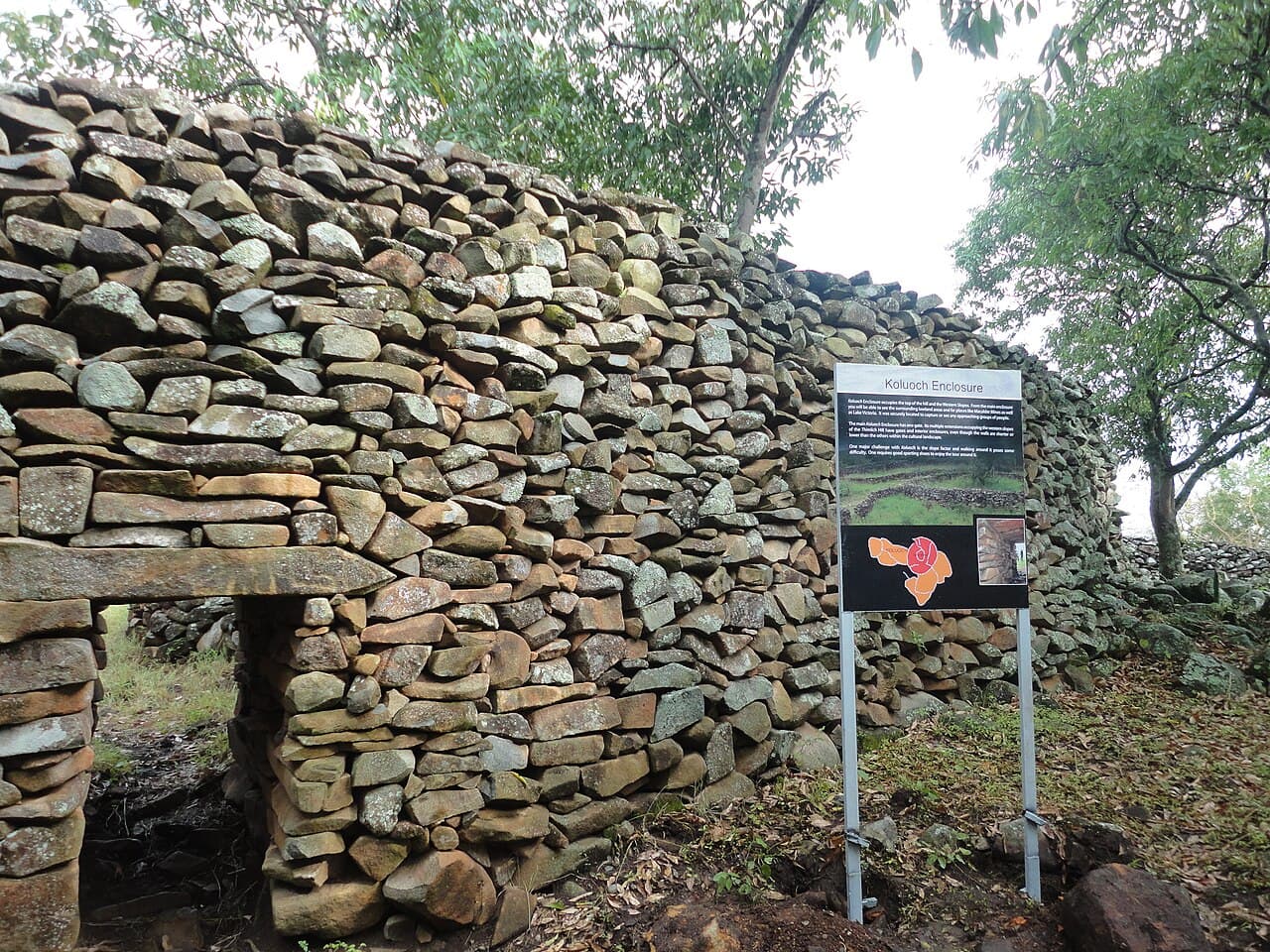
The main enclosure at Thimlich Ohinga is defined by walls that vary between 1 to 3 meters thick and rise to heights of 1 to 4.2 meters. These walls were constructed using undressed blocks, rocks, and stones meticulously interlocked without the use of mortar, a technique known as dry-stone masonry. The dense packing of stones and the interlocking method provided structural stability and durability, enabling the walls to withstand centuries of weathering.
The complex consists of multiple enclosures and chambers, which are believed to have served both residential and defensive purposes. The irregular shapes and sizes of the stones were carefully selected and placed to fit tightly together, demonstrating considerable skill and knowledge of stone construction by the builders.
Historical context and cultural significance
Thimlich Ohinga is thought to have been built by the ancestors of the Luo community or related ethnic groups inhabiting the Lake Victoria basin. The site likely functioned as a fortified homestead or a community center, offering protection against raids and wild animals. The thick walls and enclosed spaces suggest a need for defense and controlled access.
The clustering of 138 similar sites with 521 stone structures in the region indicates a widespread cultural practice of constructing such enclosures, reflecting social organization, territoriality, and architectural tradition in pre-colonial Kenya. These sites provide valuable insight into the lifestyles, security concerns, and craftsmanship of the communities during the Late Medieval period.
Preservation and archaeological importance
Today, Thimlich Ohinga stands as an archaeological site in ruins but remains one of the best-preserved examples of dry-stone architecture in East Africa. The site has been the focus of archaeological research and conservation efforts aimed at protecting its structural integrity and promoting understanding of the region's historical heritage.
Its preservation allows visitors and scholars to study the construction methods and spatial organization of the enclosures, contributing to broader knowledge of indigenous African architecture and settlement patterns.
Visitor experience and accessibility
Although the exact city location is not well-documented, Thimlich Ohinga is accessible within Migori County and attracts interest from tourists, historians, and archaeologists. The site offers a unique opportunity to explore ancient stone architecture and gain insight into the cultural history of the Lake Victoria region.
Visitors can observe the impressive thickness of the walls, the dry-stone construction technique, and the layout of the enclosures, which together reflect the ingenuity of the builders and the social functions of the complex.
Frequently asked questions (FAQ)
- What is Thimlich Ohinga?
- Thimlich Ohinga is a UNESCO World Heritage Site located in Kenya, recognized for its unique dry-stone wall architecture. The site dates back to the 16th century and is believed to have been a settlement for the Luo people, showcasing their cultural heritage and architectural ingenuity.
- When was Thimlich Ohinga designated a UNESCO World Heritage Site?
- Thimlich Ohinga was designated as a UNESCO World Heritage Site in 2011. This recognition highlights its significance in terms of cultural heritage and the preservation of traditional building techniques in the region.
- Is it possible to visit Thimlich Ohinga?
- Yes, Thimlich Ohinga is open to visitors who wish to explore its historical and cultural significance. Visitors can experience guided tours that provide insights into its history and the lifestyle of the Luo people.
- What are the opening hours for Thimlich Ohinga?
- Thimlich Ohinga is typically open to visitors from 8:00 AM to 5:00 PM daily. It is advisable to check ahead for any changes in opening hours or special events that may affect accessibility.
- Can I find nearby attractions while visiting Thimlich Ohinga?
- Yes, there are several nearby attractions worth exploring, including Lake Victoria and the Ruma National Park. These sites offer additional opportunities for wildlife viewing and experiencing the natural beauty of the region.
- What is the best time to visit Thimlich Ohinga?
- The best time to visit Thimlich Ohinga is during the dry seasons, from June to October and January to February. During these months, the weather is generally more pleasant, making it ideal for outdoor exploration and photography.
- What are the ticket prices for Thimlich Ohinga?
- Ticket prices for Thimlich Ohinga are typically affordable, catering to both local and international visitors. It is recommended to check the official site or local tourism offices for the most current pricing information before your visit.
- How accessible is Thimlich Ohinga for visitors?
- Thimlich Ohinga is accessible to visitors, although some areas may require moderate walking. The site has pathways that allow for easier navigation, but individuals with mobility challenges should plan accordingly and may want to seek assistance.
Photo gallery

Information
Loading map...
Visitor reviews
No reviews yet. Been here? Write the first review and help other travelers!
Write the first reviewVisited this castle? Share your experience
Your review helps other travelers and adds first-hand knowledge to our encyclopedia.