The Castle Village And Enchanted Kingdom Park

The Castle Village and Enchanted Kingdom Park in Midland, Ontario
Midland, Ontario, Canada
Contemporary (20th–21st c.)
Partially Preserved

The Castle Village and Enchanted Kingdom Park in Midland, Ontario, Canada, was a distinctive amusement park that opened its gates in 1972 and quickly became a cherished destination for families and tourists seeking a whimsical experience centered around a large fairytale-style castle. This castle served as the park's iconic entrance and was designed to evoke the magic and fantasy of classic European fairy tales, establishing an enchanting atmosphere that defined the park's identity.

Origins and development of the park

The park was conceived during the early 1970s, a period marked by the rise of themed amusement parks across North America. Its founders envisioned a family-friendly environment that combined the charm of a storybook castle with a variety of rides, attractions, and entertainment options suitable for all ages. The castle structure was designed to resemble a medieval fortress, featuring turrets, battlements, and stone-like facades, though it was constructed using modern materials tailored for durability and safety in a theme park setting.

Throughout its operation, the park offered numerous attractions, including themed rides, interactive play areas, and live shows that embraced the enchanted kingdom theme. The park's layout and design emphasized immersive storytelling, encouraging visitors to feel as though they had stepped into a fairy tale world filled with adventure and magic.

Architectural features and design elements

The castle at the entrance was the park's most distinctive architectural feature, blending elements of fantasy architecture with practical considerations for visitor flow and safety. The design incorporated towers with conical roofs, arched gateways, and decorative stonework that mimicked medieval masonry, creating an authentic yet approachable fairy tale aesthetic. Inside, the castle housed ticketing booths, gift shops, and themed exhibits that enriched the visitor experience and provided functional spaces within the enchanting setting.

Beyond the castle, the park grounds were thoughtfully landscaped to complement the enchanted theme. Visitors could explore manicured gardens, pathways lined with whimsical sculptures, and themed zones that recreated various aspects of a fairy tale kingdom, adding depth and variety to the park's immersive environment.

Ownership changes and closure

After more than four decades of operation, the park underwent an ownership change in 2016. The new owners initially continued to operate the park but faced significant challenges, including declining attendance and increasing maintenance costs. These difficulties ultimately led to the park's permanent closure. Despite no longer functioning as an amusement park, the castle remains a prominent landmark in Midland and holds nostalgic significance for many former visitors and local residents.

Legacy and cultural significance

Although The Castle Village and Enchanted Kingdom Park is no longer in operation, it played a significant role in the local tourism industry and community life for over 40 years. Its distinctive castle architecture and fairy tale theme made it a memorable destination that contributed to the cultural landscape of Midland, Ontario. The park's history reflects broader trends in amusement park development, including the popularity of themed entertainment and the challenges smaller parks face in a competitive market dominated by larger attractions.

Today, the site stands as a testament to the imaginative spirit that once animated the park. It continues to inspire interest among enthusiasts of amusement park history and castle-themed attractions, preserving the memory of a unique place where fantasy and family fun once came together.

Frequently asked questions (FAQ)

How do I get to The Castle Village And Enchanted Kingdom Park?
You can reach The Castle Village And Enchanted Kingdom Park by car, with ample parking available on-site. Public transportation options may also be available, but it's advisable to check local transit schedules for the most convenient routes.
What is the historical significance of The Castle Village And Enchanted Kingdom Park?
The Castle Village And Enchanted Kingdom Park is a unique blend of fantasy and historical architecture, showcasing influences from various European castles. It serves as a cultural landmark in Midland, attracting visitors interested in both history and whimsical storytelling.
When was The Castle Village And Enchanted Kingdom Park built?
The construction of The Castle Village began in the early 2000s, with the vision of creating an enchanting destination for families and history enthusiasts. The park has continued to evolve, adding attractions and features to enhance the visitor experience.
Can I host an event at The Castle Village And Enchanted Kingdom Park?
Yes, The Castle Village offers various event spaces suitable for weddings, parties, and corporate gatherings. It's recommended to contact their event coordination team for specific details about availability and packages.
Why is The Castle Village And Enchanted Kingdom Park a popular tourist attraction?
The park combines the charm of a fairy tale castle with interactive attractions and performances, making it a hit with families and children. Its picturesque setting and unique features create memorable experiences for visitors of all ages.
Is it possible to access The Castle Village And Enchanted Kingdom Park with a disability?
Yes, The Castle Village and Enchanted Kingdom Park is committed to accessibility, offering ramps and accessible pathways throughout the premises. Visitors are encouraged to reach out ahead of their visit for specific accommodations or assistance.
What are the opening hours for The Castle Village And Enchanted Kingdom Park?
The park typically opens from 10 AM to 6 PM during the peak season, but hours may vary in the off-season or for special events. It's best to check the official website for the most current hours before planning your visit.
What are the ticket prices for The Castle Village And Enchanted Kingdom Park?
Ticket prices vary based on age and the type of experience desired, with discounts available for families and groups. For the latest pricing information, please visit the official website or contact the park directly.
What nearby attractions can I visit while in Midland?
Midland offers a variety of attractions, including the Huronia Museum and the beautiful waterfront parks. Visitors can also explore local shops and restaurants that showcase the charm of this lovely town.

Information

Address

701 Balm Beach Rd E, Midland, ON L4R 4K4, Canada

Loading map...

Visitor reviews

No reviews yet. Been here? Write the first review and help other travelers!

Write the first review

Visited this castle? Share your experience

Your review helps other travelers and adds first-hand knowledge to our encyclopedia.
Write a review

(5/5)

0/2000 characters

Your review will be visible after admin approval

Nearby castles

123.8 km
Casa Loma — Canada castle

Casa Loma

Toronto, Canada

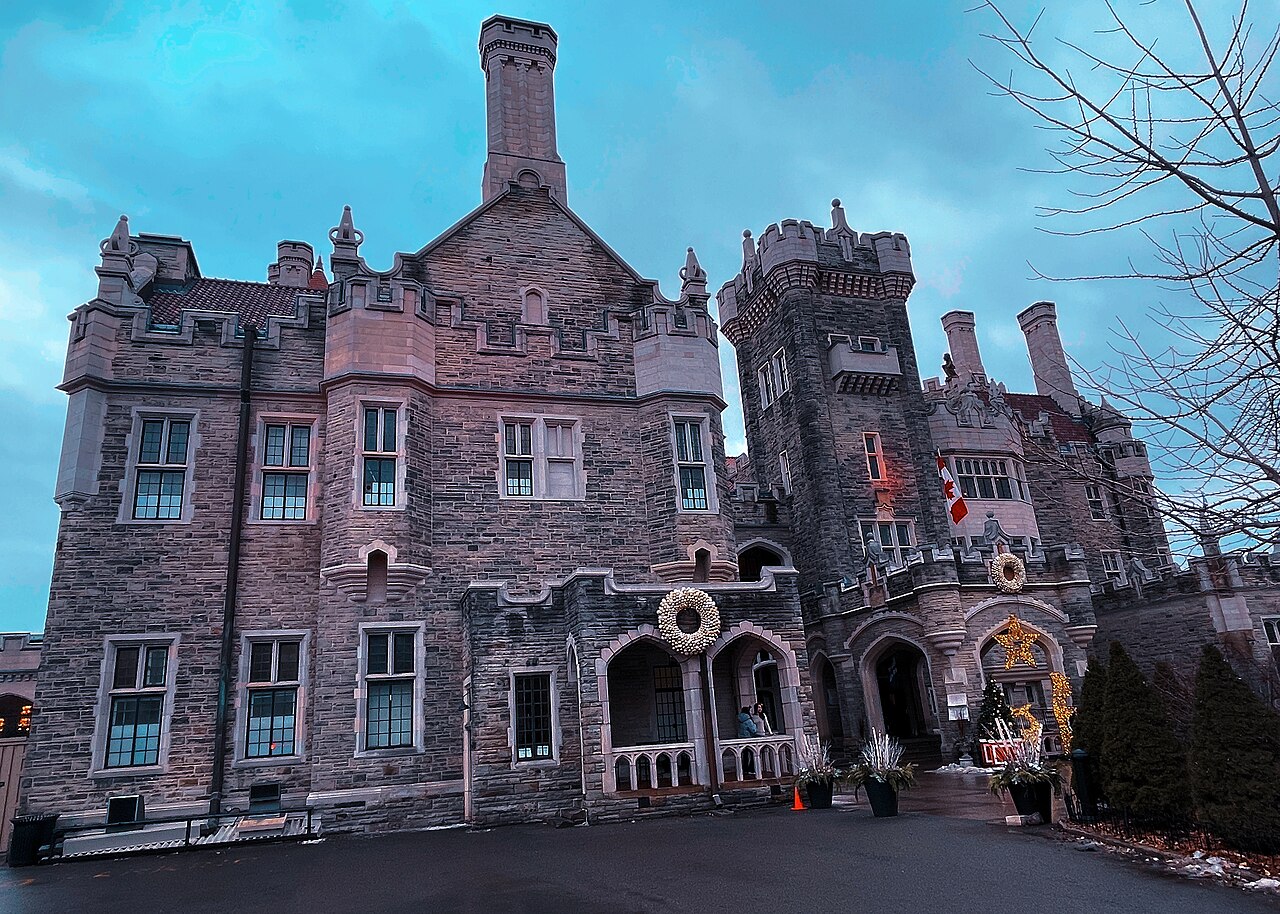
Casa Loma stands as a remarkable testament to early 20th-century wealth and ambition in the heart of Toronto, Ontario. This 98-room Gothic Revival castle was commissioned by Sir Henry Mill Pellatt, a prominent Canadian soldier, financier, and entrepreneur who amassed a vast fortune through his pioneering work in bringing electricity to Toronto and beyond. Pellatt’s vision was inspired by his youthful travels across Europe, where he developed a fascination with grand castles and châteaux, ultimately leading him to create a personal residence that would rival the great estates of the old world. The vision and construction of casa loma Construction of Casa Loma began in 1911 and was an immense undertaking, involving nearly 2 million man-hours and costing around $3.5 million at the time—equivalent to hundreds of millions in today’s currency. The castle was designed in the Gothic Revival architectural style, characterized by its imposing towers, battlements, and intricate stonework that evoke medieval European fortresses. The château features extensive courtyards, secret passages, stables, and lavish interiors spread over multiple floors, making it one of the most elaborate private residences ever built in Canada. Pellatt spared no expense in outfitting the castle, employing a staff of 40 live-in servants at a cost of $50,000 annually, and commissioning extravagant details such as naming his horses with 18-carat gold lettering. The castle’s design incorporated modern conveniences of the era, including an elevator, central vacuum system, and an advanced heating system, blending luxury with technological innovation. Historical context and pellatt’s rise and fall Sir Henry Pellatt’s wealth originated largely from founding the Toronto Electric Light Company in 1883, which was instrumental in electrifying Toronto’s streetlights and expanding power generation to the Niagara Falls area. Over the years, Pellatt consolidated his influence as chairman of 21 companies and owner of railroads, becoming a dominant figure in Canadian industry. His monopoly lasted until 1911, the same year construction of Casa Loma commenced. However, Pellatt’s fortunes declined rapidly after World War I. By 1920, the Canadian electricity market underwent public ownership reforms, effectively ending Pellatt’s control and income from his primary business. Coupled with the economic downturn following the war, Pellatt found himself deeply in debt, owing over a million dollars to the Home Bank of Canada. He was forced to sell off assets at a fraction of their value, marking a swift fall from grace. Architectural features and unique elements Casa Loma is renowned for its Gothic Revival style, which includes distinctive features such as battlements, turrets, and a grand central tower that dominates the Toronto skyline. The castle’s stone facade is complemented by ornate woodwork and stained glass windows that add to its medieval ambiance. The interior boasts a variety of lavish rooms including a grand dining hall, a library with secret doors, a conservatory, and a ballroom. The castle also contains underground tunnels and a network of secret passages, which were used for discreet movement throughout the estate. The stables and carriage house reflect Pellatt’s passion for horses and are integral parts of the estate’s design. Cultural significance and modern legacy Today, Casa Loma serves as a museum and popular tourist attraction, preserving the legacy of Sir Henry Pellatt’s ambitious vision. It is one of Toronto’s most iconic landmarks, celebrated for its architectural grandeur and historical importance. The castle hosts numerous cultural events, weddings, and film productions, contributing to Toronto’s cultural landscape. Casa Loma’s story is a vivid illustration of the opulence and risks of early 20th-century industrial wealth in Canada, embodying both the heights of ambition and the fragility of fortune. Its preservation allows visitors to experience a unique blend of history, architecture, and personal drama in the heart of a modern metropolis.

Post-Renaissance (17th–18th c.)
Details
128.1 km
Fort York — Canada castle

Fort York

Toronto, Canada

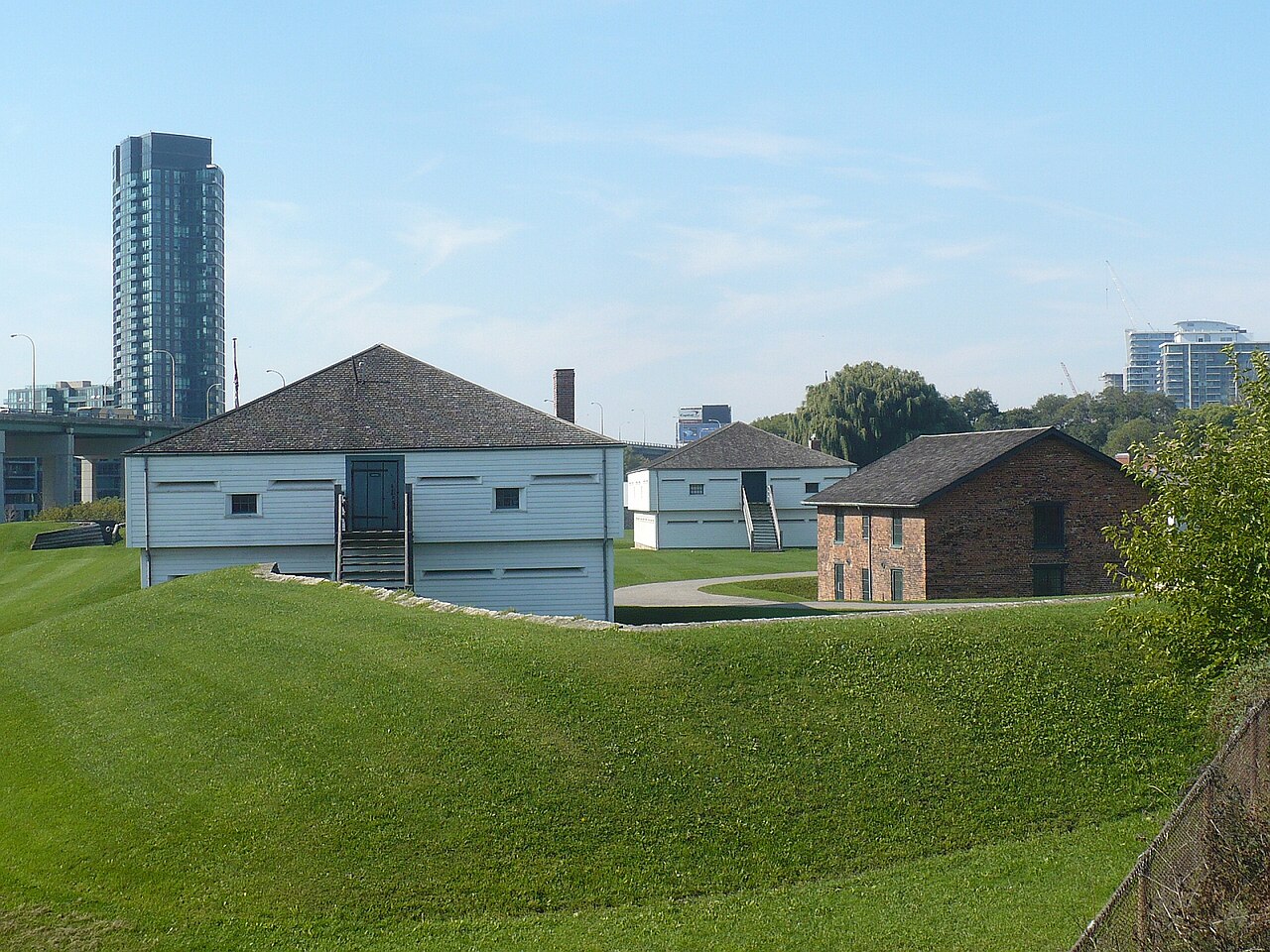
Fort York stands as a significant bastioned fortress located in the Fort York neighbourhood of Toronto, Ontario, Canada. Constructed in the 18th century, it played a crucial role in defending the entrance to Toronto Harbour during the early 19th century. The fort is characterized by its stone-lined earthwork walls and encompasses eight historic buildings, including two prominent blockhouses. Today, Fort York forms the core of the Fort York National Historic Site, a 16.6-hectare (41-acre) area that also includes the Garrison Common, military cemeteries, and a modern visitor centre. Early history and strategic importance The origins of Fort York trace back to 1793 when John Graves Simcoe, the first Lieutenant Governor of Upper Canada, established a garrison to protect the growing settlement that would become Toronto. Rising anglo-american tensions in the late 18th century led to the fort being expanded and officially designated as a British Army post in 1798. This fortification was essential for controlling access to the vital harbour and guarding against potential American incursions during a period of geopolitical uncertainty. The war of 1812 and the battle of york During the War of 1812, Fort York was a focal point of military conflict. In April 1813, American forces launched an attack that resulted in the destruction of the original fort during the Battle of York. The battle was a significant event, involving naval and land forces, and it underscored the vulnerability of the settlement. Following this, reconstruction efforts began later in 1813, rebuilding the fort over the remains of the original structure. The reconstruction was completed by 1815, resulting in a stronger and more defensible fortification. After its rebuilding, Fort York served as a military hospital for the remainder of the war, providing care for wounded soldiers. Despite this, the fort briefly engaged in combat again in August 1814 during an encounter with an American naval vessel, demonstrating its continued strategic importance. Post-war use and military significance Following the War of 1812, Fort York remained an active military site. Although a new fortification, known as New Fort York, was constructed to the west in the 1840s, the original fort continued to be used by both the British Army and the Canadian militia. In 1870, ownership of the property was formally transferred to the Canadian militia, marking a transition in military stewardship. Despite the municipal government assuming ownership in 1909, the fort was sporadically used by the Canadian military up until the end of the Second World War. This prolonged military presence highlights the fort's enduring role in Canada's defence infrastructure over more than a century. Preservation and public heritage site Fort York was designated a National Historic Site of Canada in 1923, recognizing its historical and cultural significance. In 1934, the fort underwent restoration to return it to its early 19th-century configuration, emphasizing its appearance and function during the War of 1812 era. Since then, it has operated as a museum dedicated to the war and to illustrating military life in 19th-century Canada. The site offers visitors a comprehensive experience with access to the preserved earthwork walls, original blockhouses, and other historic buildings. The visitor centre provides educational exhibits and programming, making Fort York a key destination for those interested in Canadian military history and colonial-era fortifications. Architectural features and layout Fort York's design reflects the bastioned fortress style typical of the post-Renaissance military architecture, incorporating angled bastions for defensive coverage and earthwork walls reinforced with stone. The fort's layout includes multiple buildings serving various military functions, such as barracks, officers' quarters, and storage facilities. The two blockhouses are notable for their robust timber construction and strategic placement, providing elevated firing positions and observation points. The fort's fortifications were designed to withstand artillery fire and provide overlapping fields of fire to repel attackers, demonstrating advanced military engineering for the period. The surrounding Garrison Common historically served as a parade ground and training area for troops stationed at the fort. Cultural impact and modern role Beyond its military significance, Fort York holds cultural importance as a symbol of early Canadian resilience and colonial history. The site hosts numerous public events, reenactments, and educational programs that engage the community and visitors alike. It also serves as a reminder of the complex history between British, Canadian, and American forces in the early 19th century. Today, Fort York is managed as a heritage site that balances preservation with public accessibility, offering insights into military architecture, historical conflicts, and the evolution of Toronto from a frontier settlement to a major urban centre.

Post-Renaissance (17th–18th c.)
Details
128.5 km
Fort Rouillé — Canada castle

Fort Rouillé

Toronto, Canada

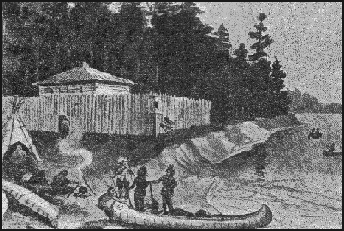
Fort Rouillé was a French bastioned fortress and trading post established in 1751 in what is now Toronto, Ontario, Canada. It was built to expand French influence and trade networks with the indigenous peoples of the region during the post-Renaissance period. The fort was named after Antoine Louis Rouillé, the Secretary of State for the Navy under King Louis XV, reflecting its strategic importance to French colonial ambitions in North America. Historical context and construction The establishment of Fort Rouillé followed the success of a smaller trading post called Fort Toronto, constructed in 1750 by the French to facilitate fur trade and solidify alliances with local indigenous groups. Recognizing the need for a more fortified presence to protect French interests against British expansion and indigenous alliances, the French authorities commissioned the construction of Fort Rouillé on the shores of Lake Ontario. The fort was designed as a bastioned fortress, a style common in European military architecture of the 17th and 18th centuries. This design incorporated angled bastions at the corners of the fort's walls, allowing defenders to cover all approaches with overlapping fields of fire. The fort's layout included defensive walls, bastions, a central courtyard, storage facilities for trade goods, barracks for soldiers, and a trading house. Architectural features and layout Fort Rouillé's bastioned design was adapted to the site's geography near the lake, providing strategic control over the waterfront and trade routes. The fort's walls were constructed from timber and earthworks, materials readily available in the region, reinforced to withstand attacks and the harsh Canadian climate. The bastions projected outward from the main walls, enabling defenders to fire along the walls and prevent attackers from approaching unseen. Inside the fort, the courtyard served as a hub for trading activities and military operations. The fort included storage buildings for furs and trade goods, soldiers' quarters, and facilities for the French garrison stationed there. Role during the French and Indian War Fort Rouillé played a significant role during the French and Indian War (1754–1763), part of the larger Seven Years' War between France and Britain. The fort served as a strategic trading post and military outpost, helping the French maintain alliances with indigenous nations and control over the western approaches to the Great Lakes. However, following the French defeat at Fort Niagara in July 1759, the French garrison at Fort Rouillé evacuated and deliberately destroyed the fort to prevent its capture by advancing British forces. This scorched earth tactic was common in the conflict to deny resources to the enemy. Legacy and archaeological significance After the war, the remains of Fort Rouillé were dismantled, and the site underwent significant changes during the 19th and 20th centuries as Toronto developed. Today, the original fort no longer stands, but its location is preserved within Exhibition Place, a public park and event venue. An obelisk monument marks the site, and the outline of the fort is delineated in concrete on the ground, providing visitors with a tangible connection to this important chapter of Canadian and French colonial history. Archaeological investigations have helped uncover details about the fort's layout and construction, contributing to the understanding of French military architecture and colonial trade practices in North America. Visiting Fort Rouillé today Visitors to the site can explore the monument and interpretive displays that explain the fort's historical significance. The location within Exhibition Place makes it accessible for those interested in early Canadian history, French colonial endeavors, and military architecture. While no original structures remain, the site offers educational opportunities about the French presence in the Great Lakes region and the complex interactions between European powers and indigenous peoples during the 18th century.

Post-Renaissance (17th–18th c.)
Details