Casa Loma
Casa Loma stands as a remarkable testament to early 20th-century wealth and ambition in the heart of Toronto, Ontario. This 98-room Gothic Revival castle was commissioned by Sir Henry Mill Pellatt, a prominent Canadian soldier, financier, and entrepreneur who amassed a vast fortune through his pioneering work in bringing electricity to Toronto and beyond. Pellatt’s vision was inspired by his youthful travels across Europe, where he developed a fascination with grand castles and châteaux, ultimately leading him to create a personal residence that would rival the great estates of the old world.
The vision and construction of casa loma
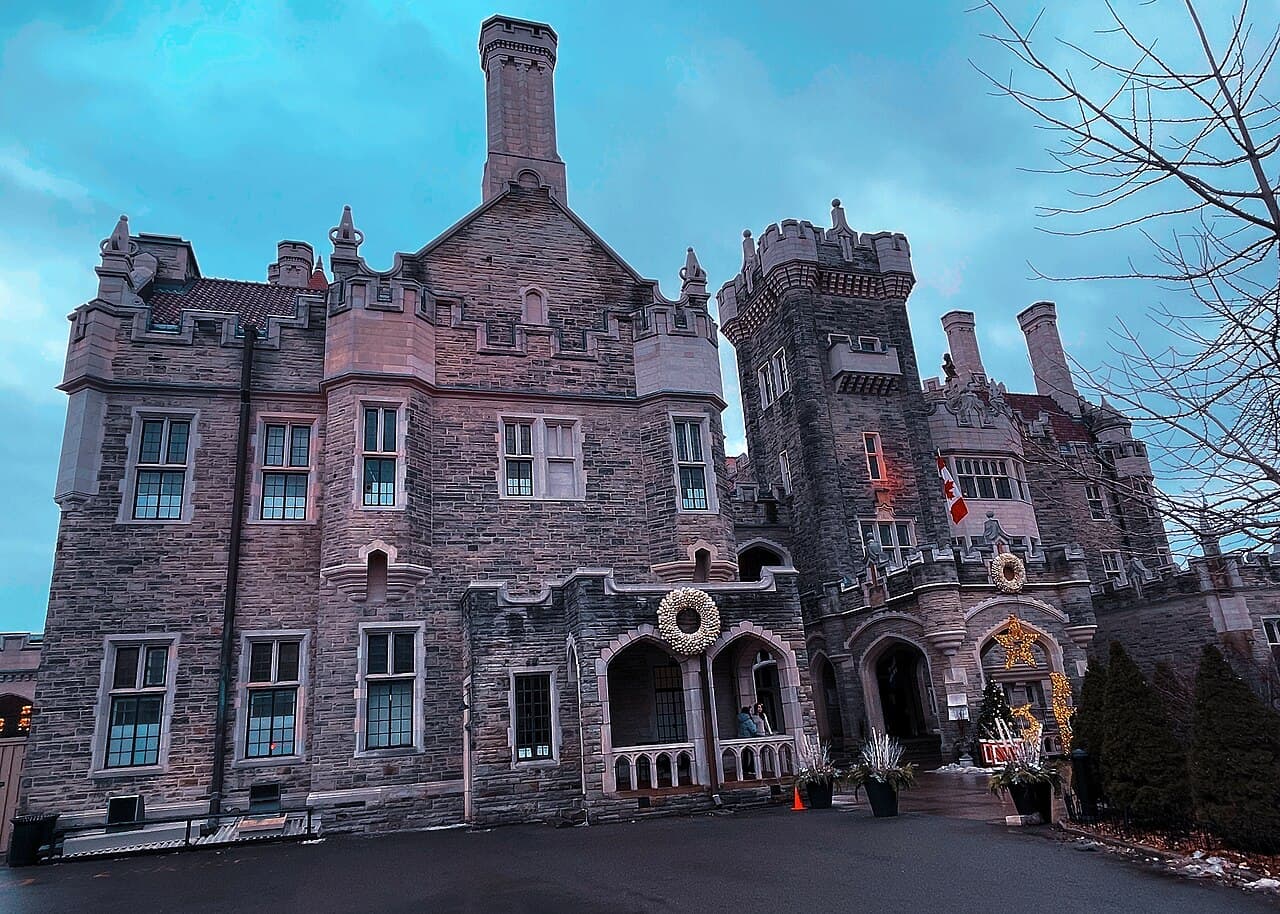
Construction of Casa Loma began in 1911 and was an immense undertaking, involving nearly 2 million man-hours and costing around $3.5 million at the time—equivalent to hundreds of millions in today’s currency. The castle was designed in the Gothic Revival architectural style, characterized by its imposing towers, battlements, and intricate stonework that evoke medieval European fortresses. The château features extensive courtyards, secret passages, stables, and lavish interiors spread over multiple floors, making it one of the most elaborate private residences ever built in Canada.
Pellatt spared no expense in outfitting the castle, employing a staff of 40 live-in servants at a cost of $50,000 annually, and commissioning extravagant details such as naming his horses with 18-carat gold lettering. The castle’s design incorporated modern conveniences of the era, including an elevator, central vacuum system, and an advanced heating system, blending luxury with technological innovation.
Historical context and pellatt’s rise and fall
Sir Henry Pellatt’s wealth originated largely from founding the Toronto Electric Light Company in 1883, which was instrumental in electrifying Toronto’s streetlights and expanding power generation to the Niagara Falls area. Over the years, Pellatt consolidated his influence as chairman of 21 companies and owner of railroads, becoming a dominant figure in Canadian industry. His monopoly lasted until 1911, the same year construction of Casa Loma commenced.
However, Pellatt’s fortunes declined rapidly after World War I. By 1920, the Canadian electricity market underwent public ownership reforms, effectively ending Pellatt’s control and income from his primary business. Coupled with the economic downturn following the war, Pellatt found himself deeply in debt, owing over a million dollars to the Home Bank of Canada. He was forced to sell off assets at a fraction of their value, marking a swift fall from grace.
Architectural features and unique elements
Casa Loma is renowned for its Gothic Revival style, which includes distinctive features such as battlements, turrets, and a grand central tower that dominates the Toronto skyline. The castle’s stone facade is complemented by ornate woodwork and stained glass windows that add to its medieval ambiance.
The interior boasts a variety of lavish rooms including a grand dining hall, a library with secret doors, a conservatory, and a ballroom. The castle also contains underground tunnels and a network of secret passages, which were used for discreet movement throughout the estate. The stables and carriage house reflect Pellatt’s passion for horses and are integral parts of the estate’s design.
Cultural significance and modern legacy
Today, Casa Loma serves as a museum and popular tourist attraction, preserving the legacy of Sir Henry Pellatt’s ambitious vision. It is one of Toronto’s most iconic landmarks, celebrated for its architectural grandeur and historical importance. The castle hosts numerous cultural events, weddings, and film productions, contributing to Toronto’s cultural landscape.
Casa Loma’s story is a vivid illustration of the opulence and risks of early 20th-century industrial wealth in Canada, embodying both the heights of ambition and the fragility of fortune. Its preservation allows visitors to experience a unique blend of history, architecture, and personal drama in the heart of a modern metropolis.
Frequently asked questions (FAQ)
- How do I get to A Ostentatious Castle in the Middle of Toronto?
- A Ostentatious Castle is conveniently located in the heart of Toronto, easily accessible by public transit, car, or on foot. If you're using public transit, the nearest subway station is just a short walk away. There are also several parking options nearby for those driving.
- What is the historical significance of A Ostentatious Castle?
- A Ostentatious Castle is a remarkable example of early 20th-century architecture and has played a significant role in Toronto's cultural history. Built as a private residence, it has hosted numerous high-profile events and has been a focal point for community gatherings. Its unique design and rich history make it a must-visit for those interested in Toronto's past.
- When was A Ostentatious Castle constructed?
- Construction of A Ostentatious Castle began in 1912 and was completed in 1916. The castle was designed to reflect the grandeur of European castles while incorporating local materials and craftsmanship. Its impressive architecture has captivated visitors for over a century.
- Can I take a guided tour of A Ostentatious Castle?
- Yes, guided tours of A Ostentatious Castle are available and highly recommended for a deeper understanding of its history and architecture. Tours typically last about an hour and provide insight into the castle's unique features, its historical significance, and the stories of those who lived there. Advanced booking is advisable during peak tourist seasons.
- Why is A Ostentatious Castle a popular tourist attraction?
- A Ostentatious Castle is popular due to its stunning architecture, rich history, and beautiful gardens. Visitors are drawn to its unique blend of cultural heritage and modern accessibility. The castle also hosts various events and exhibitions throughout the year, making it a vibrant part of Toronto's cultural scene.
- Is it possible to host events at A Ostentatious Castle?
- Yes, A Ostentatious Castle offers event spaces for weddings, corporate events, and private parties. The castle's breathtaking architecture and picturesque surroundings provide a memorable backdrop for any occasion. Interested parties should contact the castle administration for availability and booking details.
- What are the opening hours for A Ostentatious Castle?
- A Ostentatious Castle is open to visitors daily from 10 AM to 5 PM. During peak tourist seasons, extended hours may be available. It is advisable to check the official website for any holiday hours or special event closings.
- What are the ticket prices for visiting A Ostentatious Castle?
- Ticket prices for A Ostentatious Castle vary based on age and group size, with discounts available for children, seniors, and students. Generally, adult tickets are priced at approximately $15, while children under 12 may enter for free. Special rates are often offered for group bookings and special events.
- When is the best time to visit A Ostentatious Castle?
- The best time to visit A Ostentatious Castle is during the spring and fall when the weather is mild, and the gardens are in full bloom. Additionally, visiting during weekdays tends to be less crowded, allowing for a more relaxed experience. Special seasonal events are also held throughout the year, providing unique opportunities for visitors.
- Is A Ostentatious Castle accessible for individuals with disabilities?
- Yes, A Ostentatious Castle is committed to providing accessibility for all visitors. The castle features ramps and elevators to ensure that everyone can enjoy its beautiful spaces. For specific accessibility inquiries or assistance, visitors are encouraged to contact the castle prior to their visit.
Photo gallery

Information
Website
Visit websiteSources & official resources
Verify the information above using these authoritative references.
Loading map...
Visitor reviews
No reviews yet. Been here? Write the first review and help other travelers!
Write the first reviewVisited this castle? Share your experience
Your review helps other travelers and adds first-hand knowledge to our encyclopedia.