Tervete Hill Fort
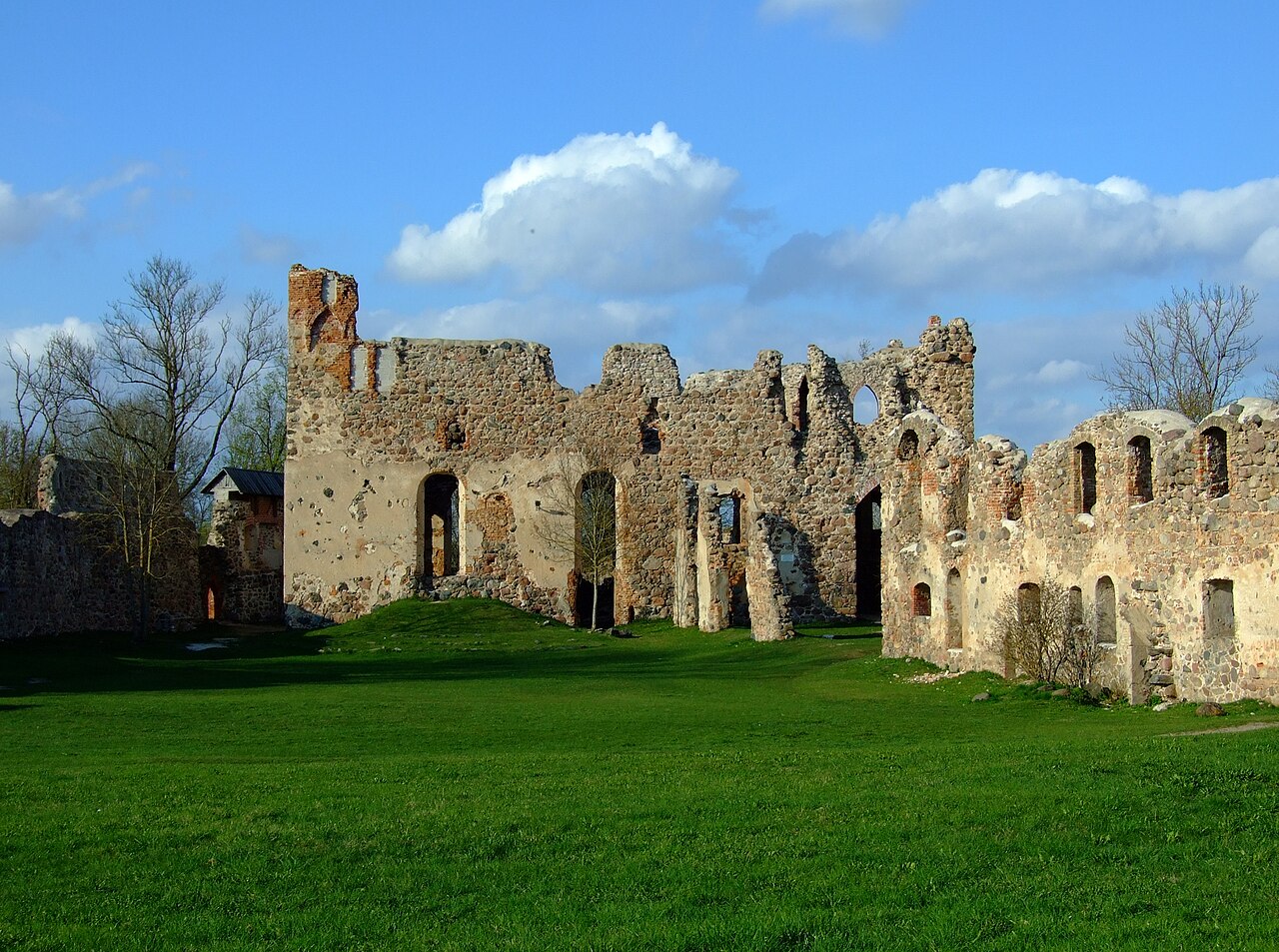
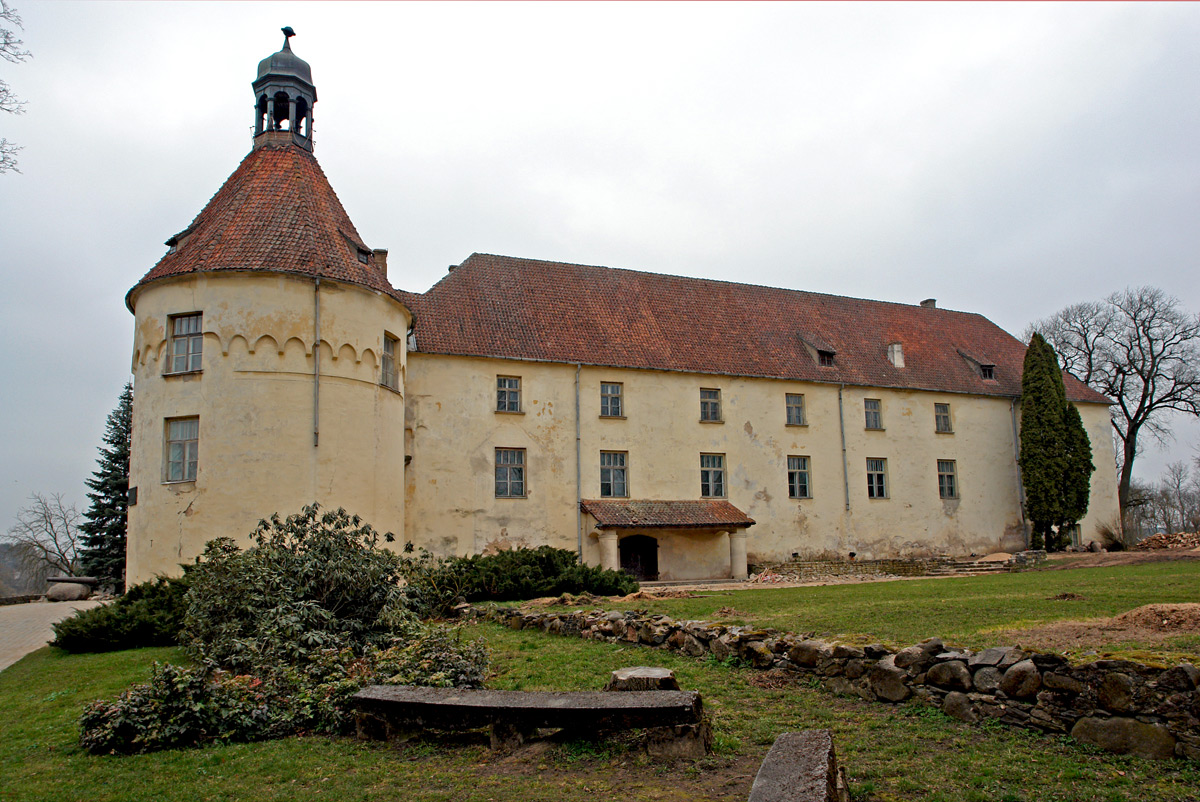
Tervete Hill Fort is a significant medieval archaeological site located in Tērvete, Latvia. Known primarily as a fortified settlement of the Semigallian kings during the High Medieval period, this hillfort played a crucial role in the defense and administration of the Western Zemgale region. The fort's strategic position on a hill overlooking the Tērvete River provided natural defenses that were enhanced by man-made fortifications, making it a formidable stronghold in the region.
Historical significance and legendary associations
The hillfort is famously linked to the legendary Semigallian king Namejs, who is celebrated in Latvian folklore. According to popular legend, King Namejs created a distinctive ring, known as the Namejs ring, as a symbol of identity and unity for his family and people. This ring was designed to help his followers recognize each other, especially during times of conflict. The legend recounts that enemies sought to capture the ring to kill the king and claim victory in war, prompting villagers to also craft these rings as a protective measure. Today, the Namejs ring remains a potent cultural symbol among Latvians, particularly those living abroad, representing heritage and national pride.
Construction and architectural features
The original fortifications at Tervete date back to the 11th century, marking the site as an early medieval stronghold. The hillfort consisted of earthen ramparts and wooden palisades, typical of Baltic tribal fortifications of the time. These defensive structures were strategically placed to utilize the natural topography of the hill, with steep slopes providing additional protection. The settlement likely included wooden buildings within the enclosure, serving as residences, storage, and places of assembly for the Semigallian elite and warriors.
Fortifications and layout
The hillfort's layout was designed to maximize defense, with a series of ramparts and ditches encircling the summit. Excavations have revealed traces of wooden structures and fortification walls, indicating a complex defensive system. The fort's position on the right bank of the Tērvete River allowed control over the surrounding landscape and trade routes, enhancing its strategic importance.
Destruction and subsequent developments
In 1287, the original Semigallian castle was destroyed by the Livonian Order, a military order that played a dominant role in the Baltic crusades and the Christianization of the region. Following this destruction, the Livonian Order constructed a wooden castle known as Hof zum Berg Kalnamuiža near the original hillfort site in 1335. This castle served as a military and administrative center for the Order but was later destroyed by Lithuanian forces in 1445.
Archaeological research and excavations
The historical importance of Tervete Hill Fort was recognized in the early 19th century when K.F. Watson identified the site in 1819 as the legendary Tervete castle mentioned in medieval chronicles. Subsequent archaeological work has been essential in uncovering the fort's past. The first significant excavations were carried out by August Bielenstein between 1866 and 1892, who documented the fort's earthworks and artifacts.
Further excavations were conducted by the Latvian Museum of History under the leadership of E. Brīvkalne in the 1950s, specifically from 1952-53 and 1954-59. These investigations revealed additional details about the fort's construction phases, habitation layers, and material culture, including weaponry, pottery, and everyday objects. The archaeological findings have provided valuable insights into the Semigallian way of life and their resistance against the crusading orders.
Cultural legacy and modern significance
Tervete Hill Fort remains a symbol of Latvian medieval heritage and the resilience of the Semigallian people. The site is an important cultural landmark and attracts visitors interested in Baltic history and archaeology. The enduring legend of King Namejs and his ring continues to inspire Latvian identity and is often featured in cultural events and exhibitions.
Today, the hillfort is preserved as an archaeological site, with visible earthworks and interpretative signage for visitors. It offers a tangible connection to Latvia's medieval past and the complex interactions between indigenous Baltic tribes and the crusading orders that shaped the region's history.
Frequently asked questions (FAQ)
- What is the historical importance of Tervete Hill Fort?
- Tervete Hill Fort was a major defensive stronghold for the Semigallian kings in medieval Latvia, playing a key role in regional power struggles during the High Medieval period.
- When was Tervete Hill Fort built and by whom?
- The hillfort was originally constructed in the 11th century by the Semigallian tribes as a fortified settlement and center of power.
- Can visitors explore archaeological remains at Tervete Hill Fort?
- Yes, the site is preserved as an archaeological site with visible earthworks and informational displays, allowing visitors to learn about its medieval history.
- What is the significance of the Namejs ring associated with Tervete?
- The Namejs ring symbolizes unity and identity among the Semigallian people, created by King Namejs to help his followers recognize each other during conflicts. It remains a cultural symbol for Latvians today.
- Who conducted the archaeological excavations at Tervete Hill Fort?
- Notable excavations were carried out by August Bielenstein in the late 19th century and later by the Latvian Museum of History led by E. Brīvkalne in the 1950s.
Information
Current owner
Latvian Museum of History
Loading map...
Visitor reviews
No reviews yet. Been here? Write the first review and help other travelers!
Write the first reviewVisited this castle? Share your experience
Your review helps other travelers and adds first-hand knowledge to our encyclopedia.