Jaunpils
Jaunpils Castle stands as a remarkable example of a late medieval hill castle in Latvia, embodying centuries of history from its origins as a military fortress to its evolution into a noble manor house. Located in the municipality of Jaunpils, this castle reflects the architectural and historical developments typical of the Baltic region's medieval and early modern periods.
The castle's exact founding date remains uncertain. While some sources claim it was built in 1301 by Gottfried von Roga, the Master of the German branch of the Livonian Order, this is unlikely given the Order's focus on conflicts with Riga at that time. More reliably, the first documented mention of Jaunpils Castle dates to 1411. The strategic impetus for its construction likely arose in the mid-14th century following the destruction of nearby castles by Lithuanian forces, prompting the Livonian Order to fortify their border with a more defensible site further from the frontier.
Medieval origins and defensive architecture
Jaunpils Castle was originally constructed on a peninsula surrounded by a mill pond, which was further isolated by a man-made moat, creating a natural defensive barrier. The castle's layout was compact, enclosed by a single curtain wall built of fieldstones up to two meters thick. Two main residential wings were attached to the southeastern and southwestern sections of the wall, connected externally by a wooden gallery that facilitated movement between buildings without exposure to the elements.
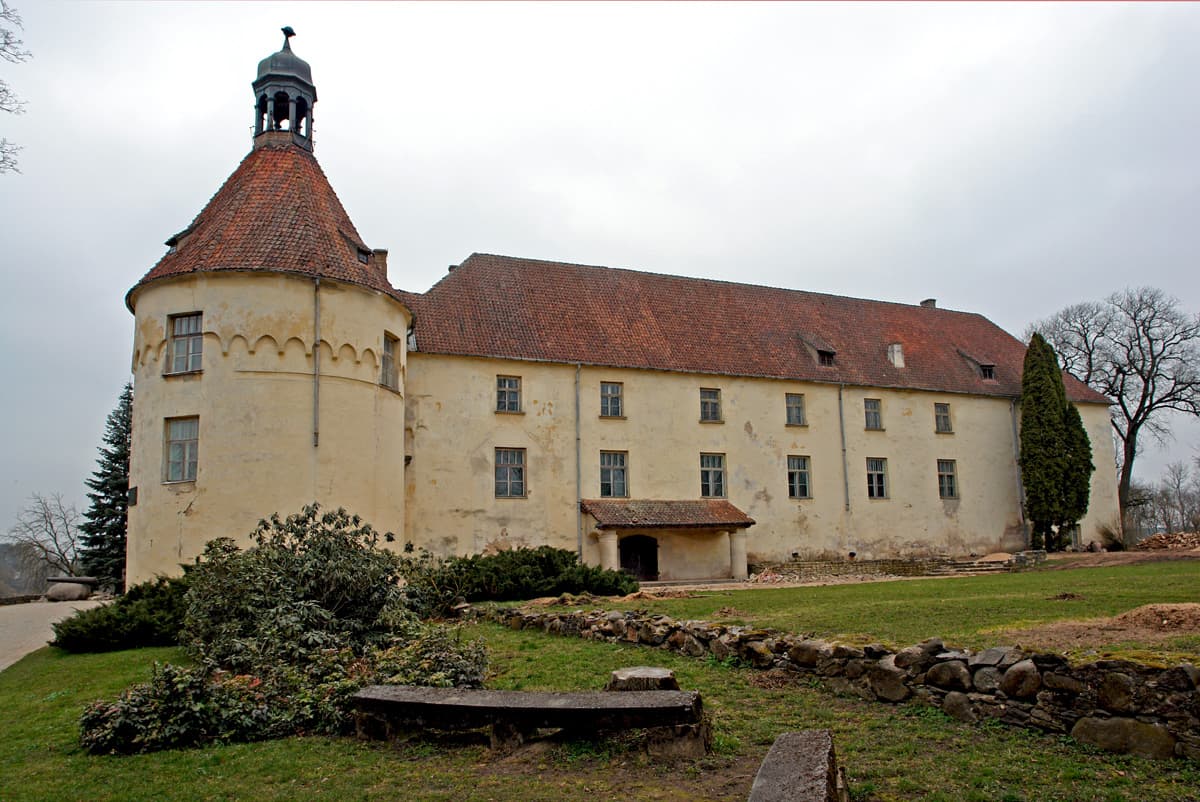
The western entrance was fortified with a drawbridge and a gate passage located in the southwestern wing, emphasizing the castle's defensive function. In the 15th century, a significant architectural enhancement was the construction of a large cylindrical tower on the southeastern corner. Measuring approximately 11.5 meters in diameter, this tower was specifically designed to accommodate the use of firearms, reflecting the evolving nature of military technology and castle defense during this period.
As a fortress of the Livonian Order, Jaunpils served as a subsidiary stronghold to the commander at Dobele Castle. By the mid-16th century, its role shifted from frontline defense to a refuge for elderly and ill members of the Order, indicating a gradual decline in its military importance.
Transition to noble residence and the von der Recke family
Following the secularization of the Livonian Order's territories in 1561, Jaunpils Castle became part of the Duchy of Courland and Semigallia. In 1576, it was granted to Thiess von der Recke, the last commander of Dobele Castle, under an agreement with Duke Gotthard Kettler. The von der Recke family maintained ownership of the castle until 1920.
Under the von der Recke family, the castle underwent significant modifications. The most notable was the addition of a third floor in the late 17th century, transforming the fortress into a comfortable manor house. The defensive walls were softened by the introduction of architectural features such as stone cloisters replacing earlier wooden galleries, and the gatehouse was enhanced with a small tower. These changes reflected the shift from military to residential and representational functions.
The von der Recke family played an active role in regional history, notably participating in the wars between the Polish-Lithuanian Commonwealth and Sweden. Matthias von der Recke distinguished himself at the Battle of Kircholm in 1605, where he captured the Swedish king's helmet and sword, trophies that were kept at Jaunpils Castle for many years.
Destruction, restoration, and 20th-century transformations
In 1625, during the Polish-Swedish wars, Swedish forces occupied Jaunpils Castle and deliberately destroyed it in retaliation for the imprisonment of Swedish prisoners. The castle was rebuilt in 1647, but subsequent renovations gradually transformed it into a manor residence with less emphasis on fortification.
The castle suffered a major setback during the Russian Revolution of 1905, when it was set on fire and extensively damaged. Reconstruction began promptly in 1906 under the direction of architect Wilhelm Bockslaff, who introduced neo-Baroque interior elements and modified the exterior. However, some historic features, such as the external kitchen wing, were removed during this process.
In the 20th century, the castle's function evolved multiple times. After Latvian independence and agrarian reforms in the 1920s, it was repurposed as an agricultural experimental station. During World War II, it served as a military hospital, and in the Soviet era, it housed the State Stallion Farm and later a cultural center. The interiors were remodeled with typical 1960s Soviet design elements, which remain visible today.
Since Latvia regained independence in 1991, Jaunpils Castle has been owned by the local municipality. It now functions as a museum, cultural venue, and hotel, combining heritage preservation with public use. A severe storm in 2023 caused damage to the roof and facade, but restoration work was completed in 2024 to maintain the castle's condition.
Architectural features and preservation
Jaunpils Castle's structure is an irregular quadrangle approximately 41 by 30 meters, constructed primarily from fieldstones with brick used in upper wall sections. The original water defenses, including the moat and mill pond, have been partially filled in but remain integral to the site's historic character.
The 15th-century cylindrical tower remains the best-preserved medieval element, exemplifying the adaptation of castle architecture to the introduction of gunpowder weaponry. Other medieval features include thick defensive walls and the gatehouse, although many have been altered by later renovations.
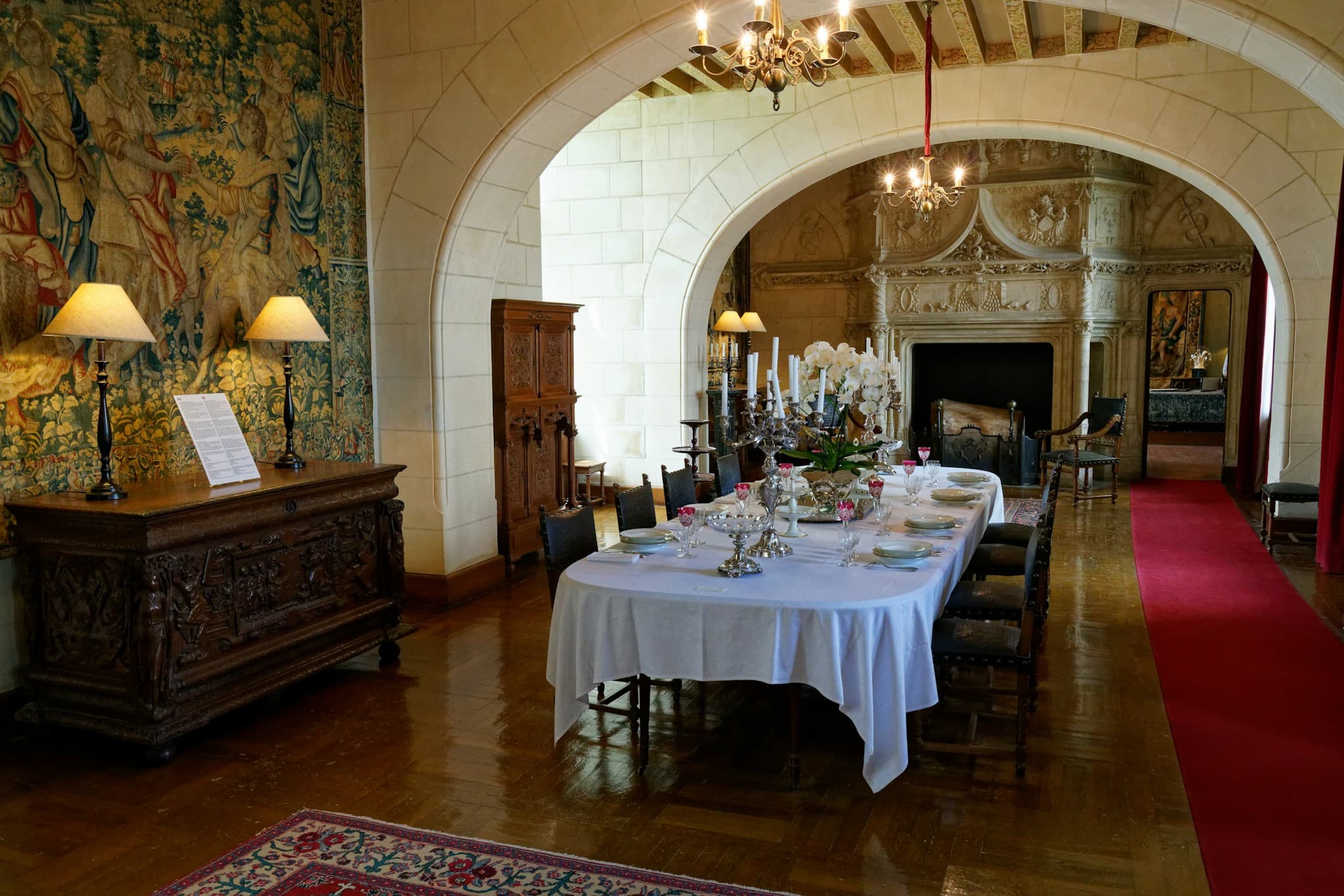
Later additions such as stone cloisters and the third-floor extension reflect the castle's transition to a noble residence. Interior decorations from the early 20th century and Soviet-era refurbishments provide a layered historical narrative visible within the castle today.
Despite the damage and modifications over centuries, Jaunpils Castle is considered one of the best-preserved examples of a Kurland fortress. It offers valuable insights into the architectural evolution from a medieval stronghold to a modern manor house, embodying the complex history of the Baltic region.
Cultural significance and visitor experience
Today, Jaunpils Castle is a cultural landmark and a popular destination for visitors interested in medieval and Baltic history. The castle's museum exhibits artifacts and historical information about the Livonian Order, the von der Recke family, and the castle's role through various historical periods.
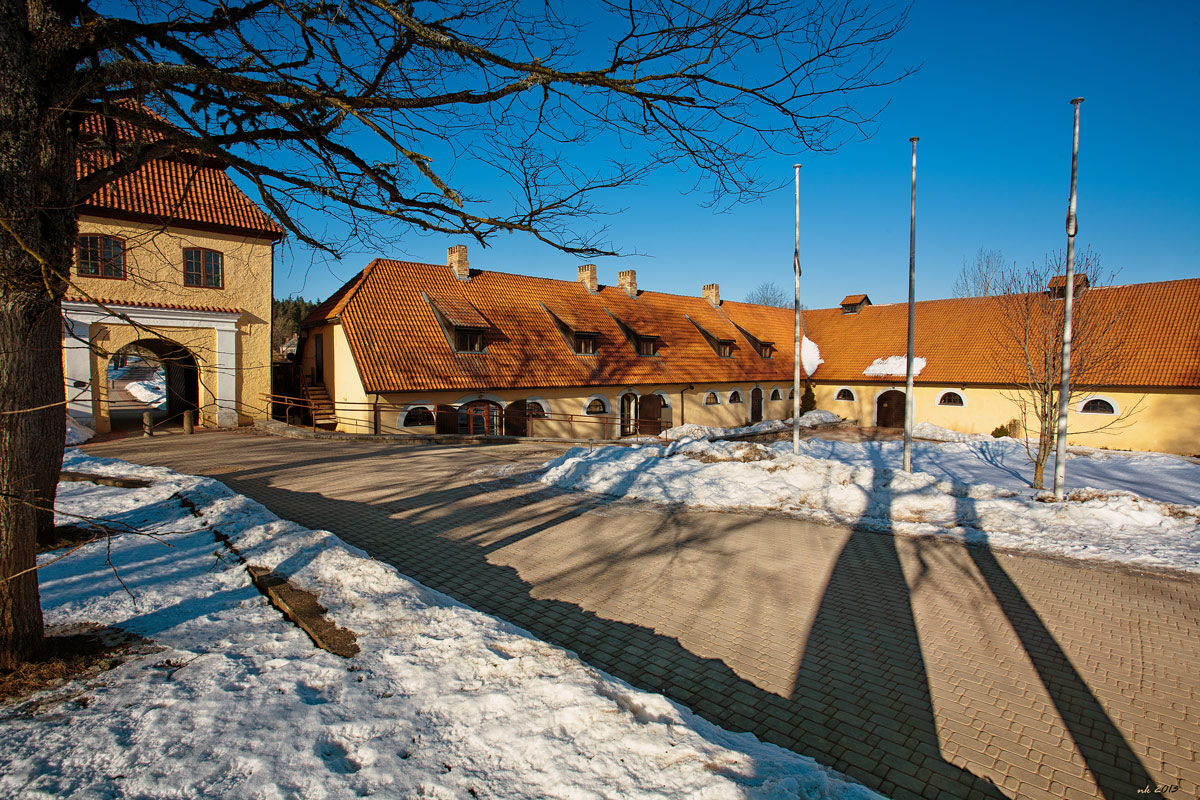
The site includes a hotel and banquet facilities, allowing guests to experience the ambiance of a historic manor. The castle's setting amidst natural water features and its well-preserved architecture create a unique atmosphere that combines history, culture, and hospitality.
Visitors can explore the castle's courtyard, the imposing round tower, and the various reconstructed interiors that showcase the layers of architectural styles and historical adaptations. The castle also hosts cultural events, enhancing its role as a vibrant community center.
Frequently asked questions (FAQ)
- When was Jaunpils Castle originally built?
- Jaunpils Castle was likely constructed in the 15th century, with the first documented mention in 1411, despite some sources citing 1301.
- What architectural styles are present in Jaunpils Castle?
- The castle features a mix of medieval defensive architecture and later modifications, including neo-Baroque interiors from the early 20th century and Soviet-era refurbishments.
- Can visitors explore the medieval tower at Jaunpils Castle?
- Yes, the well-preserved 15th-century cylindrical tower is a highlight of the castle and accessible to visitors as part of the historical experience.
- What happened to Jaunpils Castle during the 1905 revolution?
- The castle was set on fire and heavily damaged during the 1905 Russian Revolution but was rebuilt shortly afterward under architect Wilhelm Bockslaff.
- Is Jaunpils Castle open to the public today?
- Yes, the castle operates as a museum, cultural center, and hotel, welcoming visitors interested in its history and architecture.
- How did the von der Recke family influence Jaunpils Castle?
- The von der Recke family owned the castle from the late 16th century until 1920, transforming it from a fortress into a noble residence and playing a significant role in regional history.
Photo gallery

Information
Featured in
Articles on the Castlopedia blog that feature Jaunpils.
Sources & official resources
Verify the information above using these authoritative references.
Loading map...
Visitor reviews
No reviews yet. Been here? Write the first review and help other travelers!
Write the first reviewVisited this castle? Share your experience
Your review helps other travelers and adds first-hand knowledge to our encyclopedia.