Dobele
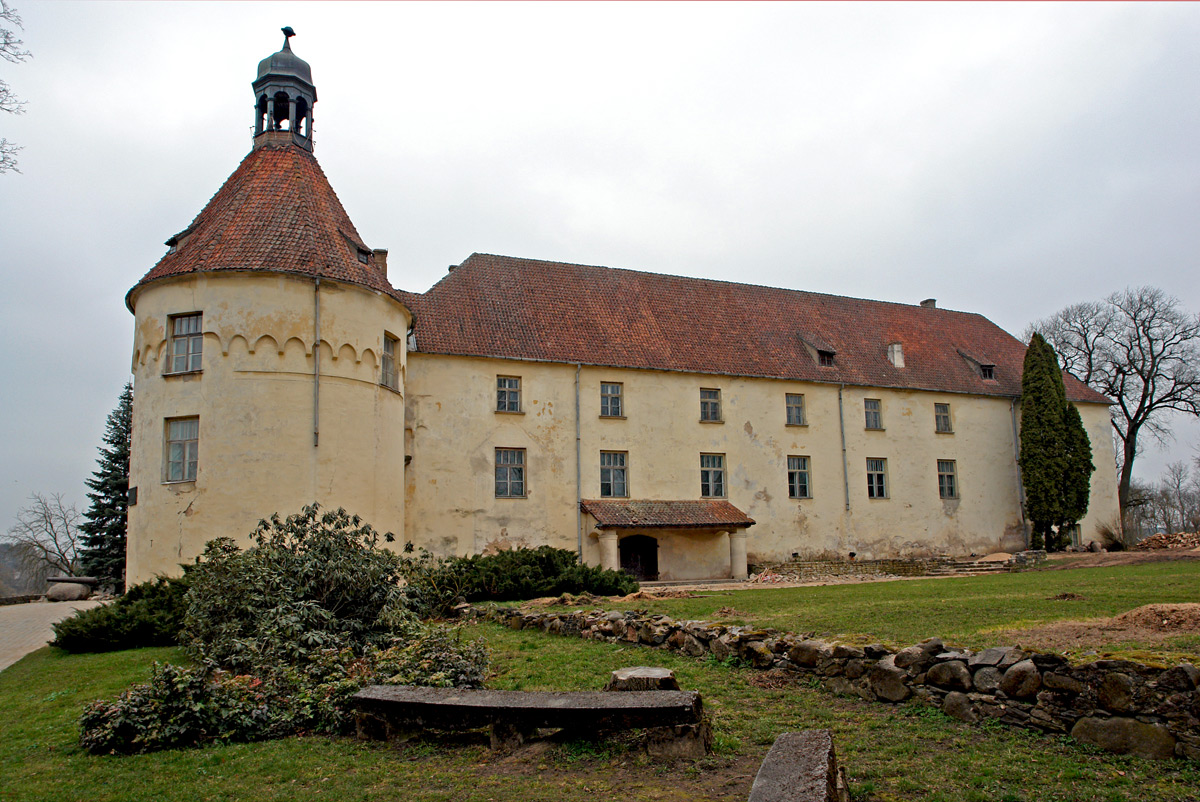
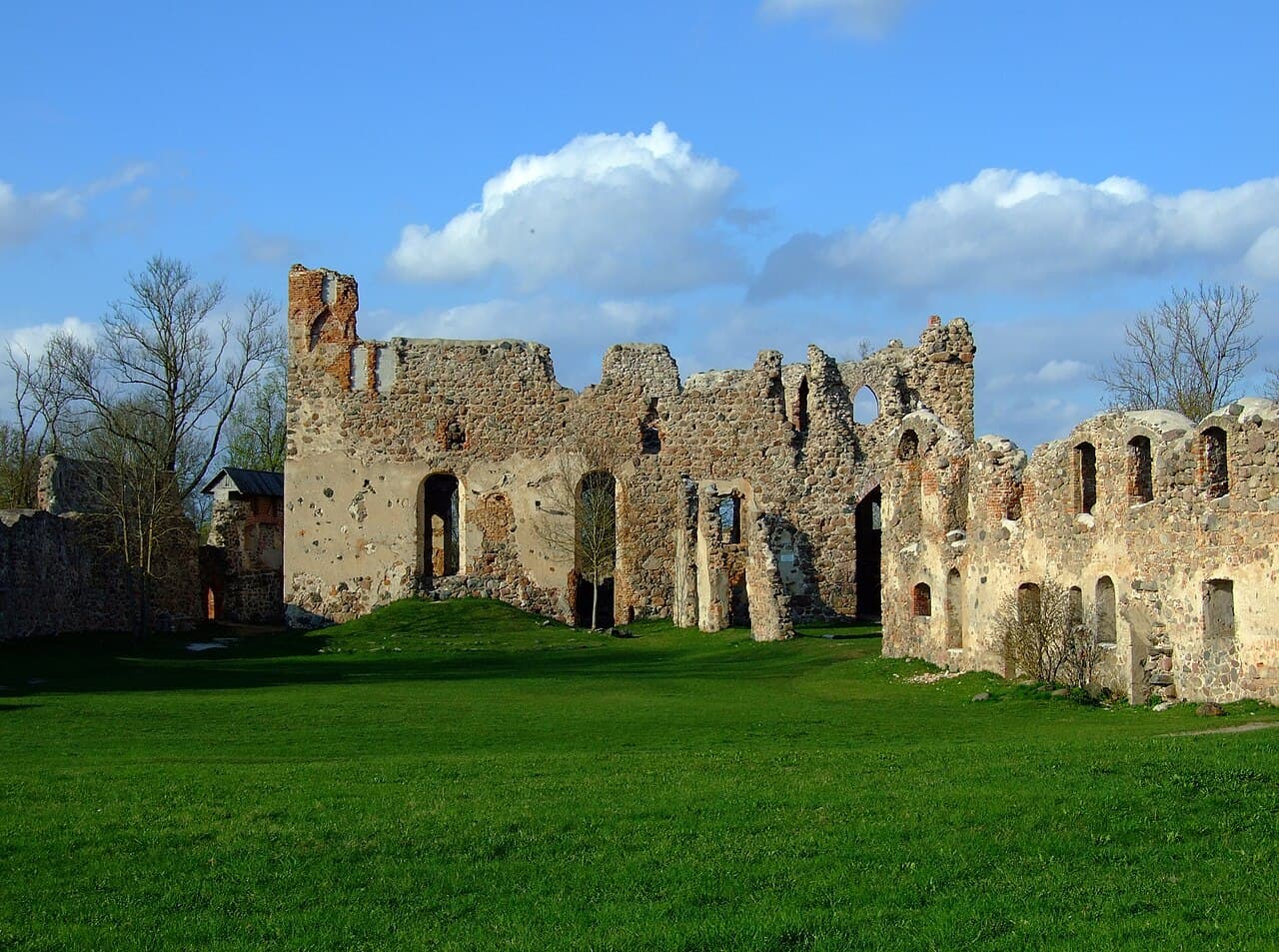
Dobele Castle is a significant medieval fortress located in Dobele, Latvia, perched on a strategic hill overlooking the Bērze River. This site has a rich history dating back over a millennium, beginning as a wooden fortification of the Baltic Semgallian tribe before evolving into a stone castle under the Livonian Order in the 14th century. The castle's ruins today stand as a testament to the turbulent history of the Baltic region during the High Medieval period.
Originally, the location was occupied by a wooden and earth fort constructed by the pagan Semgallians, a Baltic tribe known for their resistance against the Germanic crusaders. This fortification was situated on a hill on the western bank of the Bērze River. Throughout the late 13th century, the site was the focal point of intense military conflicts during the Livonian Crusades. Despite multiple sieges by the Livonian Order's forces between 1279 and 1289, the Semgallians successfully defended their stronghold. However, facing the loss of their lands and overwhelming pressure, the Semgallians ultimately chose to burn their fortress and retreat to Lithuania, leaving the area to the Livonian Order by prior agreement with the Bishop of Riga.
Construction of the stone castle
The exact date when the Livonian Order began replacing the wooden fortifications with stone structures is not precisely documented. However, it is believed that the construction started around 1335, possibly initiated by Master Eberhard von Mongehin, with significant work continuing under Master Goswin von Guerick between 1345 and 1349. The castle was completed before 1376, as records from that year mention Dietrich Holtey, the first commander (komturs) of Dobele.
Dobele Castle's design was influenced by the terrain and the remnants of the earlier fortifications, resulting in an irregular trapezoidal layout. The upper castle occupied the tip of the hill and consisted of four buildings surrounding a small courtyard, measuring approximately 17 by 32 to 37 meters. The most prominent structure was the southern wing, which projected 6 meters eastward beyond the curtain walls. This wing measured about 33.6 by 11 meters, with walls up to 2 meters thick. Its cellars served as storage, while the ground and upper floors were divided into two main rooms. The larger hall, approximately 22 by 7 meters, featured a star vault ceiling and housed a chapel. Notably, the southern wing's corners were adorned with small turrets, a rare feature in castles of the Livonian region.
As a commandery castle, Dobele included essential monastic facilities such as a refectory, dormitory, chapter house, and possibly an infirmary, reflecting its dual military and religious function.
The outer bailey and defensive features
South of the upper castle lay a large outer bailey with an irregular shape extending approximately 145 by 40 to 95 meters, widening towards the south. Along the entire eastern curtain wall of the bailey were economic buildings supporting the castle's operations. The main gate was located in a bend of the western wall and was protected by a distinctive tower that transitioned from a square base to a cylindrical upper section.
The castle was strategically situated on a 15-meter-high hill with natural steep slopes on two sides, enhancing its defensive capabilities. It was surrounded by a deep moat, adding to its fortifications. The irregular plan and mixed defensive features demonstrate adaptation to the pre-existing landscape and fortifications.
Historical significance and later history
Dobele Castle served as the administrative center and military headquarters for the Livonian Order's commandery in the region until 1562. The last commander, Ties von der Recke, resisted the secularization policies of Duke Gotthard Kettler of Courland and Semigallia. In 1566, Kettler seized the castle by force, compelling von der Recke to relinquish his lands in exchange for the castle of Jaunpils.
During the 17th century, Dobele Castle changed hands several times amid the conflicts between Sweden, Poland, and local powers. It was occupied by Swedish forces under King Gustav II Adolf in 1620 and again during subsequent wars. From 1642 to 1649, the castle was the residence of Duchess Elisabeth Magdalena, widow of Duke Friedrich of Courland. Under her patronage, a Renaissance-style residential building was added to the outer bailey along the eastern wall, and a new gate was constructed in the southwestern corner.
The castle suffered repeated damage during the Polish-Swedish wars of the late 17th and early 18th centuries. After the last administrator vacated the castle in 1730, it gradually fell into ruin, with locals scavenging building materials from the site.
Architectural features and archaeological findings
Dobele Castle is classified as a hill castle and exhibits characteristics of a house castle with features reminiscent of tower castles. Its 14th-century construction includes distinctive elements such as brick oriel towers and arcaded friezes, which add decorative value uncommon in the region's fortifications.
Archaeological excavations have uncovered a rich cultural layer beneath the castle chapel's entrance cellar, revealing artifacts from the Semgallian period. These include personal jewelry such as rings, brooches, and pendants, as well as weapons like spearheads and crossbow bolts. Everyday items such as needles, keys, fishing hooks, and fragments of sandstone whetstones provide insight into the daily life of the castle's early inhabitants.
Local legends speak of two subterranean passages extending from the castle, one reportedly running beneath the Bērze River and another toward the nearby Lielberze area. While these tunnels remain part of regional folklore, their existence is mentioned in historical commentary related to the castle.
Current condition and conservation efforts
Today, Dobele Castle stands as a picturesque ruin overlooking the river, with significant portions of the southern wing of the upper castle still visible, including one preserved corner turret. The curtain walls surrounding the outer bailey remain largely intact, along with remnants of the eastern buildings.
Conservation work began in the early 2000s to stabilize the ruins and preserve the site as a cultural monument. The castle chapel underwent restoration and was reopened to visitors in 2021. Reconstruction efforts initiated in 2018 continue to protect the castle's architectural heritage, ensuring that Dobele Castle remains an important historical and tourist attraction in Latvia.
Dobele Castle's enduring legacy as a military stronghold, administrative center, and cultural landmark reflects the complex history of the Baltic region from the medieval era through early modern times. Its ruins offer valuable insights into the architectural styles, defensive strategies, and daily lives of its inhabitants across centuries.
Frequently asked questions (FAQ)
- What is the historical significance of Dobele Castle?
- Dobele Castle, built in the 13th century, is one of the most important medieval fortifications in Latvia. It played a key role in the region's history, serving as a stronghold for the Livonian Order and later as a residence for nobility.
- When was Dobele Castle constructed?
- Dobele Castle was originally constructed in the 13th century, with significant modifications made in the following centuries. The castle's architecture reflects the different styles that emerged during its long history, showcasing both medieval and Renaissance influences.
- Can I visit Dobele Castle?
- Yes, Dobele Castle is open to visitors, allowing them to explore its historical grounds and learn about its past. Guided tours are often available, providing insights into the castle's architecture and the stories of those who once lived there.
- What are the opening hours for Dobele Castle?
- Dobele Castle typically opens to the public from 10 AM to 6 PM, but hours may vary by season. It is advisable to check the official website or contact the castle for the most current information before planning your visit.
- Is it possible to access Dobele Castle with a wheelchair?
- Yes, efforts have been made to ensure that Dobele Castle is accessible to visitors with mobility challenges. Ramps and designated pathways help facilitate easier access to the main areas of the castle.
- When is the best time to visit Dobele Castle?
- The best time to visit Dobele Castle is during the late spring and early autumn months when the weather is mild and the gardens are in full bloom. Special events and reenactments often take place during these seasons, enhancing the visitor experience.
- What are the ticket prices for visiting Dobele Castle?
- Ticket prices for Dobele Castle are generally affordable, with discounts available for students and seniors. It is recommended to check the official site for the latest pricing information and any special offers or group rates.
- Are there any nearby attractions to explore after visiting Dobele Castle?
- Yes, after visiting Dobele Castle, you can explore the charming town of Dobele, which features beautiful parks and local shops. Additionally, the surrounding region offers other historical sites and natural attractions, making it a great area for a full day of exploration.
Photo gallery

Information
Website
Visit websiteSources & official resources
Verify the information above using these authoritative references.
Loading map...
Visitor reviews
No reviews yet. Been here? Write the first review and help other travelers!
Write the first reviewVisited this castle? Share your experience
Your review helps other travelers and adds first-hand knowledge to our encyclopedia.