Termoli Castle
Termoli Castle, also known as the Swabian Castle of Termoli, stands as the most emblematic defensive structure along the entire Molise coast. This fortress is a remarkable example of medieval military architecture, reflecting centuries of strategic importance and architectural evolution.
The castle's origins likely trace back to the Norman era around the 11th century, built on the site of a pre-existing tower from the Lombard period. This early foundation highlights the site's long-standing military significance, serving as a coastal defense point against invasions and pirate raids. The castle was substantially renovated in 1247 under the reign of Frederick II, Holy Roman Emperor and King of Sicily, which is why it is often referred to as the "Svevo" (Swabian) Castle.
Architectural features and layout
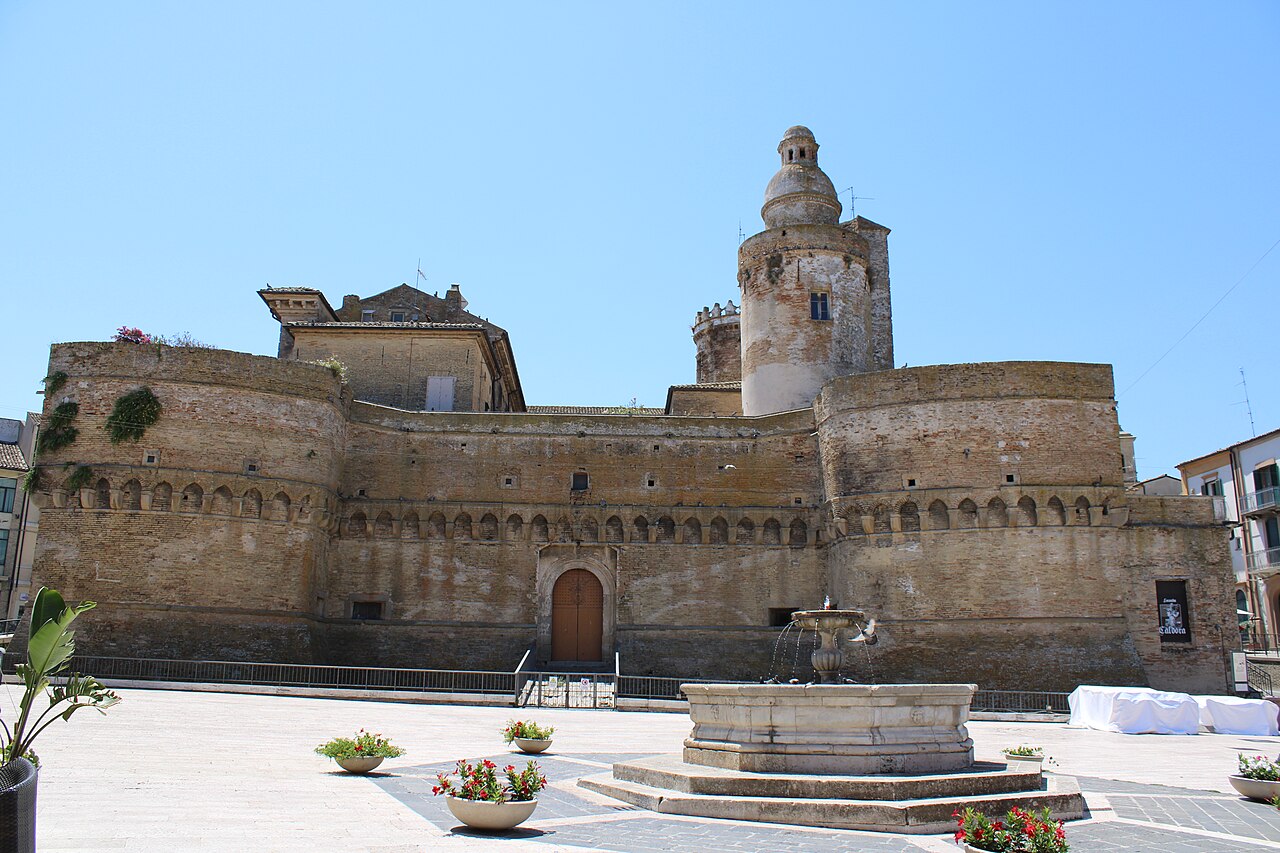
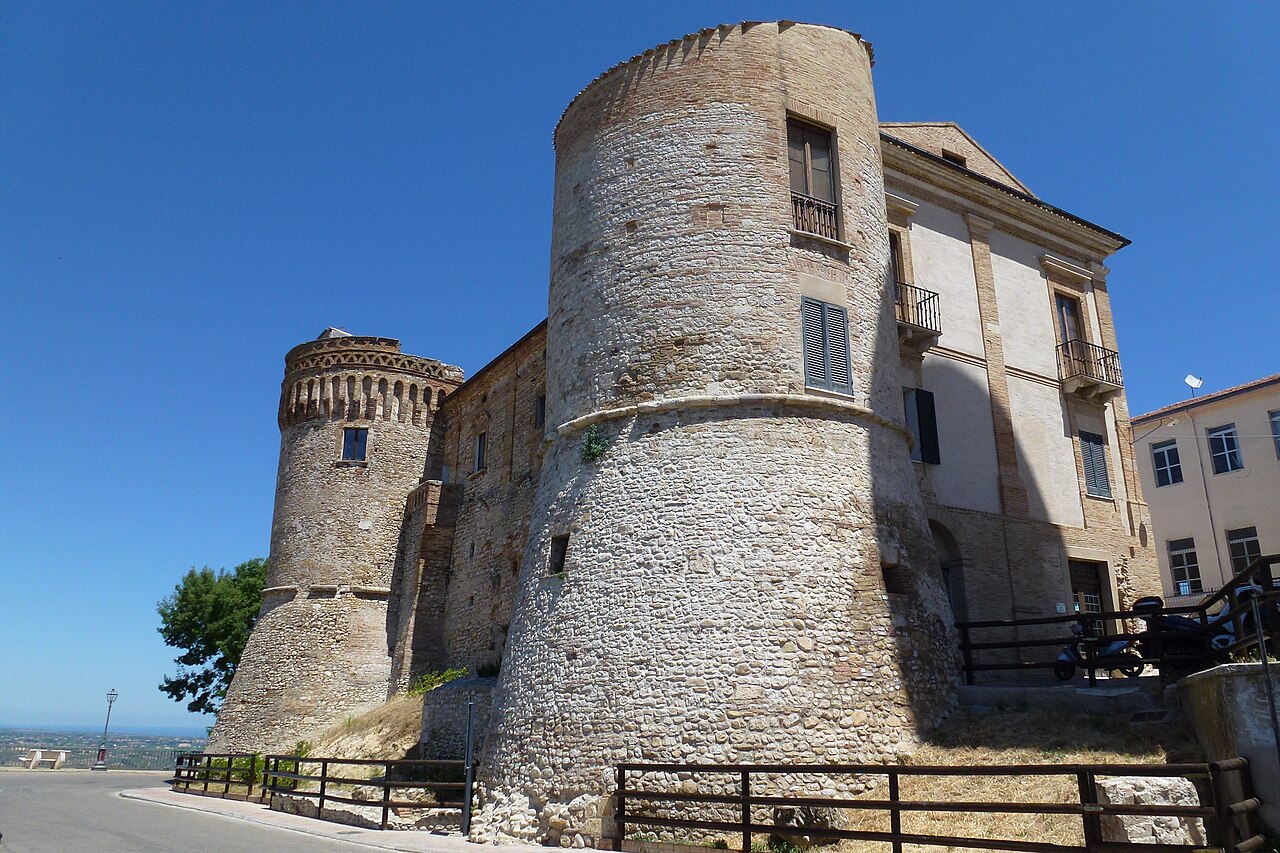
The castle's structure is notable for its two well-preserved buildings shaped like a truncated pyramid. The first and broader building forms the base, featuring cylindrical turrets at each corner that rise directly from the defensive curtain walls. These towers provided vantage points for surveillance and defense, typical of medieval fortifications designed to repel attackers.
Rising from the apex of this base is a parallelepiped tower, which extends vertically, enhancing the castle's defensive capabilities and serving as a lookout. The main gate was historically protected by a drawbridge, a common medieval defensive mechanism that could be raised to prevent enemy entry.
Defensive walls and towers
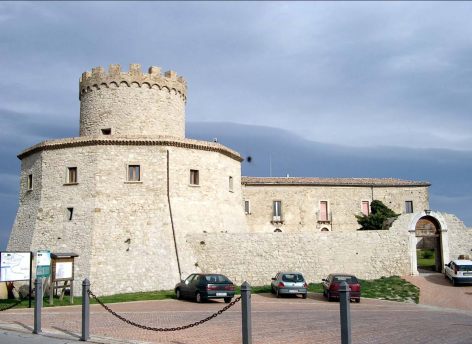
The castle was surrounded by a robust wall into which the cylindrical towers were integrated. Among these, the tower guarding the entrance arch to the old village remains perfectly preserved, serving as a striking reminder of the castle's military function. This wall system formed a critical part of the town's defense, with the castle acting as the central stronghold.
Historical significance and modifications
The earthquake of 1456 inflicted significant damage on Termoli Castle, necessitating extensive reconstruction overseen by Ferdinand I of Aragon. This rebuilding phase incorporated adaptations to new construction techniques and evolving military requirements, reflecting the changing nature of warfare and fortification design in the late medieval period.
Throughout its history, the castle has undergone several transformations, including partial use as a prison during the Bourbon period. Its strategic and civic importance persisted, leading to its designation as a national monument in 1885 and its establishment as a regional historical museum.
Recent restorations and discoveries
Modern restoration efforts have revealed fascinating architectural and military elements previously hidden within the castle's structure. These include traces of hydraulic systems and service galleries, which underscore the castle's role as a sophisticated defensive hub. Such discoveries highlight the ingenuity and complexity of medieval military engineering employed at Termoli.
Current use and cultural heritage
Today, parts of Termoli Castle serve as a Municipal Art Gallery and host various conferences and cultural events, ensuring the castle remains a vibrant part of the community. The upper section also houses a weather station operated by the Italian Air Force, demonstrating the castle's continued functional relevance.
Legends and cultural events
The castle is steeped in local folklore, including the legend of "u mazz'marill", a mischievous ghost said to roam the ancient village at night, causing playful havoc before retreating to the castle. This legend adds a layer of cultural mystique to the fortress, enriching its historical narrative.
Every year on August 15, the castle hosts the evocative "castle fire" event, commemorating a historic assault by the Turks. The old town (Borgo Vecchio) is illuminated with fires and colorful displays, creating a dramatic and festive atmosphere that celebrates Termoli's rich heritage.
Geographical and strategic importance
Situated on the Adriatic coast, Termoli Castle's location was crucial for controlling maritime routes and protecting the town from seaborne threats. Its imposing silhouette on the coastline has made it a landmark for sailors and a symbol of the town's resilience through centuries of conflict.
The castle's integration into the town's defensive network exemplifies medieval military strategy, where fortifications were designed not only as standalone structures but as part of a broader system of protection encompassing walls, towers, and natural terrain advantages.
Frequently asked questions (FAQ)
- How do I get to Termoli Castle?
- Termoli Castle is located in the historic center of Termoli, Italy. You can easily reach it by walking from the main train station, which is about a 15-minute walk, or by taking a local bus that stops nearby.
- What is the historical significance of Termoli Castle?
- Termoli Castle, built in the 15th century, played a crucial role in the defense of the coastal town against invasions. It has witnessed various historical events and has been a symbol of the town's resilience throughout the centuries.
- When was Termoli Castle built?
- The construction of Termoli Castle began in 1460 and was completed in the following years. It was built under the rule of King Ferdinand I of Aragon as part of a series of fortifications along the Adriatic coast.
- Can I enter Termoli Castle?
- Yes, visitors can enter Termoli Castle and explore its impressive architecture and panoramic views of the Adriatic Sea. There is often an entry fee, so check the latest information before your visit.
- Why is the architecture of Termoli Castle unique?
- The architecture of Termoli Castle features a mix of Renaissance and medieval elements, with thick stone walls and a unique circular tower. This blend of styles reflects the castle's historical evolution and its strategic importance over the years.
- Is it possible to visit Termoli Castle year-round?
- Yes, Termoli Castle is open to visitors year-round, but hours may vary by season. It’s advisable to check the official website for current opening hours and any seasonal closures.
- What are the ticket prices for Termoli Castle?
- The ticket prices for Termoli Castle are quite affordable, usually ranging from a few euros for adults, with discounts available for students and seniors. Children under a certain age may enter for free, making it a great family destination.
- What is the best time to visit Termoli Castle?
- The best time to visit Termoli Castle is during the spring and early fall when the weather is pleasant and the tourist crowds are smaller. Summer can be quite busy, but it also offers vibrant local festivals and events.
- Are there nearby attractions to visit after Termoli Castle?
- Yes, after exploring Termoli Castle, you can visit the nearby beaches, the picturesque old town, and the beautiful Cathedral of Termoli. There are also several restaurants and cafes where you can enjoy local cuisine.
Information
Loading map...
Visitor reviews
No reviews yet. Been here? Write the first review and help other travelers!
Write the first reviewVisited this castle? Share your experience
Your review helps other travelers and adds first-hand knowledge to our encyclopedia.