Terena Castle
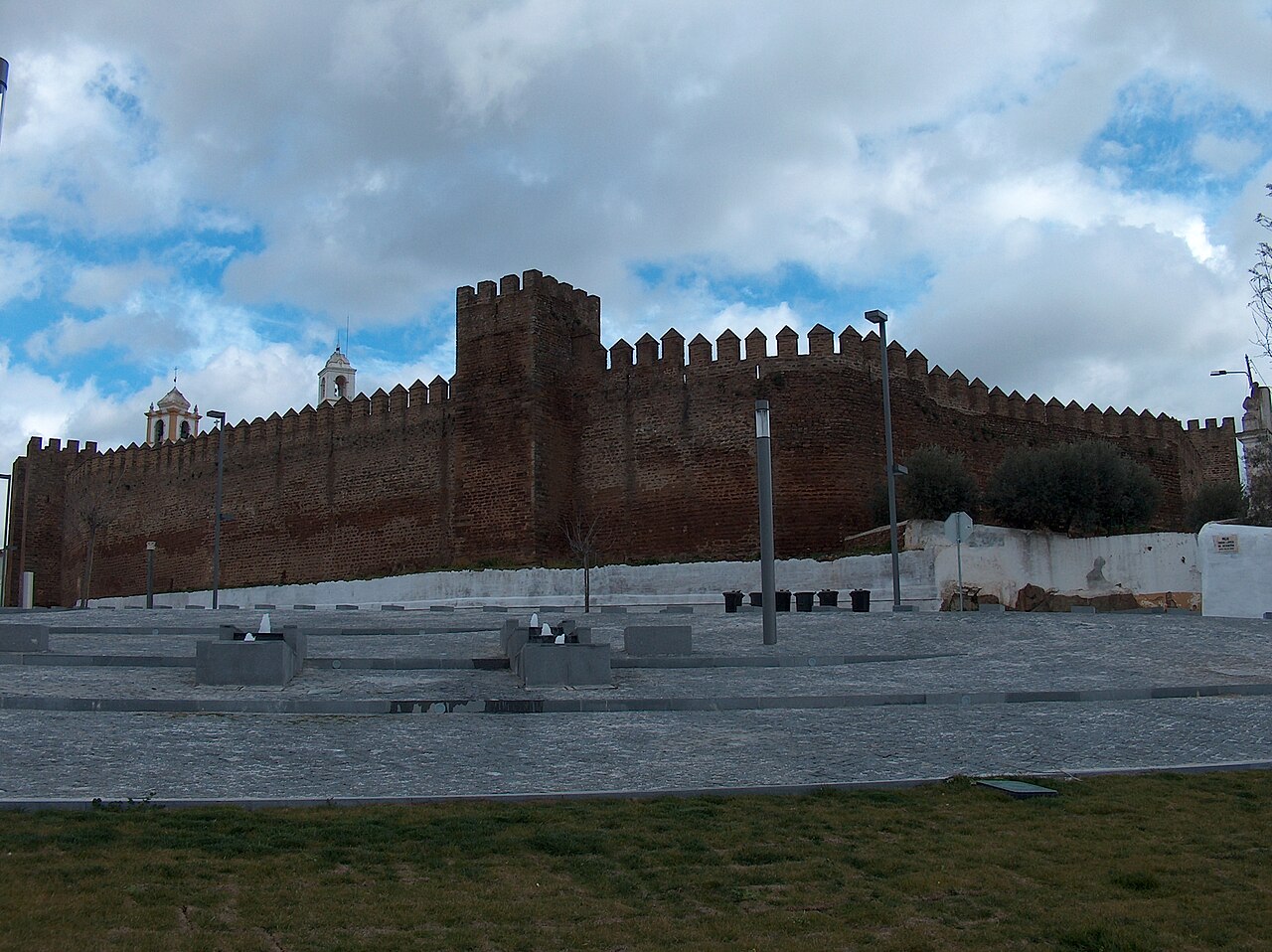
Terena Castle, locally known as Castelo de Terena, is a significant medieval fortress located in the village of Terena in the Alentejo Central region of Portugal. Perched atop a strategic hill, the castle commands sweeping views of the surrounding landscape, including the nearby ravine and the Lucefece reservoir. This hill castle played a crucial role in the defense of Portugal's eastern frontier during the Middle Ages and reflects a rich history of military architecture and regional conflict.
The exact date of Terena Castle's construction remains uncertain, but historical evidence suggests it was built between 1325 and 1332 during the reign of King Afonso IV. Some historians propose an earlier origin shortly after the village received its charter in 1262 under King Afonso III. There is also speculation about a possible Moorish predecessor on the site, given the region's history of Islamic presence prior to the Christian reconquest. Terena was part of a vital defensive network that included the castles of Elvas, Alandroal, and Juromenha, designed to secure the border with Castile.
Historical development and strategic importance
The castle's early history is closely tied to the political and military challenges of the 13th and 14th centuries. The first recorded mention of Terena dates to 1262, when King Afonso III granted a foral (charter) to the settlement, marking its formal establishment. Subsequent rulers, including King Denis, continued efforts to fortify the frontier, with Terena featuring prominently in royal defensive strategies.
By 1380, documents confirm the existence of a castle and a barbican—a fortified outwork enhancing the castle's defenses. After the dynastic crisis of 1383–1385, control of Terena was granted to the Order of Avis, a military order tasked with defending the realm. This period likely saw renovations and strengthening of the fortress in response to ongoing border tensions.
In the late 15th century, specifically 1482, King John II appointed Nuno Martins da Silveira as the local governor (alcalde), initiating a phase of restoration and architectural enhancement. These works extended into the reign of King Manuel I in the early 16th century, culminating in the construction of the castle's distinctive keep tower and the alcalde's residence. The castle's layout and fortifications were documented in 1509 by Duarte de Armas, a royal squire and cartographer, providing valuable insight into its design and military function.
Architectural features and layout
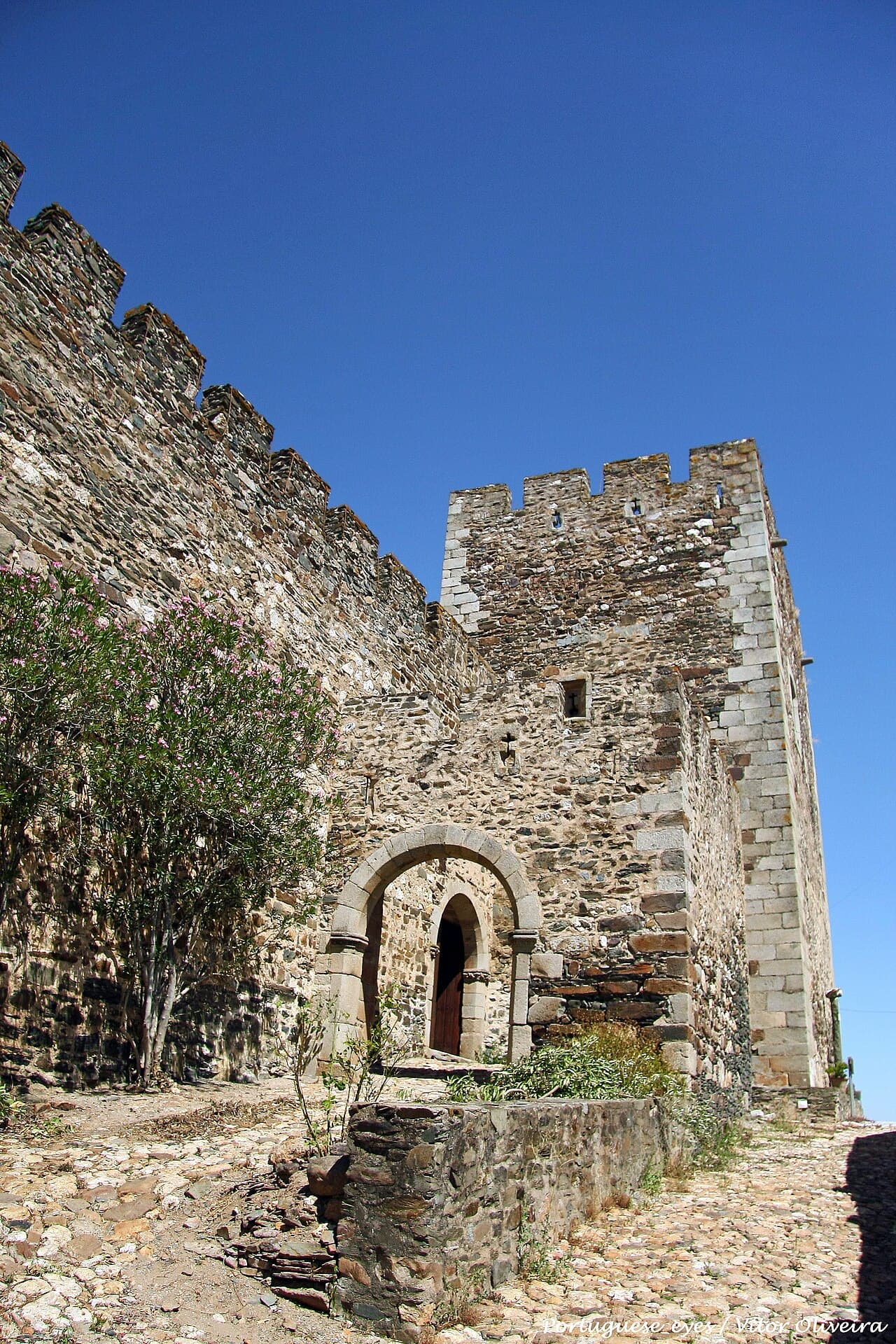
Terena Castle is notable for its irregular pentagonal plan, adapted to the terrain and defensive needs. The fortress includes four circular towers asymmetrically positioned along the walls, with only one tower protecting a corner, reflecting strategic considerations. The castle's rectangular keep tower stands two stories high, constructed from large stone blocks and featuring narrow cruciform arrow slits that provided both light and defensive capabilities.
The main gate, originally accessed through the keep tower as depicted by Duarte de Armas, was later modified by the architect Francisco de Arruda to include a bent entrance through a barbican. This defensive design forced attackers to navigate a less direct path, enhancing the castle's security. The gate is guarded by the keep and protected by a small barbican, emphasizing its strategic importance.
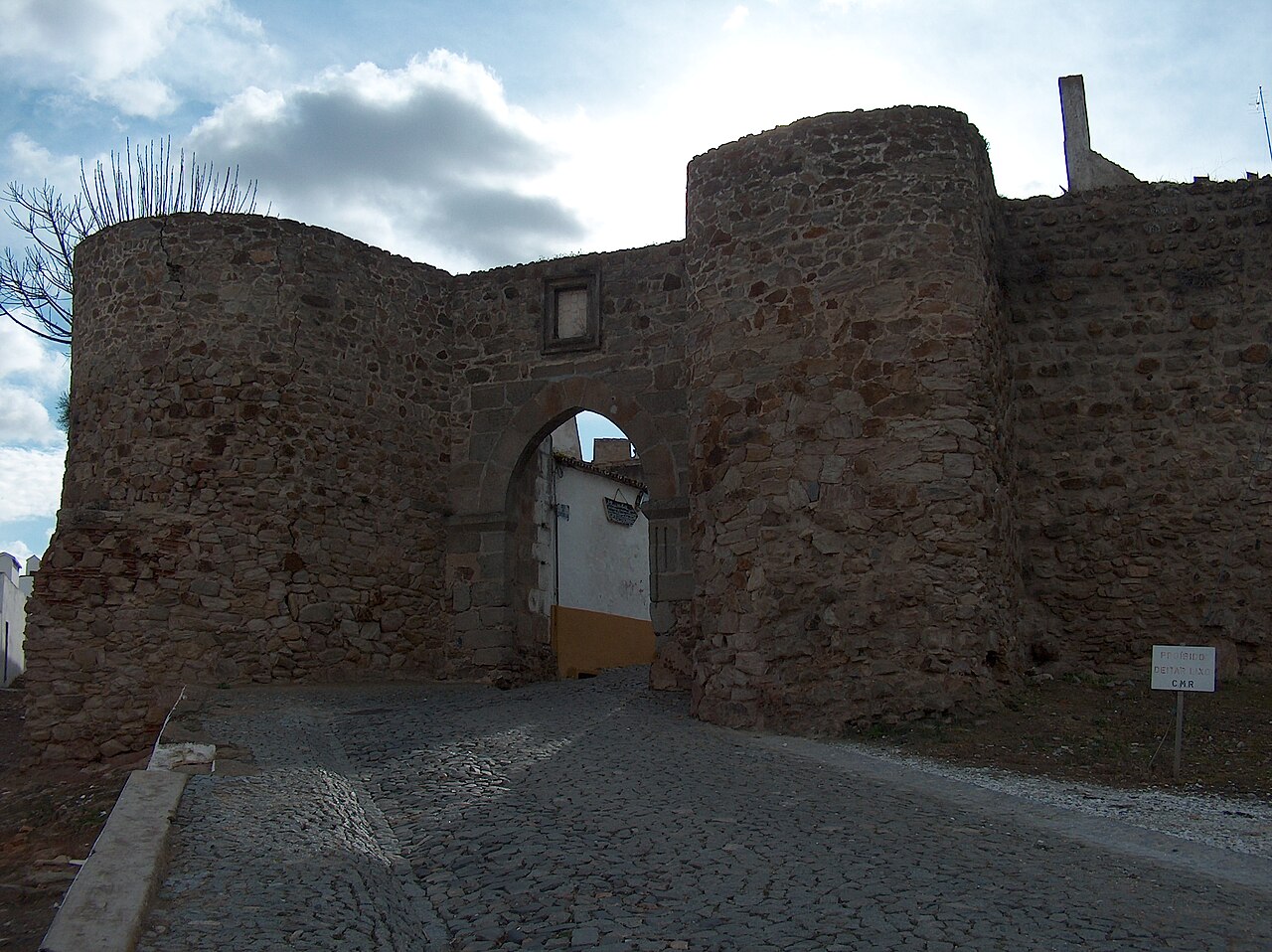
Another significant entrance is the Porta do Campo or Porta do Sol, a Gothic-style doorway with a pointed arch flanked by two circular towers. Although largely reconstructed in the 17th century, this gate retains elements from the 14th century and was sealed during the Portuguese Restoration War fortifications. The castle also features a rectangular barbican with an arched Roman gate and a wall-walk (adarve) that allowed defenders to patrol the ramparts safely.
Military history and later modifications
Terena Castle's military significance persisted into the 17th century, although its role diminished as the fortress of Elvas gained prominence. During the Portuguese Restoration War (1640–1668), the castle was attacked and sacked by Castilian forces in 1652 under the Duke of San Germán. This assault caused considerable damage, prompting the addition of the Porta das Sortidas, a gate oriented toward Spain designed to bolster defenses.
The castle also suffered structural damage during the catastrophic 1755 Lisbon earthquake, which affected much of Portugal. Unlike other fortifications, Terena was not fully restored afterward, likely due to its declining military importance and partial abandonment.
20th-century restoration and cultural significance
In the 20th century, the castle underwent several restoration and conservation efforts led by the Directorate-General for Buildings and National Monuments (DGEMN). Beginning in 1937, these works focused on reconstructing walls, restoring battlements, and repairing masonry. During the 1980s, additional interventions addressed the keep tower's vaulted ceilings and introduced modern access features such as a wooden staircase to facilitate visitor movement.
While some modern alterations sparked debate regarding historical authenticity, these efforts helped preserve the castle as a cultural landmark. Since the early 2000s, Terena Castle has hosted medieval reenactment events, celebrating its historical legacy and engaging the public with Portugal's medieval heritage.
Surroundings and visitor experience
The castle remains freely accessible to visitors and offers a tranquil experience in a quiet village setting. Its elevated position provides panoramic views of the surrounding countryside, enhancing its appeal. Nearby, the Boa Nova Chapel, a fortified church contemporary to the castle, adds to the historical ambiance of the area.
The castle's location near the sanctuaries of Endovélico and the Church of Nossa Senhora da Boa Nova further enriches the cultural landscape. These sites collectively reflect the region's layered history, blending military, religious, and local traditions.
Visitors to Terena Castle can explore its battlements, towers, and gates, gaining insight into medieval military architecture and the challenges of border defense. The castle's well-preserved features, including the Manueline-style balconies on the keep tower and the Gothic portals, illustrate the evolution of Portuguese fortification design from the 13th to the 17th centuries.
Overall, Terena Castle stands as a remarkable example of a medieval hill castle that has adapted over centuries to meet defensive needs and changing political circumstances. Its preservation and continued use as a cultural venue ensure that this historic fortress remains a vital part of Portugal's heritage.
Frequently asked questions (FAQ)
- How do I get to Terena Castle?
- Terena Castle is located in the village of Terena, within the municipality of Alandroal in Alentejo Central, Portugal. It is accessible by car and local roads; parking is available nearby.
- What are the opening hours of Terena Castle?
- The castle is open daily from dawn to dusk, allowing visitors to explore the site at their convenience without an entrance fee.
- Is there an entrance fee to visit Terena Castle?
- Visiting Terena Castle is free of charge, making it an accessible historical site for all visitors.
- What architectural styles are visible at Terena Castle?
- Terena Castle prominently features Gothic architectural elements, including pointed arches and a fortified barbican, alongside later Manueline influences in the keep tower balconies.
- Can I explore the interior of the keep tower?
- Visitors can access the keep tower via a wooden staircase installed during 20th-century restorations. The interior includes vaulted ceilings and narrow arrow slits, offering insight into medieval defensive design.
- Why is Terena Castle historically significant?
- Terena Castle was a key fortress in Portugal's eastern frontier defense during the Middle Ages, playing roles in border conflicts and the Portuguese Restoration War. Its architecture reflects centuries of military evolution.
Photo gallery

Information
Opening hours
Open daily, dawn to dusk
Ticket prices
Free
Current owner
Municipality of Alandroal
Address
Largo do Castelo, Terena, Alandroal, Portugal
Loading map...
Visitor reviews
No reviews yet. Been here? Write the first review and help other travelers!
Write the first reviewVisited this castle? Share your experience
Your review helps other travelers and adds first-hand knowledge to our encyclopedia.