Alandroal Castle
Alandroal Castle, locally known as Castelo do Alandroal, is a significant late medieval hill castle located in the village of Alandroal in the Alentejo Central region of Portugal. Constructed between 1294 and 1298 under the reign of King Denis of Portugal, this fortress was built by the Military Order of Aviz to consolidate territorial defenses during a period marked by the Reconquista and border fortification efforts.
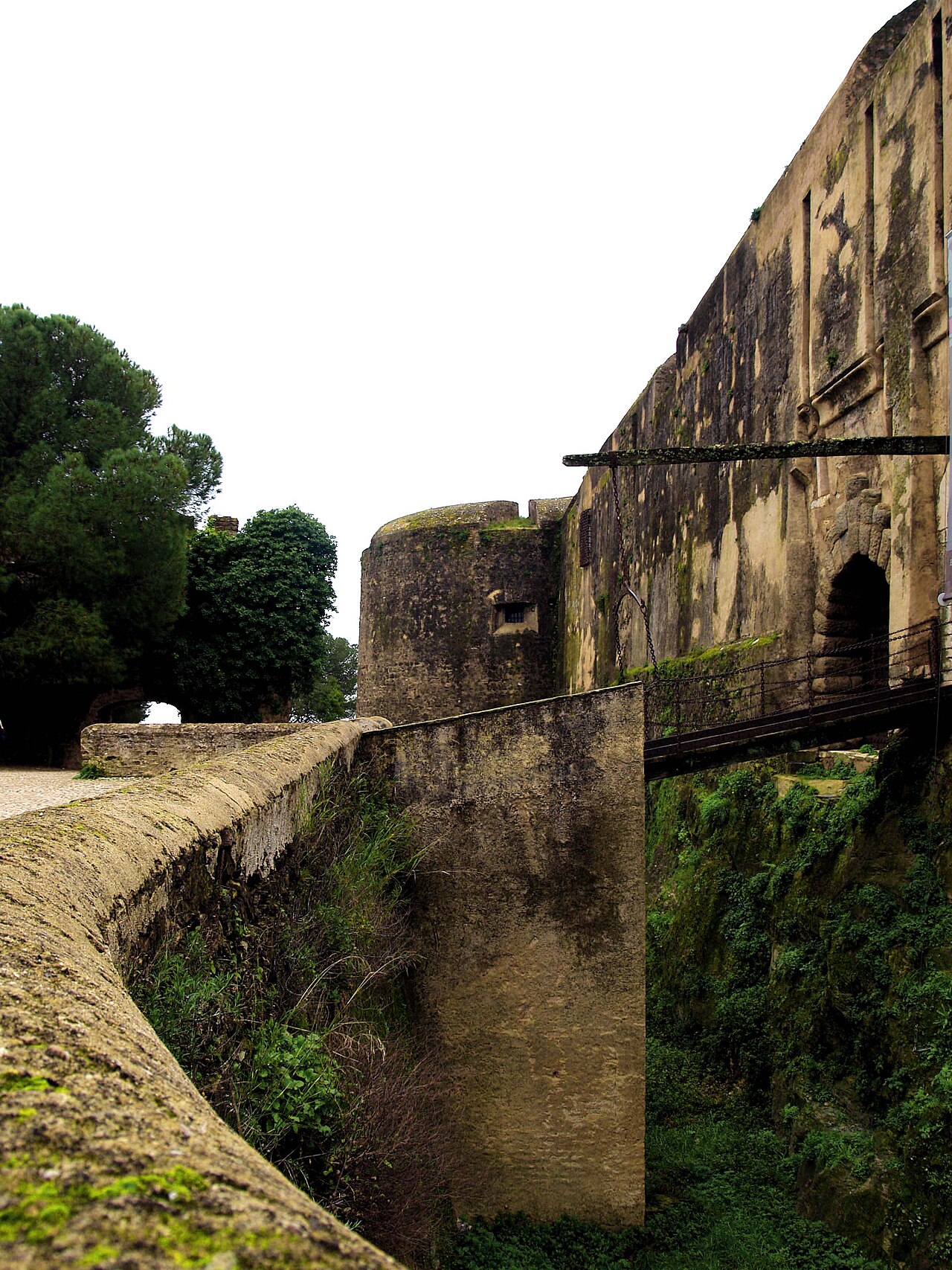
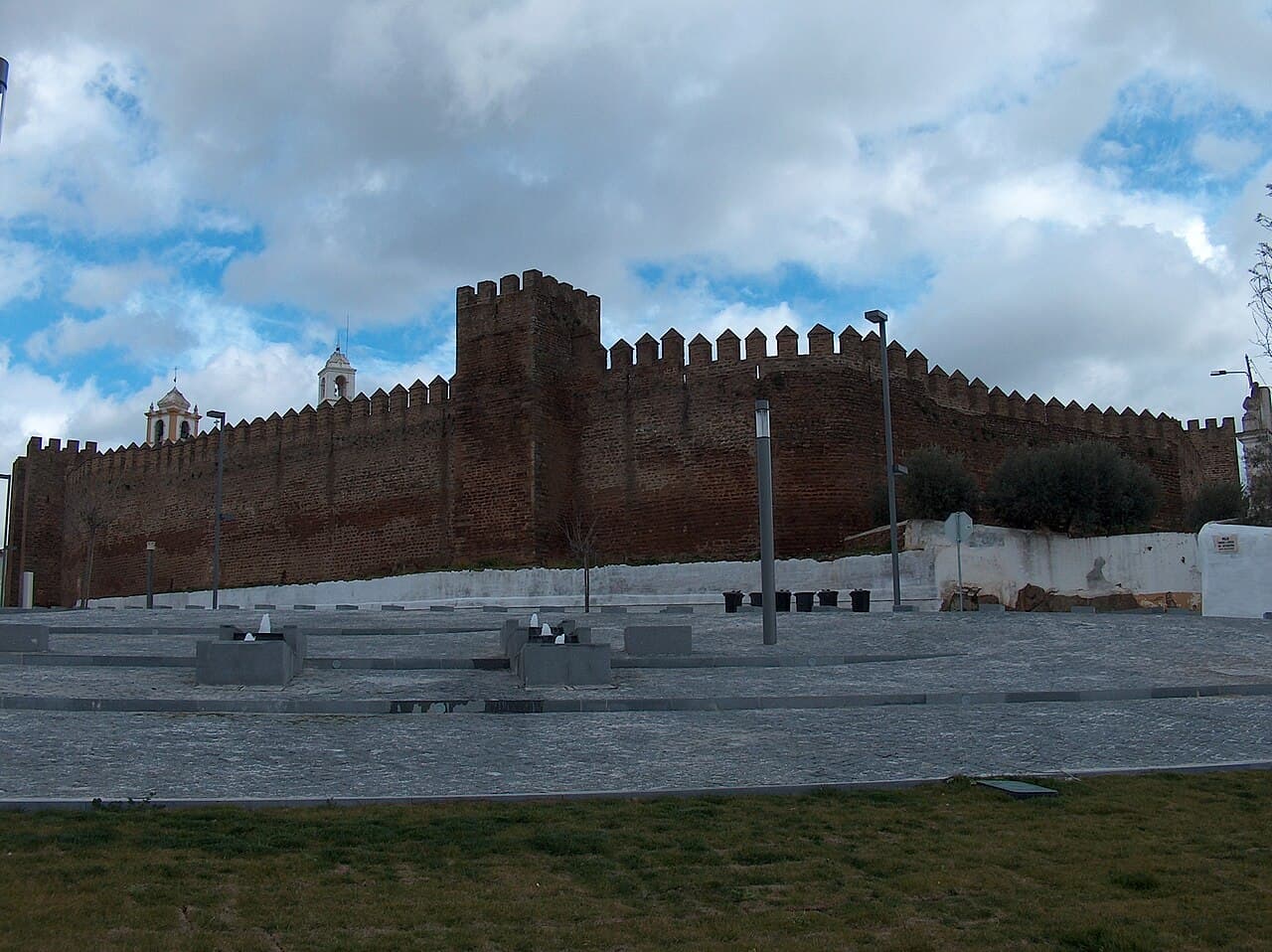
The castle occupies a strategic position on the highest elevation within the town, commanding views over the surrounding landscape. Its somewhat oval plan and Gothic architectural style reflect the military design principles of the late 13th and early 14th centuries. The fortress originally included a bailey crossed by a main road with gates at either end and an inner castle protected by its own gate tower, accessible only through a fortified entrance.
Historical background and construction
The foundation of Alandroal Castle was initiated on February 6, 1294, by D. Lourenço Afonso, the Master of the Military Order of Aviz, who oversaw the construction until its completion on February 24, 1298. An intriguing historical detail is the inscription left by the builder, identified as “Eu, Mouro Galvo,” a Moor who distinguished himself from enemy forces and contributed to the castle's construction, illustrating the complex cultural interactions of the region during the Reconquista.
Throughout the late 14th century, the castle's military importance waned as border conflicts subsided and political stability increased. During the period of 1383 to 1385, the castle's alcalde, Pedro Rodrigues, governed the fortress amid Portugal's internal struggles for power. By 1486, King João II granted Alandroal a formal charter, elevating the settlement to town status and marking its growing administrative significance.
The castle was documented in the early 16th century by Duarte de Armas in his Livro das Fortalezas, underscoring its continued recognition as a regional stronghold. However, by the early 17th century, much of the castle had fallen into ruin, reflecting its decline as a military bastion and transition to more civilian uses.
Architectural features and modifications
Layout and defensive structures
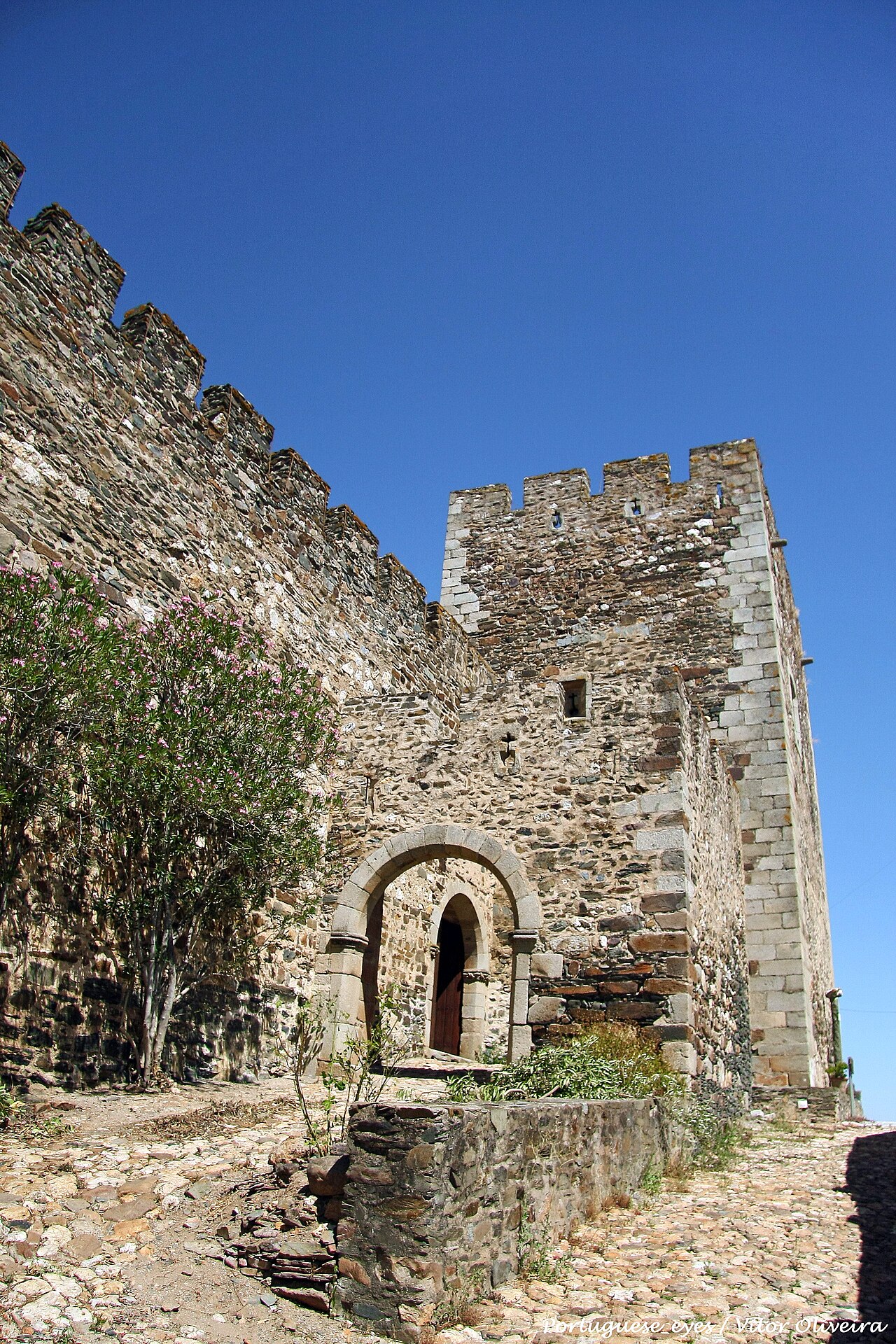
The castle's oval-shaped plan encloses a small fortified quarter divided by the main street, Rua do Castelo, which runs west to east connecting two principal gates. The eastern gate, Porta Legal, features a Gothic archway corridor flanked by two rectangular towers with a curtain wall topped by pyramid-shaped merlons designed for defensive cover. The western gate, Porta do Arrabalde, mirrors this design with marble arrow slits and a flanking tower, demonstrating the castle's symmetrical defensive planning.
The keep and inner castle
Central to the fortress is the large rectangular keep tower, a three-story structure originally sealed internally to serve as a last refuge during sieges. The keep was historically attached to the Church of Nossa Senhora da Graça, which was later modified with a Renaissance-style coffered vault ceiling. In 1744, a clock tower with three bronze bells was added atop the keep, reflecting the castle's evolving civic and religious functions.
Other notable features
The castle includes two side staircases providing access to the battlements, raised walkways along the walls used by defenders. A blocked entrance known as the traitor’s gate crosses the Cadeia Forte, a robust rectangular tower that served as a regional jail. This tower features barred windows and a stone balcony with an arch supported by sculpted capitals, blending defensive and judicial architecture.
Architectural details reveal the influence of the Moorish builder, including a distinctive horseshoe-shaped window and structural similarities to the Almohad walls of Seville, highlighting a fusion of Gothic and Islamic design elements. The walls and towers are predominantly stone, with battlements and merlons restored in the 20th century to preserve the fortress's integrity.
Later history and restoration efforts
By the 18th century, the castle's defensive role had diminished significantly. The barbican, an outer defensive wall, was demolished to accommodate a town hall and regional jail within the castle grounds, signifying a shift from military to civil functions. The keep was topped with a clock tower, further emphasizing this transition.
The 20th century saw several preservation campaigns led by the Directorate-General for Buildings and National Monuments (DGEMN). These efforts focused on consolidating walls, restoring the keep tower, and removing later residential constructions that compromised the fortress's original form. Structural repairs and vegetation clearance helped maintain the castle's stability and accessibility.
Officially designated a National Monument in 1910, Alandroal Castle came under the care of the Portuguese Institute of Architectural Heritage in 1992, ensuring ongoing protection and conservation.
Visiting alandroal castle today
Alandroal Castle is freely accessible to the public, offering visitors the chance to explore its historic bailey and fortified gates. Although access to the keep tower is currently blocked for safety reasons, the castle grounds are used occasionally for cultural events, enhancing its role as a community landmark.
The castle's elevated position provides panoramic views of the surrounding Alentejo countryside, making it a compelling destination for those interested in medieval military architecture and Portuguese history. Visitors can appreciate the blend of Gothic fortifications with unique Islamic architectural influences, reflecting the diverse cultural heritage of the region.
Architectural significance and cultural heritage
Alandroal Castle stands as a remarkable example of late medieval military architecture in Portugal, embodying the defensive strategies and cultural interactions of the era. Its construction by the Military Order of Aviz and the involvement of a Moorish builder illustrate the complex dynamics of the Reconquista period.
The castle's design, featuring an oval plan, curtain walls with merlons, and a massive keep, exemplifies the transition from purely military fortifications to multifunctional civic structures. The later adaptation of parts of the castle for judicial and religious uses further enriches its historical narrative.
Preservation efforts in the 20th century have ensured that Alandroal Castle remains a significant cultural landmark, contributing to the understanding of Portugal's medieval past and architectural heritage.
Frequently asked questions (FAQ)
- How do I get to Alandroal Castle?
- Alandroal Castle is located in the town of Alandroal in the Alentejo Central region of Portugal. It is accessible by car or local transport, with the castle situated on Rua do Castelo, easily reachable from the town center.
- What are the opening hours for visiting Alandroal Castle?
- The castle grounds are generally open to the public throughout the day, with no strict opening hours. However, access to the keep tower is currently restricted for safety reasons.
- Is there an entrance fee to visit Alandroal Castle?
- Visiting Alandroal Castle is free of charge, allowing visitors to explore the bailey and outer areas without a ticket.
- What is the historical significance of Alandroal Castle?
- Built between 1294 and 1298 by the Military Order of Aviz under King Denis, Alandroal Castle played a key role in border defense during the late medieval period. Its architecture reflects a blend of Gothic and Islamic influences, highlighting the cultural interactions of the Reconquista.
- Can I access the keep tower inside Alandroal Castle?
- Currently, access to the keep tower is blocked to visitors for safety reasons. Visitors can still explore the castle's bailey and defensive walls.
- What architectural styles are present in Alandroal Castle?
- Alandroal Castle primarily features <strong>Gothic military architecture</strong> with notable <strong>Islamic design elements</strong> introduced by its Moorish builder, including horseshoe-shaped windows and battlement styles.
Photo gallery

Information
Sources & official resources
Verify the information above using these authoritative references.
Loading map...
Visitor reviews
No reviews yet. Been here? Write the first review and help other travelers!
Write the first reviewVisited this castle? Share your experience
Your review helps other travelers and adds first-hand knowledge to our encyclopedia.