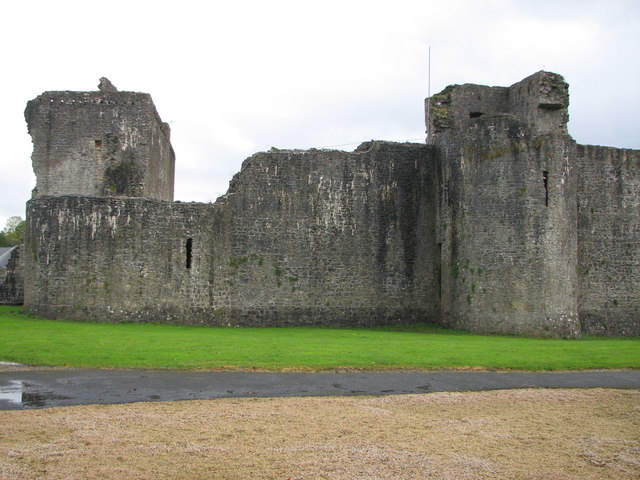
Temple House Castle
Templehouse Castle stands as a significant example of a high medieval rectangular keepless castle, originally constructed in 1181 near the townland of Ballinacarrow on the outskirts of Ballymote, Ireland. This castle was built during a period marked by Norman expansion and consolidation in Ireland, reflecting the military and architectural priorities of the time.
The origins and medieval history of Templehouse Castle
The castle's initial construction in the late 12th century coincided with the establishment of Norman power in Connacht. It was strategically positioned to control the surrounding lands and protect important routes. In 1216, the lands of Temple House were granted to the Knights Templar, a military and religious order known for their fortified properties across Europe and the Holy Land. The Templars fortified the site, adapting it for their defensive and administrative needs.
Following the suppression of the Knights Templar in 1311, Templehouse Castle passed into the hands of the Knights Hospitaller, another prominent military order. The Hospitallers maintained the castle as part of their network of properties, ensuring its continued strategic importance throughout the medieval period.
Architectural features and castle design
Templehouse Castle was a rectangular keepless castle, a form typical of early Norman military architecture in Ireland. Unlike castles with a central keep or donjon, this design relied on strong curtain walls and corner towers for defense. The absence of a keep suggests a focus on a compact, defensible enclosure rather than a towering stronghold.
The castle's walls would have featured battlements and arrow slits, allowing defenders to repel attackers effectively. Its location near a lake added a natural defensive barrier, enhancing its security. The castle's structure reflected the practical military engineering of the high medieval period, emphasizing both defense and control over the surrounding territory.
Transformation into a domestic residence and later history
In 1627, Templehouse Castle underwent significant changes as it was converted from a military fortress into a domestic residence. This transformation was part of a broader trend in Ireland and Britain where many medieval castles were adapted to serve as comfortable homes rather than purely defensive structures.
The castle's residential conversion included modifications to the interior spaces to accommodate living quarters and the addition of features reflecting contemporary domestic architecture. However, the castle's peaceful existence was disrupted during the Irish Rebellion of 1641, when it was besieged and suffered considerable damage.
Temple House estate and Georgian mansion
Close to the castle ruins stands Temple House, a notable Georgian mansion originally built around 1825. This mansion was constructed on the family estate, which spans over 400 hectares and overlooks the lakeside ruins of the medieval Knights Templar castle.
The Georgian house was substantially extended and embellished around 1864, incorporating Victorian architectural details that enhanced its grandeur. Today, Temple House functions as a luxury country guest house, offering visitors a unique blend of historical ambiance and modern comfort.
Significance and heritage
Templehouse Castle and the adjacent Georgian mansion represent layers of Irish history, from medieval military orders to 19th-century country living. The castle's association with the Knights Templar and Knights Hospitaller adds to its cultural importance, highlighting the role of these orders in Ireland's medieval landscape.
Though now in a state of ruin, the castle's remains provide valuable insight into high medieval castle architecture in Ireland. The site's preservation alongside the Georgian estate allows for a comprehensive understanding of the region's historical evolution.
Visiting Templehouse Castle and estate
Visitors to the area can explore the ruins of Templehouse Castle, appreciating its historical context and architectural features. The nearby Temple House mansion offers accommodations and hospitality, making it a destination for those interested in history, architecture, and rural Irish heritage.
Information
Loading map...
Visitor reviews
No reviews yet. Been here? Write the first review and help other travelers!
Write the first reviewVisited this castle? Share your experience
Your review helps other travelers and adds first-hand knowledge to our encyclopedia.