Markree Castle

Markree Castle: historic hill castle and astronomical observatory in Northern Ireland
Collooney, Northern Ireland, United Kingdom
High Medieval (11th–13th c.)
Restored

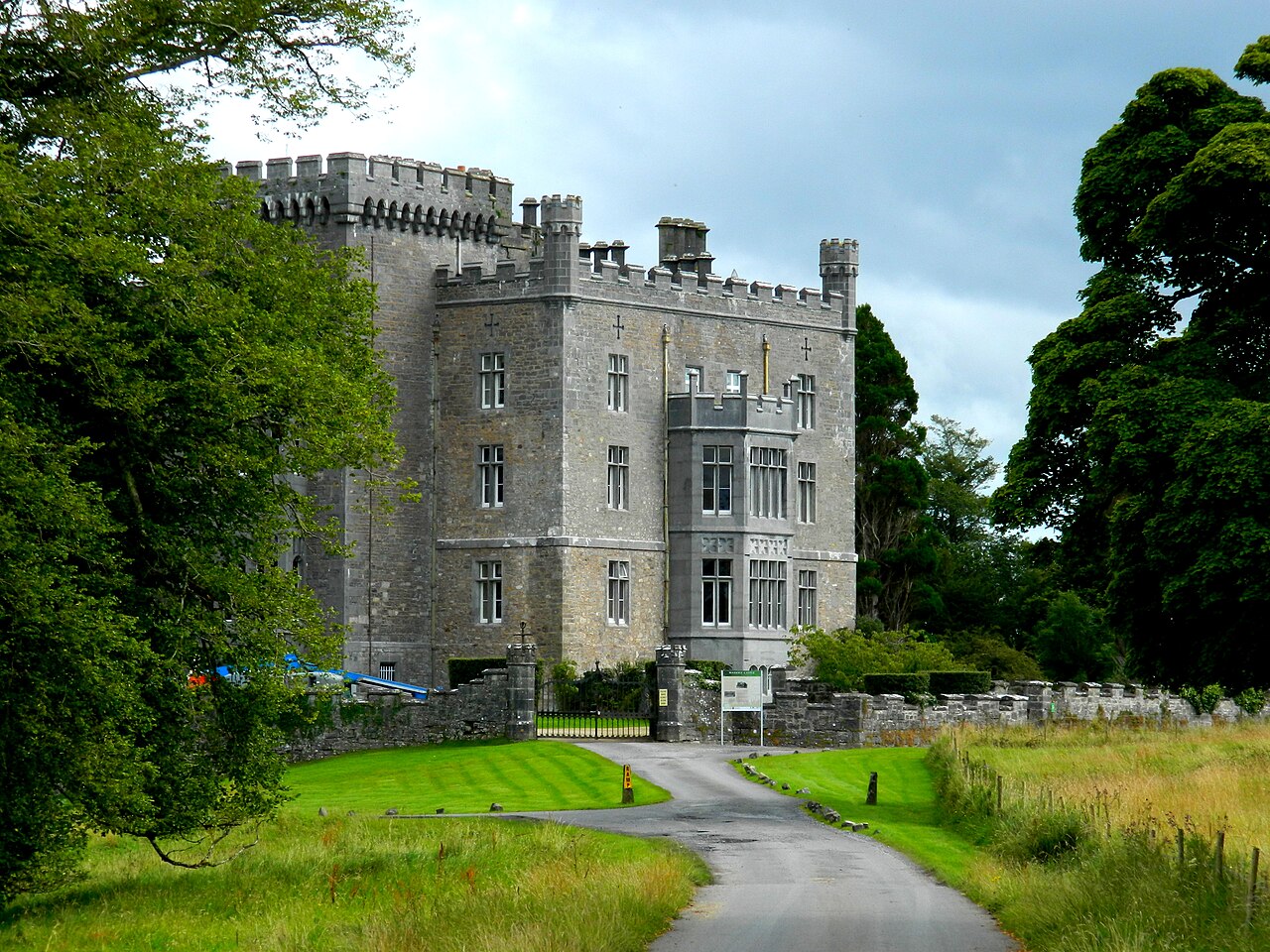
Markree Castle is a remarkable example of a hill castle with a rich history spanning several centuries in Northern Ireland. Situated in the Markree Demesne near Collooney, the castle occupies a strategic location overlooking the River Unshin, guarding a vital ford crossing. Its origins trace back to the 14th century when it was constructed by the McDonagh clan, a Gaelic family intent on defending their lands and asserting control over the surrounding area.

The castle's history is deeply intertwined with the turbulent political landscape of Ireland. During the Irish Rebellion of 1641, the McDonaghs supported the uprising against English rule. Following the rebellion's defeat, Oliver Cromwell's forces seized Markree Castle, awarding it to Cornet Edward Cooper for his military service. Cooper, who married Marie Rua, widow of the Irish leader Conor O'Brien, undertook restoration efforts by 1663, establishing the castle as the Cooper family seat for over three centuries.

The castle's role in military conflicts continued through the Jacobite Wars of the late 17th century, during which it was occupied by Catholic forces loyal to King James II. The Protestant Coopers fled temporarily but returned after the decisive Battle of the Boyne in 1690, which secured William of Orange's rule. In the early 20th century, the castle also witnessed occupation by the Irish Republican Army during the Irish War of Independence (1919–1922).

Architectural evolution and features

The visible structure of Markree Castle today predominantly reflects the architectural developments of the early 19th century, specifically from 1802 when significant exterior renovations were commissioned from the renowned architect Francis Johnston. These works enhanced the castle's defensive and residential qualities, blending medieval fortification elements with the comfort and style of the period.

The castle's interior was further embellished in 1896, featuring an intricately carved wooden staircase ascending to thirty rooms. This staircase landing is graced by a large Victorian stained glass window depicting the Cooper family tree, tracing lineage back to the reign of King John. The dining room is decorated in the Louis Philippe style, showcasing finely detailed plasterwork characteristic of this elegant 19th-century design movement.

Defensive elements and layout

Originally built as a fortress, the castle's location on a hill overlooking the river provided natural defense advantages. The strategic positioning allowed control over the river ford and surrounding lands. The structure includes typical features of a hill castle, such as thick stone walls and battlements designed for defense against attackers.

Scientific heritage: the astronomical observatory

One of the most notable features of Markree Castle is its 19th-century astronomical observatory, established by Colonel Edward Joshua Cooper, a Member of Parliament and an avid astronomer. The observatory housed what was at one time the largest refracting telescope in the world, a significant achievement in the field of astronomy. This telescope used lenses to gather and focus light, enabling detailed observations of celestial bodies.

The observatory gained international recognition when the Royal Astronomical Society acknowledged it in 1851 as one of the finest private astronomical facilities globally. The observatory remained active until the death of Edward Henry Cooper in 1902, contributing valuable scientific data and observations during its operation.

Historical and cultural significance

Markree Castle is not only significant for its military and scientific history but also for its cultural contributions. The castle is linked to the literary heritage of Ireland through Cecil Frances Alexander, who is reputed to have written the famous hymn "All Things Bright and Beautiful" at the castle in 1848. This connection adds a layer of cultural importance to the estate beyond its architectural and historical roles.

Preservation and modern use

After falling into abandonment following World War II, the castle suffered deterioration until restoration efforts began in 1989 under Charles Cooper, the tenth generation of the Cooper family to reside there. These efforts revitalized the castle, converting it into a hotel and preserving its historical fabric and architectural details.

In 2015, ownership passed to the Corscadden family, who have continued renovation works to maintain and enhance the property. Today, the castle stands as a well-preserved example of a historic Irish hill castle, offering visitors a glimpse into centuries of Irish history and architecture.

Estate and natural environment

The castle estate encompasses approximately 300 acres of protected natural habitat, supporting diverse wildlife including red squirrels, otters, and kingfishers. This natural setting adds ecological value to the site, making it an important conservation area.

Markree Castle also holds the record for Ireland's lowest official temperature, recorded at −19.1 degrees Celsius on January 16, 1881, a notable climatic fact linked to the estate's geography.

Frequently asked questions (FAQ)

How do I get to Markree Castle?
Markree Castle is located in Collooney, just a short drive from Sligo town. The castle is accessible by car, and there is ample parking available on-site. Public transportation options, including buses, also connect Collooney to major towns in the region.
What is the historical significance of Markree Castle?
Markree Castle dates back to the early 19th century and is a prime example of Gothic Revival architecture. It has been the ancestral home of the Cooper family for over 150 years, playing a significant role in the local history and culture of the area. The castle is also known for its beautiful grounds and gardens, which add to its historical charm.
When was Markree Castle built?
Construction of Markree Castle began in 1802 and was completed in 1805. The castle was designed by the architect John Nash, who was known for his influential work in the Gothic Revival style. Over the years, the castle has been preserved and maintained, allowing visitors to experience its historical grandeur.
Can I take a guided tour of Markree Castle?
Yes, guided tours of Markree Castle are available for visitors. These tours provide insights into the castle's history, architecture, and the Cooper family legacy. It is recommended to book your tour in advance, especially during peak tourist seasons.
Why is Markree Castle considered an architectural gem?
Markree Castle is celebrated for its stunning Gothic Revival design, featuring intricate stonework, towers, and a picturesque setting. The castle's interior boasts elegant rooms filled with historical furnishings and art, showcasing the craftsmanship of the period. Its architectural significance makes it a must-see for history and architecture enthusiasts.
Is it possible to host events at Markree Castle?
Yes, Markree Castle offers facilities for hosting various events, including weddings, corporate functions, and private celebrations. The enchanting surroundings and elegant interiors provide a unique backdrop for any occasion. Interested parties should contact the castle management for more details on event planning and availability.
What are the opening hours for Markree Castle?
Markree Castle is typically open to visitors from 10 AM to 5 PM, but these hours may vary depending on the season or special events. It is advisable to check the castle's official website or contact them directly for the most current information on opening hours before your visit.
What is the best time to visit Markree Castle?
The best time to visit Markree Castle is during the spring and summer months when the gardens are in full bloom and the weather is pleasant for outdoor activities. Additionally, the castle may host special events and tours during this time, enhancing the visitor experience. Autumn is also a beautiful time to visit, with stunning fall foliage surrounding the castle.
Are there any nearby attractions to visit while at Markree Castle?
Yes, there are several attractions near Markree Castle, including the scenic River Unshin and the historic village of Collooney. Visitors can also explore the nearby Sligo town, known for its vibrant arts scene and rich cultural heritage. Outdoor enthusiasts can enjoy hiking in the nearby hills or visiting the stunning beaches along the Sligo coastline.
What are the ticket prices for visiting Markree Castle?
Ticket prices for Markree Castle vary depending on the type of tour or event you are attending. General admission for self-guided tours is quite affordable, while guided tours may have a slightly higher fee. It is recommended to check the official website for the most accurate pricing and any available discounts or family packages.

Information

Hill Castle

Sources & official resources

Verify the information above using these authoritative references.

Loading map...

Visitor reviews

No reviews yet. Been here? Write the first review and help other travelers!

Write the first review

Visited this castle? Share your experience

Your review helps other travelers and adds first-hand knowledge to our encyclopedia.
Write a review

(5/5)

0/2000 characters

Your review will be visible after admin approval

Nearby castles

0 km
Markree Castle — Ireland castle

Markree Castle

Collooney, Ireland

Markree Castle is a prominent 14th-century hill castle situated in Collooney, County Sligo, Ireland. It has served as the ancestral seat of the Cooper family for centuries and is uniquely positioned on a gentle hillock partially surrounded by a moat formed by the River Unshin. The castle's strategic location and defensive features are characteristic of late-medieval Irish fortifications, designed to assert control over the surrounding landscape and waterways. Architectural features and layout The castle's core structure reflects a blend of medieval defensive architecture with later modifications tailored for residential comfort. Originally constructed in the 14th century, the castle features thick stone walls, battlements, and a fortified gatehouse. The moat fed by the nearby river added a natural defensive barrier, enhancing the castle's security. Over the centuries, the castle underwent various expansions and renovations, including the addition of domestic wings and ornamental gardens, reflecting changing tastes and the evolving needs of its occupants. Defensive elements Markree Castle's hilltop position provided a commanding view of the surrounding countryside, essential for early warning against potential attackers. The moat, although partial, was a significant deterrent to siege equipment and infantry assaults. The castle's battlements and arrow slits allowed defenders to repel invaders effectively. The gatehouse, fortified with heavy wooden doors and iron fittings, controlled access to the inner courtyard. Residential adaptations While maintaining its defensive character, the castle was adapted over time to serve as a comfortable family residence. Large windows were introduced in some sections, and interior spaces were reconfigured to include reception rooms, private chambers, and service areas. The grounds surrounding the castle were landscaped to include ornamental gardens and parkland, enhancing its appeal as a country estate. Historical significance and the Cooper family legacy The Cooper family has been intimately associated with Markree Castle since acquiring it in the late medieval period. Their stewardship has preserved much of the castle's historical fabric while adapting it for modern use. The castle remained a private family home for generations, witnessing Ireland's complex social and political transformations. Scientific heritage: the Markree Observatory One of the castle's most notable historical aspects is the Markree Observatory, established on the castle grounds in the early 19th century. In the 1830s, it housed the world's largest refracting telescope, a remarkable scientific instrument for its time. This observatory was operated by members of the Cooper family and their staff, contributing significantly to astronomical research. In the 1840s, the observatory staff discovered the asteroid 9 Metis, marking a significant achievement in the field of astronomy. This discovery highlighted the castle's role not only as a noble residence but also as a center of scientific advancement during the 19th century. Current status and visitor experience Today, Markree Castle operates as a small family-run hotel, offering guests an opportunity to experience its historic ambiance and scenic surroundings. The castle's preservation allows visitors to appreciate its medieval architecture alongside the landscaped grounds and views of the River Unshin. While the observatory no longer functions, its legacy remains an important part of the castle's story. The hotel maintains the castle's character, blending historic features with modern amenities. Visitors can explore the castle's exterior and grounds, enjoy traditional hospitality, and learn about its unique history through available materials and guided information.

Late Medieval (14th–15th c.)
Details
10.3 km
Ballymote Castle — Ireland castle

Ballymote Castle

Ballymote, Ireland

Ballymote Castle (Irish: Caisleán Bhaile an Mhóta) is a significant example of a high medieval Norman fortress located in County Sligo, Ireland. Constructed around the 13th century, specifically circa 1300, this large rectangular keepless castle stands on the outskirts of the town of Ballymote in the townland of Carrownanty. The castle occupies a strategic position historically known as Átha Cliath an Chorainn, meaning "The Ford of the Hurdles of Corann," reflecting its importance in controlling local river crossings and routes. Historical context and purpose Ballymote Castle represents the last of the Norman castles established in the province of Connacht. It was likely commissioned by Richard Óg de Burgh, 2nd Earl of Ulster, also known as the Red Earl, to consolidate and protect the extensive territories he had recently acquired in County Sligo. This construction was part of a broader Norman strategy to fortify their holdings in western Ireland during the turbulent high medieval period. The castle replaced earlier fortifications such as the motte-and-bailey structures common in the initial Norman incursions. Its location some distance from an earlier motte indicates a shift toward more permanent and defensible stone castles that could serve as administrative centers as well as military strongholds. Architectural features and layout Ballymote Castle is notable for its rectangular plan and the absence of a central keep, which is unusual for Norman castles of this era. Instead, the castle's defense relied on robust curtain walls and corner towers, which provided comprehensive coverage of the perimeter. The walls are constructed of locally sourced stone, exhibiting the typical thick and high masonry designed to withstand siege engines and assaults. The castle includes a gatehouse that controlled access and was likely equipped with defensive features such as a portcullis and murder holes. Inside, the courtyard would have contained essential buildings such as barracks, storerooms, and a great hall for administrative and residential purposes. The keepless design suggests a focus on communal defense and possibly a more advanced layout for garrison and lordly functions. Defensive innovations Unlike many earlier Norman castles featuring a dominant keep or donjon, Ballymote's design reflects evolving military architecture trends of the late 13th century. The reliance on strong curtain walls and well-positioned towers allowed defenders to cover all approaches effectively. The castle's elevated position on a hill provided natural defensive advantages, enhancing visibility and control over the surrounding landscape. Role in regional history Throughout its history, Ballymote Castle played a pivotal role in the power struggles of Connacht. It served as a base for the de Burgh family and their successors, who were influential Norman lords in Ireland. The castle witnessed various conflicts, including local Gaelic resistance and later English crown efforts to maintain control over Ireland. Its strategic location near important routes and river crossings made it a valuable military asset. Over the centuries, the castle's military significance declined, but it remained a symbol of Norman authority in the region. Preservation and current condition Today, Ballymote Castle stands as a partially preserved medieval ruin. While much of the original structure remains, including significant portions of the curtain walls and towers, some areas have deteriorated due to centuries of exposure and limited restoration. The site is accessible to visitors interested in medieval architecture and Irish history. Efforts to maintain the castle focus on preserving its structural integrity and enhancing public understanding of its historical importance. Interpretive signage and guided tours help contextualize the castle within the broader narrative of Norman expansion in Ireland. Visiting Ballymote Castle The castle is located just outside the town of Ballymote, making it easily reachable for tourists exploring County Sligo. Visitors can explore the ruins and enjoy panoramic views of the surrounding countryside from the elevated site. The castle's setting offers insight into medieval defensive strategies and Norman settlement patterns in Ireland. Nearby attractions County Sligo is rich in historical and natural sites, including other Norman castles, ancient monuments, and scenic landscapes. Visitors to Ballymote Castle often combine their trip with visits to nearby heritage sites and the vibrant town center of Ballymote.

High Medieval (11th–13th c.)
Details
10.4 km

Ballymote Castle

Ballymote, United Kingdom

Ballymote Castle is a remarkable example of a late medieval Norman fortress located in Carrownanty, Ballymote, in the province of Connacht, Ireland. Constructed around 1300 by Richard Óg de Burgh, 2nd Earl of Ulster—also known as the Red Earl—the castle was strategically built to secure newly acquired lands in County Sligo. It is distinguished as the last major Norman castle erected in Connacht, reflecting the military and architectural innovations of the period. The castle is a large, rectangular keepless enclosure castle, notable for its symmetrical layout and imposing defensive features. Its design shares strong architectural affinities with Beaumaris Castle in Anglesey, Wales, a masterpiece of Edward I’s castle-building campaign. Ballymote’s thick curtain walls, measuring approximately three meters in thickness, enclose an interior courtyard roughly 30 square meters in area, emphasizing a balance between defense and internal space. Architectural design and defensive features The castle’s north entrance is marked by a formidable gatehouse flanked by twin D-shaped towers, which provided defenders with commanding fields of fire along the approach. Though much of the outer gatehouse has been lost to time, the surviving structures still convey the strength of its original design. The castle’s perimeter is reinforced by six towers: three-quarter round towers at each corner and additional towers at the midpoint of the east and west curtain walls. These towers allowed defenders to cover all angles and protect the walls effectively. Within the thickness of the walls, narrow passages approximately three feet wide connect the towers and curtain walls. These passages facilitated the rapid movement of soldiers during attacks and provided protected routes for communication and defense. Although no internal domestic buildings remain, the castle’s robust fortifications and strategic layout highlight its primary role as a military stronghold rather than a residential palace. A postern gate was planned for the south wall, accompanied by a small square tower, but construction was halted, likely due to the turbulent events of 1317 when the castle was captured by the O'Connors. This incomplete feature underscores the castle’s turbulent history and the ongoing conflicts in the region during the early 14th century. Historical significance and ownership through the centuries Ballymote Castle played a pivotal role in the power dynamics of medieval Connacht. Initially built by the Anglo-Norman de Burgh family to consolidate control, it frequently changed hands due to the shifting allegiances and conflicts characteristic of Irish medieval politics. In 1317, the castle fell to the O'Connors, a powerful Gaelic dynasty, marking the beginning of a series of transfers among prominent Irish families. By 1347, the castle was under the control of the Mac Diarmada family, and by 1381 it had passed to the Mac Donaghs. The 16th century saw the castle in the possession of Tadhg MacDermot, the last ruler of Moylurg, before returning to the O'Connors by 1571, a tenure later ratified by King James I. The late 1500s were marked by intense conflict as English forces sought to assert dominance over Connacht. The castle was briefly seized in 1577 and firmly controlled by Governor Richard Bingham in 1584. It endured a raid in 1588 by Irish clans including the O’Connor, O’Hart, and O’Dowd families. In 1598, it was surrendered to the Mac Donaghs and soon sold to Red Hugh O’Donnell, a key Gaelic leader who used Ballymote as a military base before the Battle of Kinsale in 1601. By 1602, the castle had fallen into disrepair and was surrendered to English forces. The 17th century saw fluctuating ownership: the Taaffe family briefly held it from 1633, but it was seized by rebels during the 1641 Irish uprisings. Oliver Cromwell’s forces captured the castle in 1652 during their campaign in Ireland. Later, during the Williamite Wars, it was held for King James II by Captain Terence MacDonagh but was overcome by Williamite artillery in 1690. Following this, its defenses were dismantled, leading to its gradual decline into ruin. Current condition and preservation efforts Today, Ballymote Castle stands as an evocative ruin, retaining significant portions of its stone curtain walls and towers. The castle’s imposing silhouette continues to dominate the landscape, offering insight into the military architecture of the late medieval period in Ireland. Partial restoration work undertaken by the Irish Office of Public Works has helped stabilize the structure and preserve its historical integrity. The castle remains an important cultural and heritage site, attracting visitors interested in Ireland’s Norman past and medieval fortifications. While no internal buildings survive, the layout and surviving defensive features provide a clear understanding of the castle’s original form and function. Local legends and archaeological notes Local folklore tells of underground tunnels linking Ballymote Castle to nearby religious sites such as Emlaghfad church and a Franciscan abbey. However, archaeological investigations have found no evidence to support these tales, classifying them as legend rather than fact. Nonetheless, such stories contribute to the castle’s mystique and cultural significance in the region. Architectural comparisons and influences Ballymote Castle’s design is often compared to Beaumaris Castle, built by King Edward I of England. Both castles share the keepless enclosure style, characterized by strong curtain walls and multiple towers without a central keep. This architectural approach reflects evolving military strategies in the late medieval period, emphasizing perimeter defense and overlapping fields of fire. The castle’s symmetrical plan and robust towers illustrate the advanced Norman military engineering of the time. Its construction techniques and defensive features provide valuable insights into the adaptation of Norman castle design to the Irish landscape and political context. Visiting information and accessibility Ballymote Castle is accessible to the public, offering a fascinating glimpse into Ireland’s medieval heritage. Visitors can explore the ruins and appreciate the scale and sophistication of the fortress. While the site is primarily an outdoor ruin, it is advisable to wear suitable footwear due to uneven terrain. Interpretation panels and guided tours may be available seasonally, enhancing the visitor experience. The castle’s location near the town of Ballymote makes it a convenient destination for those interested in Irish history and Norman architecture. Nearby attractions include other medieval sites and natural landscapes typical of County Sligo. Best time to visit The most favorable time to visit Ballymote Castle is during the late spring to early autumn months when weather conditions are mild. This period offers the best opportunity to explore the ruins comfortably and enjoy the surrounding scenery.

Late Medieval (14th–15th c.)
Details