Teleborg Castle
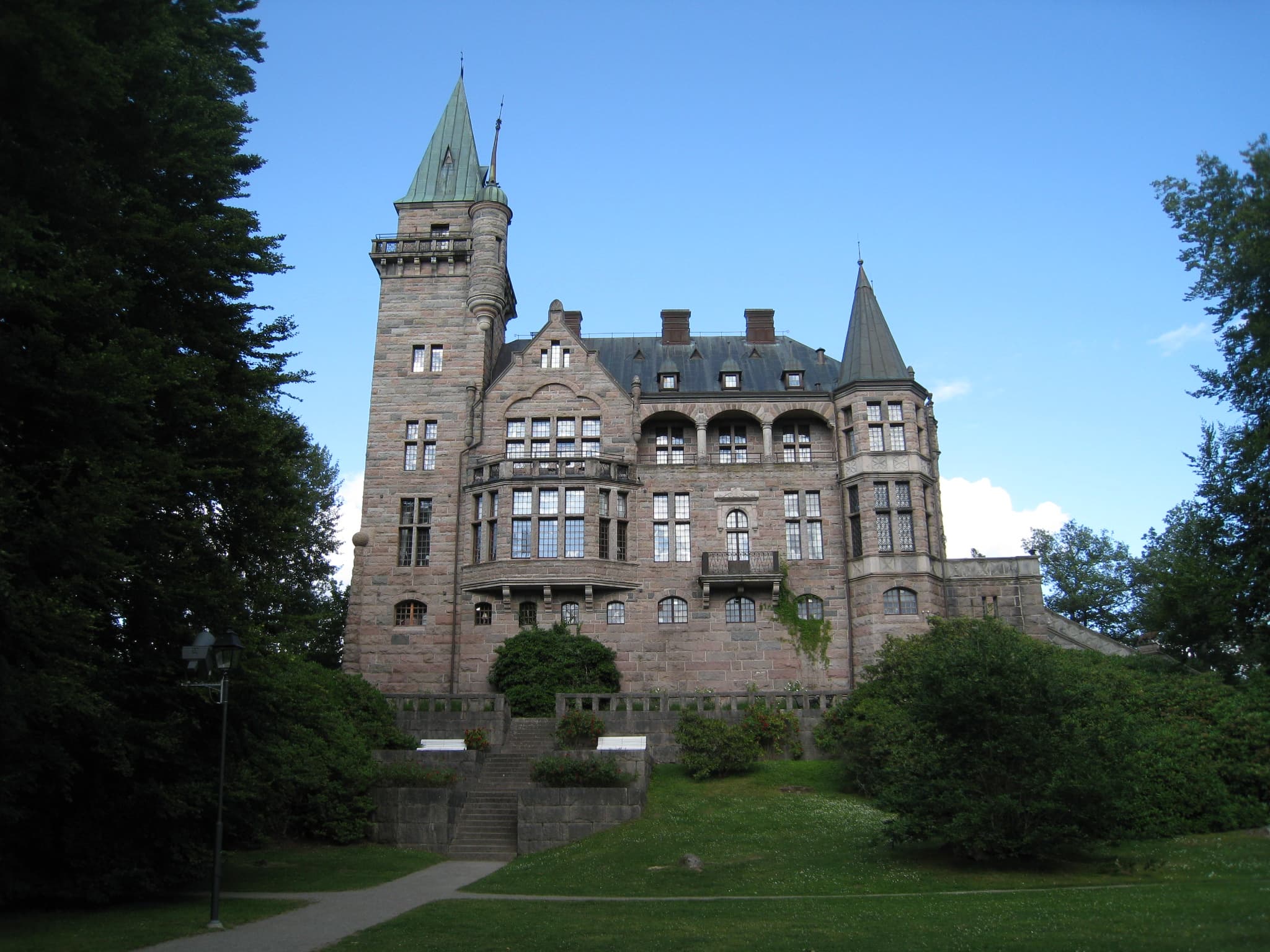
Teleborg Castle stands as a remarkable example of early 20th-century architecture that evokes the grandeur and romanticism of medieval castles, despite its modern construction date. Located in Götaland, Sweden, this castle was built in 1900 by the architectural firm Lindvall & Boklund as a unique wedding gift from Count Fredrik Bonde af Björnö to his young wife, Anna Koskull. The castle's design deliberately reflects medieval stylistic elements, creating a striking visual impression that contrasts with its relatively recent origins.
Historical background and origins
The story of Teleborg Castle begins with Count Fredrik Bonde af Björnö, a man of eccentric taste and considerable means. He commissioned the castle as a morning gift to his wife Anna Koskull, demonstrating his devotion and desire to provide her with something extraordinary. The phrase "What does not a farmer do for his koskull"—a playful nod to his wife's name—captures the spirit behind the castle's creation. The couple moved into the castle in 1900, marking the beginning of its brief initial habitation by its founders.
Tragically, the happiness was short-lived. Count Fredrik Bonde died just nine years after the castle was completed, and Anna Koskull survived him by only eight years, passing away in 1917. The couple had no children, and the castle was inherited by their grandson, Christer Bonde. This transition marked the beginning of the castle's varied uses throughout the 20th century.
Architectural design and construction
The castle's design was carefully overseen by the Count, who spared no expense in ensuring the highest quality materials and craftsmanship. Two prominent Skåne architects, Harald Boklund and August Lindvall, were engaged to bring his vision to life. The castle was constructed using granite and bricks sourced from Torpa near Växjö and from Västervik, lending it a robust and authentic appearance.
Artisans of the highest caliber were employed to decorate the interiors. The finest stucco and decorative painters in Sweden contributed their skills, while fireplaces and tiles were imported from Gothenburg. The forging work, including metal fittings and ornamental ironwork, came from Copenhagen, reflecting a blend of Scandinavian craftsmanship.
The total cost of construction was SEK 192,772 and 80 öre, a substantial investment at the time. This financial commitment underscores the importance placed on quality and detail, resulting in a castle that, although modern in age, carries the aura and aesthetic of a medieval fortress.
Medieval inspiration in a modern castle
Despite being built in the early 20th century, Teleborg Castle's architectural style is heavily influenced by medieval design principles. The castle features characteristic elements such as towers, battlements, and a prominent keep-like structure, all crafted to evoke the romantic imagery of the Middle Ages. This stylistic choice was part of a broader European trend during the period, where historicism and revivalist architecture sought to rekindle the grandeur of past eras.

Photo by Unknown • CC BY-SA 3.0
Changing roles and ownership through the 20th century
After the deaths of its original owners, Teleborg Castle underwent several changes in function and ownership. Initially, Christer Bonde attempted to establish the castle as a guesthouse, capitalizing on its electric lighting, scenic surroundings, and proximity to Lake Trummen, which offered ice skating in winter. Subsequently, the castle served as a girl's pension for about a decade, reflecting its adaptation to more commercial and residential uses.
In 1931, Christer Bonde reclaimed the castle for his personal use and developed the surrounding castle park, enhancing the estate's appeal and usability. Later, his son Fredrik Ulf Bonde took over in 1956. The castle was primarily used as a summer residence until 1964, often under the care of the owner's sister, Ulla Bonde.
In 1964, the city of Växjö purchased Teleborg Castle and its park. Since then, it has been owned by Videum AB and leased by Runosson & Co. The castle now serves multiple purposes, including representation for the city council, hosting weddings, conferences, and accommodating parts of the nearby university. This diverse usage ensures the castle remains a vibrant part of the community.
Preservation and modern use
Today, Teleborg Castle is carefully maintained to preserve its unique historical and architectural character. The current caretakers share the original Count's dedication to quality and uniqueness, undertaking restorations that respect the castle's heritage while incorporating modern amenities. The castle's interiors feature luxurious bedrooms, functional conference rooms, and an elegant dining room with carefully curated menus, blending historical ambiance with contemporary comfort.
The castle's distinctive style continues to fascinate visitors, offering a living experience of history and creativity. The surrounding park enhances the setting, providing a picturesque environment for events and leisure. Teleborg Castle thus stands as a testament to the enduring appeal of romantic medieval architecture reinterpreted through a modern lens.
Visitor experience and atmosphere
Visitors to Teleborg Castle often remark on the enchanting atmosphere created by its medieval-inspired architecture and lush parkland. The castle's staircases, halls, and decorative details evoke a sense of curiosity and wonder, much like what Anna Koskull might have felt when she first entered her new home. This blend of history, romance, and modern hospitality makes Teleborg Castle a unique destination in Götaland.
Frequently asked questions (FAQ)
- What is the history behind Teleborg Castle?
- Teleborg Castle was built in 1900 as a wedding gift from Count Fredrik Bonde af Björnö to his wife Anna Koskull. The castle reflects medieval architectural styles despite its modern construction date and has served various functions including a guesthouse, girls' pension, and city representation.
- Can I visit Teleborg Castle today?
- Yes, Teleborg Castle is currently owned by Videum AB and used for representation, weddings, conferences, and university purposes. While it is not a traditional tourist attraction, it is accessible for events and certain public functions.
- What architectural style is Teleborg Castle built in?
- Though built in 1900, Teleborg Castle features a mixed architectural style with strong medieval influences, including towers, battlements, and decorative ironwork, reflecting the romantic revival trends of the period.
- Who were the architects of Teleborg Castle?
- The castle was designed by the architectural firm of Harald Boklund and August Lindvall, who worked closely with Count Fredrik Bonde to realize his vision of a unique and high-quality castle.
- How has Teleborg Castle been preserved?
- The castle has been carefully restored and maintained to preserve its distinctive medieval-inspired style while incorporating modern amenities. The caretakers focus on maintaining the castle's historical character alongside functional uses for events and conferences.
Photo gallery


Information
Sources & official resources
Verify the information above using these authoritative references.
Loading map...
Visitor reviews
No reviews yet. Been here? Write the first review and help other travelers!
Write the first reviewVisited this castle? Share your experience
Your review helps other travelers and adds first-hand knowledge to our encyclopedia.