Kronoberg Castle Ruins
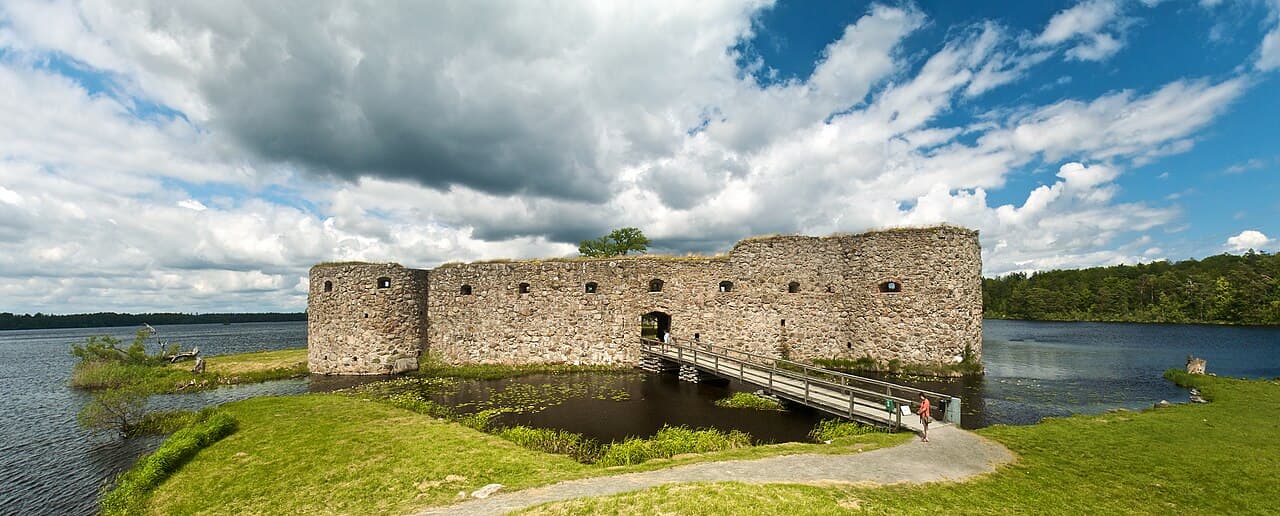
Kronoberg Castle stands as a significant medieval ruin located on an island in the serene lake Helgasjön, approximately 5 kilometers north of Växjö in Kronoberg County, Sweden. The castle's strategic position on a hill island provided natural defense advantages and control over the surrounding waterways, marking it as a vital military stronghold in the region during the late medieval period.
The origins of Kronoberg Castle trace back to 1444 when Lars Mikaelson, the bishop of Växjö, initiated the construction of a stone building on the lakeshore. This initial structure was modest but laid the foundation for the castle's future military and administrative importance. However, during the Dano-Swedish War of 1470-1471, Danish forces destroyed this early building. Following the restoration of peace in 1472, the castle was reconstructed and significantly fortified, marking the beginning of its evolution into a formidable fortress.
Architectural features and fortifications
Kronoberg Castle was designed as a hill castle, utilizing the natural elevation of the island to enhance its defensive capabilities. The fortress was surrounded by thick stone walls that enclosed various defensive structures including battlements, towers, and a gatehouse. The castle's fortifications were continually enhanced over the centuries, reflecting advancements in military architecture and the evolving needs of warfare.
By the late 16th century, the castle was equipped with at least 50 cannons, a testament to its role as a significant military bastion. The fortifications included bastions and artillery platforms designed to repel attacks, particularly from Danish forces during the frequent conflicts between Sweden and Denmark. Despite these defenses, the castle was besieged and burned multiple times, notably in 1570 and again in 1612.
Historical significance and military role
Early conflicts and reconstruction
After its initial destruction in the Dano-Swedish War, Kronoberg Castle was rebuilt to serve as a stronghold near the contested border between Sweden and Denmark. During the Swedish Reformation, the castle and its estates were confiscated by King Gustav I Vasa, demonstrating its political as well as military importance.
The Dacke War and subsequent fortifications
In 1542, the castle was captured by rebels led by Nils Dacke during the Dacke War, a major peasant uprising against the crown. The rebellion was suppressed by 1543, and the castle returned to royal control. Recognizing its strategic value, the crown invested in further fortifying Kronoberg to secure the volatile border region.
Role in the Northern Seven Years' War
Kronoberg Castle played a crucial role during the Northern Seven Years' War (1564-1570). It served as a defensive bastion against Danish incursions, with Eric XIV using it as a support base in 1568 to repel a Danish attack from Skåne. Despite its defenses, the castle was besieged and burned by Danish forces in 1570, necessitating extensive reconstruction.
Later military engagements and decline
Between 1576 and 1580, reconstruction efforts restored the castle's defenses, including the installation of numerous cannons. Duke Charles continued to enhance the fortifications, but in 1612, Danish troops under Breide Rantzau once again captured and burned the castle. Reconstruction resumed in 1616, and the castle remained in good condition through the reign of King Charles XI.
The castle's military importance diminished significantly after the Treaty of Roskilde in 1658, which shifted the Swedish-Danish border to Øresund. With the border far to the south, Kronoberg lost its strategic value and was gradually neglected, leading to its decay and eventual ruin.
Present condition and visitor information
Today, Kronoberg Castle exists as a ruined hill castle, with remnants of its stone walls, towers, and defensive structures visible on the island. The site offers a tangible connection to Sweden's medieval and early modern military history, attracting visitors interested in historical architecture and Scandinavian heritage.
Previously open to tourists during the summer months, the castle has been permanently closed to visitors since January 2023 due to maintenance challenges. Despite this, the ruins remain an important cultural landmark in Kronoberg County, symbolizing the region's turbulent history and its role in the defense of Sweden's southern borders.
Architectural and historical legacy
Kronoberg Castle exemplifies the evolution of medieval fortifications in Scandinavia, reflecting changes in military technology and political power from the 15th to the 17th centuries. Its repeated destruction and rebuilding illustrate the intense conflicts between Sweden and Denmark over territorial control.
The castle's location on an island in Helgasjön allowed it to control important waterways and served as a defensive refuge. The surviving ruins provide valuable insights into late medieval military architecture, including the adaptation to artillery warfare with extensive cannon emplacements.
As a cultural heritage site, Kronoberg Castle continues to inspire interest in Sweden's medieval past and the complex history of the Nordic region's borderlands.
Frequently asked questions (FAQ)
- How do I get to Kronoberg Castle Ruins?
- Kronoberg Castle Ruins is easily accessible by car, with parking available nearby. If you're using public transport, you can take a bus from Växjö city center, which offers convenient connections to the castle.
- What is the historical significance of Kronoberg Castle Ruins?
- Kronoberg Castle was built in the 16th century and played a crucial role during the Swedish wars of the time. Its ruins are a testament to Sweden's medieval history and military architecture, making it a fascinating site for history enthusiasts.
- When was Kronoberg Castle constructed?
- Construction of Kronoberg Castle began in 1542, and it served as a stronghold for various military campaigns. The castle was strategically important until it was abandoned in the 17th century.
- Can I visit the castle ruins year-round?
- Yes, Kronoberg Castle Ruins are open to visitors year-round, allowing you to explore the site at your convenience. However, it's recommended to check for any seasonal events or guided tours that may enhance your visit.
- Why is Kronoberg Castle a popular tourist attraction?
- Kronoberg Castle is popular due to its stunning scenery, rich history, and unique architectural features. Visitors enjoy walking through the ruins, taking in the panoramic views of the surrounding lake and forest.
- Is it possible to access the castle with a wheelchair?
- While the grounds of Kronoberg Castle are accessible, some areas of the ruins may present challenges for wheelchair users due to uneven terrain. It’s advisable to plan your visit accordingly and contact local authorities for detailed accessibility information.
- What are the opening hours for Kronoberg Castle Ruins?
- Kronoberg Castle Ruins are typically open from sunrise to sunset, allowing ample time for exploration. During peak tourist season, there may be extended hours, so it’s best to check the official website before your visit.
- What are the ticket prices for visiting the ruins?
- Visiting Kronoberg Castle Ruins is free of charge, making it an affordable option for all visitors. Donations are appreciated to help maintain the site and preserve its historical significance.
- What nearby attractions should I consider visiting?
- While visiting Kronoberg Castle, consider exploring the beautiful Växjö Lake or the nearby cultural attractions in Växjö, such as the Småland Museum. These sites provide a deeper insight into the region's history and natural beauty.
Photo gallery

Information
Loading map...
Visitor reviews
No reviews yet. Been here? Write the first review and help other travelers!
Write the first reviewVisited this castle? Share your experience
Your review helps other travelers and adds first-hand knowledge to our encyclopedia.