Taxis Castle
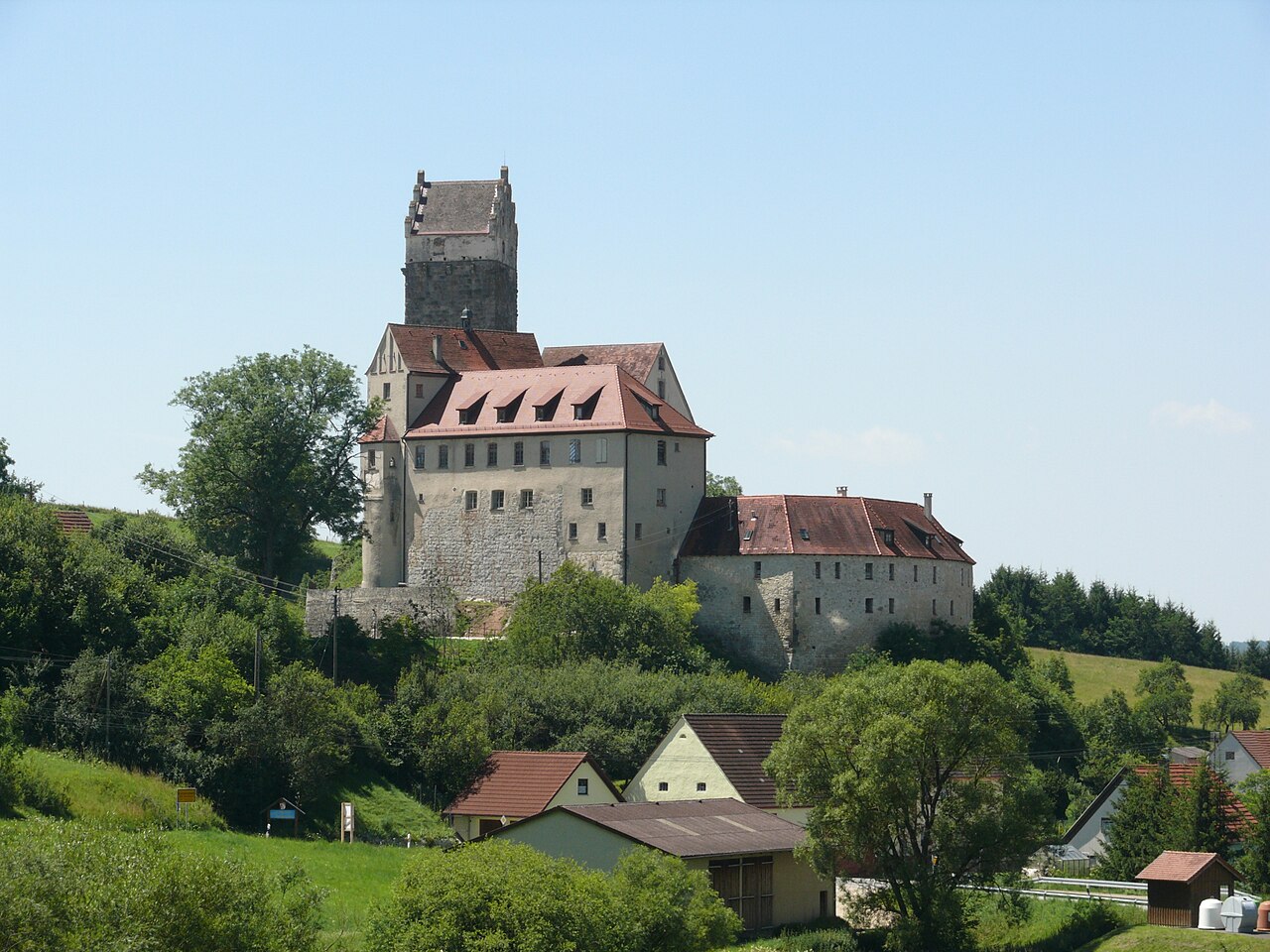
Taxis Castle, located in Dischingen, Germany, is a historic site with origins dating back to the 13th century. The castle stands as a testament to the architectural evolution from a medieval fortress to an elegant Renaissance residence. Owned by the princely house of Thurn und Taxis, the castle is not open to the public, but its rich history and surrounding natural park make it a notable landmark in the region.
Medieval origins and architectural evolution
The initial construction of the castle began between 1200 and 1374, originally serving as a fortified structure for the von Trugenhofen family. Over the centuries, the castle changed hands among prominent families including the Öttingern, Helfenstein, and Katzenstein families. This lineage reflects the castle's strategic and noble significance during the high medieval period.
In the mid-16th century, the castle underwent a significant transformation. Between 1564 and 1572, the present Renaissance style castle was constructed for the Fugger family, renowned for their wealth and influence in Europe. This reconstruction marked a shift from purely defensive architecture to a more comfortable and ornate residence, characteristic of Renaissance ideals emphasizing symmetry, proportion, and classical motifs.
From burg to schloss: transformation under thurn und taxis
In 1734, the castle was inherited by the princely house of Thurn und Taxis. The family expanded the original medieval burg into a schloss, enhancing its residential qualities and aesthetic appeal. The expansion included the addition of English gardens and terraces, reflecting the 18th-century trend of integrating landscaped gardens with noble residences. These gardens provide a picturesque setting and demonstrate the castle's transition from a fortress to a stately home.
The natural park and surrounding landscape
Adjacent to the castle is a nature park that is home to a variety of wildlife, including deer, wild pigs, and approximately 50 other species. This park is open to the public during daylight hours, offering visitors a chance to experience the natural beauty of the region. The presence of the park enhances the castle's appeal as a cultural and ecological site, blending historical architecture with environmental conservation.
Current ownership and access
Today, Taxis Castle remains under the ownership of the princely house of Thurn und Taxis. The castle itself is privately owned by a physician who operates medical laboratories on the premises, which is why it is not accessible to visitors. Despite the restricted access to the castle interiors, the surrounding park and gardens provide a public space for recreation and appreciation of the castle's heritage.
Architectural significance and historical context
Taxis Castle exemplifies the architectural transitions from medieval fortifications to Renaissance residences in southern Germany. Its construction phases reveal the evolving needs and tastes of noble families, from defense and control to comfort and display of wealth. The castle's association with prominent families like the Fuggers and Thurn und Taxis underscores its importance in regional history and aristocratic culture.
The castle's Renaissance style is characterized by its harmonious proportions, decorative elements, and integration with landscaped gardens, which were innovative features during the period. The English gardens and terraces added in the 18th century further enhance its architectural and cultural value, making it a significant example of noble estate development in the region.
Frequently asked questions (FAQ)
- What is the historical significance of Taxis Castle?
- Taxis Castle, located in Dischingen, Germany, dates back to the late 16th century and is an important example of Renaissance architecture. It served as a residence for the noble Taxis family and has witnessed significant events in local history, making it a valuable heritage site.
- When is the best time to visit Taxis Castle?
- The best time to visit Taxis Castle is during the spring and early autumn months, from April to October, when the weather is mild and pleasant. This allows visitors to enjoy the beautiful gardens and surrounding landscapes in full bloom.
- Can I take a guided tour of Taxis Castle?
- Yes, guided tours are available at Taxis Castle, offering visitors an in-depth look at its history and architecture. These tours are typically conducted in both German and English, ensuring a rich understanding of the castle's significance.
- What are the opening hours for Taxis Castle?
- Taxis Castle is open to visitors from Tuesday to Sunday, from 10 AM to 6 PM. It is advisable to check the official website for any seasonal changes in hours or special events that may affect access.
- Is it possible to host events at Taxis Castle?
- Yes, Taxis Castle offers facilities for hosting various events, including weddings and corporate meetings. The stunning backdrop of the castle adds a unique charm to any occasion, making it a popular choice for memorable events.
- What are the ticket prices for Taxis Castle?
- Admission to Taxis Castle is generally priced at €8 for adults, with discounts available for students and seniors. Children under 12 can enter for free, making it an affordable outing for families.
- How do I access Taxis Castle using public transportation?
- Taxis Castle is accessible by public transportation, with regular bus services connecting Dischingen to nearby towns and cities. Visitors can take a train to the nearest station and then use local bus services to reach the castle conveniently.
- Are there any nearby attractions to visit after Taxis Castle?
- Yes, after visiting Taxis Castle, you can explore the beautiful landscapes of the Swabian Jura or visit nearby attractions such as the historic town of Heidenheim and the archaeological site of the Cave of Hohlenstein. These sites offer a blend of culture, history, and natural beauty.
Information
Website
Visit websiteSources & official resources
Verify the information above using these authoritative references.
Loading map...
Visitor reviews
No reviews yet. Been here? Write the first review and help other travelers!
Write the first reviewVisited this castle? Share your experience
Your review helps other travelers and adds first-hand knowledge to our encyclopedia.