Ballmertshofen Castle
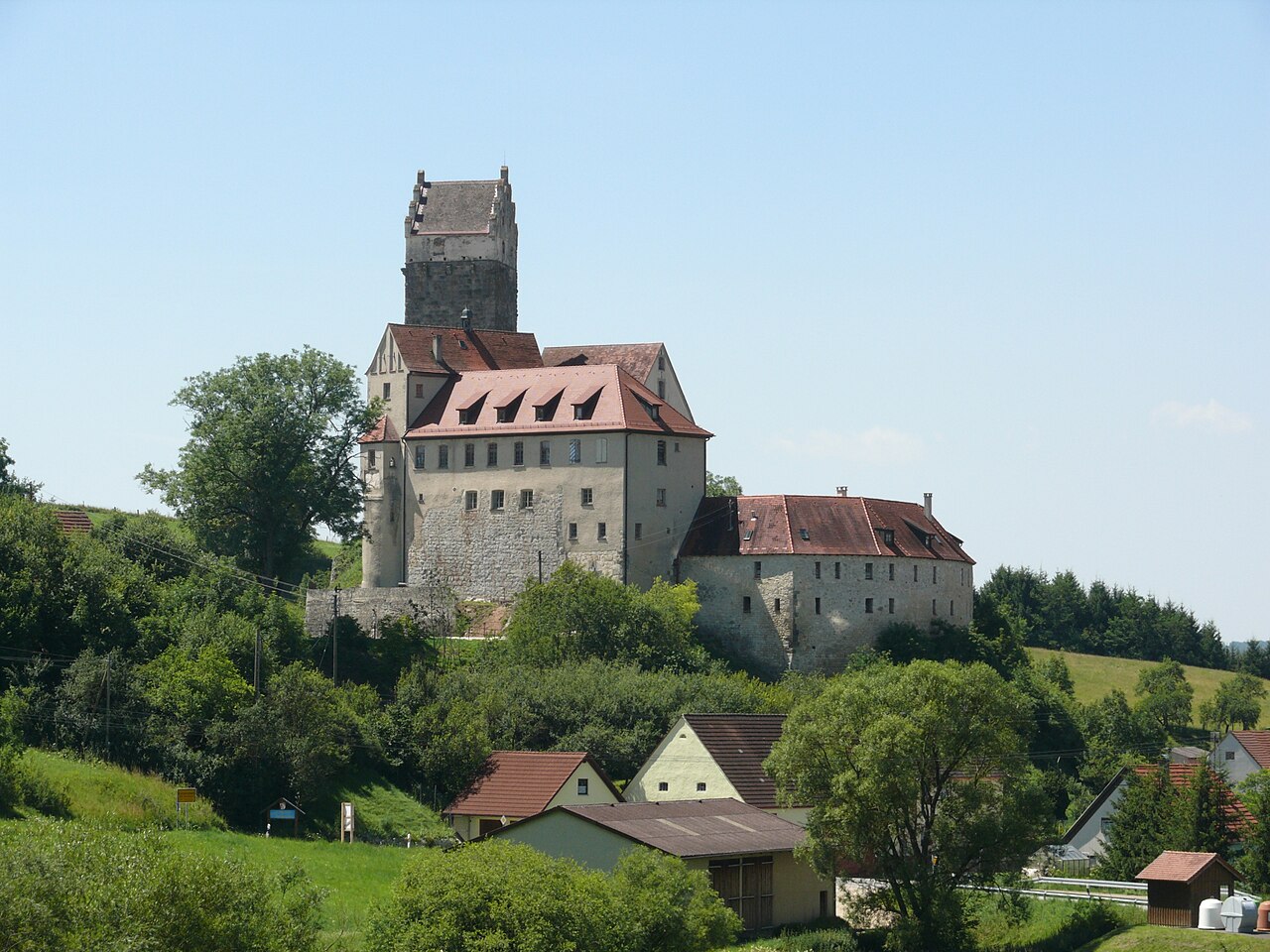
Ballmertshofen Castle stands as a notable example of a Renaissance schloss built upon the foundations of an earlier medieval fortress in Ballmertshofen, Germany. The site’s history dates back to the 12th century, with the first documented mention occurring in 1236 when the castle was granted by Count von Dillingen to Neresheim Abbey. This early medieval origin is further substantiated by archaeological findings, including a cistern discovered in 1987 beneath the southeast wall, which dates to the original 12th-century structure.
Medieval origins and ownership transitions
The castle’s ownership history reflects the shifting political landscape of the region. From 1256 to 1368, it was held by the von Hürnheim family, followed by the von Westerstetten family from 1368 until 1442. In the early 16th century, the hospital in Ulm and the von Westernach family controlled the property until 1538. These transitions highlight the castle’s strategic and feudal importance during the High and Late Medieval periods.
Renaissance transformation into a schloss
During the mid-16th century, the castle underwent significant reconstruction under the ownership of the von Leonrodt family, who ruled from 1535 to 1637. This transformation converted the medieval fortress into a schloss, a type of fortified residence that combined defensive features with the comfort and aesthetics of a noble home. The architectural style reflects the Renaissance period’s emphasis on symmetry, proportion, and classical elements, distinguishing it from purely military castles.
Architectural features and alterations
Originally, the castle included an octagonal tower at the southeast corner, a feature typical of Renaissance fortifications, which was later removed. The structure’s layout and remaining walls suggest a blend of defensive and residential functions, with courtyards, living quarters, and service buildings integrated within its walls. Subsequent owners, including the von St. Vincent family from 1637 and later the Princely house of Thurn und Taxis from 1749, maintained the castle primarily as a noble residence and for administrative purposes.
Modern history and adaptive reuse
In the 19th century, the castle served various functions, including as the residence of the princes' chief hunter and as a rental property until 1851. The community of Ballmertshofen acquired the castle in 1865, repurposing it as a school and town hall. With the onset of World War II, the castle was used as a prisoner of war camp in 1940. After the war, the school relocated in 1959, and by the 1970s, the castle was vacated and fell into neglect.
Restoration and cultural significance
Starting in 1986, a series of renovations restored the castle’s structure and improved its condition. Since 1968, the castle has housed the Ländliche Bildergalerie (Rural Living Art Gallery), featuring a collection assembled by Dr. Horst Moeferdt, a dentist from Dischingen. The gallery includes regional rural art from the Härtsfeld area, with religious paintings representing both Catholic and Evangelical traditions. Noteworthy pieces include guardian angels, Christ on the Mount of Olives, and Madonna with roses. The collection also preserves unique Haarbilder, artworks made from the hair of children who died young, framed by scriptural quotes.
Additionally, the gallery displays Reservistenbilder from the Kaiser era before World War I, illustrating the call to arms and military service. The castle’s cultural role as a regional art center complements its historical significance, attracting visitors interested in both its architectural heritage and its artistic collections. The gallery is open every Sunday from 11 am to 12 pm, offering a glimpse into the rural cultural history of the region.
Architectural and historical importance
Ballmertshofen Castle exemplifies the evolution of a medieval fortress into a Renaissance schloss, reflecting broader trends in castle architecture where defensive needs gradually gave way to residential comfort and status display. The castle’s layered history, marked by changes in ownership, function, and architectural style, provides valuable insights into the feudal and post-feudal eras of southern Germany.
The preservation efforts since the late 20th century have ensured that this heritage site remains accessible and informative. Its combination of medieval foundations, Renaissance architecture, and modern cultural use makes it a noteworthy destination for those interested in German castles, historical architecture, and regional art traditions.
Frequently asked questions (FAQ)
- How do I get to Ballmertshofen Castle?
- Ballmertshofen Castle is conveniently located in Ballmertshofen, Germany, and is accessible by car and public transport. The nearest train station is a short bus ride away, and ample parking is available for visitors who choose to drive.
- What is the historical significance of Ballmertshofen Castle?
- Ballmertshofen Castle dates back to the 12th century and has played a crucial role in the region's history. It served as a defensive stronghold and residence for local nobility, reflecting the architectural styles and societal structures of its time.
- When was Ballmertshofen Castle built?
- The construction of Ballmertshofen Castle began in the early 12th century, with various expansions and renovations occurring over the centuries. Its rich history is evident in the blend of architectural styles that can be seen throughout the castle.
- Can I take a guided tour of Ballmertshofen Castle?
- Yes, guided tours are available for visitors who wish to learn more about the castle's history and architecture. These tours are conducted by knowledgeable guides and typically last about an hour, providing insights into the castle's past and its significance.
- Why is the architecture of Ballmertshofen Castle noteworthy?
- The architecture of Ballmertshofen Castle showcases a mix of medieval and Renaissance styles, making it a fascinating study for history and architecture enthusiasts. Key features include its imposing towers, intricate stonework, and beautifully preserved interiors that reflect the craftsmanship of the era.
- Is it possible to visit Ballmertshofen Castle year-round?
- Yes, Ballmertshofen Castle is open to visitors year-round, although hours may vary seasonally. It is advisable to check the official website or contact the castle for specific opening times during holidays or special events.
- What are the ticket prices for visiting Ballmertshofen Castle?
- Ticket prices for Ballmertshofen Castle are quite reasonable, with discounts available for students, seniors, and children. Family packages are also offered, making it an affordable outing for visitors of all ages.
- What is the best time to visit Ballmertshofen Castle?
- The best time to visit Ballmertshofen Castle is during the spring and early autumn when the weather is mild, and the gardens are in full bloom. Additionally, visiting during weekdays can help you avoid larger crowds, allowing for a more enjoyable experience.
- Are there any nearby attractions to visit after Ballmertshofen Castle?
- Yes, there are several nearby attractions, including beautiful parks, local museums, and charming villages. Visitors can also explore scenic hiking trails and enjoy the picturesque landscapes of the surrounding countryside.
Information
Loading map...
Visitor reviews
No reviews yet. Been here? Write the first review and help other travelers!
Write the first reviewVisited this castle? Share your experience
Your review helps other travelers and adds first-hand knowledge to our encyclopedia.