Tavira Castle

Tavira castle in the algarve, portugal
Tavira, Portugal
High Medieval (11th–13th c.)
Partially Preserved

Tavira Castle, or Castelo de Tavira, is a historic fortress located in the town of Tavira in the Algarve region of Portugal. The castle holds a significant place in the region's medieval military architecture and history, reflecting centuries of strategic importance along the southern coast of the Iberian Peninsula.

The origins of Tavira Castle are somewhat obscure. While some accounts suggest that a fortress existed on this site as early as the 8th century BC, possibly rebuilt by the Phoenicians, the extant structure predominantly dates from the 11th century. This period coincides with the era of Islamic rule in the Iberian Peninsula, during which the castle served as a key defensive stronghold.

Historical background and reconquest significance

The castle played a pivotal role during the Reconquista, the Christian reconquest of territory from the Moors. In 1242, the town and castle were captured by the Christian knight Don Paio Peres Correia. Shortly after, in 1244, King Sancho II granted the castle to the Order of the Knights of Santiago, a military order instrumental in the Reconquista. However, the order renounced the castle about 30 years later.

Recognizing Tavira's strategic importance, King Denis ordered extensive remodeling and reconstruction of the castle in 1293. This work aimed to strengthen Tavira's defenses against increasing threats from piracy along the Algarve coast, reflecting the castle's ongoing military relevance well into the late medieval period.

Architectural features and layout

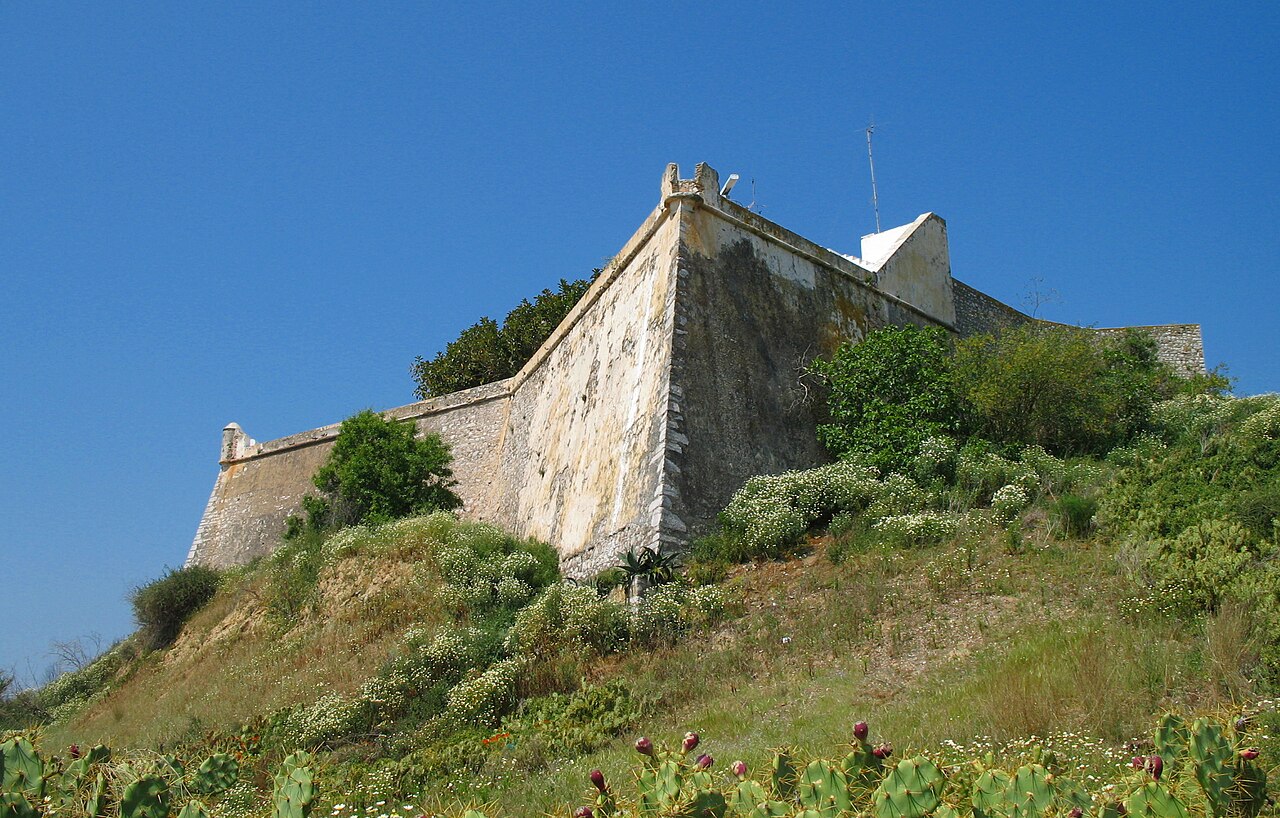
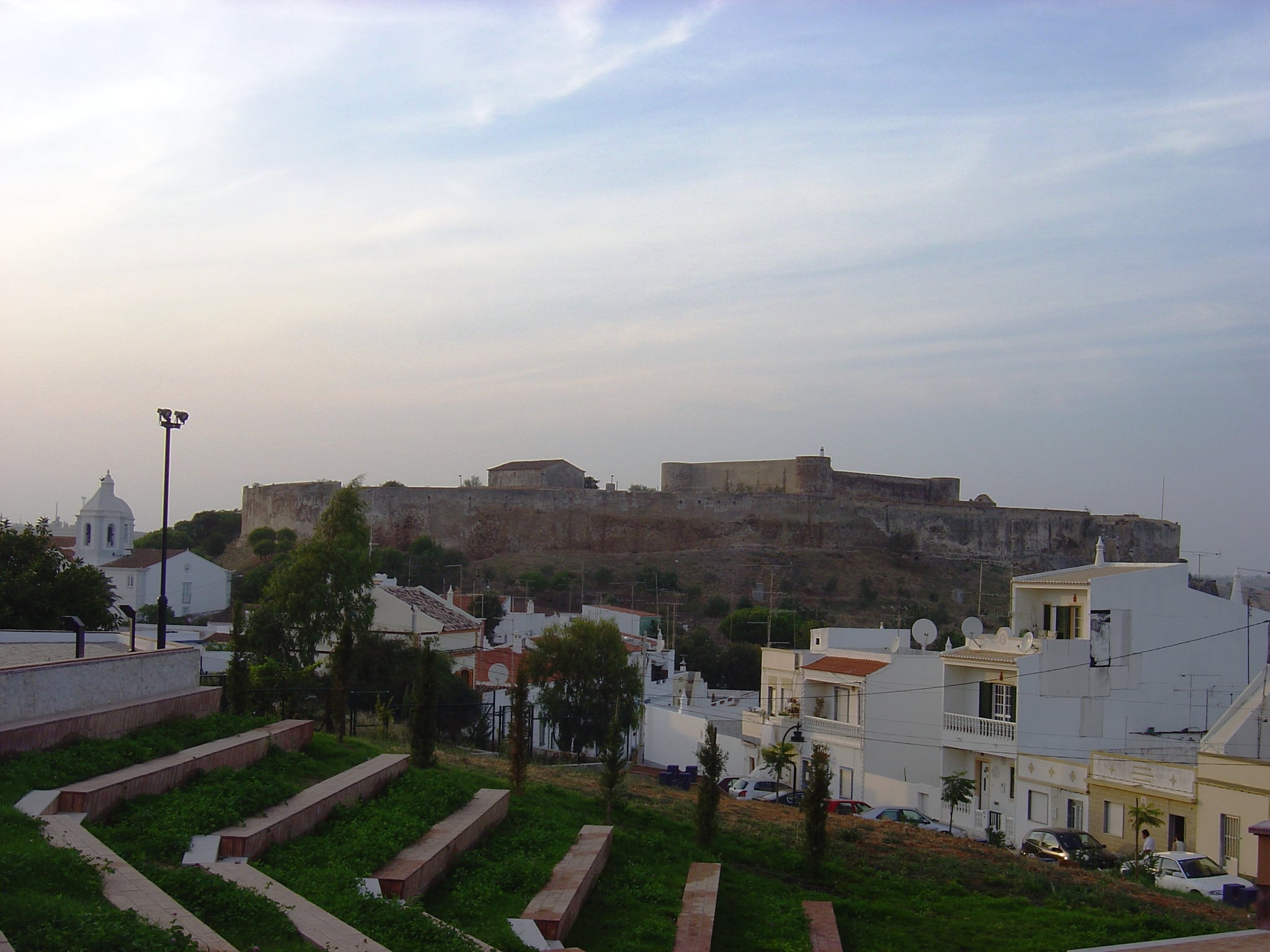
Tavira Castle was originally a small, roughly rectangular fortress. Today, visitors can see the remains of two square towers, an octagonal tower, and portions of the defensive walls on three sides. Notably, none of the surviving towers exhibit the typical characteristics of a keep, though historical evidence suggests one must have existed.

The castle's interior has been repurposed as a small garden, providing a peaceful contrast to its martial origins. Visitors are able to climb the surviving walls and towers, offering panoramic views over the town of Tavira and the Gilão River estuary. The castle's elevated position underscores its historical role in surveillance and coastal defense.

Damage and preservation

The castle and the town suffered significant damage during the 1755 Lisbon earthquake, which affected much of southern Portugal. Despite this, the remaining structures have been preserved to a degree that allows public access and appreciation of the castle's medieval heritage.

Surrounding medieval fortifications

Beyond the castle itself, the old town of Tavira features remnants of medieval city walls and towers. While these ruins are visible around the town, they are generally not accessible to visitors. These fortifications collectively illustrate the historical defensive network that protected Tavira from various threats over the centuries.

Visiting tavira castle

Tavira Castle is open to the public during daytime hours and offers free admission. Its compact size makes for a brief but rewarding visit, especially for those interested in medieval military architecture and Algarve history. The castle's vantage points provide excellent photographic opportunities of the town and surrounding landscape.

Frequently asked questions (FAQ)

How do I visit Tavira Castle and what are the opening hours?
Tavira Castle is open to visitors during the daytime and admission is free. It is advisable to check local tourism websites or visitor centers for the most current opening hours before planning your visit.
What is the historical significance of Tavira Castle?
Tavira Castle played a crucial role during the Reconquista and served as a defensive stronghold against Moorish forces and later piracy along the Algarve coast. It was remodeled by King Denis in the 13th century to strengthen its defenses.
Can I climb the towers and walls of Tavira Castle?
Yes, visitors are allowed to climb the surviving towers and walls of Tavira Castle, which offer panoramic views of the town and the Gilão River estuary.
What architectural styles are represented in Tavira Castle?
Tavira Castle features a mix of architectural styles due to its long history, including medieval military construction with elements from Islamic and later Christian periods.
Is Tavira Castle accessible for people with mobility issues?
Due to the castle's historic nature and uneven surfaces, accessibility may be limited for visitors with mobility challenges. It is recommended to inquire locally about specific accommodations.
Are there other historical sites near Tavira Castle?
Yes, the old town of Tavira has several remnants of medieval city walls and towers, although these are generally not open to the public. The town itself offers a rich historical environment worth exploring.

Information

Hill Castle

Address

Largo Abu-Otmane, Tavira, Algarve, Portugal

Loading map...

Visitor reviews

No reviews yet. Been here? Write the first review and help other travelers!

Write the first review

Visited this castle? Share your experience

Your review helps other travelers and adds first-hand knowledge to our encyclopedia.

Write a review

(5/5)

0/2000 characters

Your review will be visible after admin approval

Nearby castles

0.2 km

Castle of Tavira

Tavira, Portugal

The Castle of Tavira stands as a remarkable testament to the rich and complex history of southern Portugal. Located in the town of Tavira, this hill castle occupies a strategic position overlooking the Gilão River, a site that has been continuously inhabited since prehistoric times. The castle's location offered both military and economic advantages, controlling access to the river and the surrounding maritime routes that were vital throughout its history. Archaeological evidence reveals that the site of Tavira was significant long before the medieval castle was constructed. Among the earliest remains is a segment of a Phoenician wall dating back to the 8th century BC, indicating the presence of one of the ancient Mediterranean's great trading civilizations. Later, under Roman rule, the settlement known as Balsa flourished due to its position on a key river crossing, although no Roman military fortifications survive today. This continuity of occupation underscores Tavira's enduring strategic importance. Islamic period fortifications and early history From the 11th century, Tavira came under Muslim control and was known as at-Tabira. It became a vital center within the Algarve region of Al-Andalus, reflecting its prominence in the Muslim world. The castle's earliest fortifications date from the Almoravid period in the late 11th or early 12th century, when a small alcáçova or citadel was established at the southeast corner of the site. This was surrounded by a modest enclosure aligned roughly north-south, forming the initial defensive perimeter. During the Almohad period, significant architectural enhancements were made, including the construction of rammed-earth walls or taipa, which provided sturdy defensive barriers. A notable feature from this era is the discovery of a horseshoe-arched gate near the present-day Praça da República, exemplifying the Islamic architectural style. The presence of an albarrã tower, a detached multi-sided defensive tower facing south, highlights the sophisticated military architecture employed to protect the settlement. Christian reconquest and medieval expansion The Christian conquest of Tavira occurred on 11 June 1239, led by D. Paio Peres Correia, the Master of the Order of Santiago. This event marked a pivotal shift in the castle's history, as it transitioned from Muslim to Christian control. Following the conquest, King Sancho II granted the town and its church patronage to the Order of Santiago, a move confirmed by Pope Innocent IV in 1245, establishing a new era of governance and fortification. Throughout the 13th and 14th centuries, the castle and town walls were repaired and expanded, especially under King Dinis (1279–1325). The fortifications were reshaped into the oval plan that is still discernible today, enclosing roughly five hectares. The medieval walls featured seven gates, each serving strategic and civic functions. Among these, the D. Manuel Gate is particularly noteworthy for its Gothic architecture, characterized by a broken arch and the heraldic arms of King Manuel I. This gate served as the main entrance and symbolized royal authority. The castle's defensive importance continued through turbulent periods such as the 1383-1385 Portuguese interregnum crisis, when it was entrusted to the noble Fernão Álvares Pereira. The castle also played a role during the Age of Discoveries, reflecting Tavira's maritime significance, although by 1475 the castle was reported to be in disrepair. Early modern modifications and decline In the early 16th century, King Manuel I granted Tavira a new charter in 1504 and elevated it to city status in 1520. During this period, Vasco Eanes Corte-Real served as the castle's governor, overseeing its administration. The mid-16th century saw further military developments, including the construction of the Forte de Santo António near the river mouth to bolster coastal defenses. The Portuguese Restoration War in the 17th century prompted modernization of the castle's defenses to accommodate artillery warfare. King João IV ordered enhancements that reflected contemporary military engineering principles. Additionally, the Fortaleza de São João da Barra de Tavira was constructed between 1672 and 1717, further strengthening the town's fortifications against maritime threats. Despite these efforts, the devastating 1755 Lisbon earthquake caused significant damage to the castle and its walls. Over the following centuries, much of the defensive perimeter was dismantled, reflecting changes in military technology and urban development. However, recognition of the castle's historical and cultural value led to its designation as a National Monument—the walls in 1939 and the castle itself in 2014. Architectural features and surviving remains The Castle of Tavira today reveals a complex architectural palimpsest, showcasing layers of construction from different historical periods. Its oval-shaped fortified area covers approximately five hectares, a testament to the town's medieval prominence. The surviving fortifications include sections of rammed-earth walls from the Islamic period, the distinctive albarrã tower, and the well-preserved D. Manuel Gate with its Gothic elements. Seven named gates once punctuated the medieval walls: Fernão Mendes, Mouraria, Postigo, Feição, Vila Fria, D. Manuel, and Porta Nova. While many of these gates have not survived intact, their historical presence highlights the castle's role as a fortified urban center. The layout and construction techniques reflect adaptations to evolving military technologies and the changing political landscape over centuries. Modern visitors to Tavira can explore these remnants to gain insight into the castle's multifaceted history, from its prehistoric origins through Islamic and Christian periods to its early modern transformations. The castle remains an enduring symbol of Tavira's cultural heritage and its strategic importance in the Algarve region. Preservation and cultural significance Efforts to preserve the Castle of Tavira have emphasized its importance as a cultural landmark. The National Monument status has helped protect the remaining structures and promote archaeological research. The castle is a focal point for understanding the military, architectural, and urban development of Tavira and the wider Algarve. Today, the castle serves not only as a historical site but also as a cultural venue, hosting events and attracting visitors interested in Portugal's medieval heritage. Its layered architecture offers a tangible connection to the diverse peoples and epochs that shaped this coastal town.

High Medieval (11th–13th c.)
Details
10 km
Fort Cacela Velha — Portugal castle

Fort Cacela Velha

Vila Nova de Cacela, Portugal

Fort Cacela Velha, also known locally as Forte de Cacela Velha or Fortaleza de Cacela, is a bastioned fortress situated in the small village of Cacela Velha in the Algarve region of Portugal. This historic site stands on a strategic cliff overlooking the Ria Formosa lagoon, a protected natural park known for its rich biodiversity and scenic coastal landscapes. Medieval origins and reconquest history The earliest known fortification at this site was a Muslim castle mentioned in records dating back to the early 12th century. During the Reconquista, Christian forces captured the castle in the mid-13th century. Subsequently, King Afonso III of Portugal granted the castle and its lands to the Order of Santiago, a military religious order tasked with defending the territory and aiding in the Christian reconquest efforts. The Order undertook significant reconstruction of the castle, adapting it to the military needs of the time. Decline and coastal defense transformation By the mid-16th century, the original medieval castle had fallen into ruin. Recognizing the strategic importance of this coastal point, the Portuguese crown ordered the rebuilding of the fortifications to protect against increasing threats from pirates and maritime incursions. Despite these efforts, by 1617 the walls on the cliff side were again in a state of disrepair. The devastating 1755 Lisbon earthquake caused extensive damage to the fortress, leaving it largely in ruins. The earthquake's impact on the Algarve coast was severe, and Fort Cacela Velha was no exception. 18th-century bastioned fortress construction The present-day structure of Fort Cacela Velha was constructed between 1770 and 1794 on the foundations and remnants of the earlier medieval fortifications. This reconstruction followed the principles of the bastioned fortress style, which was prevalent in European military architecture during the late Renaissance and early modern periods. The fort is designed as a square plan with two square corner towers on the northern side, facing inland, and two star-shaped bastions on the southern side, oriented toward the sea. These bastions were intended to provide overlapping fields of fire to defend against naval attacks. A small turret is located on the western bastion, while the turret on the eastern bastion remains incomplete. Location and environmental significance Fort Cacela Velha is located within the boundaries of the Nature Park of Ria Formosa, an important protected area under the Rede Natura 2000 network. The fort and its surroundings are part of the Special Protection Zone of Cacela Velha and designated as a Sítio de Interesse Comunitário (Community Site of Interest) for the Ria Formosa and Castro Marim regions. This status highlights the area's ecological value and the need for conservation alongside cultural heritage preservation. Current use and visitor information Today, the fort is not open to the public as it is used by the GNR (National Republican Guard) for operational purposes. Visitors to the village of Cacela Velha can enjoy the quiet atmosphere and scenic views over the lagoons and coastline. During the summer months, the village's few restaurants attract tourists who come to experience the peaceful surroundings and natural beauty. Architectural features and military significance The fort's bastioned design reflects the military architectural evolution from medieval castles to modern coastal defenses. The star-shaped bastions allowed defenders to cover blind spots and provided better protection against cannon fire and siege tactics. The combination of square towers and angular bastions illustrates the transition in fortification styles adapting to gunpowder weaponry. Although the fort is relatively small, its location on a cliff gave it a commanding view of the sea approaches and the Ria Formosa lagoon, making it a critical point for monitoring and defending the Algarve coast. Historical context within the Algarve region The Algarve has a long history of fortifications due to its strategic position along the Atlantic coast and proximity to the Mediterranean. Fort Cacela Velha is one of several coastal forts built or rebuilt during the 18th century to counter threats from pirates and foreign navies. Its history mirrors the broader military and political changes in Portugal from the medieval period through the early modern era. Preservation and cultural heritage While the fort itself is not accessible to visitors, its preservation as part of the Natura 2000 and Nature Park of Ria Formosa ensures its protection. The site represents an important link between Portugal's medieval past and its coastal defense strategies in the age of sail and early artillery. Efforts to maintain the fort and its surroundings contribute to the cultural landscape of the Algarve and offer insight into the region's historical military architecture.

High Medieval (11th–13th c.)
Details
15.8 km
Castle of Castro Marim — Portugal castle

Castle of Castro Marim

Castro Marim, Portugal

The Castle of Castro Marim stands as a monumental testament to Portugal's turbulent medieval past and strategic military architecture. Perched on a commanding hilltop overlooking the Guadiana River near the Spanish border, this 13th-century hill castle played a pivotal role in the Portuguese Reconquista and later in the 17th-century Restoration War. Its location near the salt marshes and river mouth created a unique natural defensive advantage, making it a critical stronghold for controlling frontier access. Originally built during the High Medieval period, the castle's earliest occupation dates back far earlier, with archaeological evidence revealing continuous use from the Neolithic era through successive Phoenician, Greek, Carthaginian, and Roman settlements. Each culture contributed layers to the site's fortifications and infrastructure, establishing the area as a significant political and economic hub long before the medieval fortress was constructed. Historical significance and medieval origins The castle's medieval prominence began in earnest during the 13th century when it became a crucial military and administrative center in the conflict between Christian Portuguese forces and the Moors. In 1238, King Sancho II successfully seized control of the Guadiana River's mouth, and by 1242, the fortress itself was captured by Paio Peres Correia, a commander of the Military Order of Santiago. This victory marked a turning point in the Christian reconquest of southern Portugal. To consolidate control and encourage settlement, King Afonso III granted a royal charter to the town of Castro Marim in 1277 and initiated extensive reconstruction of the castle. His successor, King Denis (reigning 1279–1325), further fortified the site by adding the barbican, known locally as the Castelo de Fora, an outer defensive wall that enhanced the castle's protection against siege warfare. An inscription dating from July 1, 1279 commemorates the start of these works, underscoring the importance of this phase in the castle's development. Military orders and religious influence The castle's administration passed to the Military Order of Christ in 1319 by papal decree from Pope John XXII. This order established its first headquarters at Castro Marim, highlighting the fortress's role not only as a military bastion but also as a religious center. However, in 1334, control reverted to the Order of Santiago, who constructed the Church of Santiago within the castle walls, intertwining martial and spiritual functions. Throughout the late medieval period, the castle remained a vital stronghold, receiving upgrades and maintenance to adapt to evolving military technology and threats. Notably, under King Manuel I in the early 1500s, the castle's fortifications were modernized, including improvements to the barbican and walls that took advantage of the natural terrain. These renovations are well documented by the chronicler Duarte de Armas around 1509–1510, who illustrated the castle's defensive layout and features. Architectural features and fortifications The Castle of Castro Marim is architecturally distinguished by its irregular triangular outer walls and trapezoidal inner enclosure, both fortified with battlements topped by merlons—the vertical solid portions of crenellated parapets used for cover during defense. The outer wall includes low rectangular towers at the eastern and western corners, featuring terraces and simple doorways. A finely carved coat of arms of Portugal in sandstone, accompanied by an inscription in Caroline-Gothic script, adorns the western tower's entrance, commemorating the settlement efforts of King Afonso III in 1274. The inner fortress is anchored by four cylindrical towers at each corner, several crowned with traditional wooden conical roofs. Two main gates provide access on the north and south sides, one prominently marked with a coat of arms and an inscription dating to 1279, linking it to the fortification works under King Denis. The castle's interior features a long courtyard containing essential structures such as a chapel and two cisterns designed for rainwater collection, reflecting the self-sufficiency of the fortress during sieges. Adjoining buildings rising two to three stories high line the west and north walls, with rectangular doors and windows that reveal architectural adaptations spanning centuries. The eastern section holds the ruins of the original alcazaba, the Moorish citadel that predated the Christian castle, providing a tangible link to the site's Islamic past. On the southern perimeter, remnants of a keep survive, consisting of a rectangular bulwark and a low bastion. This defensive tower features two levels of windows, a false portico entryway, and is further shielded by a projecting body without battlements, demonstrating the layered complexity of the castle's defensive architecture. The barbican and religious buildings The Castelo de Fora, the castle's triangular outer defensive enclosure or barbican, is notable for its battlements and chemin de ronde—an elevated walkway along the walls used by sentries. Within this outer ward stand three significant religious buildings: the Church of Santiago, the Church of Santa Maria, and the Church of Misericórdia. These churches emphasize the castle's role as a religious as well as military center. The barbican also houses a museum complex that displays archaeological finds from the castle grounds, offering visitors insight into the site's extensive history. At the southern vertex of the barbican is an artillery platform designed to mount cannons, reflecting the adaptation of the fortress to gunpowder-era warfare. Quadrangular towers with terraces and round-arched doorways anchor the eastern and western corners, completing the defensive perimeter. Later history and preservation During the Restoration War of the mid-17th century, the castle underwent significant remodeling to strengthen its defenses against Spanish forces. A new bulwark was completed under King Afonso VI, integrating the castle into a broader coastal defense network that included the nearby Fort of São Sebastião and the Revelim of Santo António. This network was vital for maintaining Portuguese sovereignty along the border. The devastating 1755 Lisbon earthquake inflicted considerable damage on the castle and the town within its walls. Reconstruction efforts led by King Joseph I included relocating the Church of Santiago to a nearby hermitage, reflecting the challenges of restoring such a complex site after natural disasters. In the 20th century, multiple restoration campaigns began in 1942 and continued through the 1980s, focusing on stabilizing the castle's masonry and roofing. Archaeological excavations conducted from 2000 to 2003 under the direction of Ana Margarida Arruda uncovered further details about the site's layered history, revealing artifacts and structural elements from its diverse phases of occupation. Today, the Castle of Castro Marim is recognized as a National Monument since 1910 and forms part of a protected natural reserve along the Guadiana River. Its well-preserved walls, towers, and religious buildings stand as a vivid record of Portugal's medieval military architecture and frontier history, attracting scholars, tourists, and heritage enthusiasts alike. Architectural materials and defensive systems The castle's construction predominantly features masonry composed of carefully laid stone blocks, chosen for their strength and durability. Sandstone carvings of coats of arms and inscriptions decorate key gateways and towers, including symbolic imagery such as five castles combined with four shields arranged in a cross pattern and another depicting three escutcheons. These heraldic elements underscore the castle's royal and military affiliations. The defensive system of Castro Marim was historically integrated with nearby fortifications, including the Fort of São Sebastião and the Revelim of Santo António, creating a layered defense network that protected the Portuguese frontier. The castle's design reflects adaptations to evolving military technologies, from medieval siege tactics to early modern artillery warfare. Visitor experience and cultural significance Visitors to the Castle of Castro Marim can explore its extensive fortifications, including the inner and outer walls, towers, and the barbican. The on-site museum offers a rich collection of archaeological artifacts that illuminate the castle's multifaceted history. The surrounding natural reserve enhances the experience, providing scenic views of the Guadiana River and the salt marshes. The castle remains a powerful symbol of Portuguese resilience and heritage, embodying centuries of military, religious, and civic life on the nation's southeastern frontier. Its preservation allows for ongoing study and appreciation of medieval fortification architecture and the historical narrative of border defense in Portugal.

High Medieval (11th–13th c.)
Details