Castle of Castro Marim
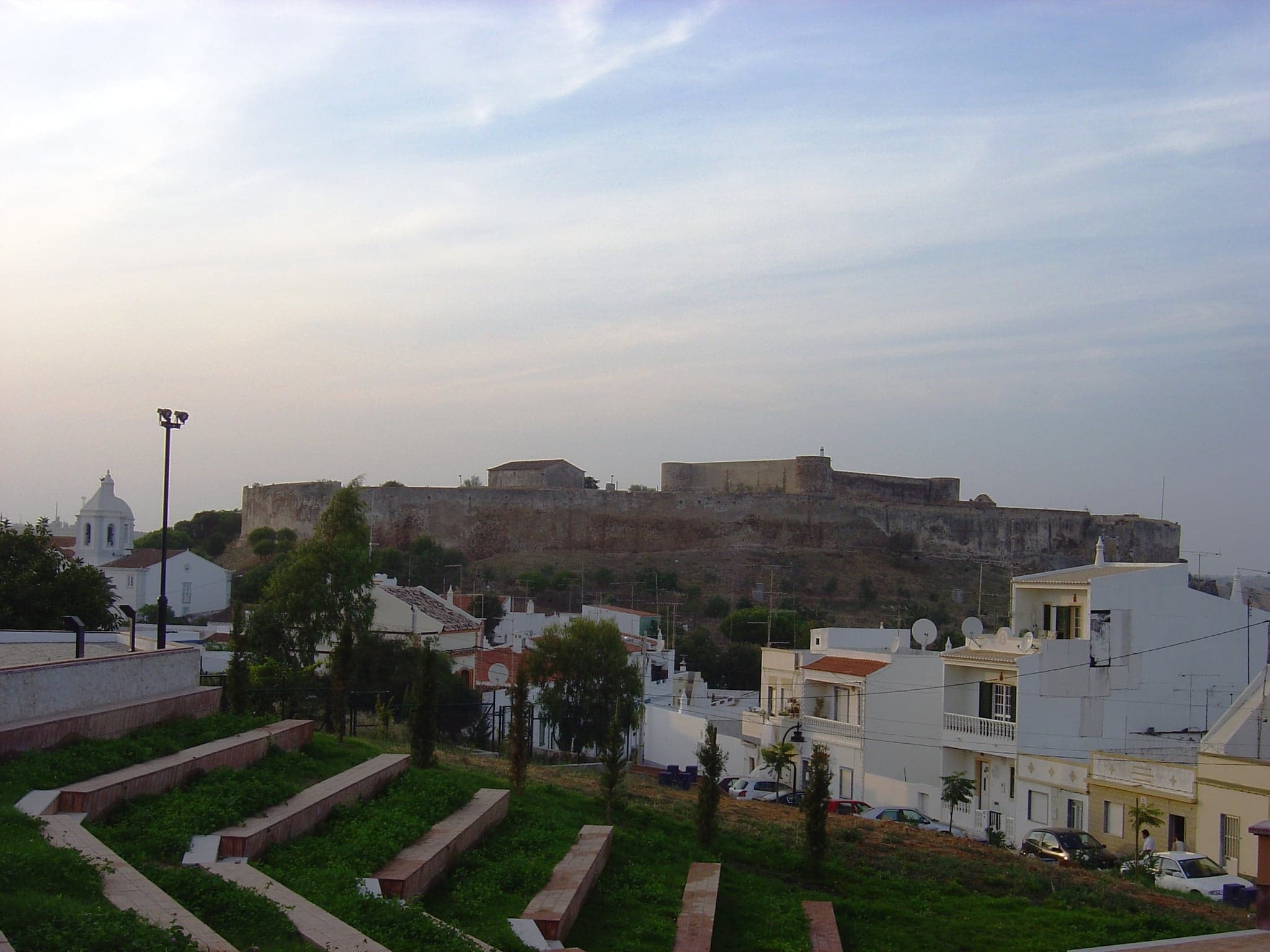
The Castle of Castro Marim stands as a monumental testament to Portugal's turbulent medieval past and strategic military architecture. Perched on a commanding hilltop overlooking the Guadiana River near the Spanish border, this 13th-century hill castle played a pivotal role in the Portuguese Reconquista and later in the 17th-century Restoration War. Its location near the salt marshes and river mouth created a unique natural defensive advantage, making it a critical stronghold for controlling frontier access.
Originally built during the High Medieval period, the castle's earliest occupation dates back far earlier, with archaeological evidence revealing continuous use from the Neolithic era through successive Phoenician, Greek, Carthaginian, and Roman settlements. Each culture contributed layers to the site's fortifications and infrastructure, establishing the area as a significant political and economic hub long before the medieval fortress was constructed.
Historical significance and medieval origins
The castle's medieval prominence began in earnest during the 13th century when it became a crucial military and administrative center in the conflict between Christian Portuguese forces and the Moors. In 1238, King Sancho II successfully seized control of the Guadiana River's mouth, and by 1242, the fortress itself was captured by Paio Peres Correia, a commander of the Military Order of Santiago. This victory marked a turning point in the Christian reconquest of southern Portugal.
To consolidate control and encourage settlement, King Afonso III granted a royal charter to the town of Castro Marim in 1277 and initiated extensive reconstruction of the castle. His successor, King Denis (reigning 1279–1325), further fortified the site by adding the barbican, known locally as the Castelo de Fora, an outer defensive wall that enhanced the castle's protection against siege warfare. An inscription dating from July 1, 1279 commemorates the start of these works, underscoring the importance of this phase in the castle's development.
Military orders and religious influence
The castle's administration passed to the Military Order of Christ in 1319 by papal decree from Pope John XXII. This order established its first headquarters at Castro Marim, highlighting the fortress's role not only as a military bastion but also as a religious center. However, in 1334, control reverted to the Order of Santiago, who constructed the Church of Santiago within the castle walls, intertwining martial and spiritual functions.
Throughout the late medieval period, the castle remained a vital stronghold, receiving upgrades and maintenance to adapt to evolving military technology and threats. Notably, under King Manuel I in the early 1500s, the castle's fortifications were modernized, including improvements to the barbican and walls that took advantage of the natural terrain. These renovations are well documented by the chronicler Duarte de Armas around 1509–1510, who illustrated the castle's defensive layout and features.
Architectural features and fortifications
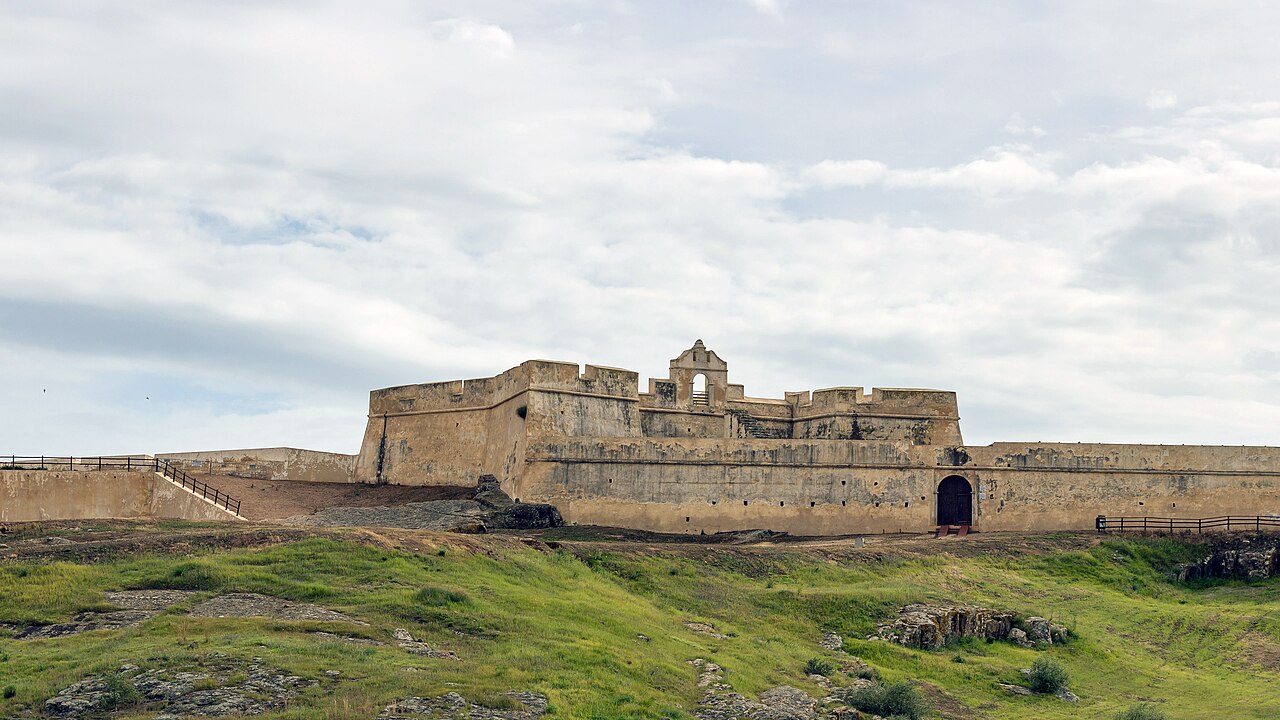
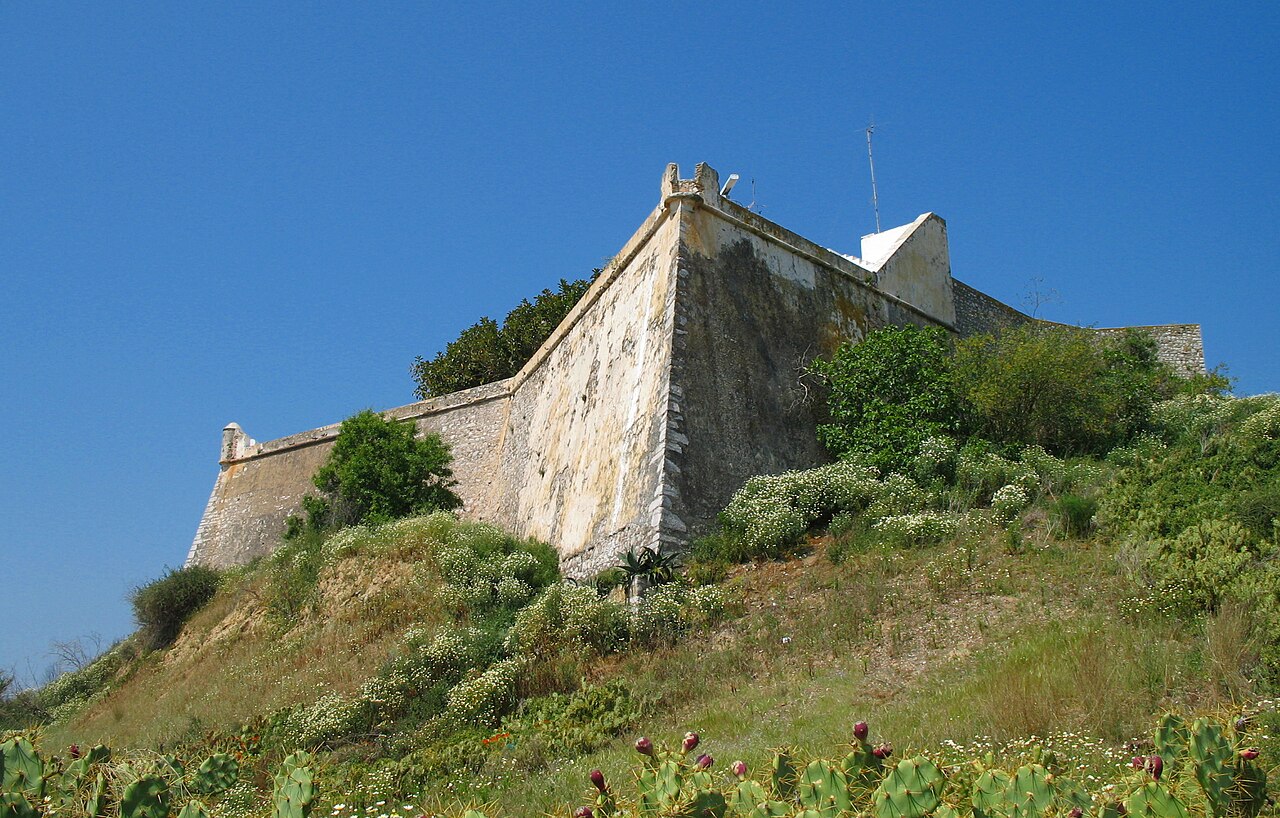
The Castle of Castro Marim is architecturally distinguished by its irregular triangular outer walls and trapezoidal inner enclosure, both fortified with battlements topped by merlons—the vertical solid portions of crenellated parapets used for cover during defense. The outer wall includes low rectangular towers at the eastern and western corners, featuring terraces and simple doorways. A finely carved coat of arms of Portugal in sandstone, accompanied by an inscription in Caroline-Gothic script, adorns the western tower's entrance, commemorating the settlement efforts of King Afonso III in 1274.
The inner fortress is anchored by four cylindrical towers at each corner, several crowned with traditional wooden conical roofs. Two main gates provide access on the north and south sides, one prominently marked with a coat of arms and an inscription dating to 1279, linking it to the fortification works under King Denis. The castle's interior features a long courtyard containing essential structures such as a chapel and two cisterns designed for rainwater collection, reflecting the self-sufficiency of the fortress during sieges.
Adjoining buildings rising two to three stories high line the west and north walls, with rectangular doors and windows that reveal architectural adaptations spanning centuries. The eastern section holds the ruins of the original alcazaba, the Moorish citadel that predated the Christian castle, providing a tangible link to the site's Islamic past.
On the southern perimeter, remnants of a keep survive, consisting of a rectangular bulwark and a low bastion. This defensive tower features two levels of windows, a false portico entryway, and is further shielded by a projecting body without battlements, demonstrating the layered complexity of the castle's defensive architecture.
The barbican and religious buildings
The Castelo de Fora, the castle's triangular outer defensive enclosure or barbican, is notable for its battlements and chemin de ronde—an elevated walkway along the walls used by sentries. Within this outer ward stand three significant religious buildings: the Church of Santiago, the Church of Santa Maria, and the Church of Misericórdia. These churches emphasize the castle's role as a religious as well as military center.
The barbican also houses a museum complex that displays archaeological finds from the castle grounds, offering visitors insight into the site's extensive history. At the southern vertex of the barbican is an artillery platform designed to mount cannons, reflecting the adaptation of the fortress to gunpowder-era warfare. Quadrangular towers with terraces and round-arched doorways anchor the eastern and western corners, completing the defensive perimeter.
Later history and preservation
During the Restoration War of the mid-17th century, the castle underwent significant remodeling to strengthen its defenses against Spanish forces. A new bulwark was completed under King Afonso VI, integrating the castle into a broader coastal defense network that included the nearby Fort of São Sebastião and the Revelim of Santo António. This network was vital for maintaining Portuguese sovereignty along the border.
The devastating 1755 Lisbon earthquake inflicted considerable damage on the castle and the town within its walls. Reconstruction efforts led by King Joseph I included relocating the Church of Santiago to a nearby hermitage, reflecting the challenges of restoring such a complex site after natural disasters.
In the 20th century, multiple restoration campaigns began in 1942 and continued through the 1980s, focusing on stabilizing the castle's masonry and roofing. Archaeological excavations conducted from 2000 to 2003 under the direction of Ana Margarida Arruda uncovered further details about the site's layered history, revealing artifacts and structural elements from its diverse phases of occupation.
Today, the Castle of Castro Marim is recognized as a National Monument since 1910 and forms part of a protected natural reserve along the Guadiana River. Its well-preserved walls, towers, and religious buildings stand as a vivid record of Portugal's medieval military architecture and frontier history, attracting scholars, tourists, and heritage enthusiasts alike.
Architectural materials and defensive systems
The castle's construction predominantly features masonry composed of carefully laid stone blocks, chosen for their strength and durability. Sandstone carvings of coats of arms and inscriptions decorate key gateways and towers, including symbolic imagery such as five castles combined with four shields arranged in a cross pattern and another depicting three escutcheons. These heraldic elements underscore the castle's royal and military affiliations.
The defensive system of Castro Marim was historically integrated with nearby fortifications, including the Fort of São Sebastião and the Revelim of Santo António, creating a layered defense network that protected the Portuguese frontier. The castle's design reflects adaptations to evolving military technologies, from medieval siege tactics to early modern artillery warfare.
Visitor experience and cultural significance
Visitors to the Castle of Castro Marim can explore its extensive fortifications, including the inner and outer walls, towers, and the barbican. The on-site museum offers a rich collection of archaeological artifacts that illuminate the castle's multifaceted history. The surrounding natural reserve enhances the experience, providing scenic views of the Guadiana River and the salt marshes.
The castle remains a powerful symbol of Portuguese resilience and heritage, embodying centuries of military, religious, and civic life on the nation's southeastern frontier. Its preservation allows for ongoing study and appreciation of medieval fortification architecture and the historical narrative of border defense in Portugal.
Frequently asked questions (FAQ)
- When was the castle of Castro Marim built?
- The castle was constructed in the 13th century during the High Medieval period, with significant fortification works under King Denis starting in 1279.
- What is the architectural style of the castle?
- The castle primarily exhibits Gothic architectural features typical of medieval military fortifications, including battlements with merlons, cylindrical towers, and a barbican.
- Can visitors explore the interior of the castle?
- Yes, visitors can explore the castle's inner courtyard, towers, and the barbican, as well as visit the on-site museum showcasing archaeological finds.
- Is the castle accessible year-round?
- The castle is generally open to visitors year-round, though specific opening hours may vary seasonally or due to restoration activities.
- What historical orders were associated with the castle?
- The castle was historically administered by the Military Order of Santiago and later by the Military Order of Christ, both of which played key roles in its defense and religious functions.
Photo gallery

Information
Website
Visit websiteSources & official resources
Verify the information above using these authoritative references.
Loading map...
Visitor reviews
No reviews yet. Been here? Write the first review and help other travelers!
Write the first reviewVisited this castle? Share your experience
Your review helps other travelers and adds first-hand knowledge to our encyclopedia.