Castle of Tavira
The Castle of Tavira stands as a remarkable testament to the rich and complex history of southern Portugal. Located in the town of Tavira, this hill castle occupies a strategic position overlooking the Gilão River, a site that has been continuously inhabited since prehistoric times. The castle's location offered both military and economic advantages, controlling access to the river and the surrounding maritime routes that were vital throughout its history.
Archaeological evidence reveals that the site of Tavira was significant long before the medieval castle was constructed. Among the earliest remains is a segment of a Phoenician wall dating back to the 8th century BC, indicating the presence of one of the ancient Mediterranean's great trading civilizations. Later, under Roman rule, the settlement known as Balsa flourished due to its position on a key river crossing, although no Roman military fortifications survive today. This continuity of occupation underscores Tavira's enduring strategic importance.
Islamic period fortifications and early history
From the 11th century, Tavira came under Muslim control and was known as at-Tabira. It became a vital center within the Algarve region of Al-Andalus, reflecting its prominence in the Muslim world. The castle's earliest fortifications date from the Almoravid period in the late 11th or early 12th century, when a small alcáçova or citadel was established at the southeast corner of the site. This was surrounded by a modest enclosure aligned roughly north-south, forming the initial defensive perimeter.
During the Almohad period, significant architectural enhancements were made, including the construction of rammed-earth walls or taipa, which provided sturdy defensive barriers. A notable feature from this era is the discovery of a horseshoe-arched gate near the present-day Praça da República, exemplifying the Islamic architectural style. The presence of an albarrã tower, a detached multi-sided defensive tower facing south, highlights the sophisticated military architecture employed to protect the settlement.
Christian reconquest and medieval expansion
The Christian conquest of Tavira occurred on 11 June 1239, led by D. Paio Peres Correia, the Master of the Order of Santiago. This event marked a pivotal shift in the castle's history, as it transitioned from Muslim to Christian control. Following the conquest, King Sancho II granted the town and its church patronage to the Order of Santiago, a move confirmed by Pope Innocent IV in 1245, establishing a new era of governance and fortification.
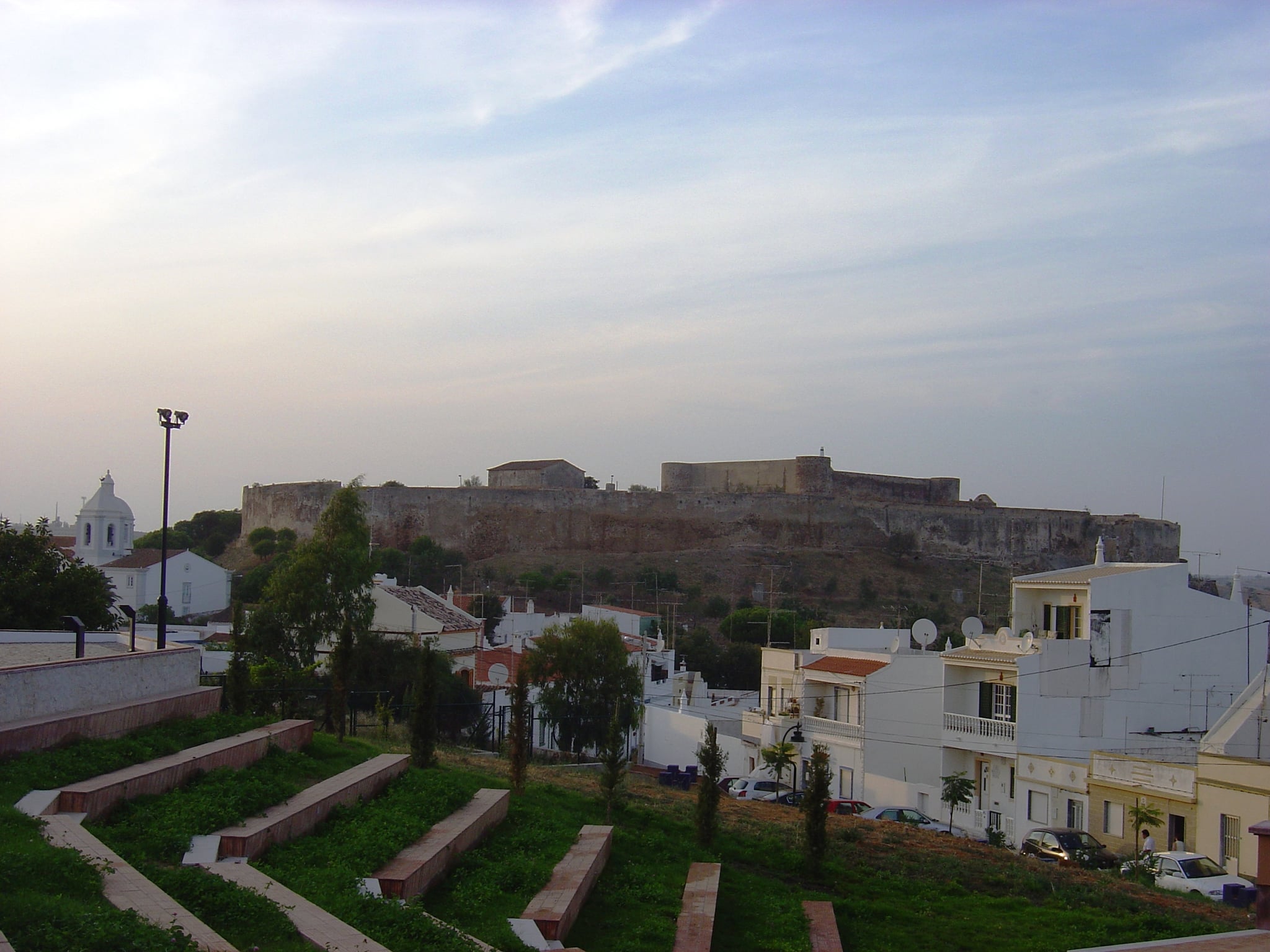
Throughout the 13th and 14th centuries, the castle and town walls were repaired and expanded, especially under King Dinis (1279–1325). The fortifications were reshaped into the oval plan that is still discernible today, enclosing roughly five hectares. The medieval walls featured seven gates, each serving strategic and civic functions. Among these, the D. Manuel Gate is particularly noteworthy for its Gothic architecture, characterized by a broken arch and the heraldic arms of King Manuel I. This gate served as the main entrance and symbolized royal authority.
The castle's defensive importance continued through turbulent periods such as the 1383-1385 Portuguese interregnum crisis, when it was entrusted to the noble Fernão Álvares Pereira. The castle also played a role during the Age of Discoveries, reflecting Tavira's maritime significance, although by 1475 the castle was reported to be in disrepair.
Early modern modifications and decline
In the early 16th century, King Manuel I granted Tavira a new charter in 1504 and elevated it to city status in 1520. During this period, Vasco Eanes Corte-Real served as the castle's governor, overseeing its administration. The mid-16th century saw further military developments, including the construction of the Forte de Santo António near the river mouth to bolster coastal defenses.
The Portuguese Restoration War in the 17th century prompted modernization of the castle's defenses to accommodate artillery warfare. King João IV ordered enhancements that reflected contemporary military engineering principles. Additionally, the Fortaleza de São João da Barra de Tavira was constructed between 1672 and 1717, further strengthening the town's fortifications against maritime threats.
Despite these efforts, the devastating 1755 Lisbon earthquake caused significant damage to the castle and its walls. Over the following centuries, much of the defensive perimeter was dismantled, reflecting changes in military technology and urban development. However, recognition of the castle's historical and cultural value led to its designation as a National Monument—the walls in 1939 and the castle itself in 2014.
Architectural features and surviving remains
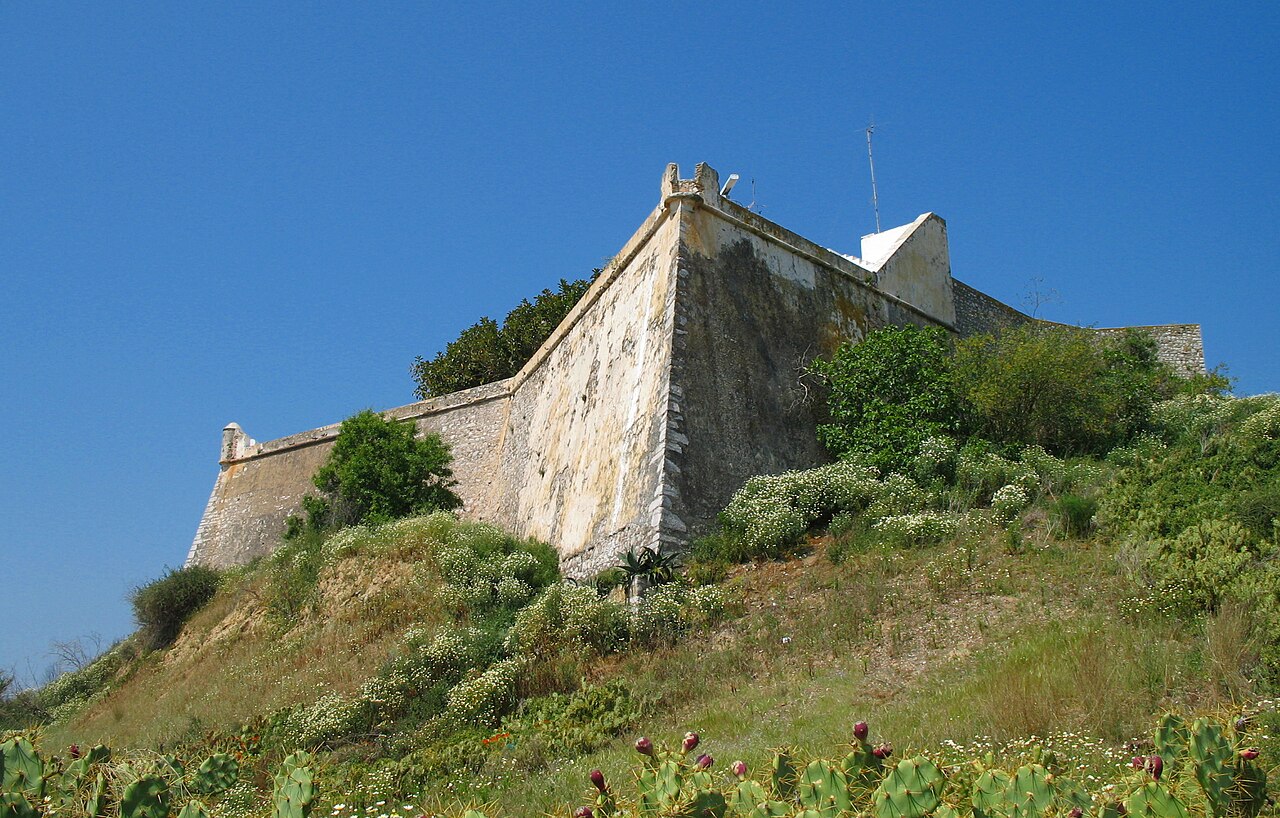
The Castle of Tavira today reveals a complex architectural palimpsest, showcasing layers of construction from different historical periods. Its oval-shaped fortified area covers approximately five hectares, a testament to the town's medieval prominence. The surviving fortifications include sections of rammed-earth walls from the Islamic period, the distinctive albarrã tower, and the well-preserved D. Manuel Gate with its Gothic elements.
Seven named gates once punctuated the medieval walls: Fernão Mendes, Mouraria, Postigo, Feição, Vila Fria, D. Manuel, and Porta Nova. While many of these gates have not survived intact, their historical presence highlights the castle's role as a fortified urban center. The layout and construction techniques reflect adaptations to evolving military technologies and the changing political landscape over centuries.
Modern visitors to Tavira can explore these remnants to gain insight into the castle's multifaceted history, from its prehistoric origins through Islamic and Christian periods to its early modern transformations. The castle remains an enduring symbol of Tavira's cultural heritage and its strategic importance in the Algarve region.
Preservation and cultural significance
Efforts to preserve the Castle of Tavira have emphasized its importance as a cultural landmark. The National Monument status has helped protect the remaining structures and promote archaeological research. The castle is a focal point for understanding the military, architectural, and urban development of Tavira and the wider Algarve.
Today, the castle serves not only as a historical site but also as a cultural venue, hosting events and attracting visitors interested in Portugal's medieval heritage. Its layered architecture offers a tangible connection to the diverse peoples and epochs that shaped this coastal town.
Frequently asked questions (FAQ)
- When was the Castle of Tavira originally built?
- The earliest fortifications at the Castle of Tavira date back to the late 11th or early 12th century during the Almoravid period of Muslim rule.
- What are the main architectural styles seen in the Castle of Tavira?
- The castle features a mix of Islamic military architecture, including rammed-earth walls and horseshoe arches, alongside Gothic elements such as the D. Manuel Gate.
- Can visitors explore the Castle of Tavira today?
- Yes, the castle remains partially preserved and open to visitors who can explore its historic walls, towers, and gates that reflect its layered history.
- How did the 1755 earthquake affect the Castle of Tavira?
- The 1755 Lisbon earthquake caused extensive damage to the castle and its walls, leading to the dismantling of much of its defensive perimeter over subsequent centuries.
- What was the significance of the Castle of Tavira during the Portuguese Restoration War?
- During the 17th century Portuguese Restoration War, the castle's defenses were modernized to withstand artillery warfare, and new fortifications like the Fortaleza de São João da Barra de Tavira were constructed.
Information
Sources & official resources
Verify the information above using these authoritative references.
Loading map...
Visitor reviews
No reviews yet. Been here? Write the first review and help other travelers!
Write the first reviewVisited this castle? Share your experience
Your review helps other travelers and adds first-hand knowledge to our encyclopedia.