Tarout Castle
Tarout Castle stands as a significant historical fortress on Tarut Island, located within the municipality of Qatif in Saudi Arabia. This hill castle is perched atop a rocky mound known locally as Tall Tarut, a site of immense archaeological importance with human settlement evidence dating back some 5,000 years. The castle's foundations are intertwined with ancient civilizations, notably linked to a temple dedicated to the Phoenician goddess Astarte, whose cultural influence is believed to have contributed to the island's name.
Historical context and strategic importance
The castle was originally constructed during the reign of the Uyunid Emirate, which controlled the eastern Arabian coast from approximately 1076 to 1238 AD. This period marked a significant phase in the castle's development as a defensive and administrative center. Tarout Castle's location on a natural elevation provided a commanding view of the surrounding waters and land, making it a strategic military outpost.
In the early 16th century, the castle gained renewed military significance when the Portuguese Empire occupied it as part of their broader ambitions to dominate maritime trade routes in the Persian Gulf. In 1544 (951 AH), the Portuguese undertook restoration work to reinforce the castle's fortifications, transforming it into a crucial stronghold supporting their control over the nearby fortress of Hormuz. Their occupation lasted roughly six years, from around 1515 to 1521 AD, during which they enhanced the castle's defensive capabilities to protect commercial channels and deter rival powers.
Following the Portuguese withdrawal, the castle came under the influence of the Ottoman Empire, which maintained control over the region from the late 19th century into the early 20th century. The castle also served as a refuge for local tribes such as the Banu Khalid during periods of conflict in the late 18th and early 19th centuries. Notably, the castle was involved in military actions during the expansion of the Saudi state in 1791 and subsequent struggles involving the Al-Khalifa rulers of neighboring Bahrain.
During the Ottoman administration, significant repair efforts were initiated, including orders by Viceroy Ahmed Medhat Pasha in 1872. Despite these efforts, the castle suffered structural damage over time, including the partial collapse of the northwestern tower and the destruction of the southeastern tower following a rainstorm in 1917.
Architectural features and construction
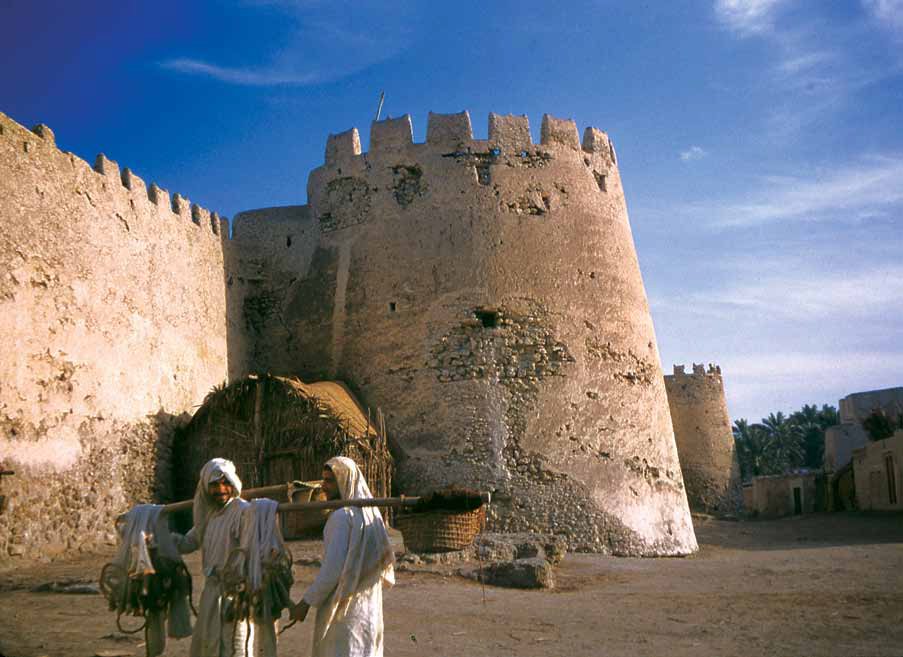
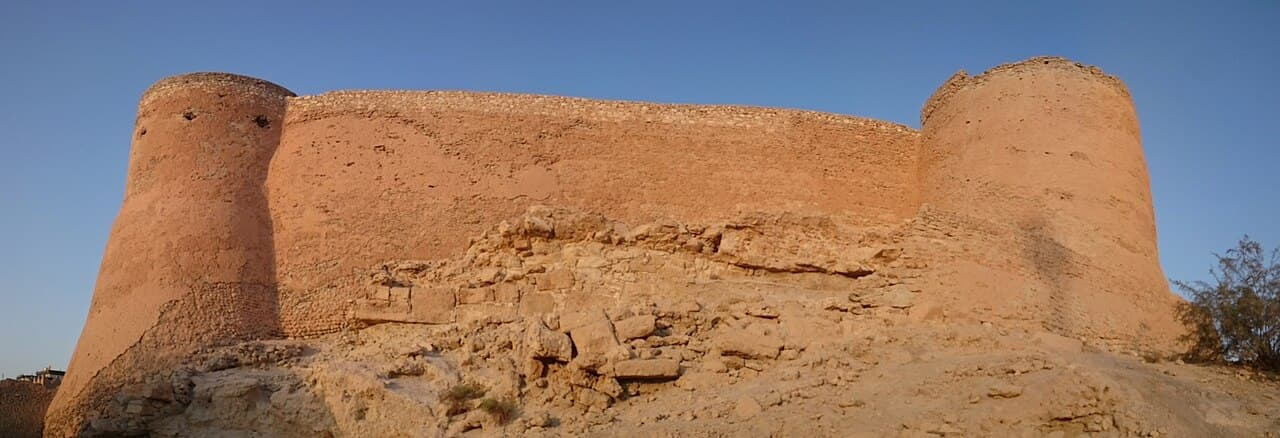
Tarout Castle is constructed on a rocky hill covering approximately 600 square meters in an irregular oval shape that closely follows the natural contours of the mound. The castle's outer walls are notably thick and robust, built from a combination of mud, plaster, bedding stones, and a distinctive sticky, unburned mud mortar. These walls rise to nearly nine meters in height and vary in thickness from one and a half to two and a half meters, showcasing traditional construction methods adapted to the local environment.
The castle originally featured eleven tall towers connected by extended bridges that created hidden passageways, which were strategically used during warfare. Today, only three towers remain, with the surviving towers exhibiting a distinctive conical design that reflects a blend of local architectural traditions and Portuguese military influences seen in fortifications along the Arabian coast. Historical photographs document the northwestern and southwestern towers, while the eastern towers were destroyed between the late 18th and early 20th centuries and partially restored in the 1980s.
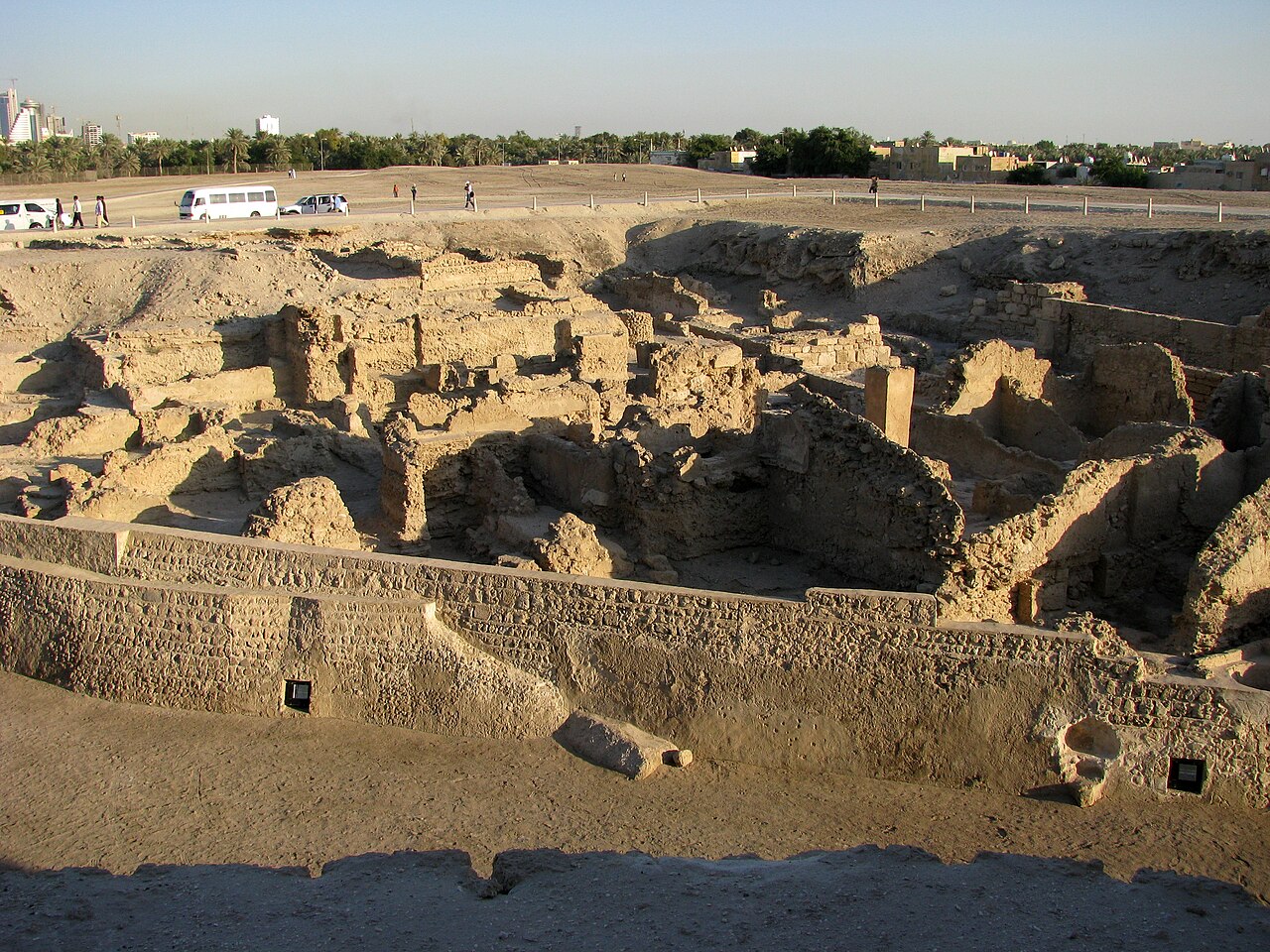
Within the castle, a central courtyard houses a deep well known as the “pocket,” which was essential for storing water during sieges. This well is believed to have been connected to an underground basement or subterranean chamber used to store weapons and supplies. During the Portuguese and Ottoman periods, this basement also functioned as a prison, featuring a secret passage that allowed prisoners to escape to the Rumaili area, providing a critical exit route during sieges.
The castle's walls incorporate iron rods embedded within the structure, a reinforcement technique that enhanced their strength and durability. The overall layout of the castle, sometimes likened to the shape of a crab, follows the natural topography of the hill, a distinctive design reminiscent of Portuguese fortifications along the coast of Oman.
Defensive structures and surrounding features
Encircling the castle is an external defensive wall that encloses the walled village of Deira, integrating residential buildings and local amenities such as the historic Tarut bathhouse and market. This outer wall varies in height from four to six meters and includes multiple gates, with the main entrance known as Darwaza al-Hammam. The Ottomans expanded and heightened this wall during their 19th-century renovations.
Near the northern wall, a natural watercourse served as a defensive moat or trench, creating a formidable obstacle for attackers while exposing them to defensive fire from the castle's towers and walls. Additional associated structures include Ain al-Awda, a natural spring that was once vital to the castle's water supply, and a sulfur bathhouse (Hammam Tarut) dating from the Portuguese era, though it was filled in during 1991.
Nearby cultural landmarks include the Imam Al-Kazim Mosque and a craftsmen's market that was restored in 2011. A traditional café established adjacent to the castle in 2004 continues the site's cultural presence, linking the historic fortress with modern community life.
Conservation challenges and current status
Despite partial restoration attempts initiated by the Saudi Ministry of Antiquities in 1984, the castle remains in a state of partial preservation with ongoing structural challenges. Weathering, neglect, and environmental factors such as oil extraction have contributed to the drying of the Ain al-Awda spring and the deterioration of the castle's walls and towers. Cracking walls and collapsed towers highlight the urgent need for further conservation efforts.
The site is currently fenced off with controlled access to protect its fragile condition. Tarout Castle remains one of the most archaeologically important sites in the region, offering a unique window into the layered history of human settlement, military architecture, and cultural heritage on the eastern Arabian coast.
Frequently asked questions (FAQ)
- How do I get to Tarout Castle?
- Tarout Castle is located on Tarut Island near the city of Qatif in the Eastern Province of Saudi Arabia. Visitors can reach the island by road via the King Fahd Causeway and local transport options within Qatif.
- What is the historical significance of Tarout Castle?
- Tarout Castle is a key historical fortress with origins dating back to the Uyunid Emirate period (11th-13th century). It played strategic roles during Portuguese and Ottoman occupations and reflects over 5,000 years of human settlement on Tarut Island.
- Can I visit the interior of Tarout Castle?
- Access to the interior of Tarout Castle is limited due to its fragile condition and ongoing preservation concerns. Visitors can view the castle from designated areas around the site but should check local guidelines for any special tours or access permissions.
- When was Tarout Castle built?
- The castle was originally built during the High Medieval period, between the 11th and 13th centuries, atop an ancient mound with much older archaeological layers beneath.
- What architectural styles are evident in Tarout Castle?
- The castle exhibits traditional Arabian defensive architecture with influences from Portuguese fortifications, particularly visible in its conical towers and strategic layout adapted to the natural hilltop.
Photo gallery

Information
Current owner
Saudi Ministry of Antiquities
Loading map...
Visitor reviews
No reviews yet. Been here? Write the first review and help other travelers!
Write the first reviewVisited this castle? Share your experience
Your review helps other travelers and adds first-hand knowledge to our encyclopedia.