Taragarh Fort (Bundi) — India castle

Taragarh Fort (Bundi)

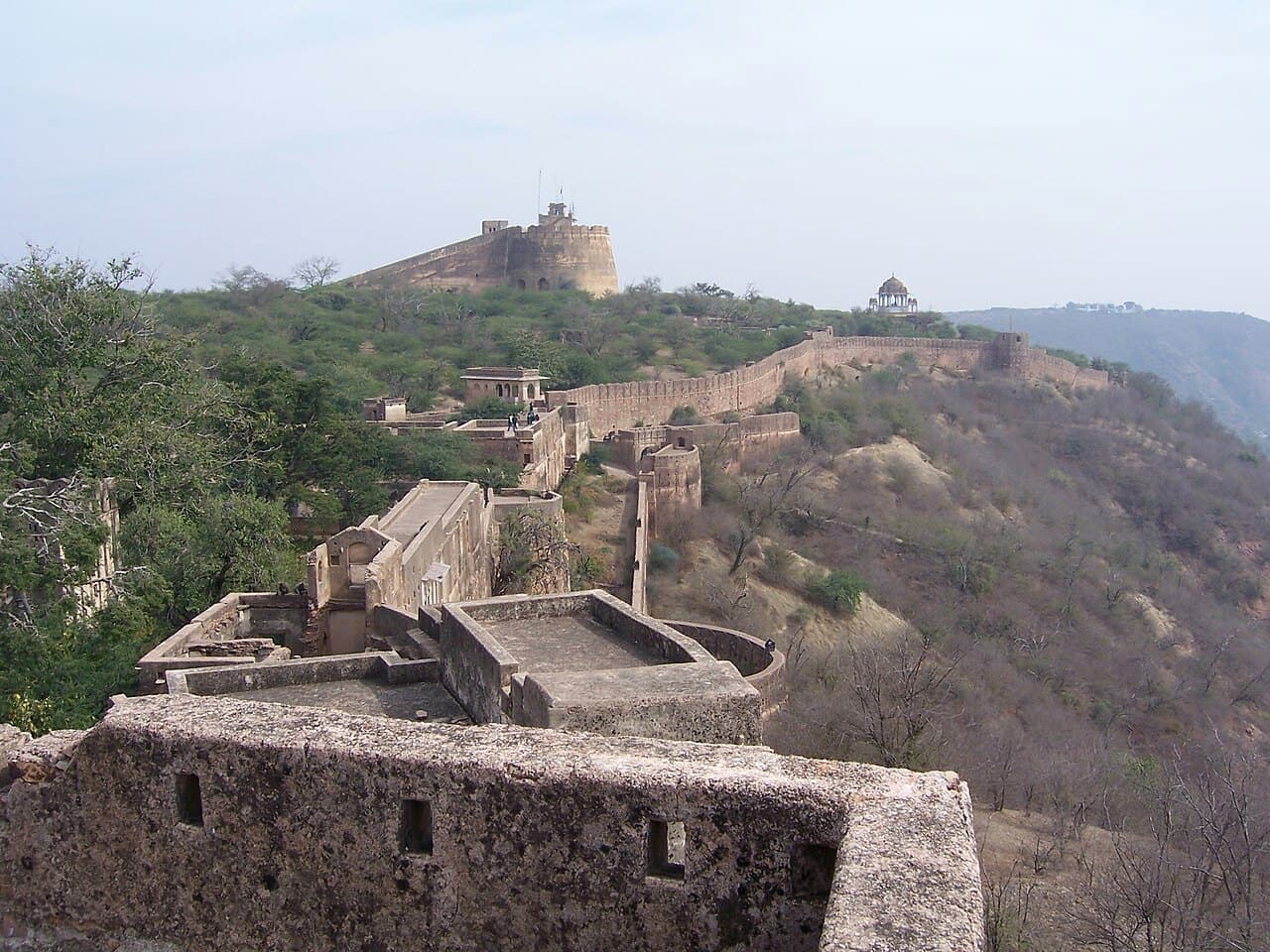
Taragarh Fort, Bundi: historic bastioned fortress in Rajasthan
Bundi, Rajasthan, India
Late Medieval (14th–15th c.)
Well Preserved

Taragarh Fort is a prominent bastioned fortress situated in Bundi, Rajasthan, India. Perched atop a steep hill in the Aravalli mountain range at an elevation of approximately 1426 feet, the fort dominates the surrounding landscape and serves as a key historical and architectural landmark in the region. Constructed in the 14th century, during the late medieval period, Taragarh Fort was strategically built to serve both as a military stronghold and as a royal residence for the Hada Chauhan Rajput rulers of Bundi.

Strategic location and fortifications

The fort's location on a steep hill provided a natural defensive advantage, allowing its defenders to monitor and control the surrounding territory effectively. The fortifications of Taragarh include massive bastions and thick stone walls designed to withstand sieges and attacks. The fortress complex includes multiple gates and ramparts, which were constructed to slow down and repel invading forces.

One of the remarkable defensive features of Taragarh Fort is the network of secret tunnels carved into the hillside. These tunnels served as escape routes during times of siege and allowed safe passage out of the fort under hostile conditions. Many of these tunnels are still visible today, providing insight into the military ingenuity of the fort's builders.

Architectural features and style

Taragarh Fort is an excellent example of Rajput architecture, characterized by robust stone construction, imposing bastions, and intricate decorative elements. The fort's design reflects the martial culture of the Rajput rulers, with an emphasis on defense and grandeur.

Within the fort complex, several palaces and residential buildings were constructed for the royal family. These structures exhibit a blend of architectural influences, including elements inspired by Mughal architecture. This fusion is evident in the ornamental arches, jharokhas (overhanging enclosed balconies), and intricate stone carvings found throughout the fort.

Palace and residential quarters

The royal palace within Taragarh Fort served as the primary residence of the Hada Chauhan Rajput Maharajas and their families. The palace complex includes multiple courtyards, audience halls, and private chambers designed to accommodate the needs of the royal household while maintaining security and privacy.

Historical context and significance

Taragarh Fort was constructed during a period of frequent conflicts and power struggles in Rajasthan. Its robust fortifications and strategic location made it a key military asset for the rulers of Bundi. The fort witnessed numerous battles and sieges, reflecting the turbulent history of the region during the late medieval period.

Besides its military importance, Taragarh Fort also played a cultural and administrative role. It was a center of governance for the Bundi state and a symbol of Rajput pride and heritage. The fort's architecture and art reflect the cultural exchanges between Rajput and Mughal traditions, illustrating the complex history of Rajasthan's princely states.

Present-day condition and tourism

Today, Taragarh Fort remains a well-preserved monument and a major tourist attraction in Bundi. Visitors can explore the extensive fortifications, palaces, and tunnels, gaining a deep understanding of Rajput military architecture and royal life. The fort offers panoramic views of Bundi and the surrounding Aravalli hills, making it a popular destination for history enthusiasts and travelers.

Efforts have been made to maintain and restore parts of the fort to preserve its historical and architectural integrity. The site is accessible to the public, with guided tours available to explain its significance and features.

Frequently asked questions (FAQ)

How do I get to Taragarh Fort?
Taragarh Fort is located in Bundi, Rajasthan, and is accessible by road. You can hire a taxi or take a local bus from Bundi city center, which is approximately 3 km away from the fort.
What is the historical significance of Taragarh Fort?
Taragarh Fort, built in the 14th century, is one of the earliest hill forts in Rajasthan and played a crucial role in the defense of the region. It was the stronghold of the Bundi rulers and witnessed various historical events, including battles and royal intrigues.
When was Taragarh Fort built?
Taragarh Fort was constructed in 1354 by Rao Raja Anirudh Singh, the founder of Bundi. Its strategic location and robust architecture made it a formidable fortification during its time.
Can I visit Taragarh Fort at any time?
Yes, Taragarh Fort is open to visitors throughout the week. However, it is advisable to visit during daylight hours to fully appreciate the fort's stunning architecture and panoramic views.
Why is the architecture of Taragarh Fort unique?
The architecture of Taragarh Fort reflects the Indo-Islamic style, characterized by intricate carvings, large ramparts, and massive gates. Its construction features a mix of majestic battlements and ornate structures, highlighting the skill of the artisans of the era.
Is it possible to hike to Taragarh Fort?
Yes, visitors can hike up to Taragarh Fort, which offers a scenic route with beautiful views of Bundi. The trek is moderately challenging and takes about 30-45 minutes, making it a rewarding experience for those who enjoy outdoor activities.
What is the best time to visit Taragarh Fort?
The ideal time to visit Taragarh Fort is during the cooler months, from October to March. During this period, the weather is pleasant, making it perfect for exploring the fort and enjoying the breathtaking views.
Are there any nearby attractions to visit?
Yes, there are several nearby attractions, including the Bundi Palace, Sukh Mahal, and the beautiful Bundi Baoris (step-wells). These sites offer a glimpse into the rich history and culture of Bundi.
What are the ticket prices for Taragarh Fort?
The entry fee for Taragarh Fort is quite affordable, with tickets typically costing around INR 40 for Indian visitors and INR 200 for foreign tourists. The nominal fee helps maintain the fort and its surroundings.
What are the opening hours of Taragarh Fort?
Taragarh Fort is generally open from 10 AM to 5 PM. It is recommended to check local listings for any seasonal changes in opening hours before your visit.

Photo gallery

Taragarh Fort (Bundi)
Click to view

Photo by Justin Morgan from Richmond, Virginia, USA•CC BY-SA 2.0

1 photo • Click any image to view in full screen

Information

Bastioned Fortress

Loading map...

Visitor reviews

No reviews yet. Been here? Write the first review and help other travelers!

Write the first review

Visited this castle? Share your experience

Your review helps other travelers and adds first-hand knowledge to our encyclopedia.
Write a review

(5/5)

0/2000 characters

Your review will be visible after admin approval

Nearby castles

105.3 km
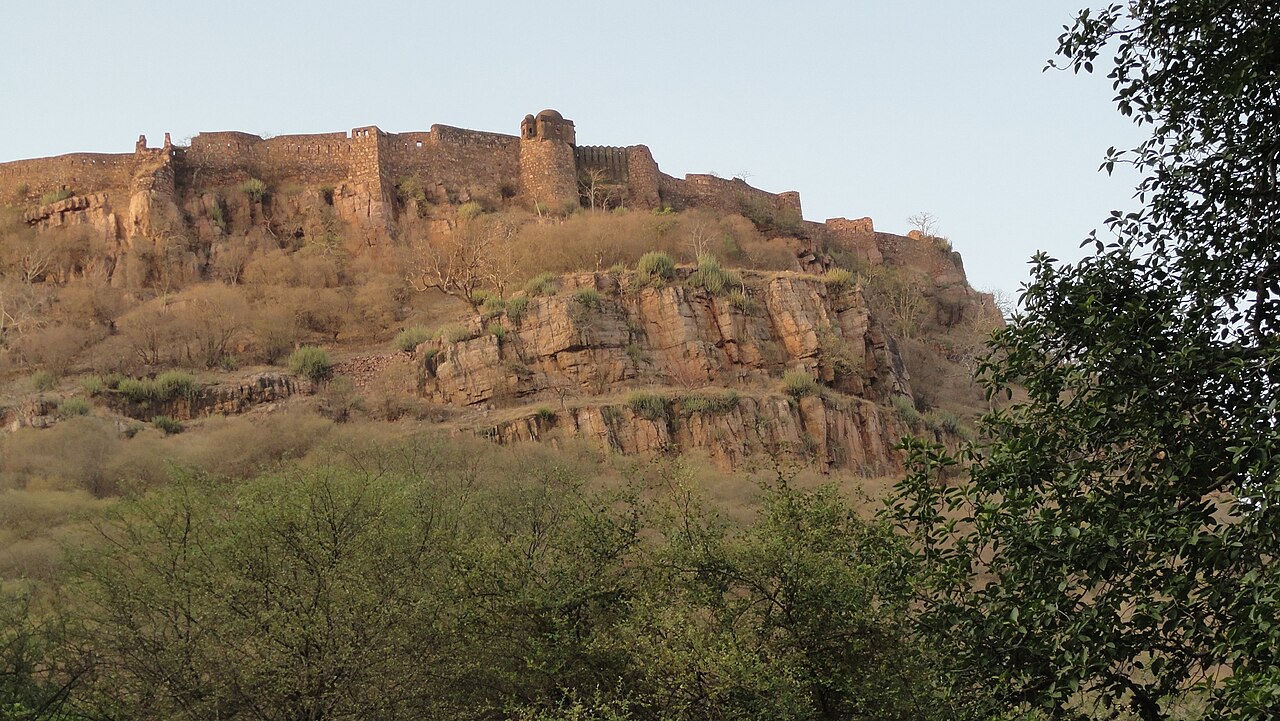
Ranthambore Fort — India castle

Ranthambore Fort

Sawai Madhopur, India

Ranthambore Fort is a monumental bastioned fortress located within the expansive Ranthambore National Park near the city of Sawai Madhopur in the Sawai Madhopur district of Rajasthan, India. This fortress stands as a significant relic of medieval Indian military architecture and history, renowned for its strategic position and robust construction. The park surrounding the fort was once the exclusive hunting grounds of the Maharajas of Jaipur until India's independence, adding to the cultural importance of the site. Today, the fort is a popular destination for tourists and history enthusiasts, offering sweeping views of the park's diverse wildlife and landscapes. Early history and foundation The origins of Ranthambore Fort date back to the 10th century, when Rajput King Sapaldaksha of the Chauhan dynasty laid its foundations. The fort's construction was an ongoing process, with successive rulers enhancing and expanding its defenses and internal structures over several centuries. Positioned atop a rocky outcrop approximately 700 feet above the surrounding plains, the fort's elevation provided a commanding view of the surrounding territory, making it a formidable stronghold. Architectural features and fortifications The fort exemplifies the characteristics of a bastioned fortress, featuring thick defensive walls reinforced with numerous bastions designed for artillery and archery. Its layout is adapted to the natural rocky terrain, integrating massive stone walls, gateways, and watchtowers that contribute to its impregnability. The fort complex includes several palatial buildings, temples, and water reservoirs, reflecting the dual military and residential purposes of the site. The massive gates and narrow entrances were strategically designed to slow down invading forces and provide defensive advantage to the garrison. Strategic location and defense Ranthambore Fort's position on a high hillock within a dense forest area made it difficult to besiege. The surrounding Ranthambore National Park provided natural camouflage and resources, while the fort's height allowed defenders to spot approaching enemies from a distance. The fort's design includes multiple layers of defense, including moats and fortified walls that were adapted over time to meet evolving military technologies. Historical significance and rulers Throughout its history, Ranthambore Fort was a coveted prize for many rulers due to its strategic importance. After its establishment by the Chauhans, it was contested by various powers including the Delhi Sultanate, the Hada Rajputs, and the Mewar kingdom. The fort was briefly held by the Delhi Sultanate during the medieval period, reflecting the turbulent power struggles in northern India. Later, it came under the control of the Marwar kingdom and the Mughal Empire, each leaving their mark on the fort's architecture and history. Sieges and battles Ranthambore Fort witnessed several significant sieges, including those led by Sultan Alauddin Khalji in the early 14th century. These sieges tested the fort's defenses and highlighted its reputation as an impregnable fortress. The fort's resilience during these conflicts is a testament to its robust design and the strategic acumen of its defenders. Cultural and heritage importance In recognition of its historical and architectural value, Ranthambore Fort was inscribed as a UNESCO World Heritage Site in 2013 during the 37th session of the World Heritage Committee held in Phnom Penh, Cambodia. It was listed as part of the group known as the Hill Forts of Rajasthan, which includes five other forts noted for their exemplary fortifications and cultural significance in the region. Tourism and preservation Today, Ranthambore Fort is well-preserved and accessible to visitors. It offers a unique blend of natural beauty and historical intrigue, attracting tourists interested in wildlife, history, and architecture. Guided tours often include visits to the fort's ancient temples, palaces, and battlements, providing insight into the life and times of the Rajput rulers. The fort's integration within the national park makes it a focal point for conservation and heritage tourism in Rajasthan. Architectural style and construction period The fort's architecture reflects the early medieval period of Indian history, with features typical of Rajput military construction. The use of bastions for defense, massive stone walls, and strategically placed gates are indicative of the military challenges of the time. While the core of the fort was built in the 10th century, later additions and renovations incorporated elements from successive rulers, creating a layered architectural narrative. Materials and techniques Constructed primarily from local sandstone and granite, the fort's walls and buildings demonstrate advanced masonry techniques of the period. The builders skillfully adapted the natural rock formations to enhance the fort's defenses, minimizing the need for artificial structures in some areas. Water harvesting systems within the fort ensured a reliable water supply during sieges, showcasing the ingenuity of its designers.

Early Medieval (5th–10th c.)
Details
106.7 km
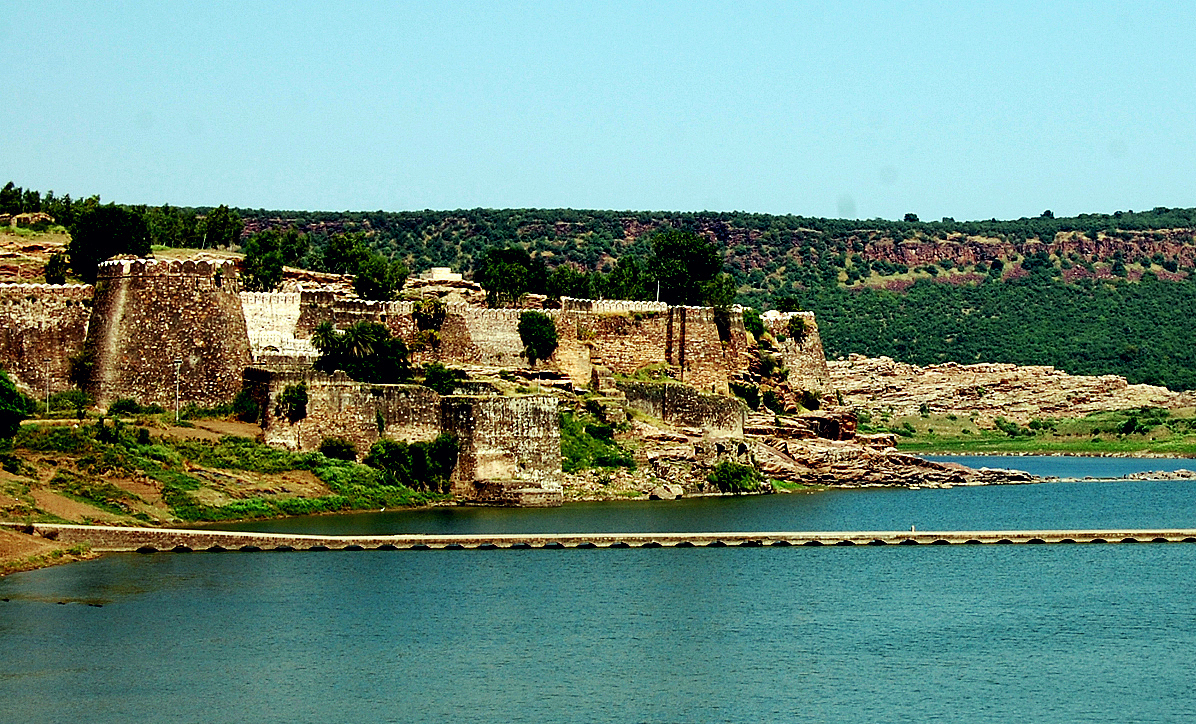
Gagron Fort — India castle

Gagron Fort

Jhalawar, India

Gagron Fort stands as a rare example of a hill and water fort located in the Jhalawar district of Rajasthan, India. This 16th-century bastioned fortress is strategically positioned at the confluence of the Ahu River and the Kali Sindh River, which naturally protects the fort on three sides with water. The fourth side is fortified by a deep moat, earning the fort the local name Jaladurg, meaning water fort. Its unique setting combines both natural and man-made defenses, making it a significant example of military architecture from the Renaissance period in India. Historical background and significance The foundation of Gagron Fort is attributed to Raja Madho Bhil, a local chieftain who established the fortification in the early medieval period. The fort later passed into the hands of Bijaldev Singh Dod, a Parmar Rajput king, in the 12th century. Over the centuries, the fort witnessed several rulers, including the powerful Sher Shah Suri and the Mughal emperor Akbar, who recognized its strategic importance in controlling the surrounding region. Gagron Fort's history reflects the turbulent political landscape of Rajasthan, where forts were critical for defense and control. Its robust construction and natural defenses allowed it to withstand numerous sieges and invasions, preserving its structure through the centuries. Architectural features and design The fort exemplifies the bastioned fortress design, a style that became prevalent during the Renaissance period, characterized by angular bastions that allowed defenders to cover all approaches with crossfire. Gagron Fort incorporates these features while adapting to the unique terrain of the site. Location and natural defenses Built on a hillock, the fort uses the natural elevation to its advantage. The surrounding rivers form a natural moat on three sides, making any direct assault challenging. The fourth side is protected by a man-made moat, completing the water defenses. This combination of hilltop position and water barriers is rare among Indian forts. Walls, bastions, and gates The fort's walls are constructed from locally sourced stone, thick and high enough to resist artillery fire of the period. The bastions are angular, projecting outward to provide overlapping fields of fire. The main gates are fortified with heavy wooden doors reinforced with iron studs, typical of Rajput military architecture. Defensive features such as arrow slits and murder holes are integrated into the gateways and walls. Internal structures and layout Inside the fort, the layout includes residential quarters, granaries, water reservoirs, and temples. The presence of water bodies inside the fort ensured a steady supply during sieges. The fort's design reflects careful planning for both defense and daily life, with courtyards and chambers arranged to maximize security and functionality. Cultural importance and world heritage status Gagron Fort is part of the group of six hill forts of Rajasthan inscribed as a UNESCO World Heritage Site in 2013. This recognition highlights the fort's outstanding universal value as an example of Rajput military architecture that integrates natural topography with man-made fortifications. The fort attracts historians, architects, and tourists interested in India's rich heritage of fort construction and Rajput history. Its preservation allows insight into the military strategies and lifestyle of the region's rulers during the Renaissance period. Visiting gagrons fort The fort is located approximately 5 km from Jhalawar city, making it accessible for visitors interested in exploring Rajasthan's historical sites. The surrounding landscape offers scenic views of the rivers and countryside, enhancing the visitor experience. While the fort is well preserved, some areas may show signs of aging due to the passage of time. Visitors can explore the fort's ramparts, bastions, and internal structures, gaining a comprehensive understanding of its defensive design. The fort is a valuable destination for those interested in military architecture and Indian history. Architectural style and construction period The fort's architecture reflects the Renaissance period military styles adapted to Indian conditions. The use of bastions and angled walls corresponds to contemporary European fortification trends, while the incorporation of water defenses and hilltop positioning reflects local innovation. The construction in the 16th century places it in the context of increasing use of gunpowder and artillery in Indian warfare, necessitating stronger and more complex fortifications. Preservation and condition Today, Gagron Fort is generally well preserved, with its main structural elements intact. Conservation efforts have focused on maintaining the integrity of the walls, bastions, and water defenses. The fort remains a significant cultural monument and a testament to the engineering skills of its builders. Faqs about gagrons fort What is the historical significance of Gagron Fort? Gagron Fort played a key role in regional defense during the medieval and Renaissance periods, controlled by various rulers including Rajput kings and Mughal emperors. How is Gagron Fort protected naturally? The fort is surrounded by the Ahu and Kali Sindh rivers on three sides and a moat on the fourth, providing natural and man-made water defenses. When was Gagron Fort built? The fort was constructed primarily in the 16th century, though its foundations date back earlier to the 12th century under Rajput rule. Can visitors explore the interior of the fort? Yes, visitors can explore various parts of the fort including bastions, gates, and internal chambers that showcase its defensive and residential features. Is Gagron Fort part of any UNESCO World Heritage listing? Yes, it is one of the six hill forts of Rajasthan designated as a UNESCO World Heritage Site in 2013. What architectural style does Gagron Fort represent? It represents a bastioned fortress style from the Renaissance period, combining European military architectural concepts with local Indian adaptations. Where is Gagron Fort located? It is located near Jhalawar city in Rajasthan, India, in the Hadoti region.

Renaissance (15th–17th c.)
Details
117.7 km
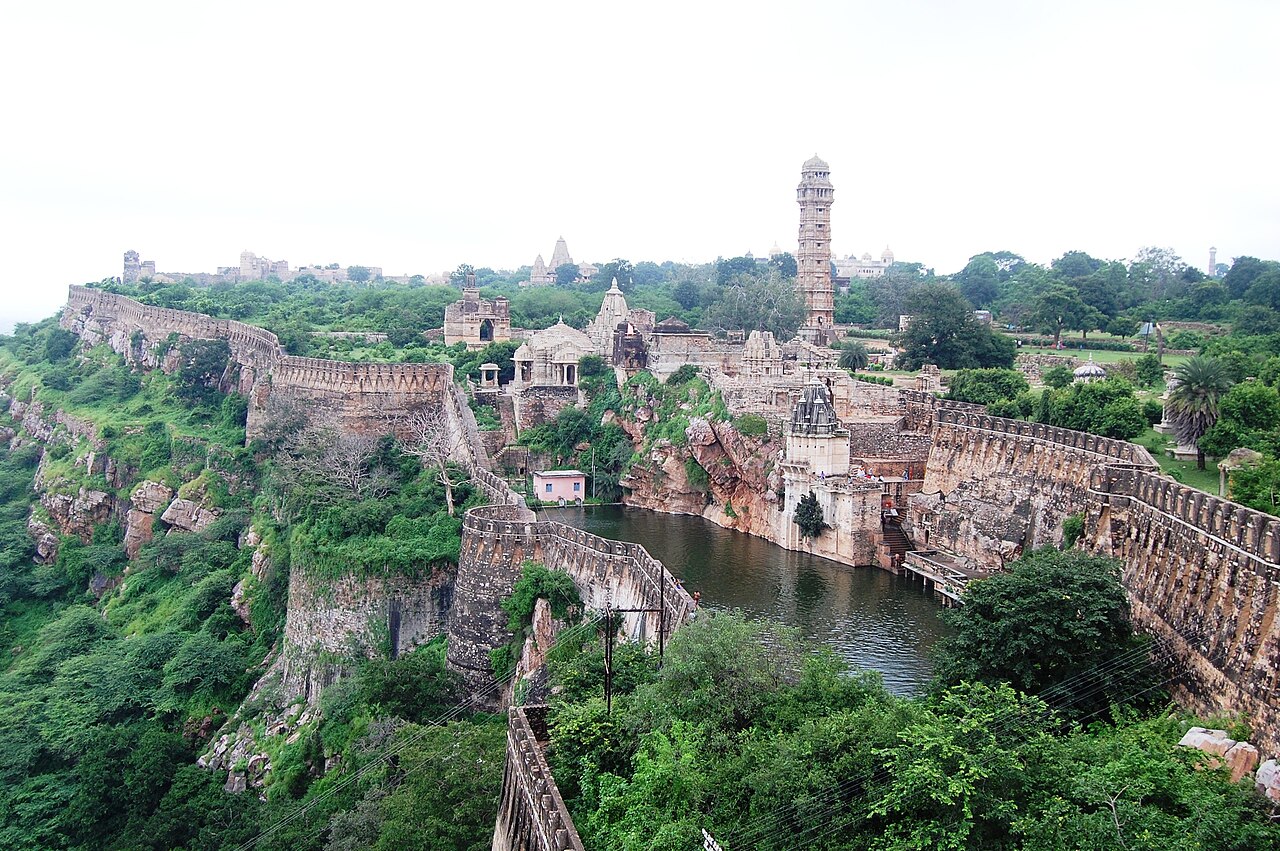
Chittorgarh Fort — India castle

Chittorgarh Fort

Chittorgarh, India

Chittorgarh Fort, also known as Chittod Fort, stands as one of the largest and most historically significant forts in India. Located in the present-day city of Chittorgarh in Rajasthan, this massive bastioned fortress sprawls across a hill rising 180 meters above the surrounding plains. Covering an extensive area of 280 hectares (691.9 acres), the fort overlooks the valley drained by the Berach River, providing a commanding strategic position that was crucial for defense and governance. The fort served as the capital of the historic kingdom of Mewar, a major Rajput state known for its resistance against invasions. Chittorgarh Fort's history spans several centuries, with its origins traditionally dated to the 7th century, although much of the current fortifications and structures reflect developments from the medieval period, particularly between the 13th and 16th centuries. The fort is a remarkable example of Rajput military architecture with its massive bastioned walls, imposing gates, and numerous defensive features designed to withstand prolonged sieges. Architectural features and layout The fort complex encompasses over 65 historic structures, including four palaces, 19 large temples, 20 large water bodies, four memorials, and several victory towers or vijay stambhas. The palaces within the fort exhibit a blend of Rajput and Mughal architectural styles, featuring intricately carved balconies, expansive courtyards, and ornate windows. The temples, dedicated to various Hindu deities, are notable for their detailed stone carvings and sculptural work, reflecting the religious and cultural importance of the fort. Water management was a critical aspect of the fort's design, given its hilltop location. The numerous large water bodies, including reservoirs and step wells, ensured a reliable water supply during sieges. These water features also contribute to the fort's aesthetic and functional landscape, demonstrating advanced engineering knowledge of the time. Defensive structures and gates The fort is protected by massive bastioned walls that extend for several kilometers, making it one of the most formidable fortresses in India. The walls are punctuated by numerous bastions and towers that allowed defenders to monitor and repel attackers effectively. The fort has seven major gates, each with unique defensive mechanisms, including the famous Pole Gate and Lohapol (Iron Gate), designed to withstand battering and infiltration attempts. Historical significance and events Chittorgarh Fort has witnessed numerous historic events, including epic battles and sieges involving Rajput rulers and invading forces such as the Delhi Sultanate and the Mughal Empire. It was the site of three major sieges in the 14th, 15th, and 16th centuries, each marking significant moments in Rajput resistance. These sieges are remembered for acts of valor and sacrifice, including the practice of Jauhar, where women committed self-immolation to avoid capture. The fort's rulers, including the legendary Maharana Pratap, are celebrated for their defiance against Mughal expansion. The fort's history is intertwined with tales of heroism, loyalty, and tragedy, making it a symbol of Rajput pride and resilience. Cultural and heritage importance In recognition of its outstanding universal value, Chittorgarh Fort was inscribed as a UNESCO World Heritage Site in 2013, as part of the group known as the Hill Forts of Rajasthan. This designation highlights the fort's architectural grandeur, historical depth, and cultural significance. It remains a major tourist attraction and a site of pilgrimage for those interested in Rajput history and Indian heritage. Visitor experience and preservation Today, Chittorgarh Fort is well-preserved, with ongoing conservation efforts to maintain its extensive structures. Visitors can explore the sprawling complex, including the palaces, temples, and battlements, while enjoying panoramic views of the surrounding landscape. The fort's large area and diverse monuments offer a rich experience for history enthusiasts and architecture lovers alike. Accessibility to the fort is facilitated by the nearby city of Chittorgarh, which provides amenities and transport links. Guided tours and informational signage help visitors understand the fort's complex history and architectural features. The site hosts cultural events and festivals that celebrate Rajput heritage, further enriching the visitor experience.

High Medieval (11th–13th c.)
Details