Gagron Fort
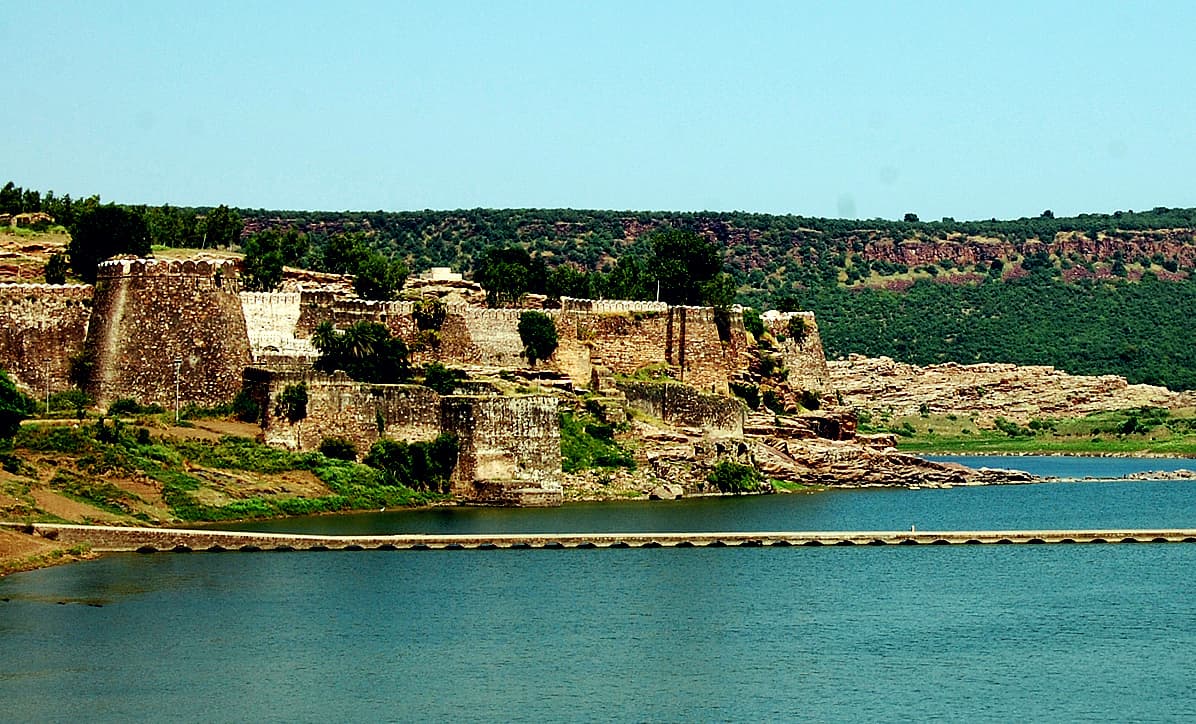
Gagron Fort stands as a rare example of a hill and water fort located in the Jhalawar district of Rajasthan, India. This 16th-century bastioned fortress is strategically positioned at the confluence of the Ahu River and the Kali Sindh River, which naturally protects the fort on three sides with water. The fourth side is fortified by a deep moat, earning the fort the local name Jaladurg, meaning water fort. Its unique setting combines both natural and man-made defenses, making it a significant example of military architecture from the Renaissance period in India.
Historical background and significance
The foundation of Gagron Fort is attributed to Raja Madho Bhil, a local chieftain who established the fortification in the early medieval period. The fort later passed into the hands of Bijaldev Singh Dod, a Parmar Rajput king, in the 12th century. Over the centuries, the fort witnessed several rulers, including the powerful Sher Shah Suri and the Mughal emperor Akbar, who recognized its strategic importance in controlling the surrounding region.
Gagron Fort's history reflects the turbulent political landscape of Rajasthan, where forts were critical for defense and control. Its robust construction and natural defenses allowed it to withstand numerous sieges and invasions, preserving its structure through the centuries.
Architectural features and design
The fort exemplifies the bastioned fortress design, a style that became prevalent during the Renaissance period, characterized by angular bastions that allowed defenders to cover all approaches with crossfire. Gagron Fort incorporates these features while adapting to the unique terrain of the site.
Location and natural defenses
Built on a hillock, the fort uses the natural elevation to its advantage. The surrounding rivers form a natural moat on three sides, making any direct assault challenging. The fourth side is protected by a man-made moat, completing the water defenses. This combination of hilltop position and water barriers is rare among Indian forts.
Walls, bastions, and gates
The fort's walls are constructed from locally sourced stone, thick and high enough to resist artillery fire of the period. The bastions are angular, projecting outward to provide overlapping fields of fire. The main gates are fortified with heavy wooden doors reinforced with iron studs, typical of Rajput military architecture. Defensive features such as arrow slits and murder holes are integrated into the gateways and walls.
Internal structures and layout
Inside the fort, the layout includes residential quarters, granaries, water reservoirs, and temples. The presence of water bodies inside the fort ensured a steady supply during sieges. The fort's design reflects careful planning for both defense and daily life, with courtyards and chambers arranged to maximize security and functionality.
Cultural importance and world heritage status
Gagron Fort is part of the group of six hill forts of Rajasthan inscribed as a UNESCO World Heritage Site in 2013. This recognition highlights the fort's outstanding universal value as an example of Rajput military architecture that integrates natural topography with man-made fortifications.
The fort attracts historians, architects, and tourists interested in India's rich heritage of fort construction and Rajput history. Its preservation allows insight into the military strategies and lifestyle of the region's rulers during the Renaissance period.
Visiting gagrons fort
The fort is located approximately 5 km from Jhalawar city, making it accessible for visitors interested in exploring Rajasthan's historical sites. The surrounding landscape offers scenic views of the rivers and countryside, enhancing the visitor experience. While the fort is well preserved, some areas may show signs of aging due to the passage of time.
Visitors can explore the fort's ramparts, bastions, and internal structures, gaining a comprehensive understanding of its defensive design. The fort is a valuable destination for those interested in military architecture and Indian history.
Architectural style and construction period
The fort's architecture reflects the Renaissance period military styles adapted to Indian conditions. The use of bastions and angled walls corresponds to contemporary European fortification trends, while the incorporation of water defenses and hilltop positioning reflects local innovation. The construction in the 16th century places it in the context of increasing use of gunpowder and artillery in Indian warfare, necessitating stronger and more complex fortifications.
Preservation and condition
Today, Gagron Fort is generally well preserved, with its main structural elements intact. Conservation efforts have focused on maintaining the integrity of the walls, bastions, and water defenses. The fort remains a significant cultural monument and a testament to the engineering skills of its builders.
Faqs about gagrons fort
- What is the historical significance of Gagron Fort? Gagron Fort played a key role in regional defense during the medieval and Renaissance periods, controlled by various rulers including Rajput kings and Mughal emperors.
- How is Gagron Fort protected naturally? The fort is surrounded by the Ahu and Kali Sindh rivers on three sides and a moat on the fourth, providing natural and man-made water defenses.
- When was Gagron Fort built? The fort was constructed primarily in the 16th century, though its foundations date back earlier to the 12th century under Rajput rule.
- Can visitors explore the interior of the fort? Yes, visitors can explore various parts of the fort including bastions, gates, and internal chambers that showcase its defensive and residential features.
- Is Gagron Fort part of any UNESCO World Heritage listing? Yes, it is one of the six hill forts of Rajasthan designated as a UNESCO World Heritage Site in 2013.
- What architectural style does Gagron Fort represent? It represents a bastioned fortress style from the Renaissance period, combining European military architectural concepts with local Indian adaptations.
- Where is Gagron Fort located? It is located near Jhalawar city in Rajasthan, India, in the Hadoti region.
Frequently asked questions (FAQ)
- What is the historical significance of Gagron Fort?
- Gagron Fort is a UNESCO World Heritage Site, recognized for its unique blend of Hindu and Islamic architectural styles. It played a strategic role in the defense of the region and served as a royal residence, showcasing the rich history of Jhalawar. The fort's location on the confluence of two rivers further enhanced its significance as a military stronghold.
- When was Gagron Fort built?
- Gagron Fort was constructed in the 12th century and has undergone various expansions and renovations over the centuries. It reflects the architectural innovations of its time and the influence of different rulers who occupied the fort. The fort's long history is evident in its well-preserved structures and fortifications.
- What are the opening hours for Gagron Fort?
- Gagron Fort is open to visitors from 9:00 AM to 6:00 PM every day. Extended hours may be available during local festivals or events, so it's advisable to check ahead for any special timings. Visitors are encouraged to arrive early to fully explore the fort and its surroundings.
- Can I take photographs inside Gagron Fort?
- Yes, photography is allowed inside Gagron Fort, so visitors can capture the stunning architecture and breathtaking views from its walls. However, it is recommended to be respectful of other visitors and the historical site while taking photos. Always check for any specific restrictions that may apply during your visit.
- Is it possible to access Gagron Fort by public transport?
- Yes, Gagron Fort is accessible by public transport, with regular buses and auto-rickshaws available from Jhalawar city. The fort is located a few kilometers away from the main town, making it convenient for visitors using local transportation. Taxis and private vehicles are also options for a more comfortable journey.
- What is the best time to visit Gagron Fort?
- The best time to visit Gagron Fort is from October to March when the weather is pleasant and ideal for exploring outdoor sites. During these months, temperatures are cooler, making the experience more enjoyable. The fort can be quite hot during the summer months, so planning your visit during the cooler season is advisable.
- What are the ticket prices for Gagron Fort?
- Entry to Gagron Fort is usually free for Indian citizens, while there is a nominal fee for foreign tourists. Ticket prices may vary for special events or guided tours, so it’s best to check in advance. Guided tours are highly recommended for a more immersive experience of the fort's history and architecture.
- Are there any nearby attractions to visit after Gagron Fort?
- Yes, there are several nearby attractions to explore, including the Jhalawar Palace and the beautiful Chandrabhaga River. Visitors can also enjoy the local markets and cultural experiences in Jhalawar city. These sites complement a visit to Gagron Fort, offering a deeper insight into the region's heritage.
Photo gallery

Information
Loading map...
Visitor reviews
No reviews yet. Been here? Write the first review and help other travelers!
Write the first reviewVisited this castle? Share your experience
Your review helps other travelers and adds first-hand knowledge to our encyclopedia.