Tanstein Castle
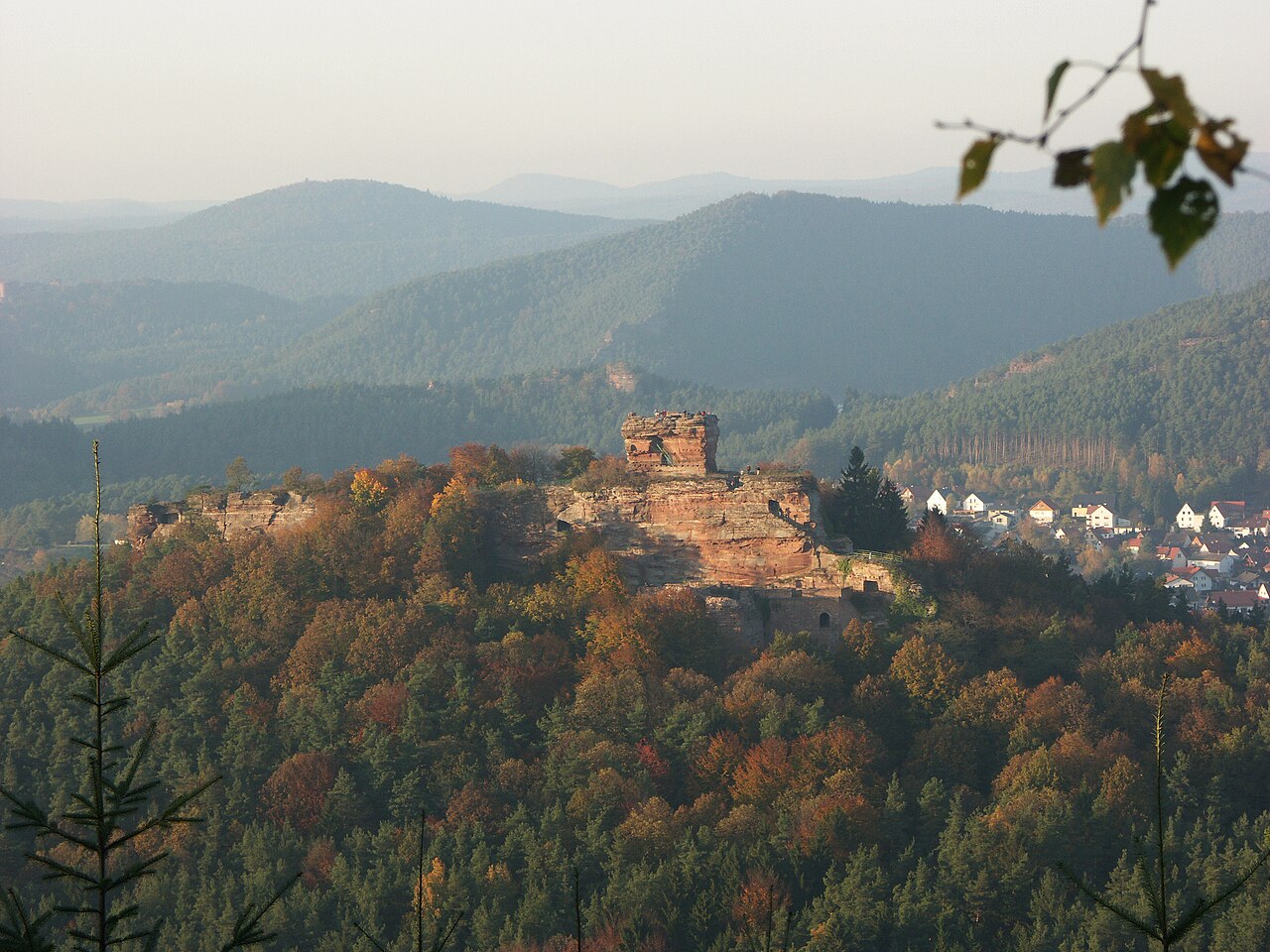
Tanstein Castle is a significant medieval rock castle ruin located in the southern Palatine Forest, near the town of Dahn in Rhineland-Palatinate, Germany. It forms part of a unique cluster of three castles—Tanstein, Altdahn, and Grafendahn—all perched on a rocky ridge but built during different periods. Among these, Tanstein is the oldest, with origins tracing back to the early 12th century, making it a key example of high medieval castle architecture in the region.
The castle's earliest documented reference appears in 1127, mentioning an Anshelmus de Tannicka, suggesting the castle's construction was underway or completed by that time. Another important historical mention occurs in 1189 in a deed by Emperor Frederick Barbarossa, which names a Henry von der Than and confirms the castle's status as an immediate imperial fief. Over the following centuries, the castle was held by various imperial ministeriales, including Ulrich of Dahn and Conrad of Dahn.
Historical ownership and conflicts
In 1328, Tanstein Castle became a fief under the Bishops of Speyer, marking a shift from imperial to ecclesiastical control. The castle's ownership changed frequently until 1464, indicating a non-heritable fief status during this period. In 1512, Frederick of Dahn purchased the castle. His alliance with the knight Franz von Sickingen embroiled Tanstein in the regional conflicts of southwest Germany. After Sickingen's defeat and death in 1523, the castle was occupied by forces loyal to the victors, notably troops of the Archbishop of Trier until 1544. This occupation likely caused significant damage, contributing to the castle's abandonment by 1585.
The castle's final destruction came during the War of the Palatine Succession in 1689, when French troops completely demolished the ruins. Since then, Tanstein has remained a ruin, with only fragments of its original structures visible today.
Architectural features and layout
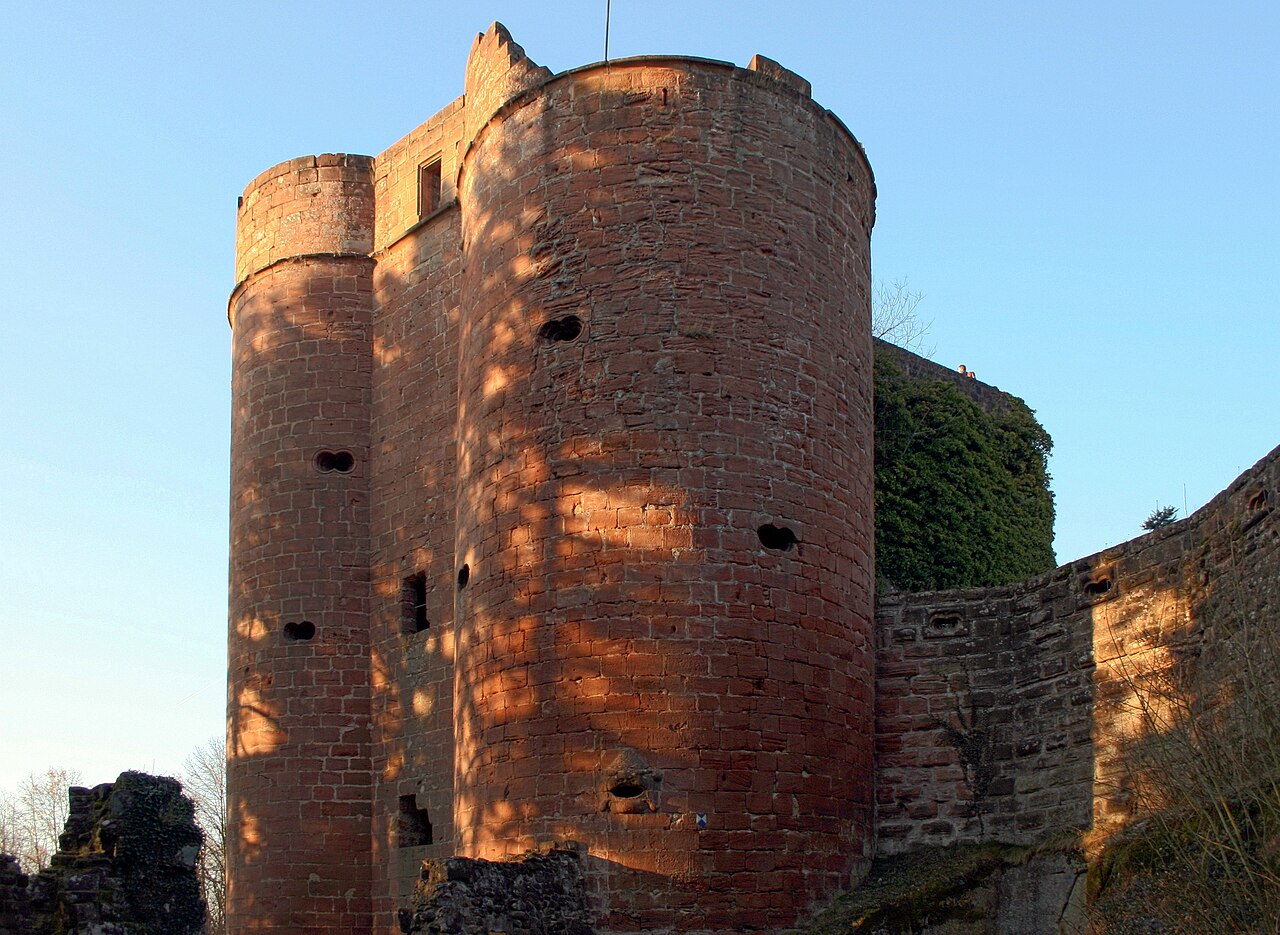
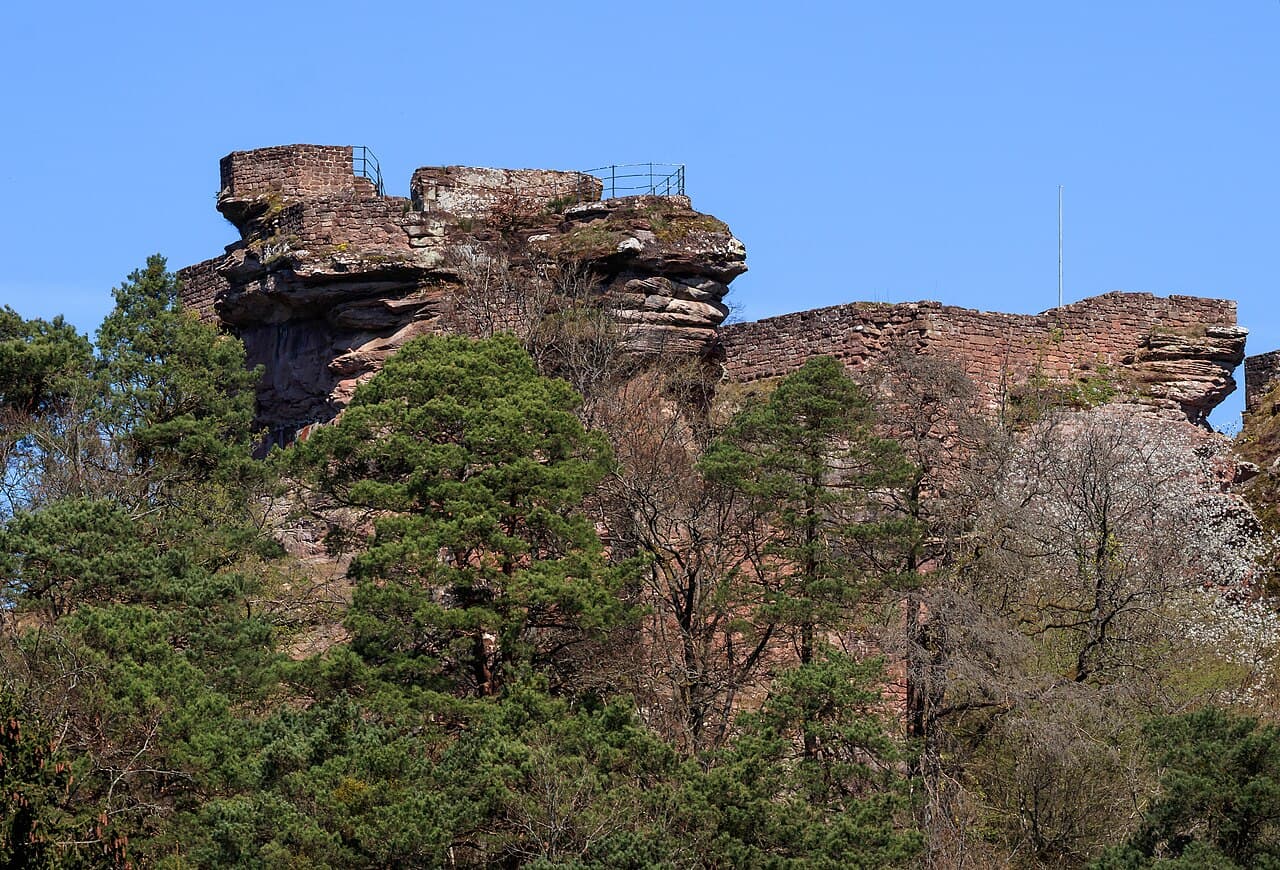
Tanstein Castle is situated on the two westernmost rock outcrops of the Dahn castle cluster, originally connected by a bridge. The western rock outcrop housed domestic buildings built against the natural rock face, evidenced by putlock holes and other architectural marks. A large cistern on this rock collected rainwater from the roofs, demonstrating advanced water management for the castle's inhabitants.
The southern rock outcrop contains the lower ward, where traces of original 15th-century walls survive. These ruins include the remains of a smithy and a smelting furnace, indicating the castle's role in local metalworking and self-sufficiency. Modern parapet walls have been added to the rocks but do not accurately represent the castle's original appearance.
Rock castle characteristics
Tanstein exemplifies a rock castle typical of the Palatine Forest region, where natural sandstone formations were integrated into the defensive and residential structures. The castle's design utilized the rugged terrain to enhance its fortifications, with buildings constructed directly against or carved into the rock.
Relationship with neighboring castles
Tanstein Castle's proximity to Altdahn and Grafendahn castles creates a rare and fascinating cluster of medieval fortifications. Although close in location, the castles were built at different times and served distinct roles. This cluster provides valuable insights into the evolution of castle architecture and feudal relationships in the region over several centuries.
Current condition and preservation
Today, Tanstein Castle remains a ruined archaeological site. The visible remains allow visitors to glimpse the castle's original layout and understand its historical functions. The site is accessible to the public and forms part of the cultural heritage of the Palatine Forest, attracting historians, architects, and tourists interested in medieval fortifications.
While modern parapet walls have been added for safety and preservation, they do not reflect the castle's authentic medieval structures. Archaeological studies continue to uncover details about the castle's construction techniques and daily life during its occupation.
Visiting tanstein castle
Visitors to Tanstein Castle can explore the ruins alongside the other Dahn castles, experiencing a unique concentration of medieval architecture in a natural forest setting. The castle's elevated position offers scenic views of the surrounding landscape, enhancing its appeal as a historical and recreational destination.
The site is ideal for hiking and educational tours, providing a tangible connection to the region's medieval past. Interpretive signage and local guides help visitors understand the castle's significance and the broader history of the Dahn castle group.
Frequently asked questions (FAQ)
- What is the historical significance of Tanstein Castle?
- Tanstein Castle, located in Dahn, Germany, dates back to the 13th century and served as a strategic fortress in the region. It played a crucial role in the feudal system and has witnessed various historical events that shaped the local landscape.
- When was Tanstein Castle built?
- Tanstein Castle was constructed around the mid-13th century, with its initial purpose being defense against potential invaders. Over the centuries, it underwent several renovations and expansions, reflecting the architectural styles of different eras.
- Can I visit Tanstein Castle?
- Yes, Tanstein Castle is open to the public, allowing visitors to explore its rich history and stunning views of the surrounding area. Guided tours are often available, providing insights into its historical significance and architectural features.
- What are the opening hours for Tanstein Castle?
- Tanstein Castle typically opens to visitors from April to October, with specific hours varying by season. It is advisable to check the official website or contact local tourist information for the most accurate and updated opening times.
- Is it possible to access Tanstein Castle by public transport?
- Yes, Tanstein Castle can be accessed via public transport, with nearby bus and train services connecting it to major towns. However, visitors should be prepared for a short hike to reach the castle from the nearest transport stop.
- What is the best time to visit Tanstein Castle?
- The best time to visit Tanstein Castle is during the spring and early fall when the weather is mild and the surrounding nature is in full bloom. These seasons also see fewer crowds, allowing for a more enjoyable experience.
- Are there any nearby attractions to explore while visiting Tanstein Castle?
- Yes, while visiting Tanstein Castle, you can also explore the nearby Palatinate Forest, which offers hiking trails and beautiful scenery. Additionally, the charming town of Dahn has various shops and restaurants for a complete day out.
- What are the ticket prices for Tanstein Castle?
- Ticket prices for Tanstein Castle are generally affordable, with discounts often available for students and seniors. It is best to check the official website for the latest pricing information and any special offers.
- Is Tanstein Castle accessible for individuals with mobility challenges?
- Tanstein Castle has limited accessibility due to its medieval architecture and the terrain leading up to it. It is recommended for visitors with mobility challenges to contact the castle management in advance to inquire about specific accommodations.
Photo gallery

Information
Loading map...
Visitor reviews
No reviews yet. Been here? Write the first review and help other travelers!
Write the first reviewVisited this castle? Share your experience
Your review helps other travelers and adds first-hand knowledge to our encyclopedia.