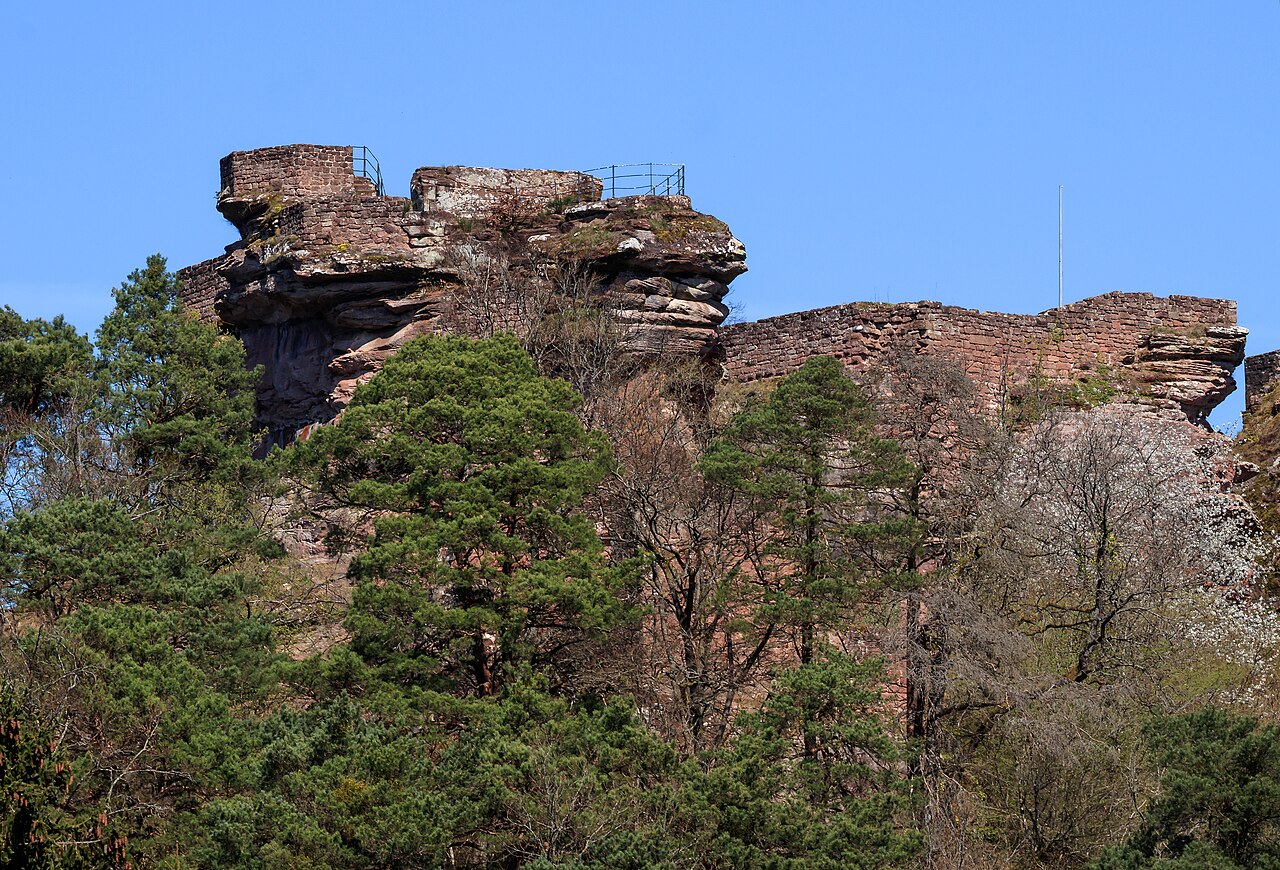
Burghalder
Burghalder is a medieval hill castle ruin located near the municipality of Hauenstein in present-day Germany. Perched atop the natural rock formation known as Burghalderfelsen, this site reflects the typical defensive strategies and architectural features of the High Middle Ages. Although much of the castle lies in ruins, its remains provide valuable insight into medieval fortification practices and regional history.
Historical context and origins
The origins of Burghalder can be traced back to at least the 10th or 11th century, based on the style of masonry and fortifications evident at the site. This places the castle firmly within the High Medieval period, a time when hilltop castles were commonly constructed across Europe to secure territorial control and provide defense against hostile forces. Archaeological excavations have uncovered 12th-century pottery shards in the defensive neck ditch, confirming active use during this century.
While some non-expert sources speculate that Burghalder may have originated as a refuge castle during the late Carolingian era (9th or 10th century), there is no firm archaeological or documentary evidence to support this earlier dating. Therefore, the castle’s construction and primary period of use are most reliably situated in the medieval era.
No direct historical records mention Burghalder by name, and its specific roles remain partially uncertain. It likely served as a defensive stronghold overseeing the surrounding valleys and controlling local routes. Local tradition and symbolic associations hint at a possible religious function, perhaps including a chapel, but this remains speculative due to lack of physical evidence.
Architectural features and layout
The castle ruins occupy a compact area approximately 30 meters long and 10 meters wide atop the Burghalderfelsen, a natural rock ridge about 300 meters in length. This rocky outcrop forms part of a ridge stretching between the higher elevation of Hoher Kopf and the northern tip, where the castle was situated.
Construction consists primarily of mortared stone walls built from roughly shaped blocks, characteristic of medieval masonry techniques. These walls survive only in fragments, outlining the castle’s defensive perimeter. A faint neck ditch, an excavated trench designed to hinder attackers’ approach, runs near the site, demonstrating strategic defensive planning.
The presumed main entrance was on the southern side of the rock, where a gate complex likely existed. However, no definitive structural remains of this gateway have been identified. The southern approach would have provided access to the rear section of the rock formation, where the castle’s buildings were concentrated.
The castle lacks extensive surviving structures such as towers, staircases, or large halls. Decorative elements or inscriptions are also absent, indicating a modestly sized fortress primarily focused on defense rather than residential grandeur.
The neck ditch and defensive elements
The neck ditch is a key defensive feature excavated near the castle, designed to protect the narrow approach to the rock outcrop. Pottery shards found within this ditch date to the 12th century, confirming the castle’s active use during this period. The ditch would have made direct assault more difficult and slowed attackers, enhancing the castle’s defensibility.
Archaeological findings and commemorations
Excavations conducted in 1972 revealed important details about the castle’s layout and occupation. The site is marked by Ritterstein number 219, a commemorative stone plaque that includes a plan of the castle and summarizes the archaeological findings. This marker helps preserve the memory of Burghalder and provides visitors with historical context.
Despite the limited remains, the archaeological evidence supports the interpretation of Burghalder as a small medieval defensive site with probable local significance rather than a major fortress or noble residence.
Possible religious associations
Local tradition suggests a potential religious connection for Burghalder, possibly including a chapel within the castle complex. While no physical remains confirm this, a medieval symbolic stone measuring approximately 200 by 60 centimeters is located in the nave of the nearby Catholic St. Bartholomew’s Church. This stone is associated with the castle and may indicate some spiritual or community significance linked to the site.
Burghalder in the landscape and cultural heritage
Strategically placed on a rocky outcrop overlooking the surrounding valleys, Burghalder exemplifies the typical hill castle form used throughout medieval Germany for territorial control and defense. Its modest scale and fragmentary remains reflect the many smaller fortifications that dotted the medieval landscape, serving local communities and regional powers.
Today, Burghalder stands as a protected archaeological site and natural monument. Its ruins and commemorative markers invite exploration and study, offering insights into medieval fortification techniques and the historical geography of the Hauenstein region.
Frequently asked questions (FAQ)
- What is the historical significance of Burghalder Castle?
- Burghalder Castle is a significant medieval fortress that played a crucial role in the defense strategies of the region during the Middle Ages. It has witnessed numerous historical events and changes in power, contributing to the rich tapestry of German history.
- When was Burghalder Castle built?
- Burghalder Castle was constructed in the 12th century, making it an important example of medieval architecture. Over the centuries, it has undergone various renovations and restorations while retaining its original charm.
- Can I visit Burghalder Castle?
- Yes, Burghalder Castle is open to visitors throughout the year. You can explore its historical grounds, enjoy guided tours, and learn about its fascinating past.
- What are the opening hours of Burghalder Castle?
- Burghalder Castle typically opens daily from 10 AM to 6 PM, but it is advisable to check the official website for any seasonal changes or special events. This ensures you have the most accurate information before your visit.
- Is it possible to access Burghalder Castle with mobility challenges?
- Yes, Burghalder Castle strives to be accessible to all visitors. There are designated paths and ramps that allow individuals with mobility challenges to navigate the castle grounds and enjoy the views.
- What are the ticket prices for visiting Burghalder Castle?
- Ticket prices for Burghalder Castle are generally affordable, with discounts available for students and seniors. Family tickets are also offered, making it a great outing for visitors of all ages.
- When is the best time to visit Burghalder Castle?
- The best time to visit Burghalder Castle is during the spring and early autumn months when the weather is mild and the surrounding landscape is vibrant. These seasons also see fewer crowds, allowing for a more enjoyable experience.
- Are there any nearby attractions to Burghalder Castle?
- Yes, there are several attractions near Burghalder Castle, including picturesque hiking trails, local museums, and charming villages. Exploring these nearby sites can enhance your visit and provide a fuller experience of the region.
Information
Loading map...
Visitor reviews
No reviews yet. Been here? Write the first review and help other travelers!
Write the first reviewVisited this castle? Share your experience
Your review helps other travelers and adds first-hand knowledge to our encyclopedia.