Neudahn Castle Ruins
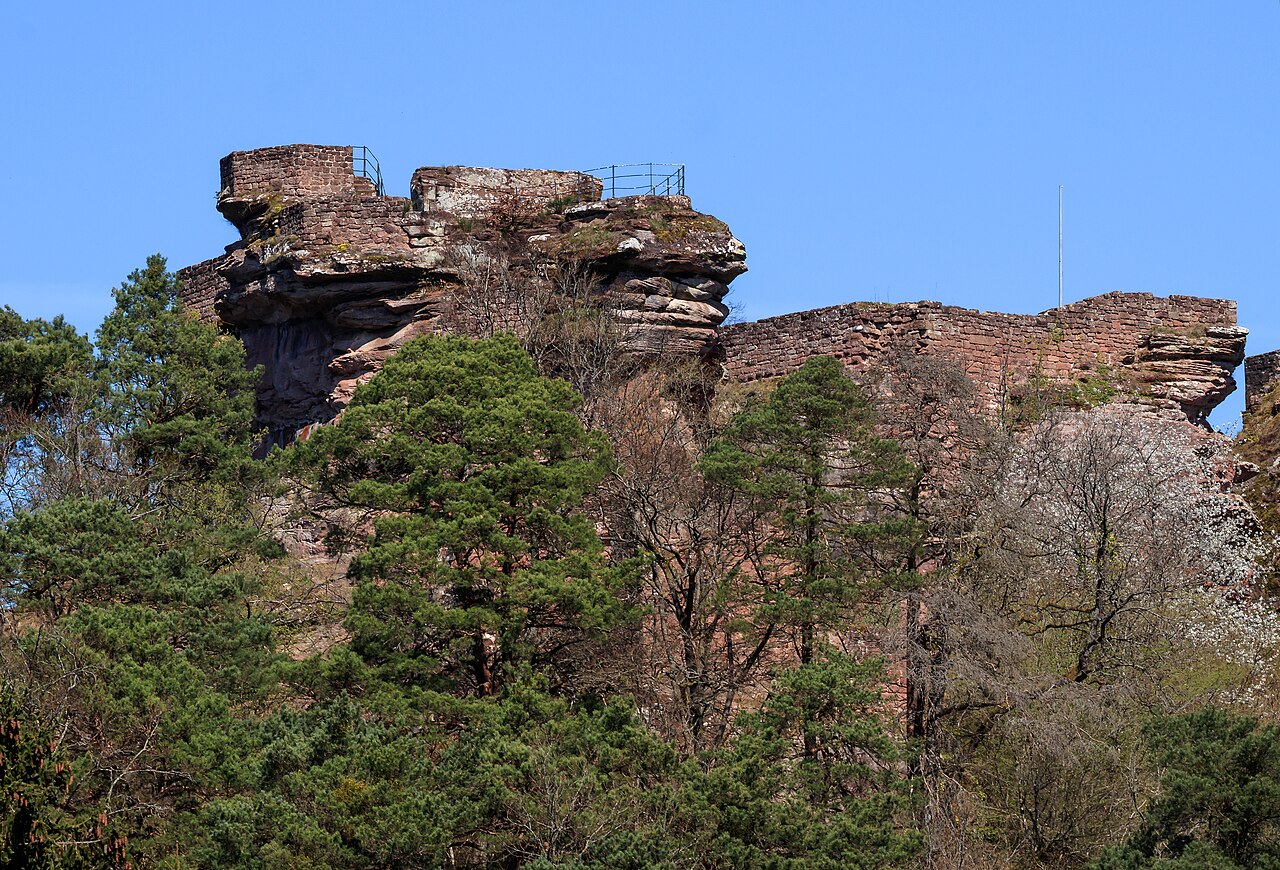
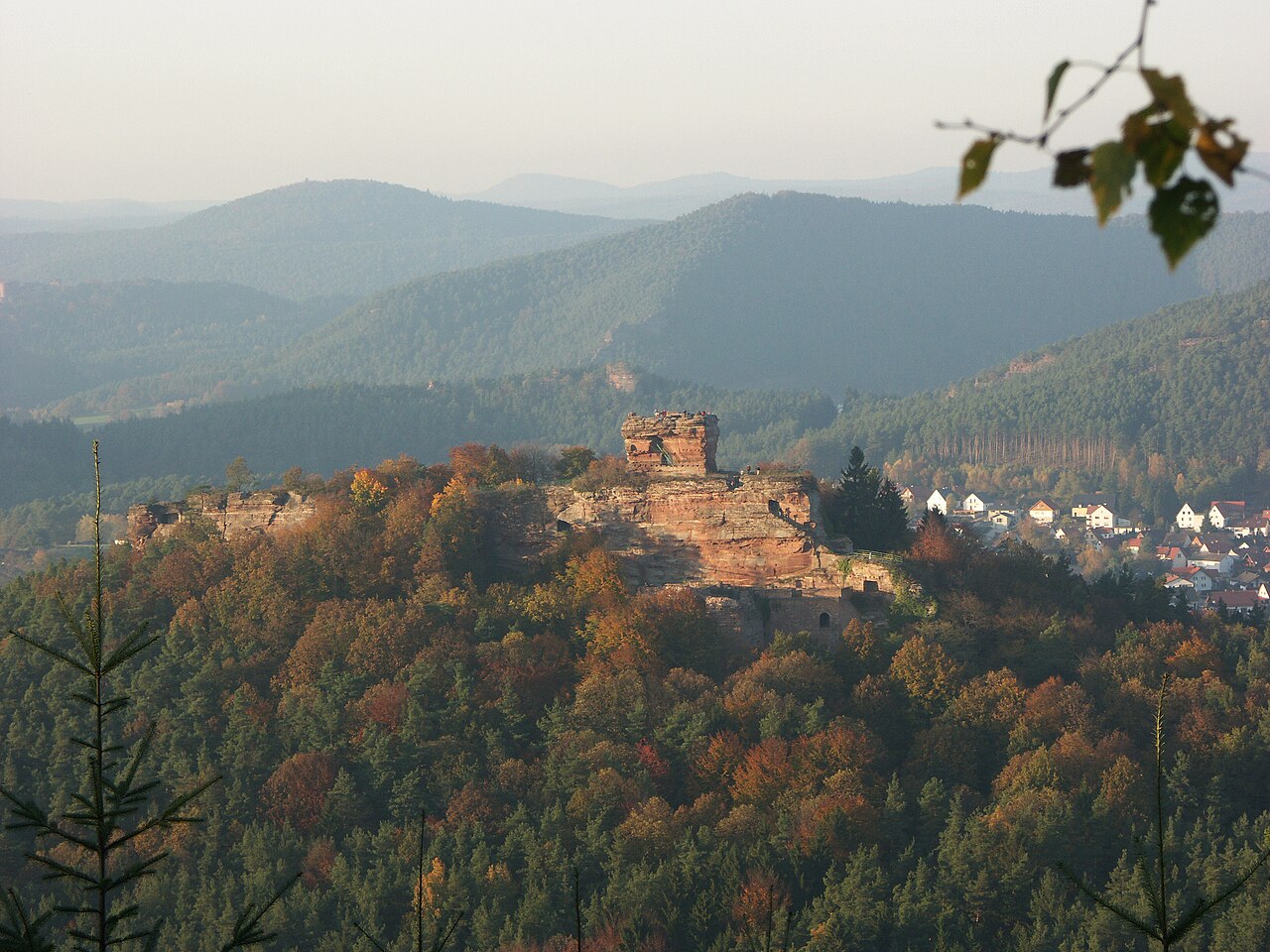
Neudahn Castle is a remarkable example of a high medieval hill castle located in the town of Dahn within the Rhineland-Palatinate region of Germany. This rock castle is uniquely perched atop a sandstone rock outcrop, characteristic of the Dahner Felsenland, a landscape renowned for its rugged rock formations. Despite its name suggesting it is "new," Neudahn Castle predates the nearby Grafendahn Castle, though it is younger than Altdahn Castle, which reflects the complex history of the three castles collectively known as the Dahn castles.
Constructed between 1230 and 1240, Neudahn Castle was likely commissioned by the Bishop of Speyer, under the tenure of Conrad IV of Dahn from 1233 to 1236. The castle's strategic position on a ridge overlooking the Wieslauter valley allowed it to control an important medieval route, now followed by the modern B 427 federal highway and the Wieslauter Railway. The castle served both defensive and administrative purposes, overseeing traffic and protecting the region.
Historical context and ownership
The initial governing ministerialis of Neudahn was Henry of Dahn, also known as Henry Mursel of Kropsberg, indicating familial ties between the Dahner area and the South Palatinate, including connections to Kropsburg and Burrweiler. The Mursel family held the castle as a heritable fief, but within a century, their line died out. Ownership then passed to the Altdahn line, another branch of the Dahn family. The castle's history is marked by conflict, including damage during the Four Lords' War of 1438 and again in the German Peasants' War of 1525.
Architectural features and defensive structures
Medieval core and rock formations
The castle's core is built on a vertically hewn sandstone rock outcrop about 20 meters high. Remnants of the original late Hohenstaufen period castle include a cistern at the western end and the southern wall of the small palas featuring original window and door openings. Adjacent to the main rock outcrop, there was a late medieval domestic building and a well, indicating the castle's residential and self-sustaining functions.
Towers and walls
To the southeast, near the original gate site, remains of a tower approximately 7 meters in diameter survive. From this tower, a thick defensive wall extends westward before turning north, though much of the wall on the steep northern and northeastern slopes has vanished. The wall connected to a flanking tower at the northern end of the castle grounds, providing additional defense.
Battery towers and artillery adaptations
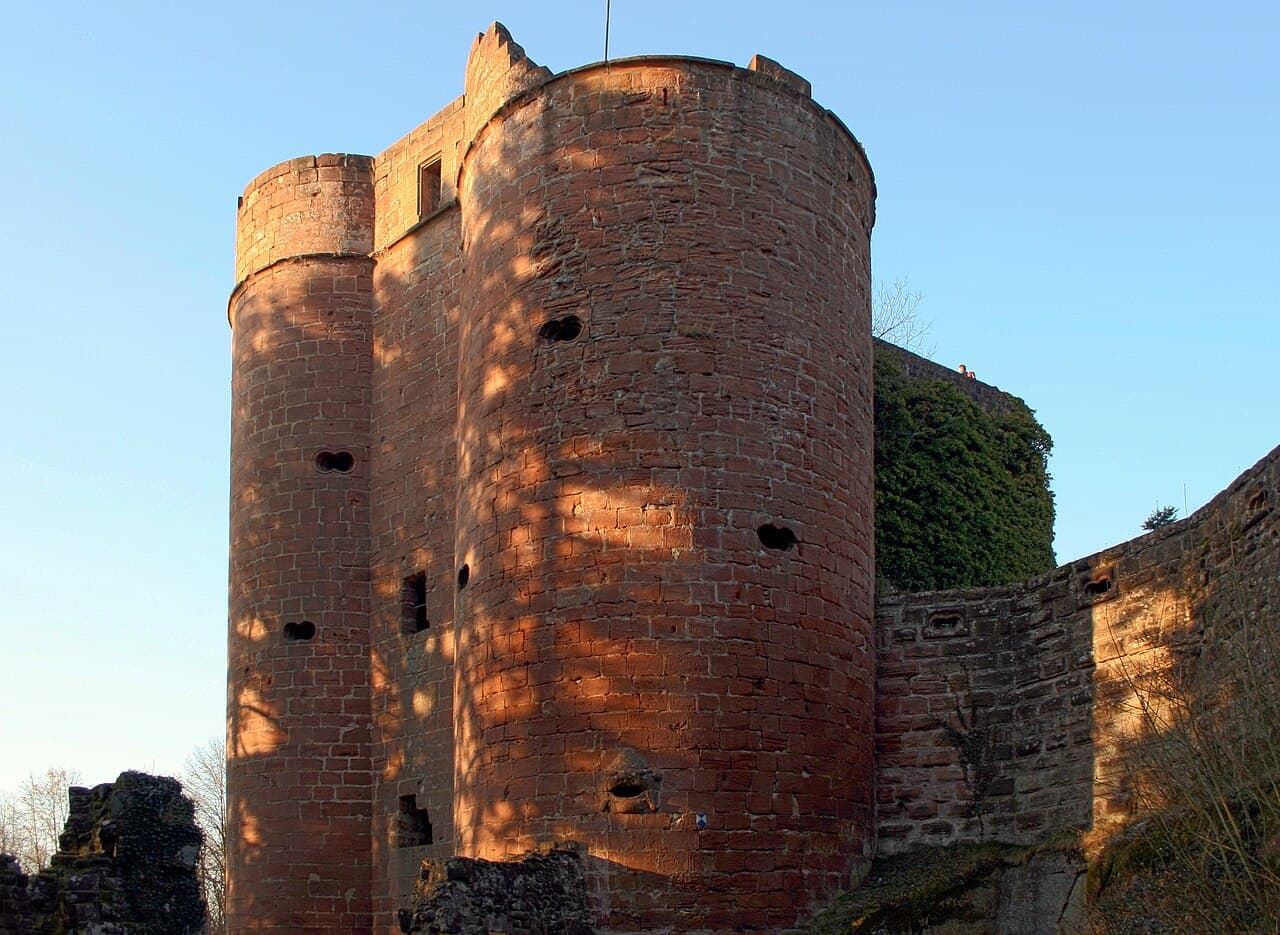
One of Neudahn's most striking features is its two four-story battery towers, each roughly 24 meters high, constructed in the first half of the 16th century. These towers, with walls approximately 3 meters thick, were designed to accommodate the use of firearms and cannon, reflecting the evolution of military technology. The western tower stands about 7 meters tall, while the eastern tower is around 10 meters. Notably, two embrasures on the southern battery tower are ornately carved with lion faces, a rare decorative element in military architecture.
Bastion and late medieval modifications
Extending from the castle hill to the east-southeast is a wedge-shaped bastion, a distinctive defensive structure intended to deflect artillery fire and protect the upper ward on the gentler slope of the hill. This bastion, along with the battery towers, illustrates the significant adaptations made during the late Middle Ages to counter the threat posed by new artillery weapons.
Castle renovations and historical events
Neudahn Castle underwent multiple phases of destruction and rebuilding. It was likely razed during the Four Lords' War in 1438 and suffered heavy damage again during the German Peasants' War in 1525. However, by 1552, the castle had been thoroughly renovated, as evidenced by the stay of King Henry II of France, who lodged there during his military campaigns. This renovation phase included the construction of the artillery towers and bastion.
After the death of Ludwig II, the last lord of Dahn, in 1603, Neudahn reverted to the Prince-Bishopric of Speyer. It then served as the headquarters for the episcopal Amtmann until its final destruction by French troops in 1689 during the War of the Palatine Succession.
Current condition and visitor experience
Today, the ruins of Neudahn Castle largely reflect the post-1525 renovation and extension phase, preserving the castle's late medieval and early modern military architecture. Visitors can observe the remains of the original gates, towers, thick defensive walls, and the impressive battery towers. A plastered newel tower on the northwestern edge of the rock outcrop leads to the upper ward, although the current ground floor entrance was likely created in 1975 for visitor access and is not original.
The castle's location on sandstone rock formations offers a dramatic setting and provides insight into medieval defensive strategies adapted to natural terrain. Neudahn Castle stands as a significant cultural heritage site, illustrating the architectural and military evolution from the high Middle Ages through the early modern period in the Palatinate region.
Frequently asked questions (FAQ)
- How do I get to Neudahn Castle ruins in Dahn?
- Neudahn Castle ruins are located near the town of Dahn in Rhineland-Palatinate, Germany. Visitors can reach the site by car via the B 427 federal highway or by train using the Wieslauter Railway, which follows the old route through the Wieslauter valley.
- What is the historical significance of Neudahn Castle?
- Neudahn Castle played a strategic role in controlling the Wieslauter valley road and reflects medieval military architecture adapted for early firearms. It was involved in regional conflicts such as the Four Lords' War and the German Peasants' War.
- Can I explore the battery towers at Neudahn Castle?
- Visitors can view the remains of the two 16th-century battery towers, which are notable for their thick walls and embrasures shaped like lion faces. Access inside the towers may be limited due to preservation efforts.
- When was Neudahn Castle built and by whom?
- The castle was constructed between 1230 and 1240, likely commissioned by the Bishop of Speyer during the tenure of Conrad IV of Dahn. It was governed by Henry of Dahn, a ministerialis with family ties to the South Palatinate.
- Is Neudahn Castle accessible year-round?
- Neudahn Castle ruins are generally accessible year-round as an outdoor historical site. However, visitors should check local conditions and weather before planning a visit, as the terrain can be rugged.
Photo gallery

Photo by derivative work: Wikipeder (talk) Burg_Neudahn_Suedseite.jpg: Haselburg-müller•CC BY-SA 3.0
Information
Loading map...
Visitor reviews
No reviews yet. Been here? Write the first review and help other travelers!
Write the first reviewVisited this castle? Share your experience
Your review helps other travelers and adds first-hand knowledge to our encyclopedia.