Drachenfels Castle Ruins
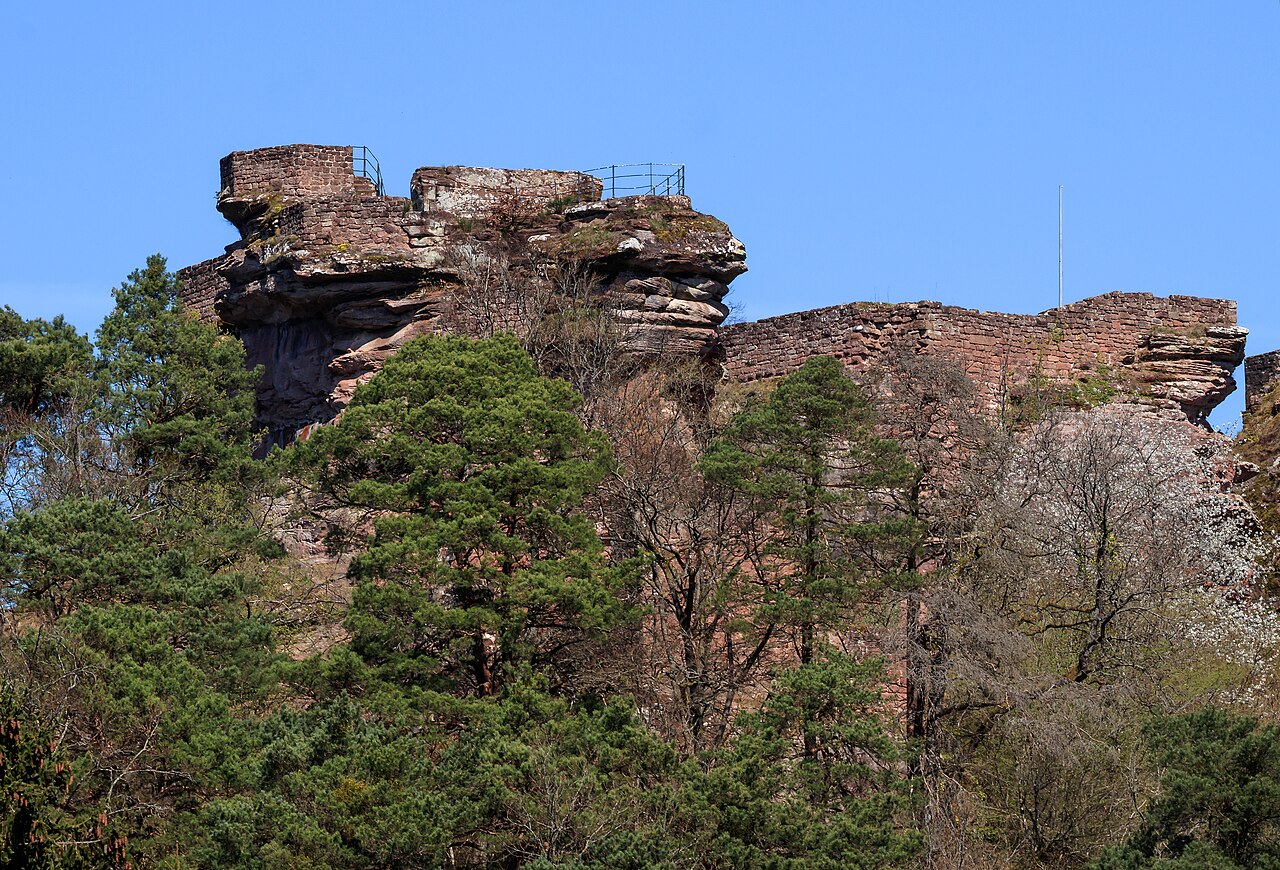
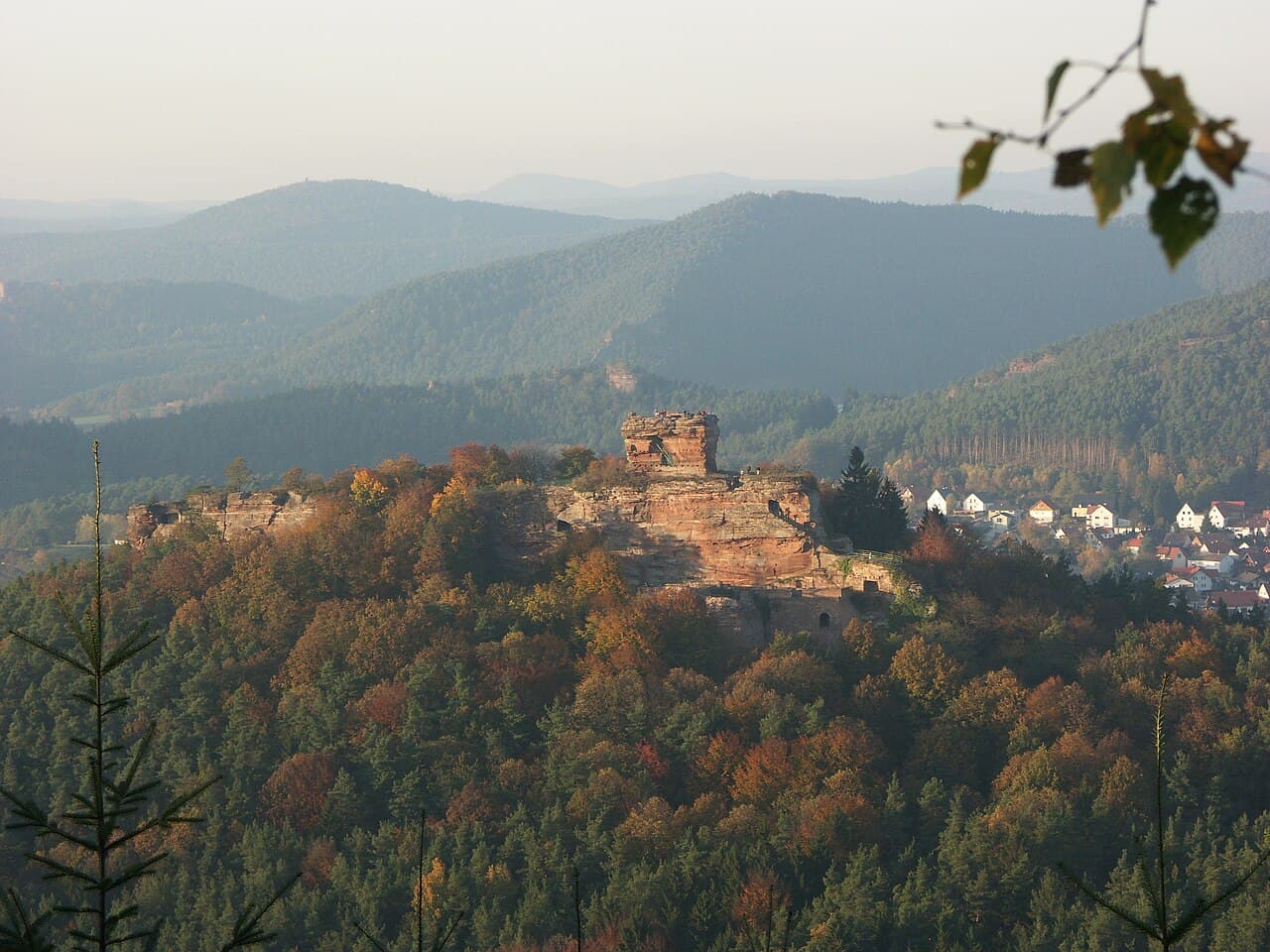
Drachenfels Castle ruins are perched on a striking 150-metre-long bunter sandstone ridge at an elevation of 368 metres above sea level, near the village of Busenberg in the Rhineland-Palatinate region of Germany. This high medieval hill castle is located about seven kilometres north of the Franco-German border, within the scenic German part of the Wasgau region, which forms the southern section of the Palatinate Forest. The castle's dramatic setting atop the sandstone rocks, known locally as the Backenzahn, offers a glimpse into its former strategic and defensive significance.
Origins and historical background
The precise origins of Drachenfels Castle remain somewhat obscure due to limited documentary evidence, but archaeological finds date its construction to the 12th century, with artefacts from the mid-13th century confirming its active use during that period. The castle's name is believed to derive from a dragon carved into the sandstone wall of the old great hall, although this carving has not been definitively dated and may have been added later as a symbolic reference.
The castle was first mentioned in historical records in 1209, naming brothers Conrad and William of Drachenfels as its lords. Further mentions include a Burkhard of Drachenfels, purportedly in service to the House of Hohenstaufen between 1219 and 1221, although this lacks firm documentary support. In 1288, a dispute involving cousins Rudolph and Anselm of Drachenfels and the Bishop of Worms was settled, highlighting the castle's role in regional power struggles.
Architectural features and layout
Drachenfels Castle was constructed on a natural sandstone ridge, which was ingeniously adapted to serve as a formidable defensive position. The castle's remains today include sections of the lower ward and the gate system, which were crucial for controlling access. The gate tower, enhanced in 1903 with two round-arched portals, stands as a prominent feature.
The eastern part of the site is dominated by the Backenzahn rock, where only a few original wall courses survive. Visitors can climb steps partially carved into the rock, which provide an impression of the castle’s former strength. On the plateau where the bergfried (main tower) once stood, remnants of a cistern can still be seen, indicating the castle’s self-sufficiency in water supply during sieges.
Within the rock-hewn rooms, putlock holes and other chiseled marks reveal that these chambers were once covered by timber-framed or stone buildings, illustrating the castle’s complex internal structure. The use of natural rock formations combined with manmade fortifications reflects typical high medieval defensive architecture in the region.
Historical events and decline
The castle’s history is marked by frequent conflicts and changing ownership. In 1314, the castle suffered damage during a campaign by the city of Strasbourg against nearby Berwartstein Castle, with Drachenfels also besieged. By 1335, the lords of Drachenfels were accused of being robber barons, leading to another siege and partial destruction of the castle.
These events forced the owners to gradually sell parts of the castle from 1344, resulting in Drachenfels becoming a Ganerbenburg—a jointly-owned castle shared by multiple families or individuals. Notably, in 1510, the rebellious imperial knight Francis of Sickingen acquired a share of the castle.
Ultimately, on 10 May 1523, after Sickingen’s defeat by allied imperial forces, the castle was destroyed. The small garrison surrendered without a fight due to overwhelming odds. The victors forbade its reconstruction, and the ruins were subsequently used as a quarry. Stones from the castle were repurposed in the late 18th century to build the Schlösschen manor house and the church in Busenberg.
Current condition and visitor experience
Today, Drachenfels Castle remains a site of archaeological ruins, with its high medieval fortifications partially preserved. The site offers visitors the chance to explore the rugged sandstone terrain, climb the carved steps, and observe the surviving architectural elements such as the gate tower and bergfried plateau. The castle’s ruins convey the layered history of feudal conflicts and architectural adaptation in the Palatinate region.
Despite its ruined state, the castle is a significant cultural landmark within the Wasgau and Palatinate Forest, attracting history enthusiasts and hikers alike. The combination of natural rock formations and medieval masonry provides a unique glimpse into castle construction techniques and defensive strategies of the period.
Frequently asked questions (FAQ)
- How do I get to Drachenfels Castle ruins?
- Drachenfels Castle ruins are located near the village of Busenberg in Rhineland-Palatinate, Germany. The site is accessible by hiking trails from Busenberg, offering scenic views of the Palatinate Forest region.
- What is the historical significance of Drachenfels Castle?
- Drachenfels Castle played a strategic role in the medieval power struggles of the Wasgau region. It was involved in conflicts with Strasbourg and became a jointly-owned castle before its destruction in 1523.
- Can I explore the ruins of Drachenfels Castle?
- Yes, visitors can explore the archaeological ruins, including the gate tower, bergfried plateau, and rock-hewn rooms. The site features steps carved into the sandstone rock, providing an immersive experience of medieval fortifications.
- When was Drachenfels Castle destroyed?
- Drachenfels Castle was destroyed on 10 May 1523 following the defeat of Francis of Sickingen by allied imperial forces. The castle was not rebuilt after this event.
- Is there an entrance fee to visit Drachenfels Castle ruins?
- There is no entrance fee to visit Drachenfels Castle ruins. The site is open to the public and can be accessed freely via hiking trails.
Photo gallery

Information
Loading map...
Visitor reviews
No reviews yet. Been here? Write the first review and help other travelers!
Write the first reviewVisited this castle? Share your experience
Your review helps other travelers and adds first-hand knowledge to our encyclopedia.