Tannenfels Castle
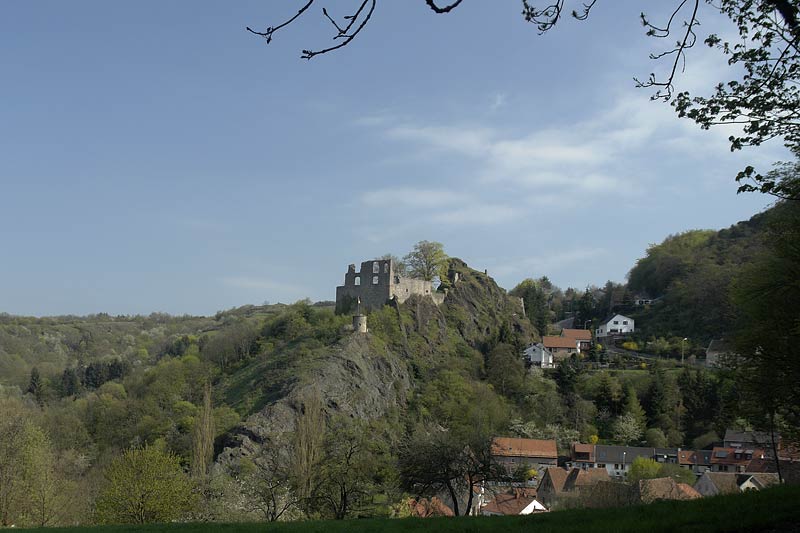
Tannenfels Castle (German: Burg Tannenfels) is a ruined hill castle located near the village of Dannenfels on the Donnersberg hill in Rhineland-Palatinate, Germany. Perched at an elevation of approximately 460 meters above sea level, this castle occupies a strategic position typical of high medieval fortifications. Its remains today reflect its original design as a motte and bailey castle, a common form of defensive structure during the 13th century.
Historical context and origins
Constructed in the high medieval period, Tannenfels Castle was built during a time when motte and bailey castles were prevalent across Europe, particularly in German-speaking regions. These castles were often erected by local lords or knights to assert control over territories and protect trade routes or settlements. The castle's location on the Donnersberg hill provided a commanding view of the surrounding landscape, offering both defensive advantages and territorial oversight.
While specific historical records about the castle's founders and occupants are scarce, its architectural style and strategic placement suggest it played a role in regional defense and administration during the 13th century. The village of Dannenfels nearby likely developed in connection with the castle, serving as a support settlement for its garrison and inhabitants.
Architectural features and layout
Tannenfels Castle exemplifies the motte and bailey design, characterized by a raised earthwork (motte) topped with a fortified structure, and an enclosed courtyard (bailey) surrounded by protective ditches and palisades. The motte at Tannenfels rises prominently, indicating the location of the original keep or tower, which would have been constructed primarily from timber or stone.
The bailey, situated adjacent to the motte, would have contained essential buildings such as living quarters, stables, workshops, and storage facilities. Defensive features likely included a surrounding ditch and wooden palisade, which may have been replaced or supplemented by stone walls in later phases of construction.
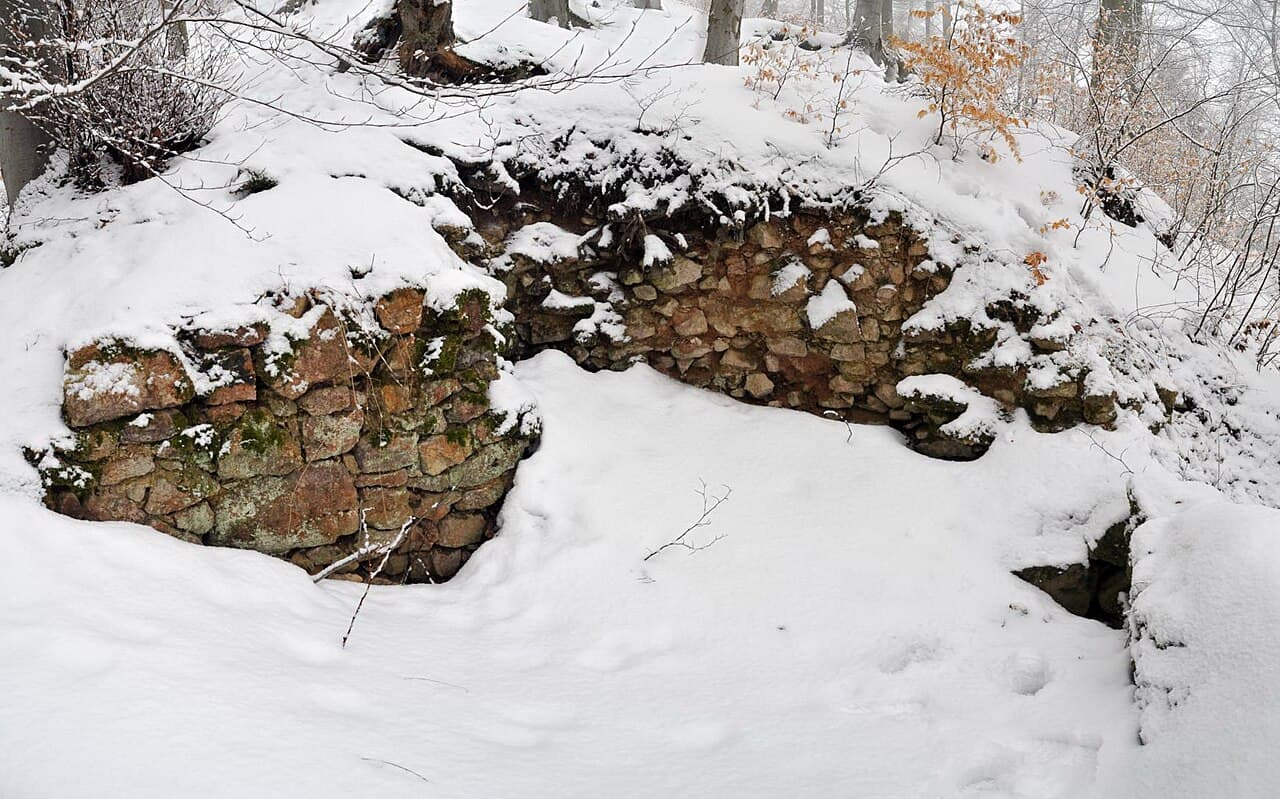
Today, the castle stands in a state of ruins, with archaeological remains revealing the earthworks and foundational structures. The site offers valuable insights into medieval castle construction techniques and the evolution of fortifications in the Rhineland region.
Strategic significance and regional role
Situated on the Donnersberg, the highest peak in the Palatinate region, Tannenfels Castle commanded a vital position overseeing trade routes and local settlements. The castle's elevation allowed for early detection of approaching forces and facilitated communication with other nearby fortifications.
The castle likely served as a local administrative center and military stronghold, contributing to the control and security of the surrounding lands during a period marked by territorial disputes and shifting allegiances among regional nobility.
Preservation and archaeological significance
As a site classified as archaeological ruins, Tannenfels Castle is an important cultural heritage location. Excavations have uncovered remnants of its motte and bailey structures, providing scholars and visitors with a tangible connection to the high medieval era.
The ruins are accessible to the public, allowing for educational opportunities and historical exploration. Preservation efforts focus on maintaining the integrity of the earthworks and stone foundations while preventing further deterioration caused by natural and human factors.
Visiting Tannenfels Castle
Visitors to Tannenfels Castle can explore the ruins nestled within the scenic landscape of the Donnersbergkreis county. The site offers hiking opportunities and panoramic views of the Palatinate countryside.
While the castle itself is in ruins, interpretive signage and guided tours may be available seasonally, enhancing understanding of its historical and architectural significance.
Nearby attractions
The region surrounding Tannenfels Castle features several other historical sites and natural landmarks, including the Donnersberg Nature Park, which provides extensive trails and outdoor activities. Visitors interested in medieval history can also explore other castles and fortifications in Rhineland-Palatinate.
Frequently asked questions (FAQ)
- How do I get to Tannenfels Castle?
- Tannenfels Castle is located near the village of Dannenfels in Rhineland-Palatinate, Germany. Visitors can reach the site by car or local transport to Dannenfels, followed by a hike up Donnersberg hill to the castle ruins.
- What is the historical significance of Tannenfels Castle?
- Tannenfels Castle was a high medieval motte and bailey castle built in the 13th century. It served as a local stronghold and administrative center overseeing trade routes and settlements in the Donnersberg region.
- Is Tannenfels Castle accessible to the public?
- Yes, the ruins of Tannenfels Castle are accessible to the public. Visitors can explore the earthworks and foundations, although only archaeological remains survive. There are walking paths and panoramic views available.
- When was Tannenfels Castle built?
- Tannenfels Castle was constructed in the 13th century during the high medieval period, reflecting typical motte and bailey architecture of that era.
- What architectural features does Tannenfels Castle have?
- The castle features a motte and bailey layout, with a raised earthwork topped by a fortified structure and an enclosed courtyard protected by ditches and palisades. Foundations and earthworks remain visible today.
Photo gallery

Information
Loading map...
Visitor reviews
No reviews yet. Been here? Write the first review and help other travelers!
Write the first reviewVisited this castle? Share your experience
Your review helps other travelers and adds first-hand knowledge to our encyclopedia.