Burg Ruppertsecken
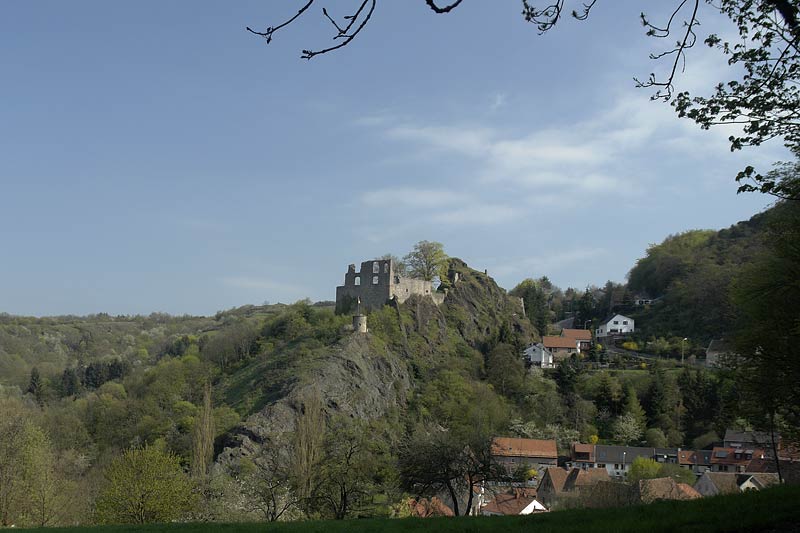
Burg Ruppertsecken is a notable medieval hill castle situated atop Schlossberg hill in the municipality of Ruppertsecken, Germany. This fortress stands at an elevation of 498 meters above sea level, offering a commanding view of the surrounding landscape and village below. Originally constructed during the Middle Ages by the Palatine Counts, a noble family influential within the Palatinate region of the Holy Roman Empire, the castle served as a strategic defensive stronghold and estate center.
Historical context and ownership
The earliest documented mention of Burg Ruppertsecken dates to July 17, 1344, when it was recorded as an estate affiliated with the nearby Burg Frauenstein. At that time, the castle was granted as a hereditary fief to Ritter Hermann von Hohenfels, marking its importance within the feudal hierarchy. Throughout the 14th and 15th centuries, the castle's ownership passed through several prominent noble hands, reflecting the complex political and territorial dynamics of the region.
In 1401, the castle was pledged for a significant sum of 4600 gold gulden to Dieter Landschad von Steinach and his wife Irmgard. Shortly thereafter, in 1406, Johann von Worms acquired Burg Ruppertsecken for 3000 gulden. By 1410, the castle had come into the possession of Duke Stephan of Pfalz-Simmern-Zweibrücken, and later, in 1444, governance transferred to Ludwig of Pfalz-Zweibrücken-Veldenz. These shifts in control illustrate the castle's role within the intricate inheritance and territorial arrangements typical of German nobility during the Late Medieval period.
Siege and destruction in 1470
A defining moment in the castle's history occurred in 1470 when Count Palatine Friedrich I launched a military siege against Burg Ruppertsecken. The castle withstood a determined 14-day assault before ultimately succumbing to the attacking forces. The destruction was meticulously overseen by the artillery master Martin Merz, who supervised the plundering and demolition of the fortress. Following this event, explicit orders forbade any rebuilding efforts, signaling the beginning of the castle's decline and eventual ruination.
Post-medieval decline and reuse of materials
By the late 18th century, around 1794, the ruins and the surrounding village became part of the Electorate of the Palatinate, an important territorial principality within the Holy Roman Empire. Even into the early 19th century, remnants of the castle's masonry were still visible, as recorded in 1825. Over time, local inhabitants harvested stones from the ruins, repurposing them for construction projects within the village. A notable example is the village bell tower, constructed in 1869, which incorporated stonework from the former castle walls.
Architectural remains and modern commemorations
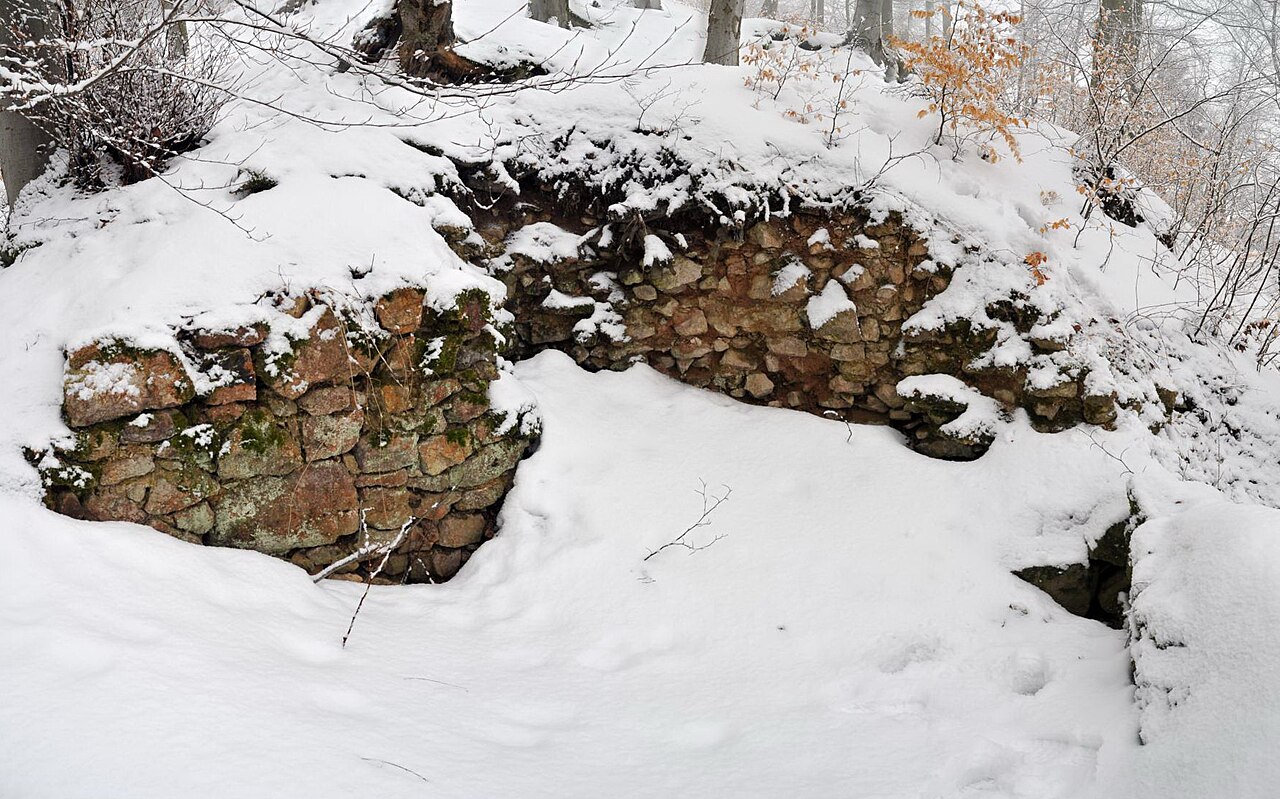
The physical remains of Burg Ruppertsecken are limited but significant. Archaeological observations from the 19th century noted surviving fragments of vertical masonry, indicating where castle walls once stood. These ruins are situated on a prominent hilltop, emphasizing the castle's original role as a defensive lookout and control point.
In 1889, a distinctive water tower was constructed on the historic castle grounds. Designed to resemble a medieval donjon or fortified tower, this structure serves as a modern architectural homage to the castle's medieval past. The water tower underwent restoration in 1963, preserving its appearance and structural integrity. This blend of practical utility and historical reference marks the landscape where the original fortress once dominated.
Strategic location and defensive features
Though detailed records of the castle's original layout and dimensions are scarce, its elevated position on Schlossberg hill provided strategic advantages. The height allowed for extensive surveillance of the surrounding region, an essential feature for medieval fortifications tasked with protecting territories and controlling trade routes. The castle likely featured typical defensive elements such as stone walls, battlements, and possibly a keep or donjon, consistent with hill castles of the Late Medieval period.
Cultural and historical significance
Burg Ruppertsecken exemplifies the turbulent history of feudal Germany, marked by shifting noble ownership, military conflict, and eventual decline. Its destruction following the siege in 1470 symbolizes the changing nature of warfare and territorial control during the Late Middle Ages. The castle's ruins and the subsequent reuse of its materials in local architecture highlight the intertwined relationship between medieval heritage and community development.
The 19th-century water tower stands as a testament to the enduring cultural memory of the castle, blending historical reverence with modern needs. Today, the site offers visitors a glimpse into the region's medieval past and the architectural legacy of the Palatine Counts.
Visiting burg ruppertsecken today
While the castle remains are primarily ruins, the site on Schlossberg hill is accessible to visitors interested in medieval history and castle architecture. The water tower, visible from the village, serves as a landmark commemorating the castle's historical presence. Visitors can explore the hilltop surroundings, enjoy panoramic views, and reflect on the site's layered history.
Interpretive signage or local guides may provide additional context about the castle's history, siege, and architectural features. The proximity to the village of Ruppertsecken allows for convenient access and exploration of the surrounding Palatinate region, known for its rich medieval heritage.
Frequently asked questions (FAQ)
- What is the historical significance of Burg Ruppertsecken?
- Burg Ruppertsecken was a medieval hill castle built by the Palatine Counts and played a strategic role in the region during the Late Middle Ages. Its history reflects the complex noble ownership and military conflicts of the time.
- Can I visit the ruins of Burg Ruppertsecken today?
- Yes, the ruins are accessible on Schlossberg hill near the village of Ruppertsecken. Visitors can explore the hilltop site and see the distinctive 19th-century water tower built in the style of a medieval donjon.
- When was Burg Ruppertsecken destroyed?
- The castle was besieged and destroyed in 1470 during a 14-day assault led by Count Palatine Friedrich I. Rebuilding was forbidden afterward, leading to its decline into ruins.
- Are there any visible remains of the castle?
- Only fragments of vertical masonry remain on the hilltop, which were partially repurposed for local village buildings, including the bell tower built in 1869.
- What architectural features did Burg Ruppertsecken likely have?
- Though exact details are scarce, the castle likely included stone walls, battlements, and a keep or donjon typical of Late Medieval hill castles, designed for defense and surveillance.
Information
Loading map...
Visitor reviews
No reviews yet. Been here? Write the first review and help other travelers!
Write the first reviewVisited this castle? Share your experience
Your review helps other travelers and adds first-hand knowledge to our encyclopedia.