Stauf Castle
Stauf Castle stands as a remarkable example of a medieval hill castle strategically positioned on a ridge overlooking the Eisbach valley near Eisenberg in Germany. Its origins trace back to before the year 1000 AD, making it one of the earliest recorded fortifications in the Palatinate region. The castle's history is deeply intertwined with significant noble families and regional power struggles, reflecting the complex feudal landscape of the High and Late Middle Ages.
Early history and foundation
The first documented mention of the castle, then known as castellum Stoufenburc, appears around 1012. It was initially associated with the Salian dynasty, notably under Duke Conrad I of Carinthia until his death in 1011. His son, Duke Conrad II, held various territories in the region but faced a major uprising that led to the destruction or "slighting" of many castles, possibly including Stauf. This event ushered in a period of obscurity lasting about two centuries, during which the castle disappears from written records.
Ownership and feudal ties
By the late 12th century, Stauf Castle reemerges in historical accounts under the ownership of figures such as Godfrey of Staufen and later the counts of Eberstein. The castle passed through marriage alliances, notably to Count Eberhard III via Kunigunde of Eberstein, and subsequently to Eberhard IV, who is renowned for founding the Rosenthal Abbey, a Cistercian monastery closely linked to the castle's history. This connection highlights the castle's role not only as a military stronghold but also as a center of regional ecclesiastical influence.
Political shifts and noble families
During the 13th century, the barony and the abbey came under the control of the Saarbrücken-Zweibrücken family through the marriage of Agnes III of Eberstein to Henry II. Their daughter, Kunigunde, became the first abbess of Rosenthal Abbey, formalizing its affiliation with the Cistercian Order. By 1282, Stauf Castle's jurisdiction shifted to the Electorate of Trier, integrating it into the broader political framework of the Holy Roman Empire.
Later ownership and decline
In the late 14th century, the castle was acquired by Count Henry II of Sponheim-Bolanden, who resided there until his death in 1393. Shortly thereafter, ownership passed to Count Philip I of Nassau-Saarbrücken. The House of Nassau maintained control of the castle until the late 18th century. However, Stauf Castle's active use ended during the German Peasants' War of 1525, when it was destroyed amid widespread unrest.
Architectural features and layout
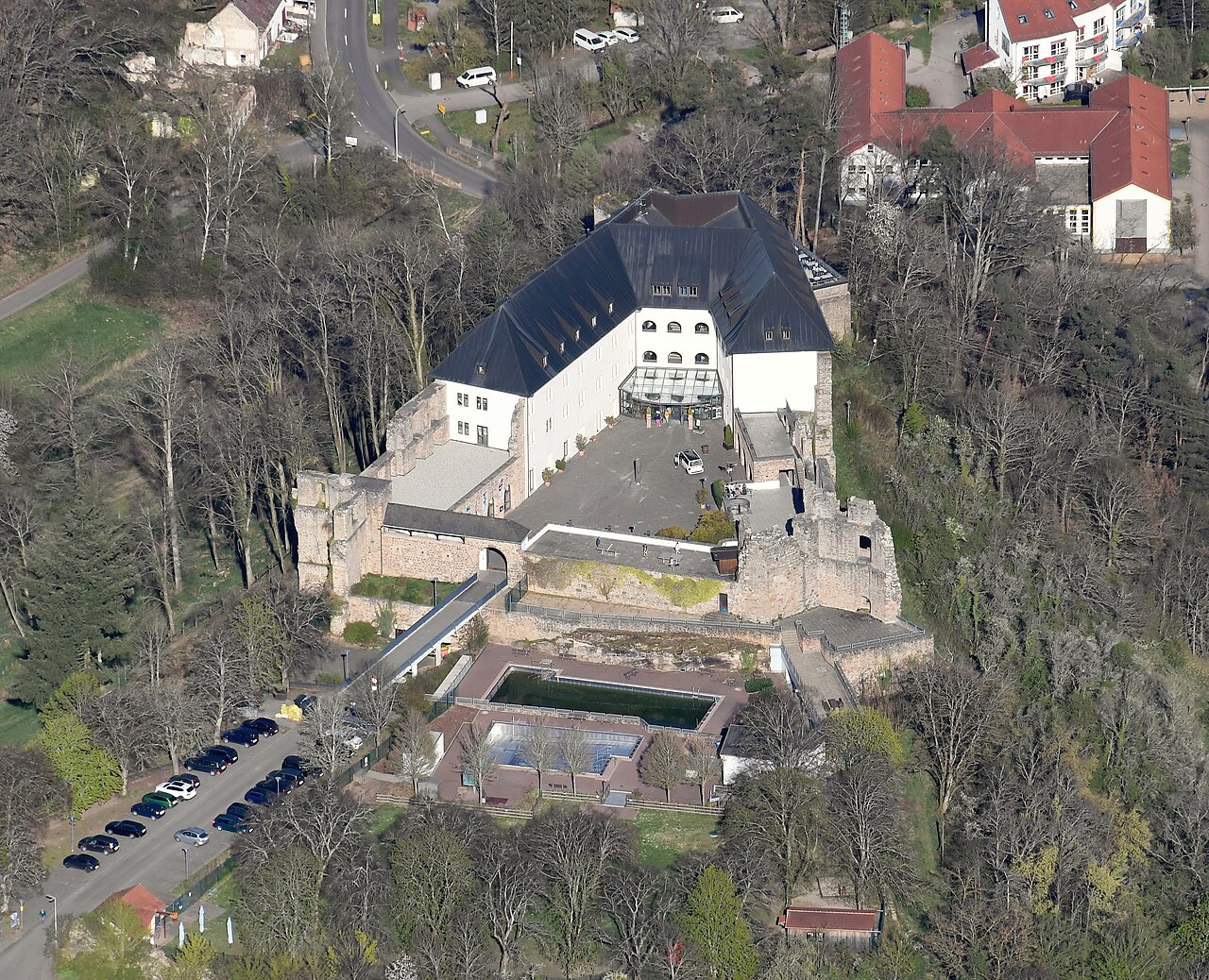
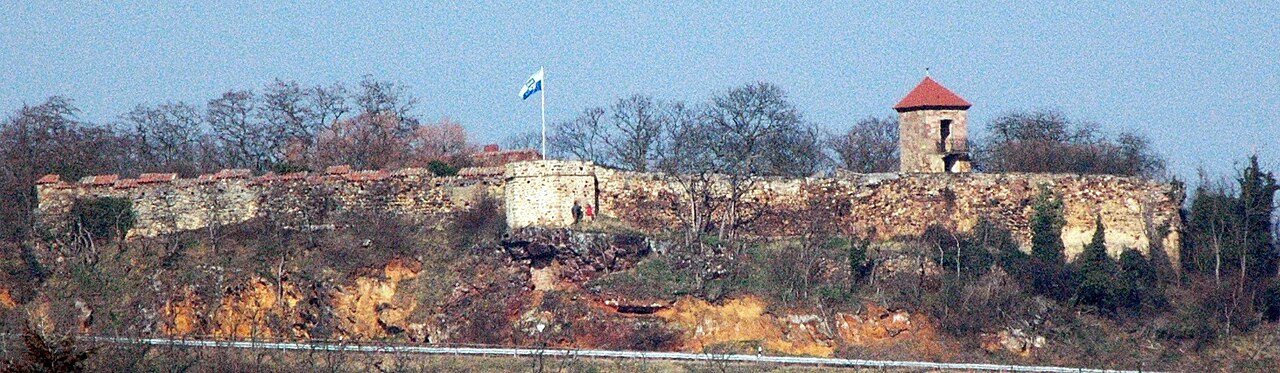
Perched on a hill ridge approximately 327 meters above sea level, Stauf Castle exemplifies the classic spur castle design, utilizing the natural topography for defense. The castle's layout consists of three distinct enclosed areas arranged sequentially along the ridge: an outer bailey to the south, a middle bailey, and an inner bailey towards the north. Each bailey was likely surrounded by defensive walls and gatehouses, creating multiple lines of fortification.
Archaeological studies have confirmed these baileys' existence despite the extensive removal of original stonework, which was repurposed by local villagers after the castle's destruction. The three baileys suggest a complex functional division within the castle, accommodating military, administrative, and residential needs typical of medieval fortifications.
Defensive structures and materials
The castle's fortifications would have included curtain walls, towers, and possibly a gatehouse controlling access. The use of local stone provided robust walls, though much of this was quarried away in later centuries. The elevated position allowed defenders to monitor the Eisbach valley and surrounding approaches, a strategic advantage in medieval warfare.
Destruction, ruin, and preservation
Stauf Castle met its demise during the German Peasants' War in 1525, when it was destroyed amid the widespread social upheaval. Following the Peace of Westphalia in 1648, the ruined castle became a convenient source of building stone for the nearby village of Stauf, accelerating its physical decline.
Preservation efforts began in the late 19th century, with a historic association taking stewardship of the ruins from 1871. In 2000, responsibility transferred to the municipality of Eisenberg, and since 2009, a dedicated local group has maintained the site. Today, the ruins are accessible via woodland paths, offering visitors a tangible connection to the region's medieval heritage.
Visitor experience and cultural significance
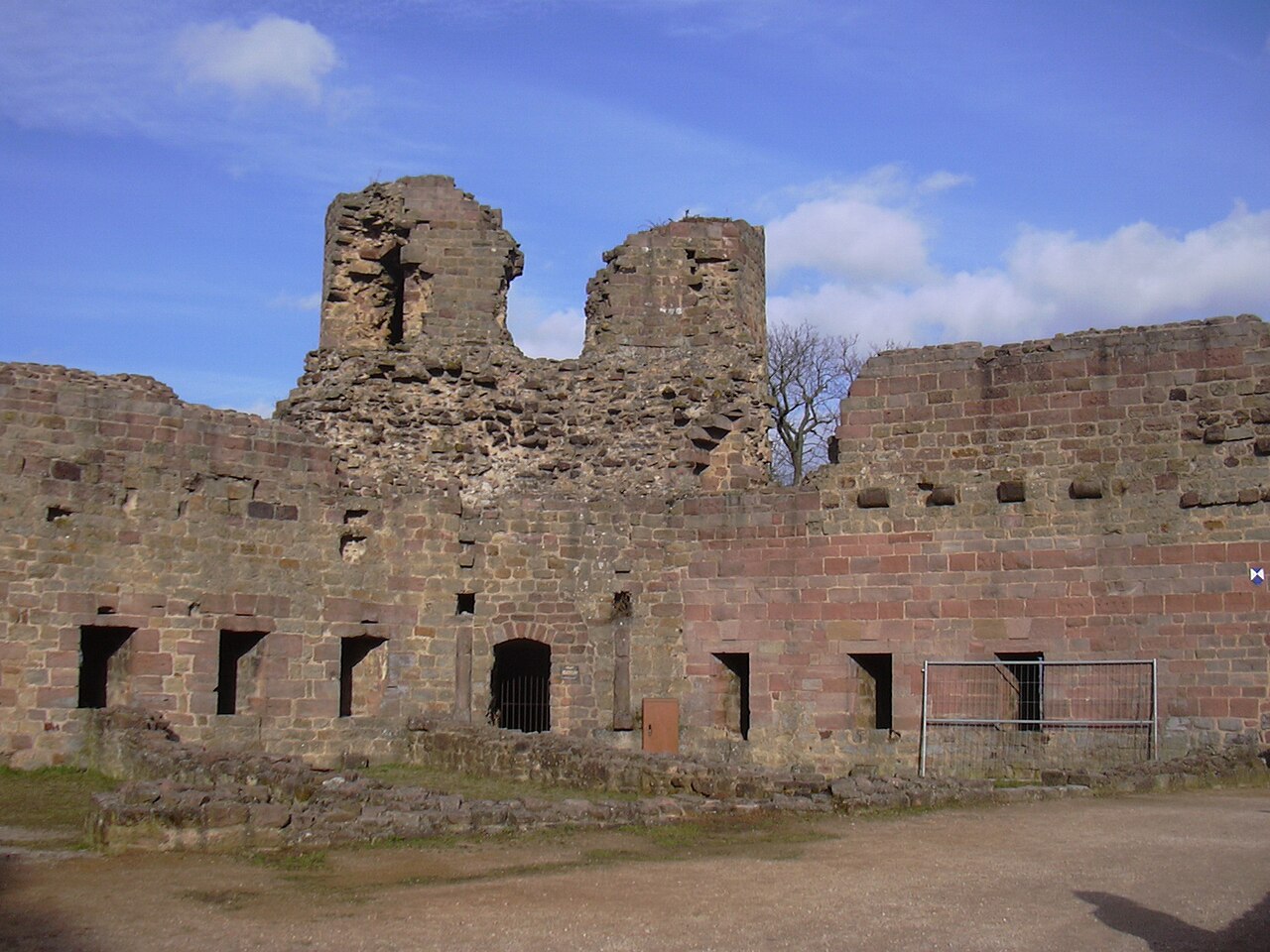
While only fragmentary ruins remain, the site allows visitors to appreciate the castle's original footprint and strategic location. Interpretive signage and conservation work help convey the castle's historical importance as a military stronghold and noble residence within the Palatinate. The ruins stand as a cultural landmark, preserving centuries of regional history and architectural heritage.
Frequently asked questions (FAQ)
- How do I get to Stauf Castle?
- Stauf Castle is located near the village of Stauf in Eisenberg, Rhineland-Palatinate, Germany. Visitors can reach the site by car or local transport, followed by a walk along woodland paths leading to the hilltop ruins.
- What is the best time to visit Stauf Castle?
- The best time to visit Stauf Castle is during the warmer months from spring to early autumn when the woodland paths are accessible and the weather is favorable for hiking.
- Is Stauf Castle wheelchair accessible?
- Due to its hilltop location and rugged terrain, Stauf Castle is not wheelchair accessible. Visitors should be prepared for uneven paths and some steep sections.
- Are there guided tours available at Stauf Castle?
- Currently, there are no regular guided tours at Stauf Castle. Visitors can explore the ruins independently, with informational signs providing historical context.
- Can I visit Stauf Castle year-round?
- Stauf Castle is generally open year-round as an outdoor ruin site, but access may be limited during severe weather or winter months due to path conditions.
Information
Current owner
Municipality of Eisenberg
Loading map...
Visitor reviews
No reviews yet. Been here? Write the first review and help other travelers!
Write the first reviewVisited this castle? Share your experience
Your review helps other travelers and adds first-hand knowledge to our encyclopedia.