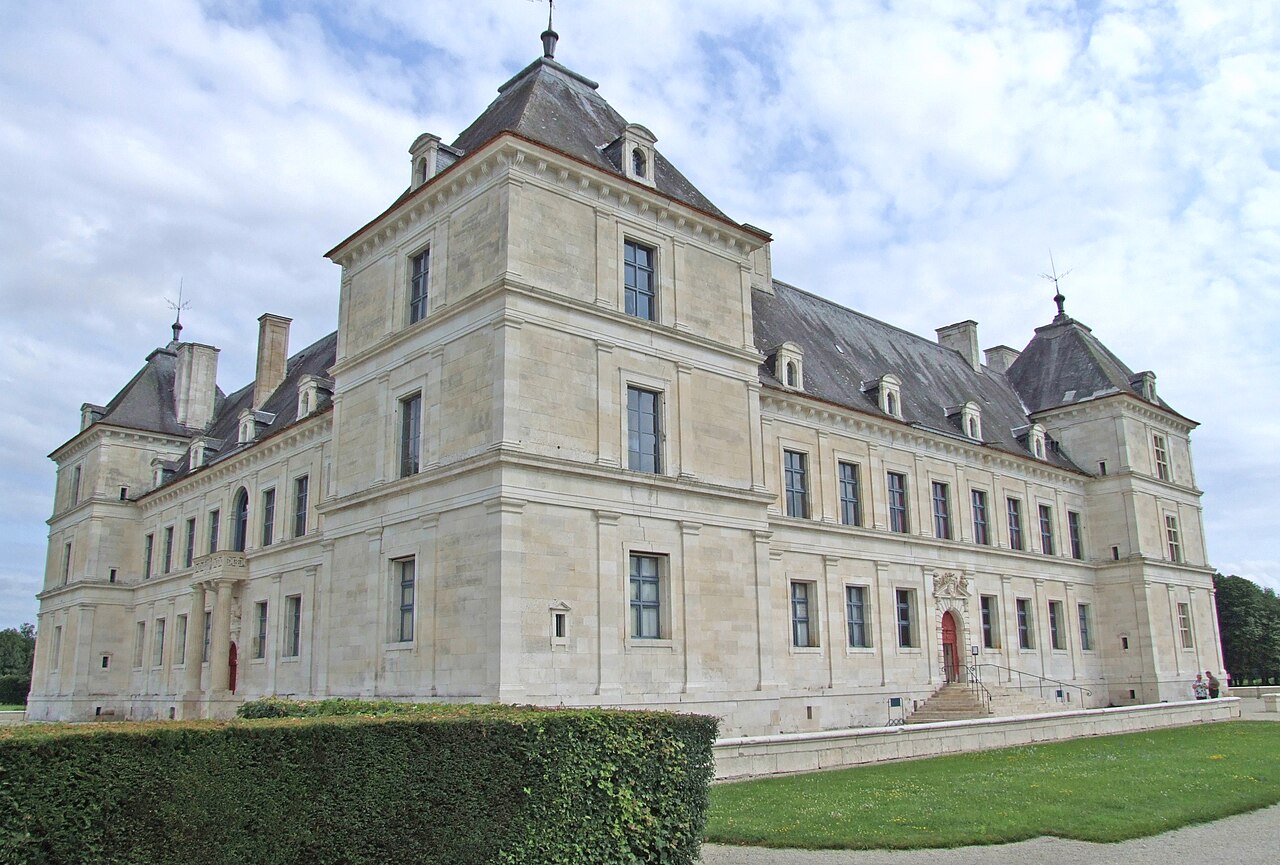
Tanlay Castle
Tanlay Castle stands as a remarkable example of French Renaissance architecture, located in the Bourgogne-Franche-Comté region of France. Its origins trace back to the early 16th century when construction commenced on the foundations of a much older fortress, reflecting the layered history of fortification and aristocratic residence in this part of France.
Early construction and the coligny family legacy
The castle's significant development began in earnest in the 16th century, particularly under the stewardship of the Coligny family. In 1533, the estate was bequeathed to Louise de Montmorency, sister of the influential constable Anne de Montmorency and widow of Marshal Gaspard de Coligny. Her youngest son, François de Coligny, Lord of Andelot, was instrumental in the construction of the great château between 1550 and 1568. This period coincided with the turbulent French Wars of Religion, during which the castle became a hub for Protestant leaders, notably hosting gatherings led by Admiral Gaspard de Coligny.
Architectural features of the renaissance period
The castle's Renaissance character is embodied in notable structures such as the Coligny Tower and the Tour de la Ligue. These towers reflect the elegant yet defensive architectural style of the time, combining aesthetic refinement with practical fortification. The small castle, begun in 1610 by François de Coligny and completed by his son-in-law Jacques Chabot, Marquis de Mirebeau, further expanded the estate, incorporating Renaissance design elements that emphasized symmetry, proportion, and ornamentation inspired by Italianate influences.
17th-century enhancements and the particelli era
Mid-17th century ownership brought significant enhancements under Michel Particelli, Lord of Hemery, who served as Superintendent of Finance. Particelli commissioned the prominent architect Pierre Le Muet to continue the château's development, ensuring that new constructions harmonized with the existing Renaissance style. Le Muet's work included the completion of the right side of the courtyard, the addition of an imposing moat, and the construction of extensive stables. The introduction of a canal within the parkland added a refined landscape feature, demonstrating the integration of architecture with natural surroundings.
Italianate details and garden features
Architectural details from this era reveal a strong Italian influence, evident in the decorative pyramids adorning the access bridge, the enclosing wall surrounding the Green Court, and the elegant Caesars Gallery. The Nymphaeum, a classical water feature, further exemplifies the château's embrace of Renaissance garden aesthetics, blending art, architecture, and nature in a harmonious ensemble.
Later history and continuous family ownership
At the close of the 17th century, the castle passed into the hands of Jean Thevenin, governor of Saint-Denis, who was ennobled as Marquis de Tanlay by Louis XIV in 1705. The castle was acquired from the family of Phelypeaux de la Vrillière, son-in-law to Particelli, ensuring the estate remained within interconnected noble families.
18th-century interior adornments and modern stewardship
Throughout the 18th century, the castle's interiors were richly decorated by its owners, reflecting the tastes and styles of the period. Today, Tanlay Castle remains under the care of the de La Chauviniere family, descendants of the ambassador Edouard de La Chauviniere and Marguerite de Tanlay. This continuous family ownership has helped preserve the château's historical integrity and cultural significance.
Architectural significance and cultural heritage
Tanlay Castle is recognized for its exemplary Renaissance architecture, blending defensive medieval elements with the elegance of Italianate design. Its moats, towers, courtyards, and gardens illustrate the evolution of French château architecture from fortified residence to stately home. The château's historical associations with the French Wars of Religion and prominent noble families enrich its cultural narrative, making it a vital heritage site in Bourgogne-Franche-Comté.
Visitor experience and preservation
Visitors to Tanlay Castle can explore its well-preserved structures and beautifully landscaped grounds, gaining insight into Renaissance architecture and French history. The château's condition is classified as well preserved, allowing for detailed study of its architectural features and historical context. Its enduring presence offers a tangible connection to France's noble past and the artistic movements that shaped its built environment.
Frequently asked questions (FAQ)
- When was Tanlay Castle built and by whom?
- Tanlay Castle was initially constructed in the early 16th century, with major development between 1550 and 1568 under François de Coligny, Lord of Andelot.
- What architectural style characterizes Tanlay Castle?
- Tanlay Castle is a prime example of French Renaissance architecture, featuring Italianate details and harmonious courtyard designs.
- Who was Pierre Le Muet and what was his role at Tanlay Castle?
- Pierre Le Muet was a prominent 17th-century French architect who completed significant parts of Tanlay Castle, including the courtyard and moat, blending Renaissance style with functional elegance.
- Is Tanlay Castle open to the public for visits?
- Tanlay Castle is open to visitors, offering access to its well-preserved Renaissance structures and gardens, though visiting hours may vary seasonally.
- What historical events is Tanlay Castle associated with?
- The castle is closely linked to the French Wars of Religion and served as a meeting place for Protestant leaders, including Admiral Gaspard de Coligny.
Information
Architect
Pierre Le Muet
Current owner
de La Chauviniere family
Loading map...
Visitor reviews
No reviews yet. Been here? Write the first review and help other travelers!
Write the first reviewVisited this castle? Share your experience
Your review helps other travelers and adds first-hand knowledge to our encyclopedia.