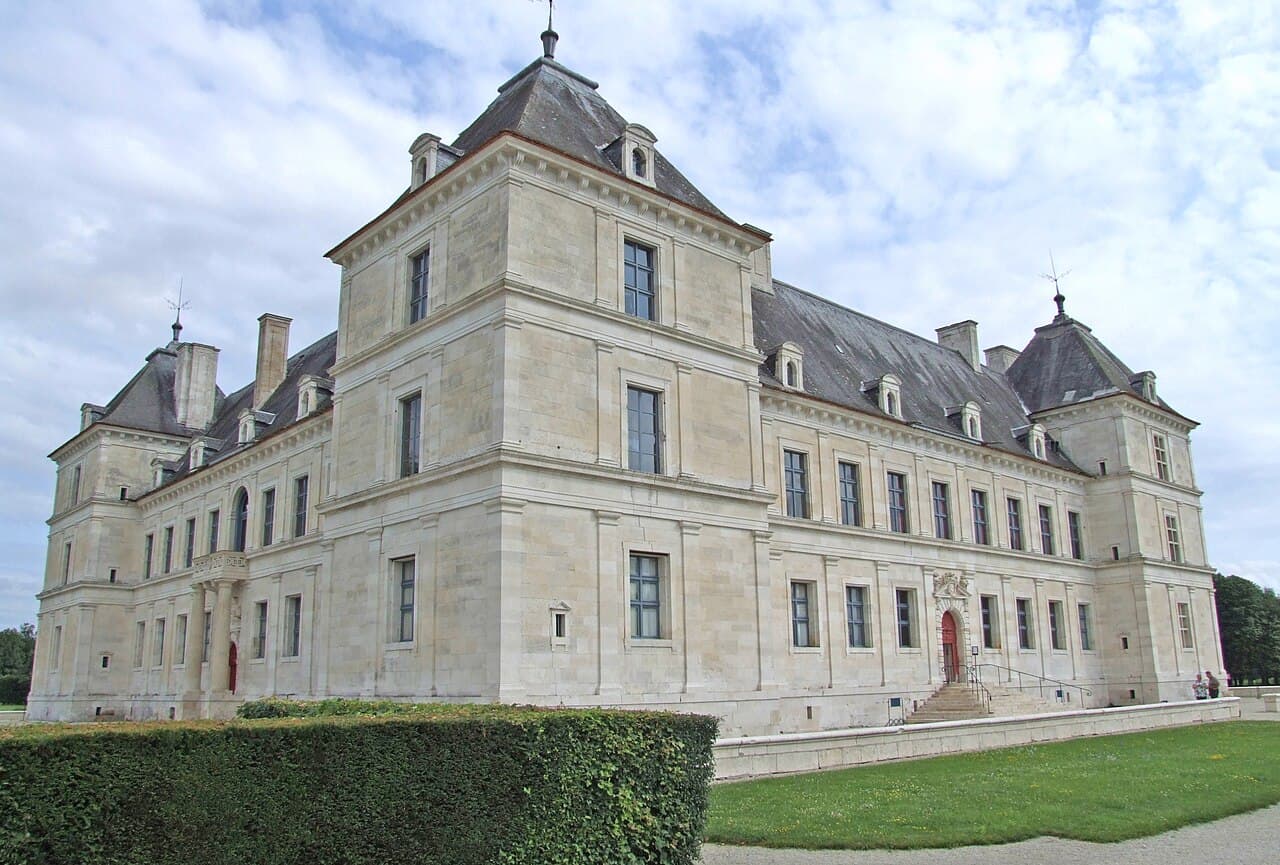
Château d’Ancy-le-Franc
The Château d’Ancy-le-Franc stands as a remarkable example of 16th-century Renaissance architecture in France, located in the town of Ancy-le-Franc within the Yonne department. Built on the site of an earlier medieval fortress, this château embodies the transition from medieval fortifications to the elegant residential palaces favored by French nobility during the Renaissance. Commissioned by Antoine III de Clermont, a nobleman closely connected to the French royal court, its construction began between 1536 and 1546, reflecting the era's new artistic and architectural ideals.
The château’s design is traditionally attributed to Sebastiano Serlio, an Italian architect invited to France by King Francis I to introduce Renaissance principles. Serlio’s influence is evident in the château’s harmonious proportions and classical details, which marked a departure from the defensive medieval style toward a more refined and symmetrical aesthetic. After Serlio’s death in 1554, the French architect Pierre Lescot continued the project, ensuring fidelity to the original Renaissance vision. The château’s layout follows a precise square plan with four wings enclosing a courtyard, each corner accented by projecting pavilions, a typical feature of the Second French Renaissance style.
Architectural features and design elements
The château is constructed from finely cut Burgundian limestone ashlar masonry, giving the façades a smooth and elegant appearance. The exterior walls are adorned with pilasters in the Tuscan order on the ground floor and the Doric order above, framing the windows rhythmically to create a balanced façade. Originally, the windows alternated between glazed and blind bays, a design element intended to produce a visual pattern, though all were glazed by the 17th century. The steep slate roof maintains a distinctively French silhouette, contrasting with the Italianate details below.
The main entrance on the southern façade is accessed via a fixed stone bridge that replaced the original drawbridge spanning a former moat. Above the entrance is an inscription reading “Soli Dio Gloria” ("Glory to God alone") and the date 1546, marking a significant phase of the château’s construction.
Interior decoration and artistic contributions
The château’s interiors showcase the work of prominent artists associated with the First School of Fontainebleau, including Francesco Primaticcio, who blended Italian Renaissance motifs with French tastes. Rich wood paneling (boiseries) and murals featuring mythological themes adorn many rooms, creating a richly decorated environment. The vaulted Salle des Césars, completed in 1578, features medallions depicting Roman emperors, exemplifying the château’s classical inspirations.
Private apartments once used by Diane de Poitiers include paintings by the Flemish artist Bartholomeus Spranger, further highlighting the château’s connection to influential figures of the Renaissance. Other notable spaces include the Zodiaque and Nudités rooms, once lavishly decorated but partially destroyed, as well as the upper-floor galleries such as the Galerie des Sacrifices and the 32-meter-long Galerie de Pharsale, which depicts ancient battle scenes attributed to Nicolò dell’Abbate.
Intricately carved coffered ceilings, elaborately decorated fireplaces, and high-quality wood panelling contribute to the château’s luxurious interior atmosphere. The Salle des Gardes, a large ceremonial hall measuring approximately 20 by 9 meters, was reportedly prepared for a visit by Henry III.
Historical context and notable ownership
The château’s history is closely tied to the noble Clermont-Tonnerre family, who maintained ownership through much of the Renaissance and early modern periods. Antoine III de Clermont’s commissioning of the château reflected his family’s prominence and connections to the royal court, including ties to Diane de Poitiers, the influential mistress of King Henry II.
Throughout the 16th and 17th centuries, the château hosted several French monarchs, including Henry III, Henry IV in 1591, Louis XIII in 1631, and Louis XIV in 1674, underscoring its status as a significant noble residence.
In 1683, the estate was sold to François-Michel Le Tellier de Louvois, a powerful minister under Louis XIV. Louvois expanded the property and commissioned the famed landscape architect André Le Nôtre to design extensive formal French gardens featuring canals, fountains, and topiary. Under Louvois’s direction, architects Jules Hardouin-Mansart and Robert de Cotte designed large stables and outbuildings, adding to the château’s grandeur.
Garden evolution and landscape architecture
The château’s gardens have undergone several transformations reflecting changing tastes over centuries. Originally designed with Renaissance features such as geometric flowerbeds, labyrinths, and fountains, the grounds were later reshaped by Le Nôtre into a formal French garden with canals and sculpted greenery. In the late 18th century, the marquis de Courtanvaux, a descendant of Louvois, converted parts of the garden into an English-style park characterized by naturalistic landscaping and ornamental follies.
Although the original moat was filled in 1836 and the large terrace supporting the château was removed in the 18th century, recent restoration efforts have sought to revive historic fountains, parterres, and garden layouts based on 18th-century plans, preserving the château’s layered heritage.
Later history and preservation
The château survived the upheavals of the French Revolution, during which it was seized but later returned to the family by 1795. The 19th century brought restoration efforts including modifications to the gardens and filling of the moats. Ownership passed through various noble families, including the Clermont-Tonnerres and the princes of Mérode.
Since 1999, the château has been privately owned by Société Paris Investir SAS, which has undertaken extensive restoration projects in collaboration with French heritage authorities. Recognized as a historic monument since 1983 and reaffirmed in 2003, the château remains a significant cultural and architectural landmark, exemplifying the fusion of Italian Renaissance artistry and French classical architecture.
Architectural legacy and cultural significance
The Château d’Ancy-le-Franc is a key example of Renaissance architecture in France, illustrating the influence of Italian Renaissance ideals adapted to French tastes and traditions. Its precise quadrangular plan, classical orders, and richly decorated interiors reflect the aesthetic and cultural ambitions of the French nobility during the 16th century.
The château’s gardens and outbuildings further document the evolution of French landscape design from Renaissance formality to the naturalistic English style, showcasing contributions by leading figures such as André Le Nôtre. The involvement of renowned architects and artists over several centuries highlights the château’s importance as a site of artistic innovation and noble prestige.
Today, the château continues to attract visitors interested in Renaissance art, architecture, and French history, offering a well-preserved glimpse into the lifestyle and cultural environment of the French aristocracy from the Renaissance through the Ancien Régime.
Frequently asked questions (FAQ)
- How do I get to Château d’Ancy-le-Franc?
- Château d’Ancy-le-Franc is located in the charming village of Ancy-le-Franc, France, easily accessible by car or public transport. The nearest major city is Dijon, from where you can take a train or drive approximately 1.5 hours. Ample parking is available on-site for visitors.
- What is the historical significance of Château d’Ancy-le-Franc?
- Château d’Ancy-le-Franc is a prime example of Renaissance architecture in France, built in the 16th century for the noble family of the Duke of Burgundy. It has a rich history, having served various purposes, including a royal residence and a setting for significant cultural events. Its beautifully preserved interiors and gardens attract history enthusiasts and architecture lovers alike.
- When was Château d’Ancy-le-Franc built?
- Construction of Château d’Ancy-le-Franc began in 1546 and was completed in the early 17th century. Designed by the renowned architect Sebastiano Serlio, the castle showcases the transition from medieval to Renaissance styles. Over the years, it has undergone restorations to preserve its grandeur.
- Can I take guided tours of the castle?
- Yes, guided tours are available at Château d’Ancy-le-Franc, providing visitors with in-depth knowledge about the castle's history, architecture, and the families that lived there. Tours are conducted in several languages, including French and English, and allow you to explore both the interior and surrounding gardens. It is advisable to book in advance during peak tourist seasons.
- Why is Château d’Ancy-le-Franc popular among tourists?
- Château d’Ancy-le-Franc is famed for its stunning Renaissance architecture, exquisite interior decorations, and beautifully landscaped gardens, making it a must-visit destination for architecture and history enthusiasts. The castle's serene surroundings and rich history also offer a peaceful escape for visitors. Additionally, it frequently hosts cultural events and exhibitions, enhancing its appeal.
- Is it possible to host events at Château d’Ancy-le-Franc?
- Yes, Château d’Ancy-le-Franc offers facilities for hosting various events, including weddings, corporate gatherings, and private functions. The picturesque setting and historical ambiance provide a unique backdrop for memorable occasions. For more information on event hosting and reservations, it's best to contact the castle's administration directly.
- What are the opening hours of Château d’Ancy-le-Franc?
- Château d’Ancy-le-Franc is typically open to visitors from April to October, with varying hours depending on the season. Generally, the castle opens at 10 AM and closes at 6 PM, but it's advisable to check the official website or contact them for the most current schedule. Special holiday hours may apply, so planning ahead is recommended.
- What are the ticket prices for visiting Château d’Ancy-le-Franc?
- Ticket prices for Château d’Ancy-le-Franc vary based on age and group size, with discounts available for students and seniors. As of the latest information, adult tickets are approximately €9, while children under 12 may enter for free. Group rates and family packages can also provide savings, so it's worth inquiring when booking your visit.
- When is the best time to visit Château d’Ancy-le-Franc?
- The best time to visit Château d’Ancy-le-Franc is during the spring and early autumn months when the weather is pleasant and the gardens are in full bloom. Visiting during these seasons also allows you to enjoy various cultural events hosted at the castle. Be sure to check the calendar for special events and activities that might enhance your experience.
- Are there any nearby attractions to visit?
- Yes, there are several nearby attractions worth exploring, including the charming village of Ancy-le-Franc itself, known for its beautiful architecture and local shops. The region also offers picturesque countryside views, walking trails, and other historical sites, such as the nearby Château de Tanlay. A visit to the area can be easily combined with exploring other local attractions for a full day of adventure.
Photo gallery

Information
Website
Visit websiteSources & official resources
Verify the information above using these authoritative references.
Loading map...
Visitor reviews
No reviews yet. Been here? Write the first review and help other travelers!
Write the first reviewVisited this castle? Share your experience
Your review helps other travelers and adds first-hand knowledge to our encyclopedia.



