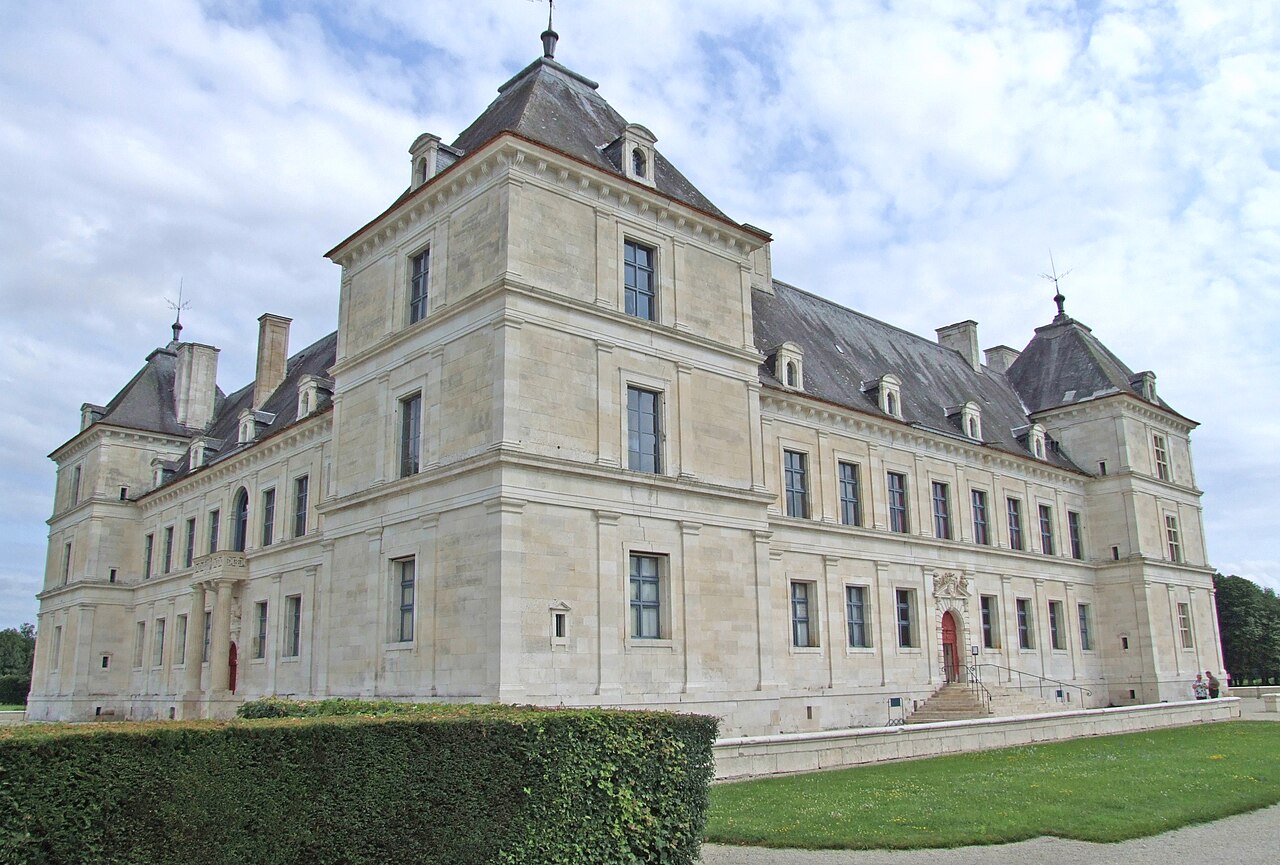
Maulnes Castle
Maulnes Castle, known locally as Château de Maulnes, is a distinctive Renaissance castle located north of the village of Cruzy-le-Châtel in the Yonne department of France. This remarkable fortress stands on the site of earlier medieval fortifications, reflecting a layered history that spans from the High Medieval period into the Renaissance. Its unusual pentagonal design and innovative architectural features make it a unique example of 16th-century French castle construction.
Historical background and evolution
The site of Maulnes Castle was originally home to two earlier castles. The first was abandoned at the end of the 12th century, while the second was destroyed in 1411 by troops of the Burgundian Duke John the Fearless during a conflict with the Count of Tonnerre. These events set the stage for the dramatic transformation of the site in the mid-16th century.
In 1556, Countess Louise de Clermont, then the Countess of Tonnerre and a lady-in-waiting to Queen Catherine de' Medici, commissioned the construction of a new castle on the ruins of the former fortress. Louise, a 52-year-old widow, had recently married Antoine de Crussol, Duke of Uzes, who was 24 years her junior. Together, they envisioned a castle that combined defensive features with the elegance and innovation of Renaissance architecture.
Architectural design and features
The castle's most striking characteristic is its pentagonal layout, uncommon in French castles. It features four corner towers and a fifth entry tower added later, creating a symmetrical and fortified appearance. The castle rises to five floors, all centered around a hollow cylindrical well, which is encircled by a large spiral staircase. This staircase connects every floor and leads up to the roof terrace, providing both functional access and a dramatic architectural centerpiece.
Maulnes Castle was equipped with 21 fireplaces, a clear indication of the harsh winters on the Maulnes plateau and the need for effective heating. At the back of the castle, opening onto a large garden, is a nymphaeum, a classical feature that reflects Renaissance ideals of harmony between architecture and nature.
Construction timeline and early use
Louise de Clermont moved into the castle in September 1569, furnishing it to suit her status and needs. Her husband Antoine joined her in January of the following year. Construction of the outbuildings began around August 1570, shortly after Antoine left for the French court. Antoine was made a Peer of France in 1572 and participated in the Siege of La Rochelle in early 1573. He returned to Maulnes in August that year, seriously ill, and died there shortly afterward. Following his death, all construction work ceased.
Later history and decline
After Antoine's death, Louise de Clermont gradually abandoned Maulnes, spending most of her time at other residences. She ceased visiting after May 1575, leaving the castle in the care of appointed guardians. Upon her death, the castle passed to her great-nephew Charles-Henri de Clermont in 1606, who became Count of Tonnerre and Maulnes.
In the mid-17th century, ownership disputes among Charles-Henri's sons resulted in the castle passing to the youngest brother, Roger, Marquess of Cruzy, in 1658. Roger undertook modifications and repairs to the structure. In 1695, the castle was acquired by the Tellier family, Marquesses of Louvois, but they abandoned it by 1721. By then, Maulnes had largely served as housing for foresters and estate representatives rather than as a noble residence.
The castle's maintenance declined steadily, worsened by the establishment of a glass factory nearby in 1775. The Tellier family owned the castle until 1834, when it was sold to François Vallory, a master glassmaker who had operated the factory since 1824. Subsequent owners showed little interest in preserving the castle, leading to its gradual ruin by the mid-19th century. By 1866, reports described Maulnes as being in poor condition.
Modern restoration and public access
During the 1960s, initial efforts were made to stabilize the crumbling structure, including consolidation works. However, the castle again fell into neglect until it was expropriated in 1997. Since then, extensive restoration and archaeological research have been undertaken to preserve and understand this unique monument.
Maulnes Castle has been open to the public since 2005, allowing visitors to explore its unusual architecture and historical significance. The central spiral staircase around the well remains a highlight for visitors, exemplifying Renaissance ingenuity and aesthetic. The castle's pentagonal form and integration of functional and decorative elements continue to attract scholars and tourists alike.
Architectural significance
Maulnes Castle stands out for its innovative design that blends Renaissance architectural principles with traditional defensive features. The pentagonal shape was rare in France, offering both aesthetic symmetry and strategic advantage. The central well and spiral staircase are engineering feats, providing light, ventilation, and vertical circulation within a compact footprint.
The castle's fireplaces, nymphaeum, and garden demonstrate the Renaissance emphasis on comfort, beauty, and harmony with nature, contrasting with the purely military focus of earlier medieval castles. This combination reflects the evolving role of castles in the 16th century as residences and symbols of status as much as fortresses.
Visiting maulnes castle today
Today, visitors to Maulnes Castle can experience a rare example of Renaissance castle architecture in a rural French setting. The castle is accessible for a fee and offers guided tours that explain its history, architecture, and restoration efforts. The site provides insight into the lives of its noble inhabitants and the broader historical context of the French Renaissance.
Exploring the castle reveals the ingenuity of its design and the story of its gradual decline and revival. The surrounding Maulnes forest and plateau add to the atmosphere, making it a compelling destination for history enthusiasts and architecture lovers.
Frequently asked questions (FAQ)
- How do I get to Maulnes Castle?
- Maulnes Castle is located in Cruzy-le-Châtel, France, and can be accessed by car or public transportation. The nearest major city is Dijon, from which you can drive or take a train to a nearby station and continue with local transport.
- What is the historical significance of Maulnes Castle?
- Maulnes Castle, built in the late 16th century, is a remarkable example of Renaissance architecture in France. It was commissioned by the nobleman Jacques de Maulnes and is known for its unique design, featuring a star-shaped layout that symbolizes the influence of the period.
- When was Maulnes Castle constructed?
- Construction of Maulnes Castle began in 1566 and was completed in 1571. The castle was designed as a residence for Jacques de Maulnes and has since been recognized for its architectural innovation and historical importance.
- Can I take a guided tour of Maulnes Castle?
- Yes, guided tours of Maulnes Castle are available, offering visitors insights into the history and architecture of this unique site. It is recommended to check the official website for tour availability and to book in advance.
- Why is Maulnes Castle considered architecturally unique?
- Maulnes Castle is considered architecturally unique due to its star-shaped plan, which is rare for French castles of the Renaissance. This distinctive design, along with its intricate details and harmonious proportions, showcases the artistic aspirations of its time.
- Is it possible to host events at Maulnes Castle?
- Yes, Maulnes Castle offers options for hosting private events and gatherings in its stunning setting. Interested parties should contact the castle management for details on availability, packages, and requirements.
- What are the opening hours for Maulnes Castle?
- Maulnes Castle is typically open to visitors from April to October, but hours may vary depending on the season. It is advisable to check the official website or contact the castle directly for the most current opening hours before planning your visit.
- What is the ticket price for visiting Maulnes Castle?
- Ticket prices for Maulnes Castle vary based on age and group size, with discounts available for students and seniors. It is best to consult the castle's official website for the latest pricing information and any special offers.
- When is the best time to visit Maulnes Castle?
- The best time to visit Maulnes Castle is during the spring and early autumn months when the weather is mild and the gardens are in full bloom. Visiting during these seasons allows for a more enjoyable experience exploring the castle and its surroundings.
- Are there any nearby attractions to visit along with Maulnes Castle?
- Yes, there are several nearby attractions including picturesque villages, vineyards, and other historical sites. Visitors can explore the beautiful countryside of Burgundy and enjoy local wine tastings, making it a perfect addition to your trip to Maulnes Castle.
Information
Loading map...
Visitor reviews
No reviews yet. Been here? Write the first review and help other travelers!
Write the first reviewVisited this castle? Share your experience
Your review helps other travelers and adds first-hand knowledge to our encyclopedia.