Tanaka Castle — Japan castle

Tanaka Castle

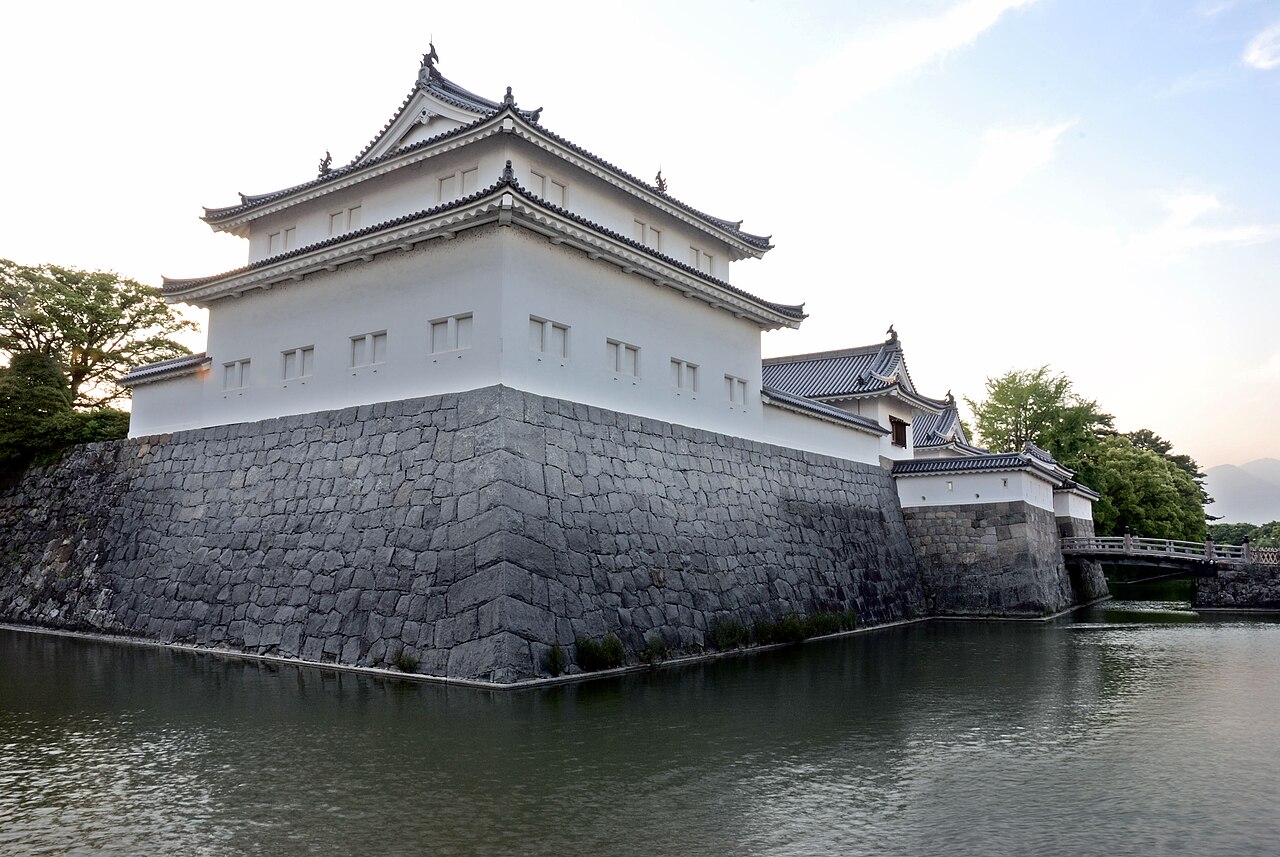
Tanaka Castle in Fujieda, Shizuoka Prefecture
Fujieda, Japan
Renaissance (15th–17th c.)
Partially Preserved

Tanaka Castle (田中城, Tanaka-jō) is a historically significant hill castle located in Fujieda, in the central part of Shizuoka Prefecture, Japan. Constructed in the 16th century during the turbulent Sengoku period, the castle played an important role in regional defense and governance. It later became the seat of a branch of the Honda clan, who were the daimyō of the Tanaka Domain at the end of the Edo period. This castle exemplifies the characteristics of Japanese fortifications from the late medieval era transitioning into the early modern period.

Historical context and significance

The origins of Tanaka Castle date back to the mid-16th century, a time marked by constant military conflict among feudal lords vying for control over Japan. As a hill castle, it was strategically positioned to oversee important routes and provide a defensive advantage against rival clans. The castle's location in what is now Shizuoka Prefecture placed it within a critical area that connected the Tokai region with other parts of Japan.

During the Edo period (1603–1868), Tanaka Castle became the administrative center for the Tanaka Domain under the Honda clan, a prominent samurai family loyal to the Tokugawa shogunate. The castle's role shifted from purely military defense to also serving as a symbol of the clan's power and governance. Although it did not witness major battles during this period, its presence was a key element in maintaining regional stability.

Architectural features and layout

Tanaka Castle is a classic example of a hill castle built to adapt to the natural terrain. The castle complex was designed to maximize the defensive benefits of its elevated position. The main structures included a central keep (tenshu), surrounded by multiple baileys (kuruwa) protected by earthen walls and moats.

The castle's layout featured a series of terraces carved into the hillside, connected by winding paths and gates that controlled access. Defensive elements such as stone walls, watchtowers, and gates were integrated into the natural landscape, making assaults difficult for attackers. The use of wooden buildings with tiled roofs was typical of Japanese castles of this era.

Main keep and defensive structures

The main keep of Tanaka Castle was relatively modest compared to larger castles but served as the command center and residence of the daimyō. It was constructed primarily of wood with multiple stories, featuring defensive loopholes and observation points. Surrounding the keep were secondary enclosures that housed the garrison, storehouses, and administrative offices.

Moats, both dry and wet, encircled the castle grounds, enhancing defense by limiting direct access. The combination of natural elevation and man-made fortifications made Tanaka Castle a formidable stronghold in its region.

Tanaka Castle during the Edo period

Under the Honda clan's stewardship, Tanaka Castle was maintained as a regional administrative hub rather than a frontline military fortress. The castle grounds were adapted to accommodate the needs of governance, including the construction of residences, gardens, and official buildings. The Honda clan's management contributed to the economic development of the Tanaka Domain.

While the castle did not see military action during the peaceful Edo period, it remained an important symbol of feudal authority. The Honda clan's presence at Tanaka Castle lasted until the abolition of the han system in 1871, when the castle's military functions were discontinued.

Preservation and current status

Today, Tanaka Castle is recognized as a cultural heritage site reflecting Japan's feudal past. Although much of the original wooden structures have not survived, the castle grounds retain earthworks, moats, and some reconstructed elements that illustrate its historical layout. The site offers visitors insight into Japanese castle architecture and the regional history of Shizuoka Prefecture.

The castle area is accessible to the public, providing a place for historical education and appreciation of traditional Japanese fortification techniques. Efforts to preserve and restore parts of the castle continue, emphasizing its importance as a historical landmark.

Frequently asked questions (FAQ)

What is the historical significance of Tanaka Castle?
Tanaka Castle, built in the late 16th century, played a vital role during the feudal era in Japan. It served as a strategic stronghold for the Takeda clan and is a symbol of the region's rich history.
When is the best time to visit Tanaka Castle?
The best time to visit Tanaka Castle is during the cherry blossom season in spring, typically from late March to early April, when the surrounding cherry trees are in full bloom. Autumn also offers a beautiful display of colorful foliage, making it an ideal season for sightseeing.
Can I access Tanaka Castle with public transportation?
Yes, Tanaka Castle is accessible via public transportation. Visitors can take a train to Fujieda Station and then use local buses or taxis to reach the castle, making it convenient for travelers.
What are the opening hours of Tanaka Castle?
Tanaka Castle is open to visitors from 9:00 AM to 5:00 PM daily. However, it's advisable to check for any seasonal variations in hours or special closures before planning your visit.
Is there an entrance fee to visit Tanaka Castle?
Yes, there is a nominal entrance fee to visit Tanaka Castle, which helps maintain the site and its facilities. Ticket prices are generally affordable, making it accessible for all visitors.
What architectural features can I expect to see at Tanaka Castle?
Tanaka Castle is known for its unique Japanese castle architecture, including stone walls, wooden structures, and traditional roofs. The layout reflects the defensive designs of the era, along with scenic views of the surrounding landscape.
Are there any nearby attractions to visit when at Tanaka Castle?
Yes, visitors to Tanaka Castle can explore nearby attractions such as Fujieda’s historic temples and beautiful parks. The area is rich in cultural sites, providing a full day of exploration.
Is it possible to take guided tours of Tanaka Castle?
Yes, guided tours are available at Tanaka Castle, offering in-depth insights into its history and architecture. These tours enhance the visitor experience by providing expert knowledge and context about the castle's significance.

Photo gallery

Tanaka Castle
Click to view

Photo by ja:user:Mocchy•Public domain

1 photo • Click any image to view in full screen

Information

Hill Castle

Loading map...

Visitor reviews

No reviews yet. Been here? Write the first review and help other travelers!

Write the first review

Visited this castle? Share your experience

Your review helps other travelers and adds first-hand knowledge to our encyclopedia.
Write a review

(5/5)

0/2000 characters

Your review will be visible after admin approval

Nearby castles

15.4 km
Suwahara Castle — Japan castle

Suwahara Castle

Shimada, Japan

Suwahara Castle (諏訪原城, Suwahara-jō) stands as a significant example of a Sengoku period yamashiro-style Japanese castle, located in the Kanaya neighborhood of Shimada city, within Shizuoka Prefecture, Japan. Constructed in the 16th century, this castle reflects the military architectural trends of a turbulent era marked by constant warfare and political upheaval. The site has been recognized and protected as a National Historic Site since 1975, underscoring its cultural and historical value. Historical context and significance The Sengoku period (c. 1467–1615) was characterized by near-constant military conflict among competing warlords vying for control over Japan. During this era, castles like Suwahara were constructed primarily for defense, strategic control, and as symbols of power. Suwahara Castle's location in Shizuoka Prefecture placed it in a region of strategic importance, controlling access routes and local territories. The castle was built by the Takeda clan, a powerful samurai family known for their military prowess. Suwahara served as a defensive stronghold and a base of operations during the clan's campaigns. Its construction and use reflect the military strategies and feudal dynamics of the late medieval period in Japan. Architectural features of Suwahara Castle Suwahara Castle is classified as a yamashiro, or mountain castle, a style that utilizes natural terrain for defense. Built on elevated ground, the castle's design integrates steep slopes, natural ridges, and forests to create formidable obstacles for attackers. Layout and defensive elements The castle complex included multiple baileys (courtyards) arranged on terraced levels along the mountainside. These baileys were protected by earthen walls, dry moats, and wooden palisades. The use of earthworks rather than extensive stone walls is typical for yamashiro castles, which relied on the natural landscape and man-made earth barriers for defense. The main enclosure (honmaru) was situated at the highest point, providing commanding views of the surrounding area. This vantage point allowed defenders to monitor enemy movements and coordinate defense effectively. Materials and construction techniques The castle's construction primarily used wood and earth, common materials in Japanese castle building of the period. Stone was used sparingly, mostly for foundations and certain defensive positions. The wooden structures included watchtowers and gates, though none of these remain intact today. The decline and current state of Suwahara Castle Following the unification of Japan under the Tokugawa shogunate in the early 17th century, many castles, including Suwahara, lost their military importance. The castle was abandoned and fell into ruin over the centuries. Today, Suwahara Castle exists as archaeological ruins, with remnants of earthworks, moats, and terraces visible in the landscape. The site offers valuable insights into Sengoku period military architecture and feudal history. Preservation efforts have maintained the ruins as a protected cultural heritage site. Visiting Suwahara Castle The castle ruins are accessible to the public and provide a unique opportunity to explore a classic example of a Sengoku period mountain castle. Visitors can walk along the terraced grounds, observe the earthworks, and imagine the strategic significance of the location. Interpretive signs and local guides help explain the historical context and architectural features. The natural setting also offers scenic views of the surrounding mountains and valleys, enhancing the visitor experience. Cultural importance and legacy Suwahara Castle is an important cultural asset that reflects the military history and architectural ingenuity of Japan's Sengoku period. As a protected National Historic Site, it contributes to understanding the regional power struggles and castle-building techniques of the time. The site continues to be a focus for archaeological research and education, helping to preserve the legacy of Japan's feudal past for future generations.

Late Medieval (14th–15th c.)
Details
15.4 km
Sunpu Castle — Japan castle

Sunpu Castle

Shizuoka City, Japan

Sunpu Castle stands as a significant historical site in Shizuoka City, Japan, renowned for its association with Tokugawa Ieyasu, one of Japan's most influential shoguns. Originally, the site began as a yakata, or fortified palace, for Imagawa Norimasa during the 15th century, though precise details of this early structure remain obscure. The castle as it is recognized today was constructed in 1585 by Tokugawa Ieyasu, marking a pivotal moment in Japanese feudal history as it became his stronghold before and after his rise to power. Historical significance and Tokugawa Ieyasu's legacy Sunpu Castle is famously known as the "retirement castle" of Tokugawa Ieyasu after he relinquished the shogunate to his son, Tokugawa Hidetada. Ieyasu's decision to retire here in the early 17th century represents a unique chapter in Japanese history where a powerful ruler chose to govern indirectly from a secondary residence. The castle played a strategic role during the Azuchi-Momoyama period and into the Edo period, serving as a political and military center in the region. Architectural features and construction history The original structure and subsequent rebuilds The initial construction of Sunpu Castle in 1585 introduced a fortified complex typical of the era, incorporating stone walls, moats, and defensive gates. The castle's main keep (tenshu) was notably rebuilt multiple times, reflecting both its importance and the challenges it faced. The second keep was erected in 1605 after Ieyasu passed the shogunate to his son. Unfortunately, this keep succumbed to fire and was rebuilt again two years later. The third iteration of the keep also burned down in 1635 and was never reconstructed, which significantly altered the castle's silhouette and defensive capabilities. Defensive elements and layout The castle is classified as a lowland castle, strategically positioned on flat terrain rather than elevated ground, which necessitated robust defensive features. It originally featured multiple layers of moats—two of which remain today—alongside extensive stone walls that bear numerous owner's marks and inscriptions, offering insights into the craftsmen and historical periods involved in their construction. These fortifications were designed to protect against both military assaults and fire hazards common to wooden structures of the time. Preservation and current condition Despite its turbulent history, including fires and dismantling during the Meiji period, parts of Sunpu Castle have survived to the present day. The castle is partially preserved, with significant sections of its moats and stone walls intact. The main keep itself no longer stands, but the remaining structures and grounds offer a valuable window into Japan's feudal past. Visitors can explore the expansive castle grounds, which are larger than many expect, and appreciate the craftsmanship evident in the stonework and the layout of the defensive features. Visitor experience and cultural importance While many visitors tend to view only the castle gate, the site rewards those who take time to walk the grounds fully. The multiple layers of moats and the stone walls with their inscriptions provide a tangible connection to the castle's rich history. The castle's role as Ieyasu's retirement residence adds to its cultural significance, making it an important destination for those interested in the Tokugawa shogunate and Japanese castle architecture. Sunpu Castle in the context of Japanese castle architecture Sunpu Castle exemplifies the lowland castle typology, which contrasts with Japan's hilltop castles by relying heavily on moats and walls for defense. Its construction during the late 16th century places it within the transitional period from the Sengoku (Warring States) period to the Edo period, reflecting the evolving military and political needs of the time. The repeated rebuilding of the main keep and the eventual decision not to reconstruct it after 1635 illustrate changing priorities in castle use and the increasing stability under Tokugawa rule. Architectural style and materials The castle's design incorporates traditional Japanese castle architectural elements such as wooden structures, stone bases, and curved tiled roofs. The surviving stone walls are notable for their craftsmanship and the inscriptions left by stone masons, which are valuable for historical research. The absence of the main keep today means that visitors must imagine the castle's original grandeur, but the remaining gates and walls provide a strong sense of the site's former scale and defensive complexity.

Renaissance (15th–17th c.)
Details
26.1 km
Kakegawa Castle — Japan castle

Kakegawa Castle

Kakegawa, Japan

Kakegawa Castle is a prominent hill castle located in Kakegawa city, Shizuoka Prefecture, Japan. Originally constructed in 1497 during the late medieval period, this castle played a vital strategic role along the historic Tokaido road, a major route connecting Kyoto and Edo (modern Tokyo). The castle's location atop a hill provided excellent defensive advantages and control over the surrounding area, making it a key military and administrative center throughout its history. The castle's initial construction was commissioned by Imagawa Yoshitada, who tasked his retainer Asahina Yasuhiro with building the fortress approximately 0.5 kilometers northeast of the current site. This early version of Kakegawa Castle was intended to secure the region and monitor the movement along the Tokaido road. In 1569, the castle fell to the forces of Tokugawa Ieyasu, a pivotal figure in Japanese history who would later unify the country and establish the Tokugawa shogunate. Historical significance and ownership transitions Following Tokugawa Ieyasu's acquisition of the castle, the region underwent significant political changes. In 1590, the area was absorbed into the domain of Toyotomi Hideyoshi, the powerful warlord who succeeded in unifying Japan after the Sengoku period. Hideyoshi appointed Yamanouchi Kazutoyo as the castle's lord when Tokugawa was relocated to Edo, marking a new era for Kakegawa Castle. Yamanouchi Kazutoyo is credited with major renovations and modernization efforts at Kakegawa Castle. He constructed the castle's main keep (tenshu) on the current site, transforming it into a more contemporary and formidable fortress. His improvements extended beyond the castle itself, as he also developed the surrounding castle town, enhancing its infrastructure and fortifications to reflect the evolving needs of the period. Architectural features and reconstruction history The castle's main keep underwent several reconstructions due to natural disasters. The original keep built by Yamanouchi was destroyed in an earthquake in 1604, but it was promptly rebuilt to maintain the castle's defensive capabilities. This rebuilt keep stood for over two centuries until it was again destroyed by a major earthquake in 1854. Following this destruction, the keep was not reconstructed, and the castle gradually fell into disuse. After the Meiji Restoration and the subsequent abolition of the feudal system in 1869, Kakegawa Castle was dismantled as part of the government's efforts to modernize Japan and reduce the power of the samurai class. Despite this, several original structures survived, including an original palace building and some gates, which provide valuable insight into the castle's architectural style and historical function. Modern restoration and preservation efforts In recent decades, Kakegawa Castle has undergone partial restoration to revive its historical appearance and promote cultural heritage tourism. The main keep has been reconstructed using traditional techniques and materials, carefully replicating the design of the Edo-period structure. This reconstruction allows visitors to experience the castle's imposing presence and architectural grandeur firsthand. The castle grounds also feature a well-maintained museum housed within the reconstructed main keep. Although the museum's collection of artifacts is modest, the exhibits are thoughtfully curated to provide visitors with a clear understanding of the castle's history, architectural evolution, and the lives of its former inhabitants. The combination of restored buildings and informative displays makes Kakegawa Castle a compelling destination for enthusiasts of Japanese history and castle architecture. Architectural style and castle layout Kakegawa Castle exemplifies the late medieval Japanese castle architecture that evolved into the early Edo period style. Its design incorporates multiple defensive features typical of hill castles, such as stone walls, moats, and strategically placed gates. The castle's layout was carefully planned to maximize natural terrain advantages, including steep slopes and elevated positions, which hindered enemy advances. The main keep served as the castle's central stronghold and symbol of lordly power. Surrounding it were various baileys and courtyards that housed administrative buildings, barracks, and residences for samurai retainers. The surviving palace building offers a rare glimpse into the residential architecture of the period, featuring elegant interiors and refined craftsmanship. Visiting Kakegawa Castle today Today, Kakegawa Castle stands as a partially restored historical site that invites visitors to explore its grounds and learn about its rich past. The castle's location in Kakegawa city makes it accessible for tourists interested in Japan's feudal history and traditional architecture. Visitors can stroll through the castle's reconstructed main keep, original palace, and remaining gates, gaining insight into the strategic importance and cultural heritage of this late medieval hill castle. The castle grounds are complemented by beautiful surrounding gardens and scenic views of the city and countryside. Educational programs and guided tours are often available, enhancing the visitor experience. Kakegawa Castle's blend of restoration and preservation efforts ensures it remains a vital link to Japan's samurai era and a treasured cultural landmark.

Late Medieval (14th–15th c.)
Details