
Sunpu Castle
Sunpu Castle stands as a significant historical site in Shizuoka City, Japan, renowned for its association with Tokugawa Ieyasu, one of Japan's most influential shoguns. Originally, the site began as a yakata, or fortified palace, for Imagawa Norimasa during the 15th century, though precise details of this early structure remain obscure. The castle as it is recognized today was constructed in 1585 by Tokugawa Ieyasu, marking a pivotal moment in Japanese feudal history as it became his stronghold before and after his rise to power.
Historical significance and Tokugawa Ieyasu's legacy
Sunpu Castle is famously known as the "retirement castle" of Tokugawa Ieyasu after he relinquished the shogunate to his son, Tokugawa Hidetada. Ieyasu's decision to retire here in the early 17th century represents a unique chapter in Japanese history where a powerful ruler chose to govern indirectly from a secondary residence. The castle played a strategic role during the Azuchi-Momoyama period and into the Edo period, serving as a political and military center in the region.
Architectural features and construction history
The original structure and subsequent rebuilds
The initial construction of Sunpu Castle in 1585 introduced a fortified complex typical of the era, incorporating stone walls, moats, and defensive gates. The castle's main keep (tenshu) was notably rebuilt multiple times, reflecting both its importance and the challenges it faced. The second keep was erected in 1605 after Ieyasu passed the shogunate to his son. Unfortunately, this keep succumbed to fire and was rebuilt again two years later. The third iteration of the keep also burned down in 1635 and was never reconstructed, which significantly altered the castle's silhouette and defensive capabilities.
Defensive elements and layout
The castle is classified as a lowland castle, strategically positioned on flat terrain rather than elevated ground, which necessitated robust defensive features. It originally featured multiple layers of moats—two of which remain today—alongside extensive stone walls that bear numerous owner's marks and inscriptions, offering insights into the craftsmen and historical periods involved in their construction. These fortifications were designed to protect against both military assaults and fire hazards common to wooden structures of the time.
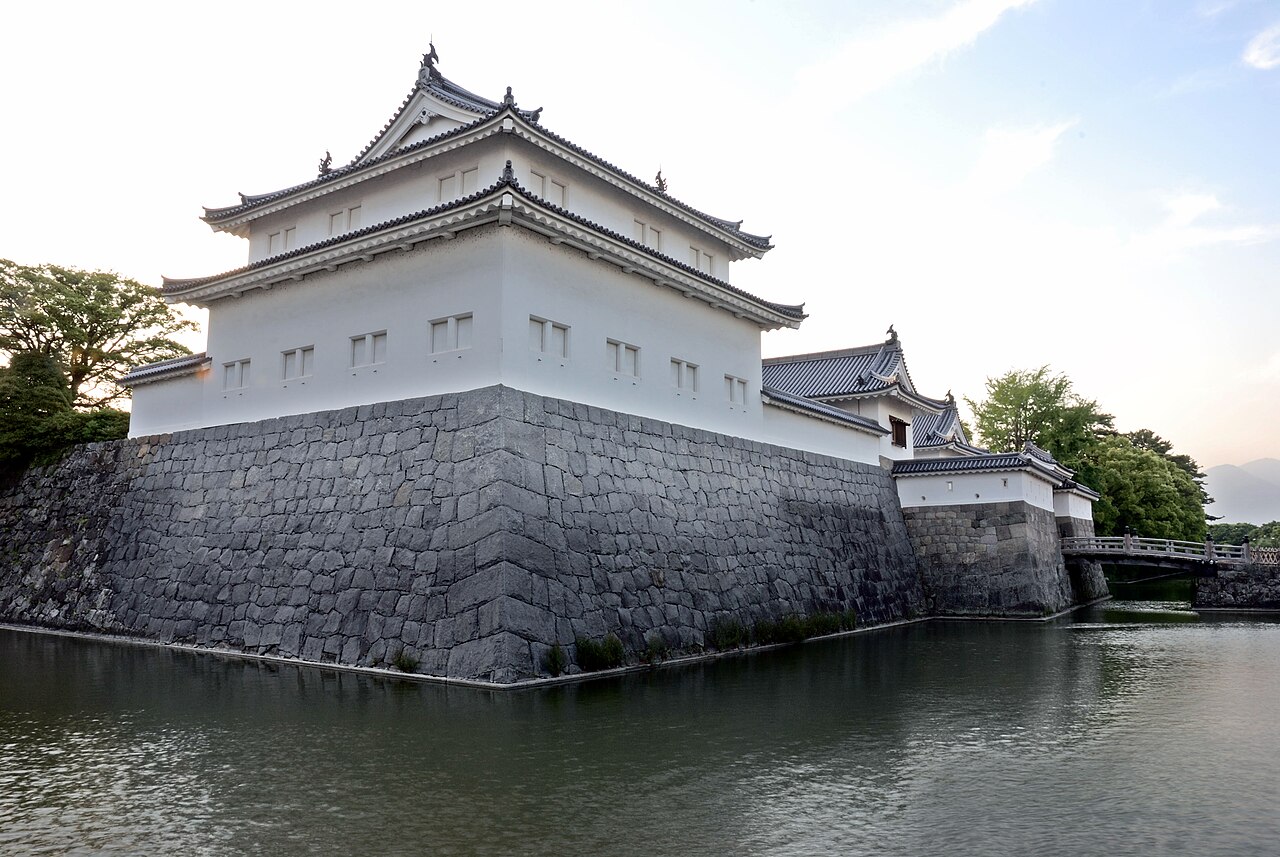
Photo by by Monado • CC BY-SA 2.5
Preservation and current condition
Despite its turbulent history, including fires and dismantling during the Meiji period, parts of Sunpu Castle have survived to the present day. The castle is partially preserved, with significant sections of its moats and stone walls intact. The main keep itself no longer stands, but the remaining structures and grounds offer a valuable window into Japan's feudal past. Visitors can explore the expansive castle grounds, which are larger than many expect, and appreciate the craftsmanship evident in the stonework and the layout of the defensive features.
Visitor experience and cultural importance
While many visitors tend to view only the castle gate, the site rewards those who take time to walk the grounds fully. The multiple layers of moats and the stone walls with their inscriptions provide a tangible connection to the castle's rich history. The castle's role as Ieyasu's retirement residence adds to its cultural significance, making it an important destination for those interested in the Tokugawa shogunate and Japanese castle architecture.
Sunpu Castle in the context of Japanese castle architecture
Sunpu Castle exemplifies the lowland castle typology, which contrasts with Japan's hilltop castles by relying heavily on moats and walls for defense. Its construction during the late 16th century places it within the transitional period from the Sengoku (Warring States) period to the Edo period, reflecting the evolving military and political needs of the time. The repeated rebuilding of the main keep and the eventual decision not to reconstruct it after 1635 illustrate changing priorities in castle use and the increasing stability under Tokugawa rule.
Architectural style and materials
The castle's design incorporates traditional Japanese castle architectural elements such as wooden structures, stone bases, and curved tiled roofs. The surviving stone walls are notable for their craftsmanship and the inscriptions left by stone masons, which are valuable for historical research. The absence of the main keep today means that visitors must imagine the castle's original grandeur, but the remaining gates and walls provide a strong sense of the site's former scale and defensive complexity.
Frequently asked questions (FAQ)
- What is the historical significance of Sunpu Castle?
- Sunpu Castle, built in the early 16th century, served as the residence of Tokugawa Ieyasu, the founder of the Tokugawa shogunate. The castle played a crucial role in the unification of Japan and is a symbol of the Edo period's political power. Its historical importance is recognized in Japan's cultural heritage.
- When was Sunpu Castle constructed?
- Sunpu Castle was originally constructed in 1543 and later expanded by Tokugawa Ieyasu after he became its lord in 1585. The castle underwent various renovations over the years, especially after its destruction during the Meiji Restoration in the late 19th century. Today, it stands as a reconstructed site, reflecting its historical architecture.
- Can I visit Sunpu Castle?
- Yes, Sunpu Castle is open to visitors year-round. Guests can explore the castle grounds, which include beautiful gardens and historical structures, making it a great destination for history enthusiasts and families alike. Be sure to check for any special events or guided tours available during your visit.
- What are the opening hours for Sunpu Castle?
- Sunpu Castle is typically open from 9:00 AM to 5:00 PM, with last entry at 4:30 PM. However, hours may vary during holidays or special events, so it’s advisable to check the official website for the most current information before planning your visit.
- Is it possible to access Sunpu Castle by public transportation?
- Yes, Sunpu Castle is easily accessible by public transportation. Visitors can take a train to Shizuoka Station and then a short bus ride or a pleasant walk to the castle grounds. The area is well-marked, making it convenient for tourists to find their way.
- What is the best time to visit Sunpu Castle?
- The best time to visit Sunpu Castle is during the spring and fall when the weather is mild and the scenery is particularly beautiful. Cherry blossoms in spring and vibrant autumn leaves create a stunning backdrop for your visit. Additionally, these seasons often feature special events and festivals at the castle.
- Are there any nearby attractions to Sunpu Castle?
- Yes, there are several attractions near Sunpu Castle, including the Shizuoka City Museum of Art and the historic Sumpu Castle Park. Visitors can also explore local shops and restaurants in the vicinity, making it easy to enhance your trip with additional cultural experiences.
- What are the ticket prices for Sunpu Castle?
- Admission to Sunpu Castle is typically free for the castle grounds, but there may be a small fee for entry into specific buildings or exhibitions. It’s a good idea to check the official website for the latest pricing and any available discounts for groups or students.
Photo gallery

Information
Website
Visit websiteSources & official resources
Verify the information above using these authoritative references.
Loading map...
Visitor reviews
No reviews yet. Been here? Write the first review and help other travelers!
Write the first reviewVisited this castle? Share your experience
Your review helps other travelers and adds first-hand knowledge to our encyclopedia.