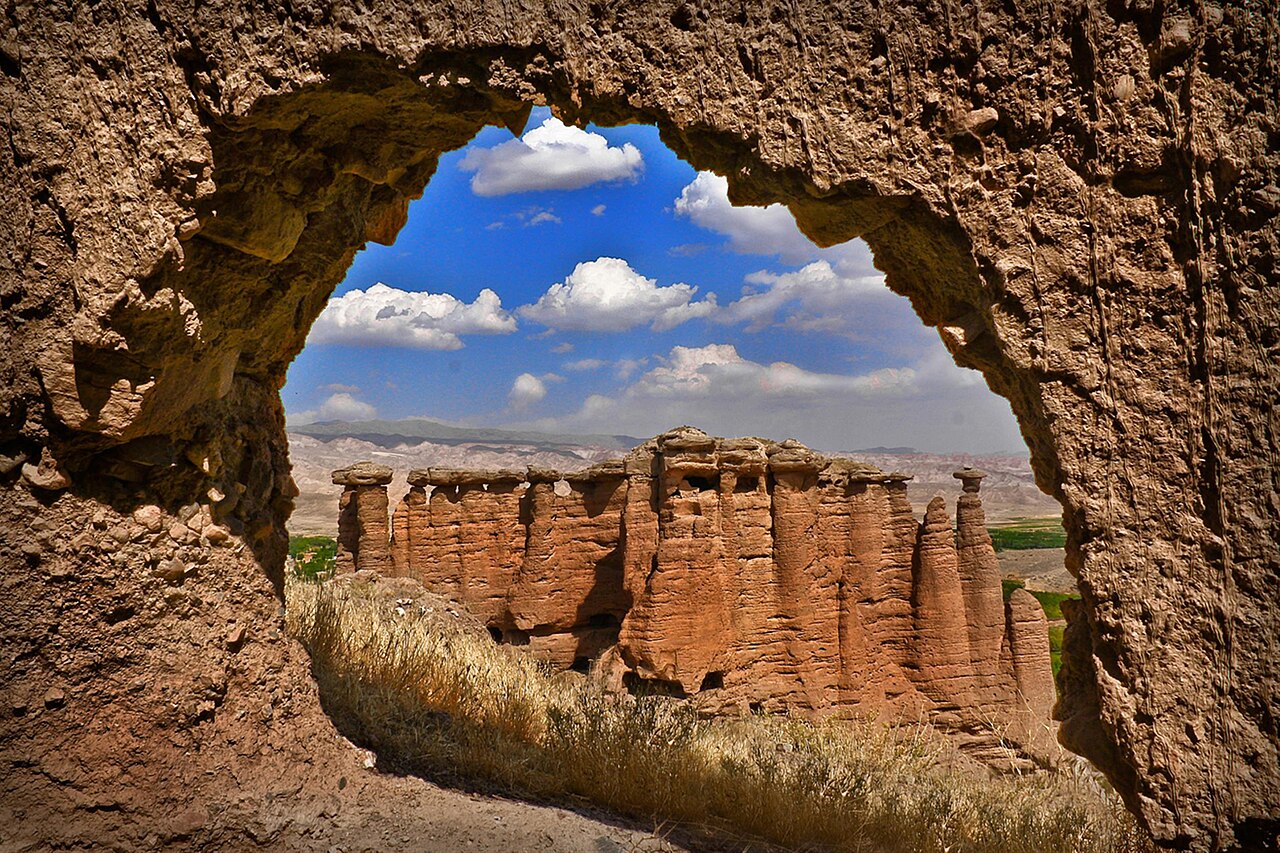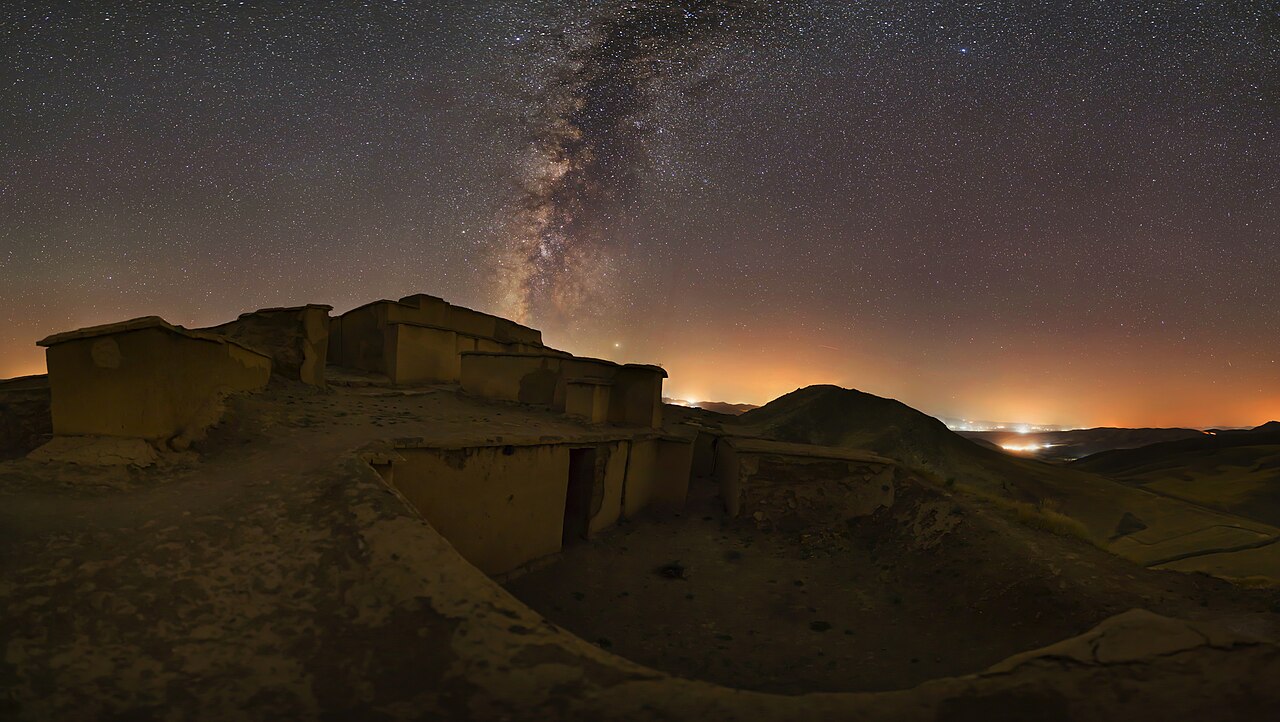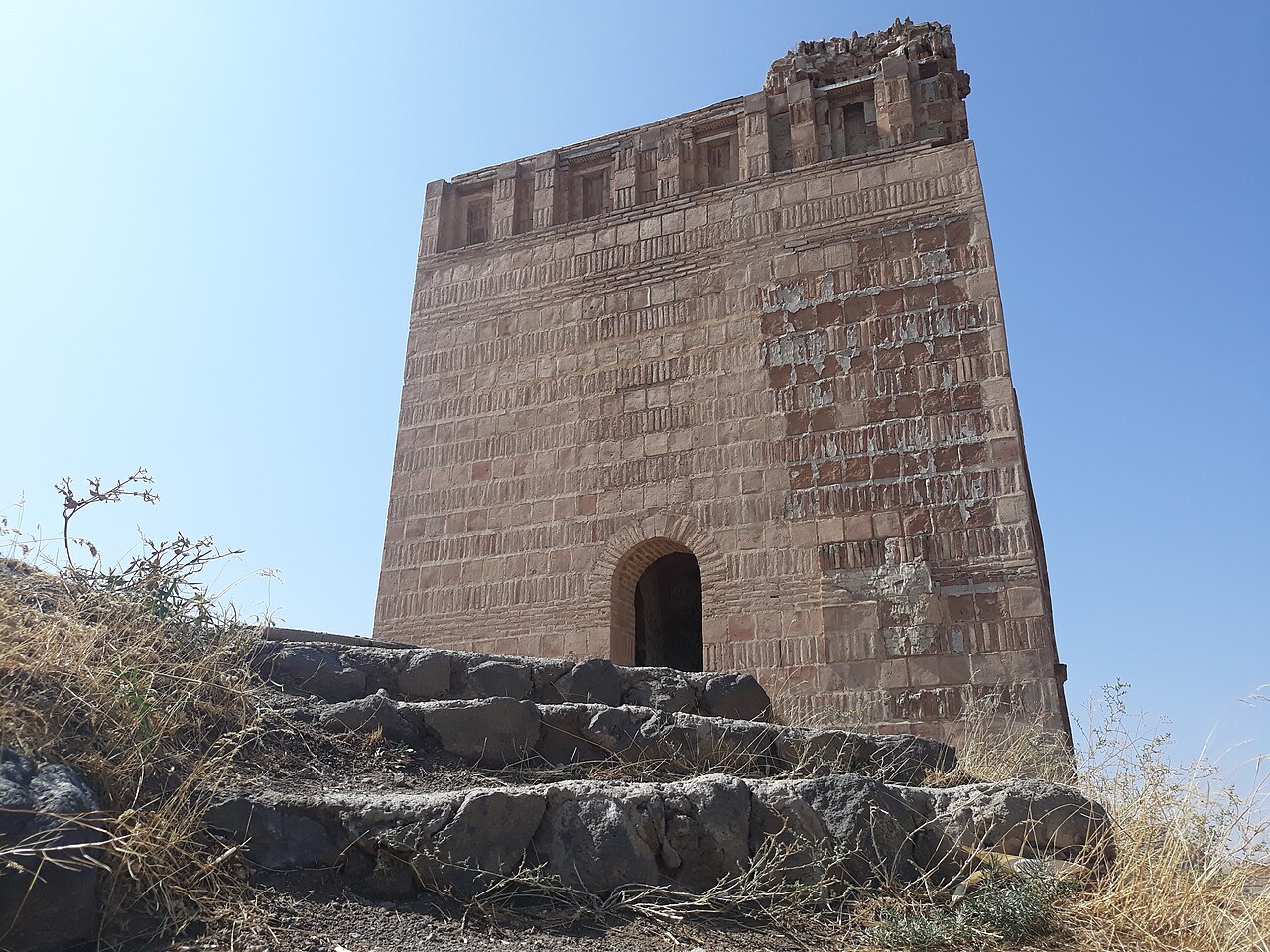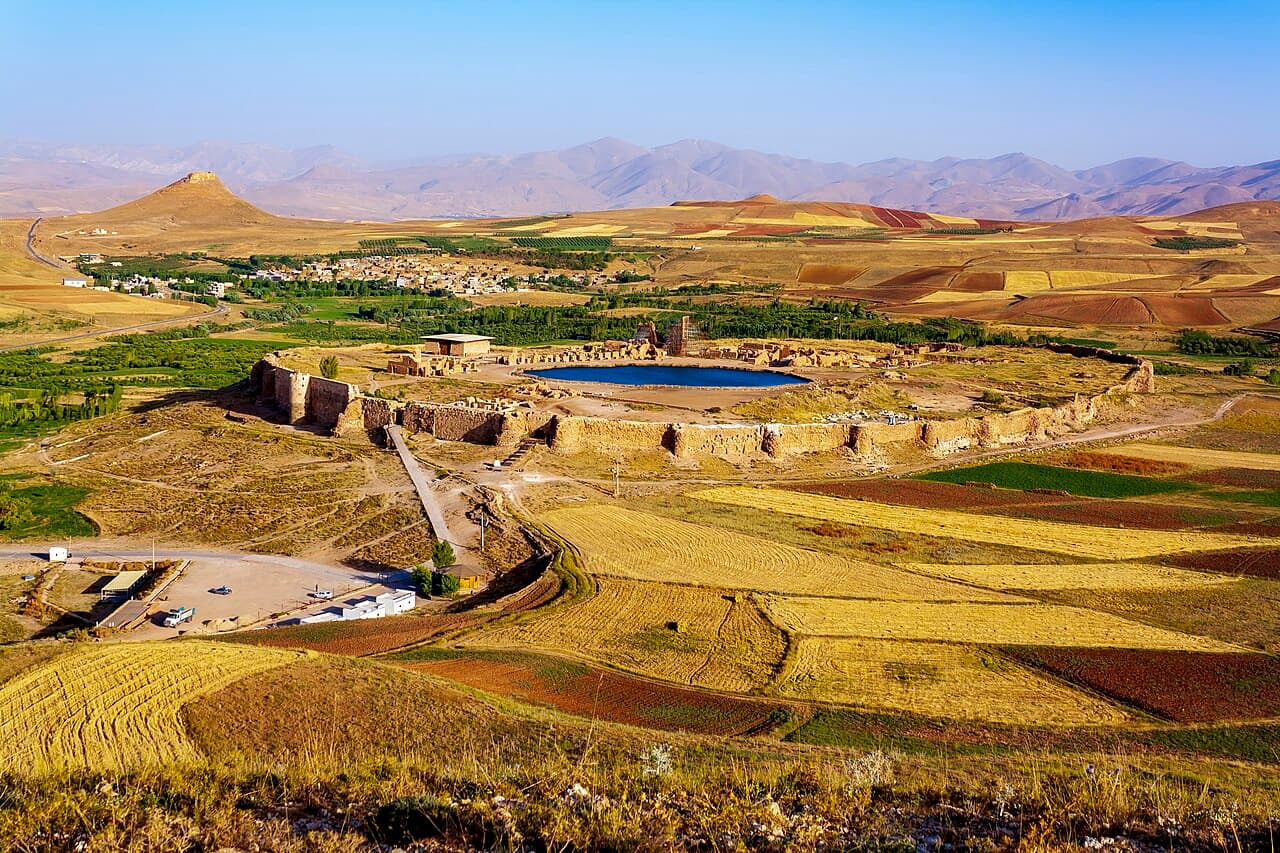
Takht-e Soleyman (Persian: تخت سلیمان, lit. 'Throne of Solomon') is a significant archaeological site located in West Azerbaijan, Iran, near the modern town of Takab. This site dates back primarily to the Sasanian Empire period and is situated approximately 400 km west of Tehran, midway between Urmia and Hamadan. The site occupies a naturally fortified hill formed by the outflow of a calcium-rich spring pond, which adds a unique geological feature to the fortress complex.
The historical and cultural significance of Takht-e Soleyman
Takht-e Soleyman was a major religious and administrative center during the Sasanian era. The site is best known for the remains of Adur Gushnasp, a Zoroastrian fire temple that was one of the three "Great Fires" or "Royal Fires" revered by the Sasanian rulers. This fire temple was dedicated to the arteshtar, the warrior class of the Sasanian society, and the fire was considered a symbol of royal legitimacy and divine favor. The temple's foundations are located around the central pond, emphasizing the sacred connection between water and fire in Zoroastrian tradition.
Following the Muslim conquest of Persia in the 7th century, the site acquired its biblical name, "Throne of Solomon," reflecting local legends that King Solomon imprisoned demons in a nearby deep crater called Zendan-e Soleyman ("Prison of Solomon"). Folklore also attributes the creation of the flowing pond within the fortress to Solomon, blending pre-Islamic history with Islamic-era mythology.
Architectural features and site layout
The fortress at Takht-e Soleyman is characterized by its strategic location on a hill formed by natural springs, which created a moat-like pond surrounding the inner citadel. The site includes the ruins of defensive walls, towers, and the central fire temple complex. The Adur Gushnasp fire temple itself was a grand structure with a square plan, featuring thick walls constructed from stone and mortar. The temple's design incorporated a central sanctuary where the sacred fire was kept, surrounded by ancillary chambers for priests and ritual activities.
During the Ilkhanate period (13th-14th century), parts of the fire temple were converted and partially rebuilt as a mosque, reflecting the site's continued religious importance and adaptation over centuries. The site also contains remains from earlier periods, including traces of Achaemenid occupation dating back to the 5th century BC and Parthian settlements, indicating the long-term strategic and cultural significance of this location.
Defensive structures and natural features
The hilltop fortress was naturally protected by the spring-fed pond, which acted as a moat, and by the surrounding rocky terrain. The defensive walls included battlements and towers designed to repel invaders, while the citadel's elevated position provided commanding views of the surrounding landscape. This natural and man-made defense system made Takht-e Soleyman a formidable stronghold during its peak.
Archaeological discoveries and artifacts
Excavations at Takht-e Soleyman have uncovered a wealth of artifacts that illuminate its historical timeline. Among the finds are coins from the reigns of Sasanian shahs and the Byzantine emperor Theodosius II (AD 408–450), demonstrating the site's role in regional trade and politics. The discovery of these coins helps date the site's active use and highlights its connections beyond Persia.
Additional artifacts include pottery, architectural fragments, and religious objects related to Zoroastrian worship. These finds are displayed in a small museum near the site, providing visitors with insights into the cultural and religious life of the ancient inhabitants.
World Heritage status and preservation
Takht-e Soleyman was recognized as a UNESCO World Heritage Site in July 2003, acknowledging its outstanding universal value as a cultural and historical monument. The site's classification as archaeological ruins reflects its current condition, with many structures surviving only as remnants. Despite this, the ruins offer a remarkable glimpse into Sasanian architecture and religious practices.
Preservation efforts focus on stabilizing the remaining structures and protecting the site from environmental and human threats. Visitors can explore the ruins and the museum, gaining a deeper understanding of the site's significance in Iranian history.
Frequently asked questions (FAQ)
- How do I get to Takht-e Soleyman?
- Takht-e Soleyman is located in the West Azerbaijan province of Iran. The nearest major city is Takab, which is accessible by bus or car from larger cities like Tabriz or Tehran. Once in Takab, local transportation options can take you directly to the site.
- What is the historical significance of Takht-e Soleyman?
- Takht-e Soleyman, also known as the Throne of Solomon, is a UNESCO World Heritage Site that dates back to the Sassanian era. It was a religious and cultural center, showcasing Zoroastrian and later Islamic influences, and is believed to be linked to the ancient fire temple of Adur Gushnasp.
- When was Takht-e Soleyman built?
- The construction of Takht-e Soleyman began in the 5th century AD and continued for several centuries. Its ruins reflect various architectural styles and adaptations over time, particularly during the Sassanian period. The site has been a place of worship and pilgrimage for millennia.
- Can I visit Takht-e Soleyman year-round?
- Yes, Takht-e Soleyman is open to visitors throughout the year. However, the best time to visit is during the spring (March to May) and fall (September to November) when the weather is mild and pleasant for exploring the ruins.
- Why is the architecture of Takht-e Soleyman unique?
- The architecture of Takht-e Soleyman is unique due to its blend of Zoroastrian and Islamic elements, featuring impressive stone structures, intricate carvings, and the remains of a large fire temple. The layout of the site, with its artificial lake and surrounding mountains, adds to its historical and aesthetic significance.
- Is it possible to take guided tours at Takht-e Soleyman?
- Yes, guided tours are available for visitors to enhance their experience at Takht-e Soleyman. Local guides provide valuable insights into the history and architecture of the site, making it easier to understand its cultural significance. It is recommended to book a tour in advance, especially during peak tourist seasons.
- What are the ticket prices for visiting Takht-e Soleyman?
- The ticket prices for Takht-e Soleyman are generally affordable, with discounts available for students and groups. As prices may vary, it is advisable to check local sources or official websites for the most up-to-date information before your visit.
- What are the opening hours for Takht-e Soleyman?
- Takht-e Soleyman is typically open to visitors from sunrise to sunset. However, it's always good to confirm the specific hours prior to your visit, as they may vary seasonally or due to special events.
- Are there any nearby attractions to visit after Takht-e Soleyman?
- Yes, there are several nearby attractions, including the ancient city of Takab and the natural beauty of the surrounding mountains. Visitors can also explore local bazaars and experience traditional Iranian culture in the nearby towns, making for a well-rounded trip.
Photo gallery

Information
Loading map...
Visitor reviews
No reviews yet. Been here? Write the first review and help other travelers!
Write the first reviewVisited this castle? Share your experience
Your review helps other travelers and adds first-hand knowledge to our encyclopedia.