
Takamatsu Castle
Takamatsu Castle, located in Takamatsu city on Japan's Shikoku island, is a remarkable example of a lowland castle uniquely constructed on the waterfront. Built between 1588 and 1590 under the direction of Ikoma Chikamasa, a retainer of the powerful warlord Toyotomi Hideyoshi, the castle stands out for its ingenious use of the ocean to fill its moats, a feature that earned it a place among Japan's celebrated three great water castles.
The castle's strategic location on the Seto Inland Sea allowed it to harness tidal waters, creating a natural defensive barrier that made it appear as a floating fortress at high tide during its prime. This waterfront design was not only a defensive innovation but also an aesthetic marvel, integrating the castle seamlessly with its maritime environment.
Historical background and ruling clans
Following its completion, Takamatsu Castle became the seat of the Ikoma clan, who governed the domain for four generations. However, in 1639, the clan faced a significant setback when the young lord Ikoma Takatoshi was reassigned to the distant Dewa Province in northeastern Japan with diminished lands. This reassignment was a punitive measure resulting from internal conflicts involving the Ikoma retainers.
Subsequently, the castle came under the control of the Matsudaira family, descendants of Tokugawa Ieyasu's grandson, Matsudaira Yorishige. The Matsudaira ruled Takamatsu until the Meiji Restoration, overseeing the castle's development during the Edo period.
Architectural features and castle layout
During the Edo period, Takamatsu Castle featured an impressive three-level, five-story main keep (tenshu) along with approximately 20 yagura (turrets). The castle's layout emphasized defense and integration with its waterfront setting. The moats were filled directly with seawater, a rare characteristic among Japanese castles, which typically used freshwater sources.
The stone walls and gates were constructed to withstand both land and naval assaults, and the castle's design incorporated multiple layers of defense, including battlements and watchtowers. The waterfront location also allowed for supply and communication via sea routes, enhancing its strategic importance.
The mizunotegomon gate and tsukimi yagura turret
Today, one of the few surviving structures from the original castle complex is the Mizunotegomon Gate, located adjacent to the Tsukimi Yagura turret. At high tide, water reaches the base of the gate, evoking the castle's historic waterfront character. These remnants provide valuable insights into the castle's original design and maritime defenses.
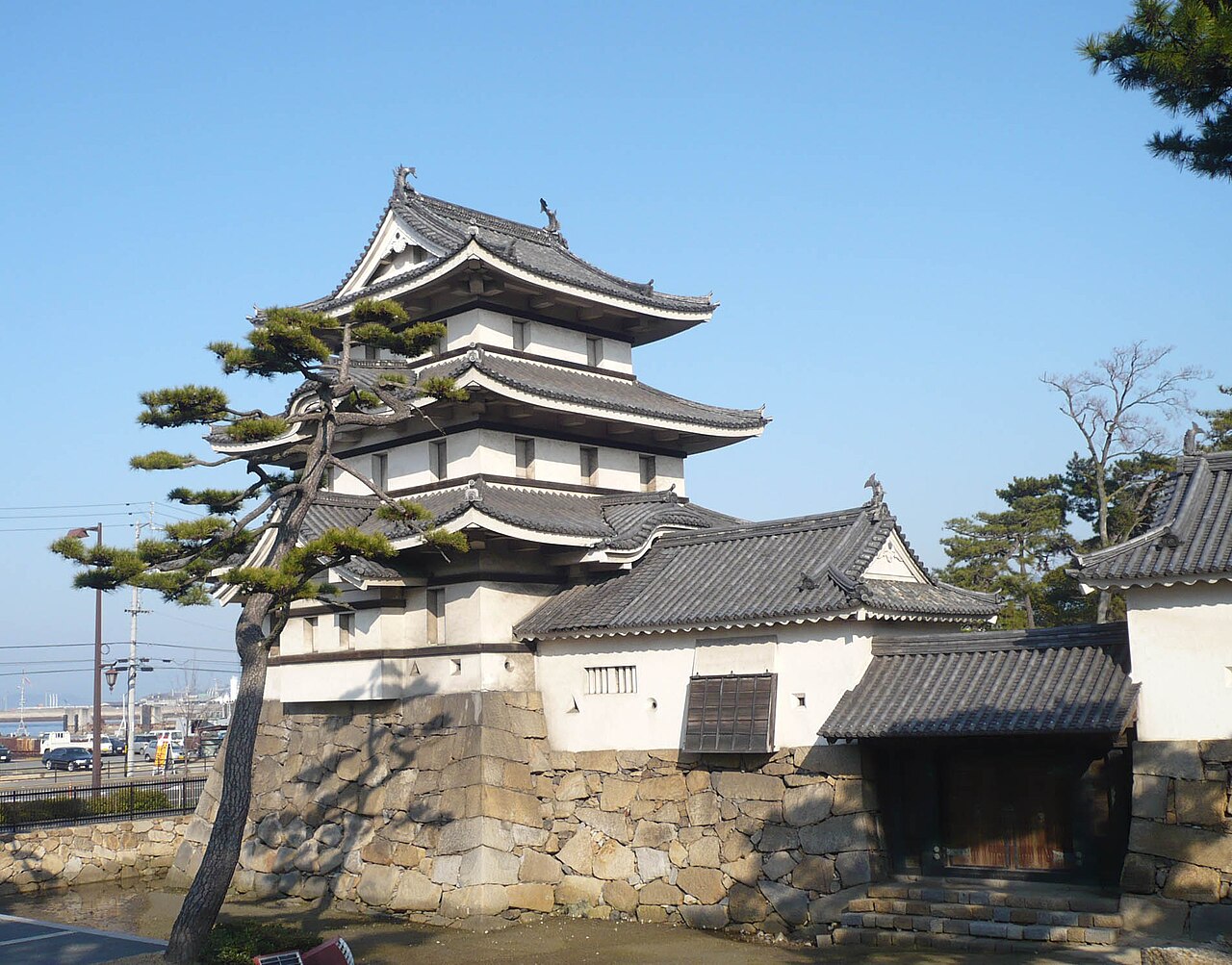
Photo by 投稿者が撮影 • Public domain
Decline and preservation efforts
After the Meiji Restoration, Takamatsu Castle was decommissioned in 1869. The main keep was dismantled in 1884 as part of the government's policy to reduce feudal symbols. Over time, much of the castle grounds were altered, including the filling in of parts of the oceanfront to create additional land for urban development.
Despite these changes, the castle grounds retain significant portions of their stonework and water-filled moats, preserving the essence of its historic waterfront character. The site is now partially preserved, offering visitors a glimpse into its past grandeur.
In recent years, there has been a strong local movement to reconstruct the castle's main keep. However, efforts have been challenged by the scarcity of detailed historical photographs and architectural records. At one point, the city even offered rewards for old photographs or information that could aid in an accurate reconstruction. As of the mid-2010s, plans were advancing despite these difficulties, reflecting the community's commitment to restoring this iconic landmark.
Visitor experience and surrounding attractions
Visitors to Takamatsu Castle today can explore the castle grounds, including the Mizunotegomon Gate and the Tsukimi Yagura turret, and enjoy the scenic moats that recall the castle's waterfront heritage. The castle's location in Takamatsu city also provides easy access to other cultural and historical sites, such as Marugame Castle, which is known for its extensive stone walls and well-preserved keep.
Planning a visit during high tide offers a unique perspective, as the water rises close to the castle structures, enhancing the impression of a fortress floating on the sea. The castle's blend of natural and man-made defenses makes it a fascinating study in Japanese castle architecture and maritime strategy.
Takamatsu Castle remains a significant cultural asset, embodying the history of feudal Japan, the strategic ingenuity of waterfront fortifications, and the enduring legacy of the Ikoma and Matsudaira clans. Its story continues to inspire both historians and visitors alike.
Frequently asked questions (FAQ)
- When was Takamatsu Castle built and by whom?
- Takamatsu Castle was built between 1588 and 1590 by Ikoma Chikamasa, a retainer of Toyotomi Hideyoshi.
- What makes Takamatsu Castle unique among Japanese castles?
- Takamatsu Castle is unique for its waterfront location and moats filled with seawater, making it one of Japan's three great water castles.
- Are there any original structures still standing at Takamatsu Castle?
- Yes, the Mizunotegomon Gate and the Tsukimi Yagura turret are among the few original structures that remain today.
- Why was the Ikoma clan removed from Takamatsu Castle?
- The Ikoma clan was reassigned to Dewa Province in 1639 with reduced lands due to conflicts caused by the clan and their retainers.
- Is it possible to visit Takamatsu Castle today?
- Yes, visitors can explore the castle grounds and enjoy the preserved moats and stonework, although the main keep no longer stands.
Photo gallery

Photo by 投稿者が撮影•Public domain
Information
Opening hours
Open times vary by season. The west gate is open as early as long as 5:30-19:00 in the summer, but 7:00-15:00 in January. Closed Dec 29-31. 200 yen.
Website
Visit websiteSources & official resources
Verify the information above using these authoritative references.
Loading map...
Visitor reviews
No reviews yet. Been here? Write the first review and help other travelers!
Write the first reviewVisited this castle? Share your experience
Your review helps other travelers and adds first-hand knowledge to our encyclopedia.