Sycharth Castle
Sycharth Castle stands as a significant historical site near the village of Llansilin in Wales, United Kingdom. This castle, originally constructed as a Norman motte and bailey fortification, reflects the turbulent history of the Welsh borderlands following the Norman Conquest. Its strategic location within the historic region of Powys Fadog showcases its importance in controlling the surrounding territories during the medieval period.
Historical context and ownership
Established in the wake of the Norman expansion into Welsh lands, Sycharth Castle was initially built to secure Norman influence over the border commotes of Cynllaith and Edeyrnion. These areas were documented under Norman control by the time of the Domesday Book in 1086. The castle's original function was primarily military, serving as a defensive stronghold and administrative center within the contested border region.
By the late 13th century, the castle transitioned into Welsh hands, becoming the possession of Madog Crypl, a notable lord of the Lordship of Glyndyfrdwy and Cynllaith Owain. Madog Crypl is historically significant as an ancestor of Owain Glyndŵr, the famed Welsh leader who led a major uprising against English rule in the early 15th century. In 1369, Sycharth was inherited by Owain Glyndŵr, who made it his principal manor and family home.
During the Glyndŵr rebellion, Sycharth became a key target for English royal forces. In May 1403, troops led by Prince Henry (later King Henry V) launched a campaign against the Welsh insurgents, culminating in the burning of Sycharth among other estates. This devastating attack marked the decline of Sycharth as a noble residence and left archaeological evidence of the destruction still visible today.
Architectural features and layout
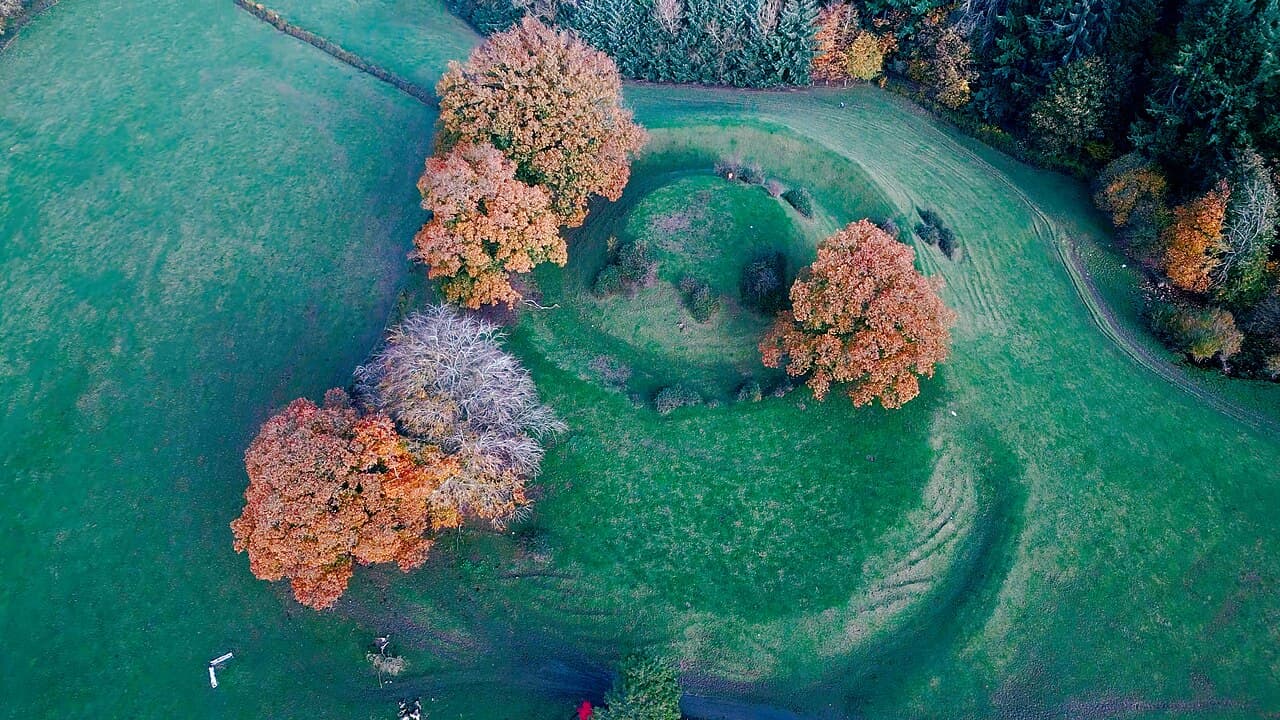
Sycharth Castle exemplifies the Norman motte and bailey design, characterized by a raised earth mound (the motte) topped with timber structures, and an enclosed courtyard (the bailey) surrounded by defensive earthworks. Excavations have revealed the foundations of two large timber halls atop the motte, one measuring approximately 43 meters in length, indicating the castle's considerable size and status.
The castle's buildings were constructed primarily from wood, following medieval timber-framing techniques. Contemporary descriptions by the 14th-century Welsh bard Iolo Goch provide valuable insight into Sycharth's architectural character. He described nine wooden buildings arranged symmetrically on the green hill, each featuring tiled roofs and smoke-emitting chimneys. These structures included adjacent wardrobes or storage closets, reflecting a level of domestic comfort and planning unusual for typical military castles of the time.
Surrounding the motte, earth banks and ditches formed defensive boundaries, typical of motte and bailey fortifications. The site also contained a medieval fishpond nearby, underscoring the castle's role as a self-sufficient estate. The surrounding lands served communal and judicial functions, including acting as a courthouse until the 19th century.
Destruction and archaeological remains
The castle's destruction in 1403 during the Glyndŵr uprising left clear traces of burning in the archaeological record. Excavations have uncovered charred timber remains and evidence of fire damage consistent with historical accounts of the royal assault. Today, Sycharth survives primarily as visible earthworks and foundational remains, offering valuable insights into medieval Welsh castle construction and the lifestyle of its inhabitants.
The site is situated in a picturesque valley near the River Cynllaith, approximately one kilometer west of the modern England-Wales border. The surrounding landscape includes the wooded area known as Parc Sycharth on higher ground to the east, enhancing the site's natural defenses and scenic value.
Cultural significance and legacy
Sycharth Castle holds a prominent place in Welsh history as the ancestral home of Owain Glyndŵr, who remains a symbol of Welsh nationalism and resistance. The castle's poetic depiction by Iolo Goch immortalizes its architectural elegance and domestic sophistication, contrasting with its martial origins. Sycharth exemplifies the fusion of military and residential functions in medieval Welsh castles, reflecting broader social and political dynamics of the era.
While it never evolved into a stone fortress, Sycharth's timber halls and earthworks provide a rare glimpse into Norman and Welsh castle-building traditions. Its destruction and subsequent preservation as an archaeological site allow historians and visitors to explore the complexities of medieval borderland life and conflict.
Visiting sycharth today
Today, visitors to Sycharth Castle can explore the extensive earthworks and foundations that mark the site. Although no standing structures remain, the layout of the motte and bailey is clearly discernible. The surrounding natural landscape offers a tranquil setting for understanding the castle's strategic location and historical context.
Interpretive signage and local heritage initiatives help convey the site's significance, particularly its connection to Owain Glyndŵr and the Welsh struggle for independence. Sycharth remains an important cultural landmark within Wales, attracting historians, archaeologists, and tourists interested in medieval history and architecture.
Frequently asked questions (FAQ)
- How do I get to Sycharth Castle?
- Sycharth Castle is located near Llansilin in Wales, close to the England-Wales border. It is accessible by local roads, and visitors should check local maps or tourist information centers for the best routes.
- What is the historical significance of Sycharth Castle?
- Sycharth Castle is historically significant as the ancestral home of Owain Glyndŵr, the Welsh rebel leader who led a major uprising against English rule in the early 15th century. The castle's destruction in 1403 marks an important event in Welsh history.
- Can I visit the remains of Sycharth Castle?
- Yes, visitors can explore the visible earthworks and foundations at Sycharth Castle. While no standing buildings remain, the site offers insight into medieval motte and bailey castle construction and Welsh heritage.
- When was Sycharth Castle built?
- Sycharth Castle was originally constructed as a motte and bailey castle during the Norman expansion into Welsh territories, likely in the late 11th or early 12th century.
- Why was Sycharth Castle destroyed?
- Sycharth Castle was destroyed in May 1403 during the Glyndŵr rebellion when English royal forces led by Prince Henry attacked and burned it to suppress the Welsh uprising.
Photo gallery

Information
Website
Visit websiteSources & official resources
Verify the information above using these authoritative references.
Loading map...
Visitor reviews
No reviews yet. Been here? Write the first review and help other travelers!
Write the first reviewVisited this castle? Share your experience
Your review helps other travelers and adds first-hand knowledge to our encyclopedia.