Świecie — Poland castle

Świecie

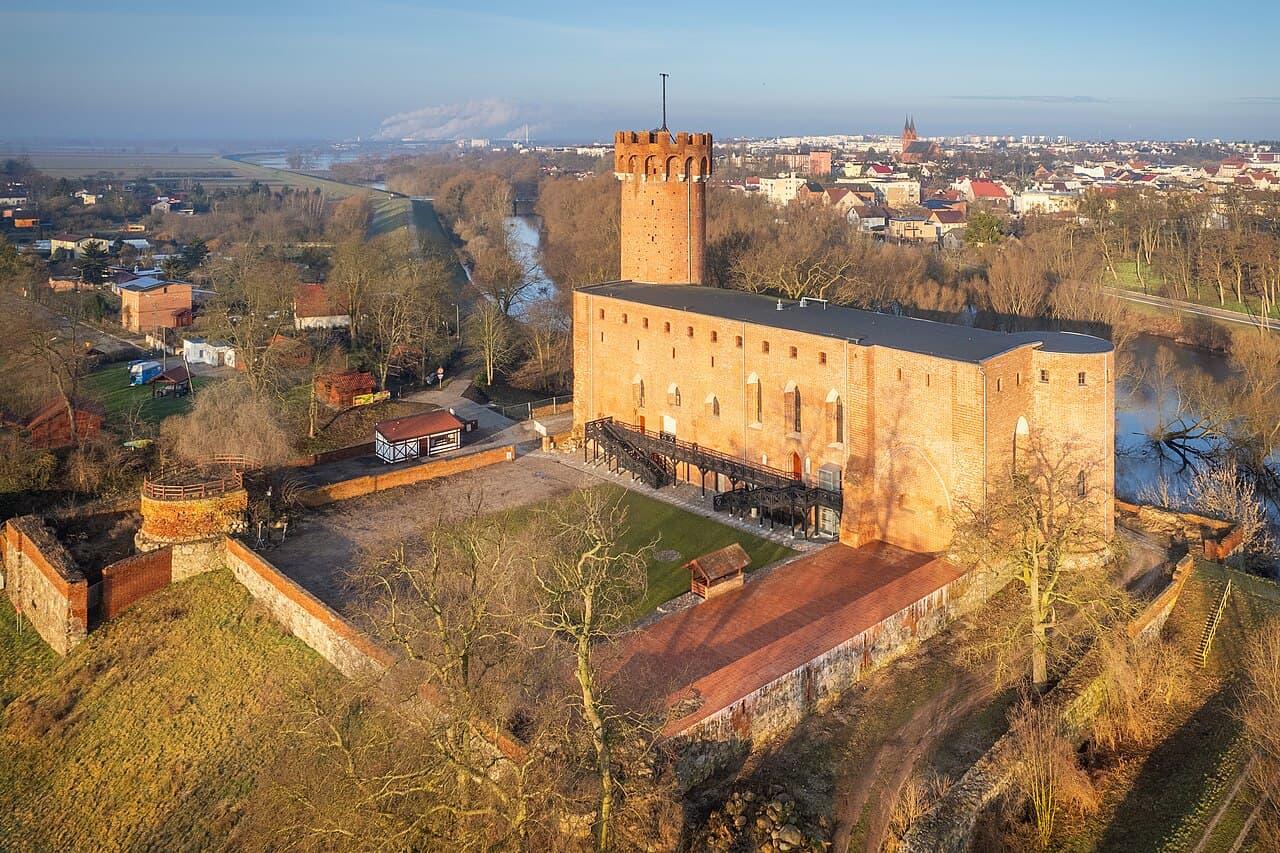
Świecie Castle: late medieval Teutonic bastioned fortress in Poland
Świecie, Poland
Late Medieval (14th–15th c.)
Ruins

Świecie Castle stands as a remarkable example of a late medieval bastioned fortress constructed by the Teutonic Knights in present-day Poland. Located strategically at the confluence of the Vistula (Wisła) and Wda rivers, this castle was designed to control vital river traffic and regional trade routes during the Middle Ages. Its imposing ruins, surrounded historically by water defenses, reflect the military ingenuity and architectural sophistication of the Teutonic Order in the 14th century.

The castle's origins date back to the early 14th century, with the Teutonic Knights occupying the region after their conquest of Gdańsk in 1308. Following the destruction of the earlier Pomeranian fortified settlement, the Order established a new stronghold around 1335. The fortress was built on a wedge-shaped site formed by the rivers, featuring a roughly square plan approximately 50 meters on each side. Constructed primarily of brick, the castle was fortified with thick walls nearly one meter thick and encompassed by a moat filled with water diverted from the Wda river, an innovative defensive feature that earned it the moniker "water castle."

Architectural design and defensive features

The castle's layout was a classic example of Teutonic military architecture, with four wings enclosing a central courtyard. Each corner was anchored by a robust circular tower, serving both as defensive bastions and residential quarters. The most prominent structure was the three-story northern wing, housing the castle chapel and chapter house, spaces essential for the knights' religious and administrative functions.

The northeastern corner tower, measuring over 10 meters in diameter with walls three meters thick, functioned as the main gate's fortification and the last refuge during sieges. Its entrance was elevated 13 meters above ground, accessible only via a drawbridge connecting to a guard gallery. Below the entrance, a windowless well served as a prison cell, while the upper levels contained defensive positions accessible by spiral staircases embedded within the thick walls. The towers were topped with conical roofs covered in tiles, characteristic of the period's style.

Surrounding the castle was a complex system of water defenses. The Teutonic Knights engineered the course of the Wda river to flow along the northern walls and connected it artificially to the Vistula by a canal, creating a nearly impregnable aquatic barrier. Adjacent to the main fortress, a lower bailey or "low castle" was separated by a stone-lined moat, further enhancing the site's defensive depth.

Historical significance and military engagements

Świecie Castle played a significant role in the regional power struggles of medieval Poland and the Teutonic Order. After its capture by the Knights in 1309, it became the seat of a separate commandery established in 1317. The fortress withstood multiple sieges, including the notable 1410 battle aftermath when Polish forces occupied the town but failed to take the castle itself.

During the Thirteen Years' War (1454–1466), the castle changed hands several times. Initially seized by the Prussian Confederation allied with Poland, it was later retaken by the Teutonic Knights. A prolonged siege by Polish mercenaries financed by the city of Toruń ended with the castle's surrender in 1461. The subsequent Second Peace of Toruń in 1466 incorporated Świecie into the Polish Crown as part of the Pomeranian Voivodeship, marking a shift in political control.

Under Polish rule, the castle served as the residence of royal starosts, local governors appointed by the monarchy. In the mid-16th century, Jerzy Konopacki, a nobleman of Pomeranian descent, undertook Renaissance-style renovations, adapting the fortress for more comfortable residential use while preserving its defensive capabilities.

The castle's decline began during the Swedish Deluge (mid-17th century), when it was captured and burned by Swedish forces. Subsequent neglect and partial demolition by Prussian authorities after the partitions of Poland further reduced the structure to ruins.

Architectural evolution and restoration efforts

Despite its ruined state, Świecie Castle retains significant architectural elements that illustrate its historical development. The northern wing, partially restored, reveals vaulted chambers and window openings, while the main tower stands nearly 35 meters tall, crowned with crenellations supported by sixteen machicolations, a distinctive feature from the 1561 reconstruction.

In the 19th century, King Frederick William IV of Prussia halted plans for complete demolition and initiated restoration work, including the addition of wooden stairs to the main tower. The 20th century saw further conservation efforts, particularly after World War II, when archaeological research and preservation projects began in earnest.

Recent renovations completed in 2024 focused on the meticulous restoration of the medieval star vaults in the refectory, using thousands of handmade bricks modeled on original Teutonic designs. The castle grounds now include a museum housed within the restored tower, offering visitors insights into the site's storied past.

Archaeological findings and natural heritage

Extensive archaeological excavations have enriched understanding of the castle's construction phases and historical context. Notable studies by Gerard Wilke and Adam Chęć uncovered foundational structures and artifacts that shed light on the Teutonic Order's presence.

Since 2008, the castle area has been protected under the Natura 2000 network due to its ecological importance as a winter habitat for the western barbastelle bat, a rare species that hibernates within the castle's sheltered spaces.

The castle today and visitor experience

Today, Świecie Castle is a captivating ruin that offers a tangible connection to medieval military architecture and the turbulent history of northern Poland. Visitors can explore the partially preserved northern wing, the towering bergfried, and the surrounding moat system that once made the fortress nearly impregnable.

The site is accessible via the western entrance featuring a stone-arched gateway. Interpretive displays and the onsite museum provide educational context, while the castle's scenic riverside location enhances its appeal. Plans for a miniature park aim to further enrich the visitor experience, blending cultural heritage with leisure.

Świecie Castle exemplifies the architectural and historical legacy of the Teutonic Knights' presence in Poland, standing as a testament to medieval fortification techniques and the region's complex past.

Frequently asked questions (FAQ)

How do I get to Świecie Castle?
Świecie Castle is easily accessible by car and public transport. If traveling by train, the nearest station is in Świecie, from where you can take a short bus or taxi ride to the castle.
What is the historical significance of Świecie Castle?
Świecie Castle dates back to the 13th century and has played a vital role in Poland's history, serving as a defensive stronghold and royal residence. Its strategic location along the Vistula River made it an important site for trade and military activities.
When was Świecie Castle built?
The construction of Świecie Castle began in the early 14th century, initially as a wooden fortification. Over the years, it was rebuilt with stone, particularly during the 15th century, reflecting the architectural styles of the period.
Can I take guided tours of Świecie Castle?
Yes, guided tours are available at Świecie Castle, providing visitors with in-depth insights into its history and architecture. It's recommended to check the castle's official website for tour schedules and availability.
Why is the architecture of Świecie Castle unique?
The architecture of Świecie Castle features a blend of Gothic and Renaissance styles, showcasing its evolution over centuries. Its impressive stone walls and towers reflect the medieval defensive architecture typical of the region.
Is it possible to visit Świecie Castle year-round?
Yes, Świecie Castle is open to visitors throughout the year, although opening hours may vary by season. It's advisable to check the official website for the most current visiting hours and any potential seasonal closures.
What are the ticket prices for Świecie Castle?
Ticket prices for Świecie Castle are generally affordable, with discounts available for students and seniors. Check the castle's official website for the latest pricing information and any special offers.
When is the best time to visit Świecie Castle?
The best time to visit Świecie Castle is during the spring and early autumn when the weather is pleasant and conducive for exploring the grounds. Additionally, visiting during these seasons allows you to enjoy the natural beauty surrounding the castle.
Are there any nearby attractions to visit while in Świecie?
Yes, there are several nearby attractions, including the picturesque Vistula Boulevards and local museums that showcase the region's history. Additionally, the charming town of Świecie offers various restaurants and shops worth exploring.

Photo gallery

Świecie
Click to view

Photo by Mariusz Guć•CC BY-SA 4.0

1 photo • Click any image to view in full screen

Information

Bastioned Fortress

Sources & official resources

Verify the information above using these authoritative references.

Loading map...

Visitor reviews

No reviews yet. Been here? Write the first review and help other travelers!

Write the first review

Visited this castle? Share your experience

Your review helps other travelers and adds first-hand knowledge to our encyclopedia.

Write a review

(5/5)

0/2000 characters

Your review will be visible after admin approval

Nearby castles

6.8 km

Chełmno Castle

Chełmno, Poland

Chełmno Castle stands as a significant medieval monument located in Chełmno, Poland. Established in the early 13th century, this hill castle was originally built by the Teutonic Order after they took control of the region in 1230. The castle’s strategic position on the steep right bank of the Vistula River allowed it to serve as a critical defensive and administrative center during the High Medieval period. Its proximity to the town’s walls and moat integrated it closely with the urban fortifications, highlighting its importance in regional defense and governance.The earliest mentions of Chełmno date back to 1132, when it was a fortified settlement and the seat of a castellan. In 1222, it became the property of Bishop Christian, who was engaged in missionary work among the pagan Prussian tribes. Following the bishop’s departure in 1230, the Teutonic Knights seized Chełmno and immediately began constructing a stone castle. This castle comprised a convent house and two residential towers flanking it, situated at the town’s northwest corner, separated from the town by walls and a moat.The architectural composition of Chełmno CastleLayout and defensive structuresThe castle’s design reflected typical Teutonic military architecture of the period, emphasizing robust fortifications and functional residential spaces. The two prominent residential towers, including the notable "Baszta Mestwina" (Mestwin’s Tower), served both defensive and administrative purposes. According to local legend, the tower was used to imprison Mestwin, son of Duke Świętopełk. The castle’s location on a steep riverside escarpment provided natural defense, supplemented by the constructed moat and walls that linked it with the town’s fortifications.Religious and monastic buildingsIn 1265, Master Ludwik von Baldersheim invited the Cistercian nuns from Czyste in Silesia to Chełmno. They established a convent and constructed a single-nave brick church, a fine example of Gothic ecclesiastical architecture. After the dissolution of the Teutonic provincial master’s office, the Cistercian nuns adapted the castle for their monastic needs. In 1349, the order relocated to Königsberg, and the Benedictine nuns took over the monastery, maintaining it until the early 19th century.Historical significance and transformationsTeutonic Order eraFrom 1233, Chełmno Castle served as the seat of the Teutonic provincial masters, effectively making it the northern capital of the Order’s territories until the grand master moved to Malbork. The castle was a center of military and administrative command, overseeing the northern lands during a period of intense crusading activity against the pagan Prussians.Monastic adaptationsFollowing the decline of the Teutonic administrative presence, the castle’s function shifted to religious and charitable uses. The Cistercian and later Benedictine nuns adapted the fortress into a monastery, preserving much of the medieval structure while modifying interiors for monastic life. In the 19th century, the Sisters of Mercy of St. Vincent expanded the complex by building a hospital in 1878, further transforming the site into a center for social care.Preservation and current statusToday, Chełmno Castle is well-preserved and forms part of a monastery complex in the western corner of the Old Town. The original convent house has undergone 19th-century renovations, and the castle church built by the Cistercian nuns remains a prominent Gothic landmark. The "Baszta Mestwina" is one of the most interesting surviving elements of the medieval castle, attracting visitors intrigued by its history and legends.The site also features sections of the Gothic town walls and one of the original gates, the Merseburg Gate, now sealed. The city walls, extending over 2 kilometers, are among the best-preserved medieval fortifications in Poland, contributing to Chełmno’s reputation as a valuable urban heritage site and a popular tourist destination.Chełmno’s medieval urban landscapeThe castle’s integration with the town’s fortifications exemplifies the medieval urban planning characteristic of the Teutonic Order’s settlements. The preservation of the town’s medieval street layout alongside the defensive walls offers a rare glimpse into the spatial organization and defensive strategies of a High Medieval fortified town. Visitors can explore the harmonious blend of military, religious, and civic architecture that defines Chełmno’s historic core.Visitor experienceToday, the former castle grounds house a social care home operated by the Sisters of Mercy, continuing the site’s long tradition of service and care. While some areas are private, the surrounding town walls and notable architectural features remain accessible to tourists. Chełmno’s rich history, architectural heritage, and well-preserved medieval fabric make it a compelling destination for those interested in castle architecture, medieval history, and monastic culture.

High Medieval (11th–13th c.)
Details
12.1 km

Starogród

Starogród, Poland

Starogród Castle stands as a significant historical monument reflecting the military and administrative strategies of the Teutonic Order in medieval Poland. Established around 1232, this hill castle was among the earliest fortifications erected by the Order following their invitation by Prince Konrad of Masovia in 1226. Its primary purpose was to serve as a base for campaigns against the pagan Prussian tribes, marking an important phase in the Christianization and territorial expansion of the region.The initial structure was a modest wooden and earth fortification, typical of early Teutonic military architecture constrained by limited manpower and resources. This rudimentary fortress was strategically located on the right bank of the Vistula River, making it the second stronghold after Toruń in that area. Its placement on a high riverbank provided natural defensive advantages and facilitated control over river traffic and surrounding lands.Development from wooden fort to stone castleBy the mid-13th century, the original wooden fortification was replaced with a more durable stone castle. This transition marked the Order's growing consolidation of power and resources in the region. The castle was constructed on the edge of a high Vistula River escarpment, enhancing its defensive capabilities. Unlike the later standardized conventual castles built by the Teutonic Order, Starogród featured an irregular pentagonal plan enclosing a small inner courtyard. The irregular shape likely adapted to the topography and existing defensive needs.The castle was surrounded by a stone curtain wall and probably a bailey to the north, enclosed by its own defensive wall. Beyond this, a moat separated the main castle from an outer bailey. In later periods, a second, larger outer bailey was established, separated by an additional moat, reflecting the castle's evolving defensive complexity. Unfortunately, the castle suffered extensive destruction in subsequent centuries, leaving only traces such as the moat visible today, which complicates precise reconstruction of its original layout.Historical significance and military roleStarogród served as the seat of the Teutonic Order's provincial masters until 1253, after which it became the center of a komturia (commander's district) lasting until 1454. This highlights its importance as both a military stronghold and administrative hub during the Order's rule. The castle witnessed significant military action, notably during the Battle of Grunwald in 1410, when it was temporarily captured by the forces of King Władysław Jagiełło.During the Thirteen Years' War (1454–1466), Starogród changed hands multiple times. Initially reclaimed by the Polish crown in 1454, it was retaken by Teutonic mercenaries under Bernard Szumborski in 1457. Szumborski's refusal to pay his troops led to a temporary seizure of several castles and towns as collateral, including Starogród. Negotiations by the Grand Master Marcin Truchsess von Wetzhausen in 1478 eventually resulted in the return of these properties to the Order, but Polish pressure forced the Order to relinquish the Chełmno Land castles, including Starogród.Transition to Polish royal control and later historyIn 1479, the castle was incorporated into the Kingdom of Poland, becoming the seat of royal starosts. Under the reign of King Jan Olbracht in the late 15th century, Starogród underwent reconstruction to repair wartime damages. In 1505, King Aleksander Jagiellończyk granted the castle to the Bishops of Chełmno, who transformed it into a richly appointed summer residence. This period marked a shift from pure military use to a more residential and administrative function.The castle suffered significant damage during the Swedish invasions of the 17th century, known as the Deluge, but was partially rebuilt between 1682 and 1693. However, by the 18th century, the castle was in decline, as noted in a 1759 inspection describing cracked and deteriorating walls. Following the First Partition of Poland, Starogród fell under Prussian control and was sold into private hands in 1777. Extensive removal of building materials led to the castle's near-total dismantling by 1795.Archaeological research and present conditionToday, Starogród Castle exists only as ruins, with no visible above-ground structures apart from traces of its moats. Archaeological excavations have been limited and have not significantly clarified the castle's original layout or developmental phases. Despite this, the site remains an important cultural and historical landmark, reflecting the turbulent history of the Teutonic Order's presence in Poland and the region's medieval military architecture.Visitors to the site can appreciate the strategic location on the Vistula escarpment and imagine the castle's former prominence as a military and administrative center. The ruins symbolize the complex history of territorial conflict, religious crusades, and political change in northern Poland from the 13th to the 18th centuries.

High Medieval (11th–13th c.)
Details
18.4 km
Papowo Biskupie — Poland castle

Papowo Biskupie

Papowo Biskupie, Poland

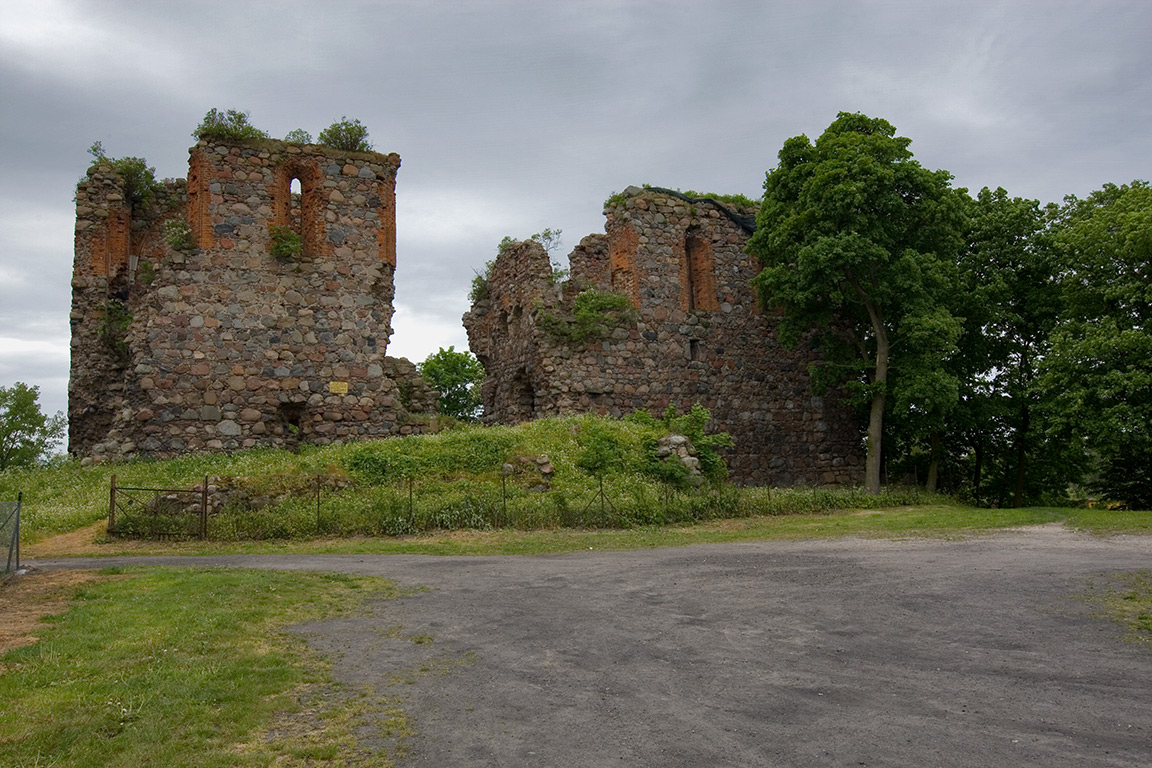
Papowo Biskupie Castle stands as a significant relic of medieval military architecture in Poland, located on a small artificially elevated hill at the edge of the village of Papowo Biskupie. This hill castle was originally constructed by the Teutonic Order in the late 13th century and played a pivotal role in the turbulent history of the region, especially during the conflicts between Poland and the Teutonic Knights in the 15th century. Today, only ruins remain, offering valuable insights into the castle's original structure and historical importance. Early history and foundation The site of Papowo Biskupie was initially under the control of the bishops of Płock and later, from 1222, the missionary Bishop Christian of Prussia. In 1231, the village and its lands passed into the hands of the Teutonic Order, marking the beginning of the castle's association with this military-religious organization. By the second half of the 13th century, as the Order consolidated its authority in the newly acquired territories, Papowo became the seat of a komturei (commandery). The first documented reference to this komturei dates to 1287. Construction of the castle began around 1280 and was completed by 1300, making it one of the earliest convent-type castles within the Teutonic state. The castle was designed as a quadrangular four-winged structure approximately 40 meters on each side, enclosing a small internal courtyard surrounded by two-story wooden cloisters. This layout reflected the dual military and monastic functions typical of Teutonic convent castles. Architectural features and construction The castle was primarily built from fieldstones and granite boulders, materials that were abundant locally. Only the vaults and window openings were constructed using bricks, a common practice in the region to combine robustness with architectural detail. The surviving foundations and walls suggest that the castle had defensive corner towers on each angle, enhancing its fortification. The main entrance was located in the northern wing, accessed via a bridge over a moat and fortified gatehouse. This northern wing also housed the chapel and the chapter house, key elements of the castle's religious function. The eastern wing contained the refectory where communal meals were held, while the western wing was designated as the dormitory for the knights. The southern wing was the most prominent, serving as the residence of the komturei commander. Surrounding the main castle was a low defensive wall and moat separating it from a larger outer bailey, which was itself protected by walls and wide moats. The bailey's entrance was on the western side, completing the castle's layered defensive system. Historical significance and military events Papowo Biskupie Castle played a notable role during the Polish-Teutonic wars of the 15th century. Despite its fortifications, it was briefly captured by the forces of King Władysław Jagiełło in 1410 during the conflict culminating in the Battle of Grunwald. After the battle, the castle was occupied by Polish knights for a short time before returning to Teutonic control, serving thereafter as a seat for a local vogt or governor. The castle suffered damage during various military engagements, including a raid led by Janusz Brzozogłowy in 1411 which targeted the outer bailey. During the Thirteen Years’ War (1454–1466), the fortress was a refuge for the Teutonic leadership but changed hands multiple times. In 1454, it was seized by forces allied with the Prussian Confederation and Polish supporters. King Casimir IV Jagiellon ordered its destruction to prevent further military use. Despite this, in early 1458, Teutonic mercenaries briefly recaptured the castle. However, on 20 July 1458, Polish forces under Piotr of Szamotuły stormed and reclaimed the stronghold, subsequently burning it on royal orders. The castle's military importance effectively ended after this event. Following the Second Peace of Thorn in 1466, Papowo Biskupie and the surrounding region were incorporated into the Kingdom of Poland. The castle became a royal estate, with Gabriel Bażyński appointed as the first royal administrator. Later history and decline In 1505, King Alexander Jagiellon granted the castle and village to the Bishops of Chełmno. Under their ownership, the castle was partially dismantled before 1639, with stones repurposed for building a seminary in Chełmno. Despite this, the robust stone construction allowed substantial ruins to survive through the centuries. The bishops retained control until the First Partition of Poland in 1772, after which the castle was seized by the Kingdom of Prussia under King Frederick the Great. The castle rapidly fell into ruin, with local inhabitants removing building materials during the 19th century. Today, the site is officially registered as a historic monument since 1937. Architectural remains and current condition Today, the remnants of Papowo Biskupie Castle primarily consist of the ruins of the main castle. The northern wing, which once contained the chapel and chapter house, is the best preserved. The eastern and western wings survive only as thick external walls, while fragments of the southern wing's ground floor walls remain. The castle's modest size and convent-style layout are evident from the surviving structures. Unlike many other Teutonic castles built predominantly of brick, Papowo Biskupie is notable for its extensive use of fieldstones, giving it a distinctive appearance. The lack of a central tower (donjon) and the presence of corner towers reflect a defensive strategy suited to its role as a local commandery rather than a major fortress. Visitors to the site can explore the ruins, which provide a tangible connection to the high medieval period and the complex history of the Teutonic Order in the Chełmno region. The castle's ruins stand as a testament to the region's medieval heritage and the shifting tides of political and military power in Central Europe. Archaeological and historical research Extensive archaeological studies have documented the castle's layout, construction techniques, and phases of use. Findings confirm the presence of vaulted ceilings and pointed arch windows in the chapel and refectory, indicating the incorporation of Gothic architectural elements within the primarily stone-built fortress. These features highlight the blend of functional military design with ecclesiastical architectural influences characteristic of Teutonic convent castles. The castle's history, from its foundation to its decline, mirrors the broader historical narrative of the Teutonic Order's rise and fall in the Baltic region, making it a subject of interest for historians and castle enthusiasts alike. Visitor information and cultural significance Papowo Biskupie Castle is accessible to visitors interested in medieval history and architecture. While the site consists mainly of ruins, it offers a compelling glimpse into the Teutonic Order's architectural and military heritage. The castle is an important cultural landmark within the Kuyavian-Pomeranian Voivodeship and contributes to the understanding of medieval fortifications in Poland. Efforts to preserve and study the ruins continue, emphasizing the castle's value as a historical monument and educational resource. Visitors are encouraged to explore the site respectfully, appreciating the enduring legacy of this high medieval hill castle.

High Medieval (11th–13th c.)
Details