Chełmno Castle
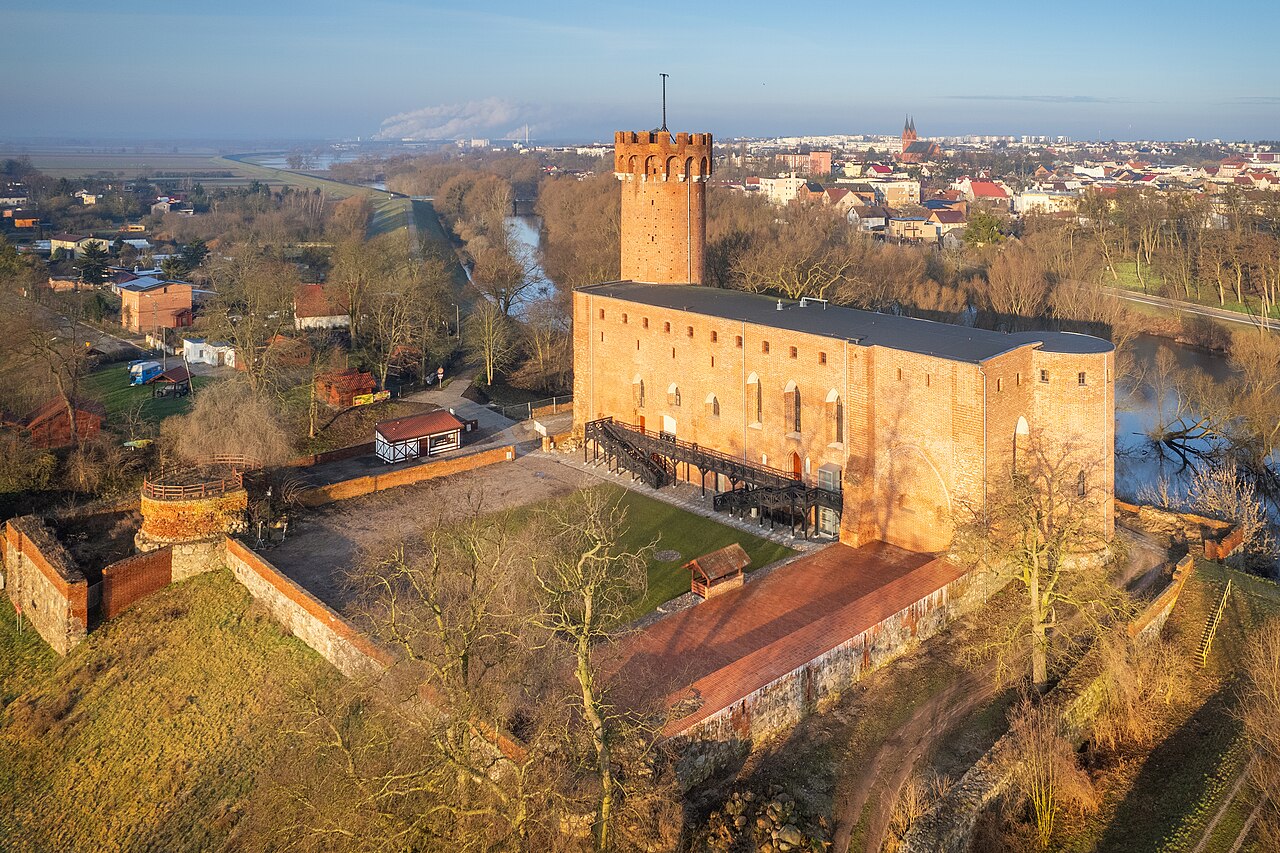
Chełmno Castle stands as a significant medieval monument located in Chełmno, Poland. Established in the early 13th century, this hill castle was originally built by the Teutonic Order after they took control of the region in 1230. The castle’s strategic position on the steep right bank of the Vistula River allowed it to serve as a critical defensive and administrative center during the High Medieval period. Its proximity to the town’s walls and moat integrated it closely with the urban fortifications, highlighting its importance in regional defense and governance.
The earliest mentions of Chełmno date back to 1132, when it was a fortified settlement and the seat of a castellan. In 1222, it became the property of Bishop Christian, who was engaged in missionary work among the pagan Prussian tribes. Following the bishop’s departure in 1230, the Teutonic Knights seized Chełmno and immediately began constructing a stone castle. This castle comprised a convent house and two residential towers flanking it, situated at the town’s northwest corner, separated from the town by walls and a moat.
The architectural composition of Chełmno Castle
Layout and defensive structures
The castle’s design reflected typical Teutonic military architecture of the period, emphasizing robust fortifications and functional residential spaces. The two prominent residential towers, including the notable "Baszta Mestwina" (Mestwin’s Tower), served both defensive and administrative purposes. According to local legend, the tower was used to imprison Mestwin, son of Duke Świętopełk. The castle’s location on a steep riverside escarpment provided natural defense, supplemented by the constructed moat and walls that linked it with the town’s fortifications.
Religious and monastic buildings
In 1265, Master Ludwik von Baldersheim invited the Cistercian nuns from Czyste in Silesia to Chełmno. They established a convent and constructed a single-nave brick church, a fine example of Gothic ecclesiastical architecture. After the dissolution of the Teutonic provincial master’s office, the Cistercian nuns adapted the castle for their monastic needs. In 1349, the order relocated to Königsberg, and the Benedictine nuns took over the monastery, maintaining it until the early 19th century.
Historical significance and transformations
Teutonic Order era
From 1233, Chełmno Castle served as the seat of the Teutonic provincial masters, effectively making it the northern capital of the Order’s territories until the grand master moved to Malbork. The castle was a center of military and administrative command, overseeing the northern lands during a period of intense crusading activity against the pagan Prussians.
Monastic adaptations
Following the decline of the Teutonic administrative presence, the castle’s function shifted to religious and charitable uses. The Cistercian and later Benedictine nuns adapted the fortress into a monastery, preserving much of the medieval structure while modifying interiors for monastic life. In the 19th century, the Sisters of Mercy of St. Vincent expanded the complex by building a hospital in 1878, further transforming the site into a center for social care.
Preservation and current status
Today, Chełmno Castle is well-preserved and forms part of a monastery complex in the western corner of the Old Town. The original convent house has undergone 19th-century renovations, and the castle church built by the Cistercian nuns remains a prominent Gothic landmark. The "Baszta Mestwina" is one of the most interesting surviving elements of the medieval castle, attracting visitors intrigued by its history and legends.
The site also features sections of the Gothic town walls and one of the original gates, the Merseburg Gate, now sealed. The city walls, extending over 2 kilometers, are among the best-preserved medieval fortifications in Poland, contributing to Chełmno’s reputation as a valuable urban heritage site and a popular tourist destination.
Chełmno’s medieval urban landscape
The castle’s integration with the town’s fortifications exemplifies the medieval urban planning characteristic of the Teutonic Order’s settlements. The preservation of the town’s medieval street layout alongside the defensive walls offers a rare glimpse into the spatial organization and defensive strategies of a High Medieval fortified town. Visitors can explore the harmonious blend of military, religious, and civic architecture that defines Chełmno’s historic core.
Visitor experience
Today, the former castle grounds house a social care home operated by the Sisters of Mercy, continuing the site’s long tradition of service and care. While some areas are private, the surrounding town walls and notable architectural features remain accessible to tourists. Chełmno’s rich history, architectural heritage, and well-preserved medieval fabric make it a compelling destination for those interested in castle architecture, medieval history, and monastic culture.
Frequently asked questions (FAQ)
- What is the historical significance of Chełmno Castle?
- Chełmno Castle, built in the 13th century, is an important monument of medieval architecture in Poland. It served as a key stronghold for the Teutonic Knights and played a significant role in the region's history, particularly during the conflicts between Poland and the Teutonic Order.
- When was Chełmno Castle constructed?
- Chełmno Castle was constructed starting in 1236 and completed by the end of the 13th century. It is one of the earliest examples of brick Gothic architecture in Poland, showcasing the architectural styles prevalent during that period.
- Can I visit Chełmno Castle?
- Yes, Chełmno Castle is open to visitors, allowing you to explore its rich history and stunning architecture. Guided tours are available, providing insights into the castle's past and its significance in Polish history.
- What are the opening hours for Chełmno Castle?
- Chełmno Castle is typically open to visitors from Tuesday to Sunday, with hours varying depending on the season. It is recommended to check the official website for the most up-to-date information regarding holiday hours and special events.
- Is it possible to access Chełmno Castle with mobility challenges?
- Yes, Chełmno Castle has made efforts to improve accessibility for visitors with mobility challenges. However, some areas may still present challenges due to the castle's historic structure, so it's advisable to contact the castle administration for specific accessibility information.
- What is the best time to visit Chełmno Castle?
- The best time to visit Chełmno Castle is during the spring and early autumn months when the weather is mild and the surrounding landscape is particularly beautiful. Additionally, visiting during these seasons allows you to avoid the summer tourist crowds.
- What are the ticket prices for Chełmno Castle?
- Ticket prices for Chełmno Castle are generally affordable, with discounts available for students, seniors, and groups. It is advisable to check the official website for the latest pricing information and any special promotions that may be available.
- Are there any nearby attractions to Chełmno Castle?
- Yes, Chełmno is rich in historical sites and attractions, including the charming Old Town and several churches featuring beautiful Gothic architecture. Visitors can also enjoy local parks and the scenic Vistula Boulevards, making it a perfect day trip destination.
Information
Loading map...
Visitor reviews
No reviews yet. Been here? Write the first review and help other travelers!
Write the first reviewVisited this castle? Share your experience
Your review helps other travelers and adds first-hand knowledge to our encyclopedia.