Svaneholm Castle
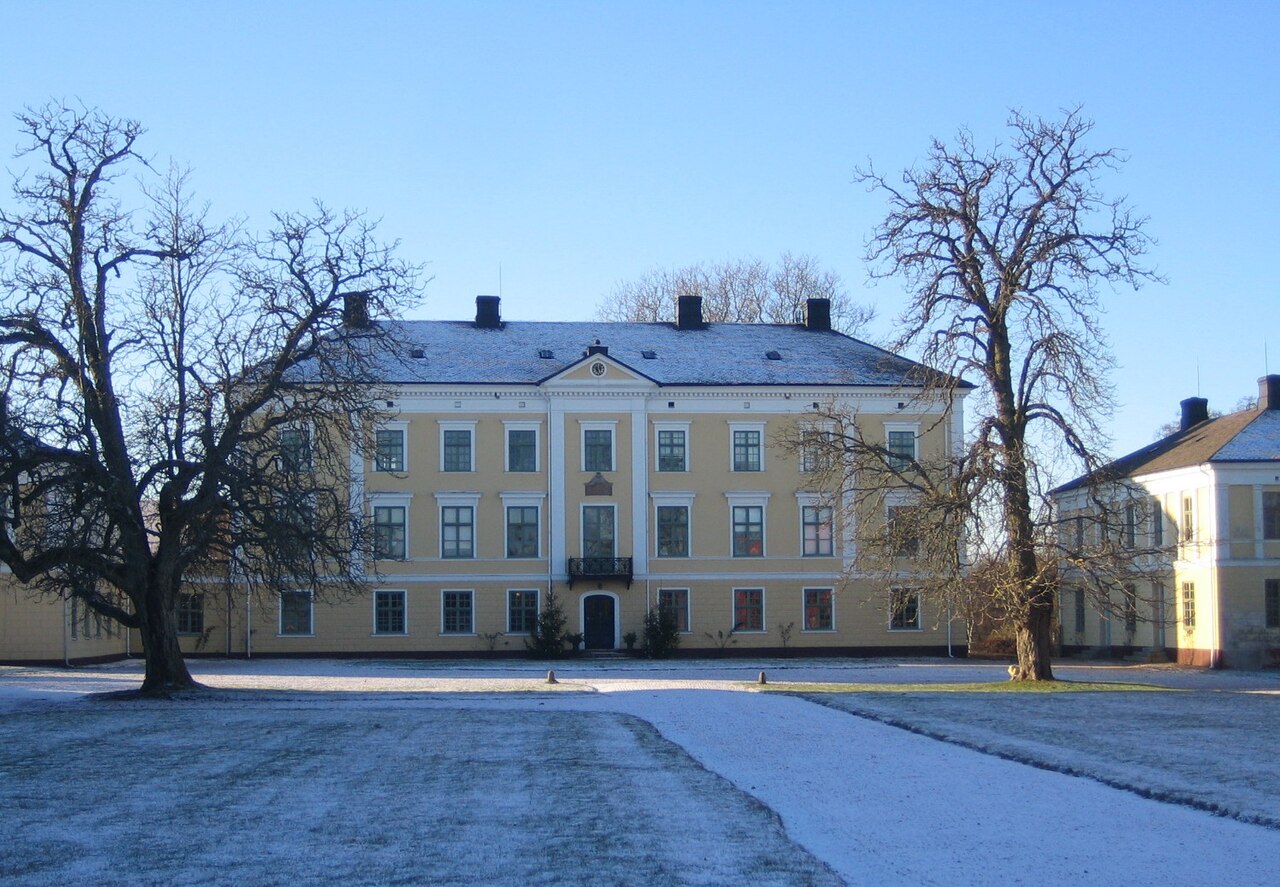
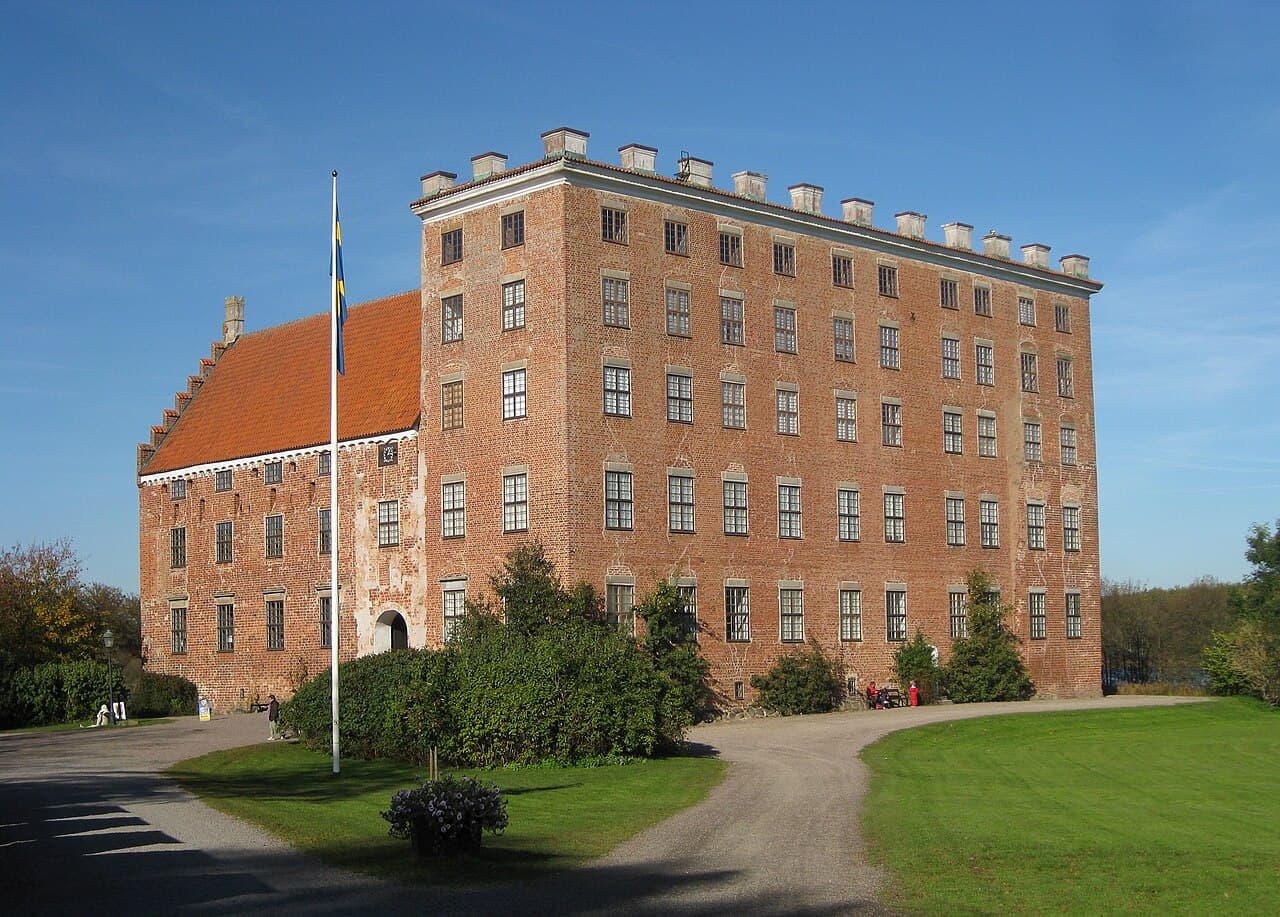
Svaneholm Castle (Swedish: Svaneholms slott) stands as a significant Renaissance hill castle located near the town of Skurup in southern Sweden. Originally constructed in the 1530s by the Danish knight and royal advisor Mourids Jepsen Sparre, the castle exemplifies the architectural and historical evolution of noble residences in the region. Its strategic placement on an islet in Lake Svaneholmssjön reflects the defensive priorities of the period, while its later transformations illustrate shifts in aristocratic lifestyle and land use from fortification to agricultural reform and landscape aesthetics.
The castle’s origins trace back to a fortified medieval residence called Skurdorp (Skudrup), situated adjacent to the local parish church. This earlier fortification, dating from the Middle Ages, was owned in the 15th century by the guardsman Henning Meyenstorp (Meinstrup). Through marriage, the estate passed to the influential Sparre family, who relocated the main residence to the island in the early 16th century, thus founding what is now known as Svaneholm Castle.
Architectural design and features
Structure and layout
Svaneholm Castle is characterized by its four-winged layout arranged around a central courtyard, a common Renaissance design that balanced residential comfort with defensive capability. The primary construction material is brick, typical for Scanian castles of the era. The oldest wing, which includes the gate passage, dates from the initial 1530s construction and retains original defensive elements such as murder-holes embedded in the thick walls.
Each wing originally rose to three floors, although modifications occurred in the late 17th century under the ownership of Axel Gyllenstierna. Between 1694 and 1705, the southeastern wing was heightened by two additional blind stories—non-functional upper floors—crowned with a prominent cornice and a decorative balustrade. The balustrade featured chimney-like wall supports inspired by Italian Baroque architecture, illustrating a blend of Renaissance and Baroque stylistic elements. Plans to extend these modifications to the other wings were halted by Gyllenstierna's death.
Exterior and defensive elements
The castle’s exterior exhibits restrained Renaissance influences, notably through its stepped gables and a slender white frieze encircling the facade near the roofline. Defensive features include the original moat, which was filled in during the late 18th century, and the upper-level attic shooting gallery equipped with loopholes and embrasures for archers and musketeers.
Interior spaces
Inside, the castle contains several historically significant rooms. The knights’ hall on the first floor served as a ceremonial and administrative space. Above it, the borgsal or ladies’ hall on the second floor functioned as a reception and social area. The extensive cellar housed the castle's garrison and storage facilities, reflecting the castle’s military and residential dual purpose.
Historical ownership and significance
Noble families and inheritance
Following its establishment by Mourids Jepsen Sparre, Svaneholm Castle passed through several prominent noble families. In 1611, it came into the possession of the Prebend Gyllenstierna family, who maintained ownership throughout much of the 17th century. Axel Gyllenstierna, a notable figure, owned the castle until his death in 1705. Ownership then transferred to the Coyet family, including Axel Julius and Gustaf Julius Coyet, who managed the estate during the 18th century.
Rutger macklean and agricultural reform
A pivotal figure in Svaneholm’s history is Baron Rutger Maclean, who inherited the castle in 1782. Maclean is renowned as "the reformer of Scanian agriculture" for pioneering innovative farming practices that influenced Swedish agricultural legislation in the early 19th century. Under his direction, the castle’s defensive moat was filled in, and the surrounding grounds were transformed into an English-style landscape garden, marking a shift from military defense to aesthetic and productive land use.
19th and 20th-century transitions
After Maclean’s death in 1816, the castle changed hands multiple times. Notable owners included Kjell Christoffer Bennet and chamberlain Carl Johan Hallenborg. In 1902, Count Carl Augustin Ehrensvärd acquired Svaneholm, retaining it until his death in 1934. Post-Ehrensvärd, the castle and its extensive grounds were purchased by the Svaneholm Castle Cooperative Society, which currently manages the property.
Cultural and modern uses
Museum and public access
Today, Svaneholm Castle operates as a museum under the stewardship of the Wemmenhög Hundred’s Monuments and Home District Society. The museum showcases the castle’s rich history, architectural heritage, and the legacy of the noble families who resided there. Visitors can explore the preserved medieval defensive features, Renaissance architecture, and the elegant interiors that reflect centuries of Scandinavian aristocratic life.
The rökhuset and ancillary buildings
Across the lake and nestled within a beech forest stands the octagonal Rökhuset, constructed circa 1870 and likely designed by architect Carl Georg Brunius. This small building features Romanesque-style windows and a decorative roof frieze. Originally a thatched-roof henhouse, the Rökhuset has served various functions including a coachman’s residence, scout meeting place, café, and event venue, illustrating the adaptive reuse of estate buildings over time.
Events and cultural significance
The castle grounds host summer concerts, outdoor ceremonies, and cultural events, contributing to the local community’s engagement with its heritage. Svaneholm Castle has also appeared in popular media, notably serving as a filming location for the Swedish TV series Wallander, enhancing its cultural footprint beyond historical and architectural interest.
Frequently asked questions (FAQ)
- How do I get to Svaneholm Castle?
- Svaneholm Castle is located in Skurup, Sweden, and can be accessed by car or public transportation. If you are driving, follow the signs to Skurup and look for the castle, which is situated just outside the town center. Public transport options include buses that connect from nearby cities.
- What is the historical significance of Svaneholm Castle?
- Svaneholm Castle dates back to the late 16th century and is a notable example of Renaissance architecture in Sweden. It was originally built as a noble residence and has served various purposes throughout its history, including as a school and a museum. The castle is a symbol of local heritage and offers insights into the region's past.
- When was Svaneholm Castle built?
- Construction of Svaneholm Castle began in 1574 and was completed in 1583. The castle was built by the noble family of Tott and features distinctive architectural elements that reflect the Renaissance style. Over the centuries, it has undergone several renovations while retaining its historical charm.
- Can I visit Svaneholm Castle year-round?
- Yes, Svaneholm Castle is open to visitors year-round, but the opening hours may vary by season. It is advisable to check the castle's official website for current visiting hours, especially during holidays or special events. Guided tours are available, providing an in-depth look at the castle's history.
- Why is Svaneholm Castle a popular tourist destination?
- Svaneholm Castle is popular due to its rich history, stunning architecture, and beautiful surrounding landscapes. Visitors appreciate the chance to explore the castle grounds, enjoy guided tours, and participate in various cultural events held throughout the year. Its picturesque setting makes it a favorite for photography and leisurely walks.
- Is it possible to host events at Svaneholm Castle?
- Yes, Svaneholm Castle offers facilities for hosting events such as weddings, conferences, and private parties. The castle's unique ambiance and scenic surroundings create a perfect backdrop for memorable occasions. Interested parties should contact the castle administration for more information on availability and services.
- What are the ticket prices for visiting Svaneholm Castle?
- Ticket prices for Svaneholm Castle may vary based on age and the type of tour selected. Generally, adult tickets are priced reasonably, while discounts may be available for students, seniors, and children. It is advisable to check the official website for the most up-to-date pricing information.
- What are the best times to visit Svaneholm Castle?
- The best times to visit Svaneholm Castle are during the spring and summer months when the weather is pleasant, and the gardens are in full bloom. Special events and exhibitions are often held during these seasons, enhancing the visitor experience. Autumn also offers beautiful foliage, making it a picturesque time to explore the castle.
- Are there nearby attractions to visit after Svaneholm Castle?
- Yes, there are several nearby attractions worth visiting after your trip to Svaneholm Castle. The surrounding area features beautiful parks, hiking trails, and charming villages. Additionally, the coastal town of Skurup offers lovely beaches and local shops, perfect for extending your day of exploration.
Photo gallery

Information
Website
Visit websiteSources & official resources
Verify the information above using these authoritative references.
Loading map...
Visitor reviews
No reviews yet. Been here? Write the first review and help other travelers!
Write the first reviewVisited this castle? Share your experience
Your review helps other travelers and adds first-hand knowledge to our encyclopedia.