Börringekloster Castle
Börringekloster Castle, located in Börringe, Sweden, stands on the historic site of a medieval Benedictine priory, reflecting centuries of religious and noble heritage. Originally founded around 1150 under Eskil, Archbishop of Lund, the priory was initially a Benedictine monastery before becoming a nunnery by 1231. Known also as St. Mary's Priory, the religious complex was situated on the island of Byrdingø in Börringe Lake, on land once reserved by Valdemar II of Denmark for hunting. The priory church was dedicated to the Virgin Mary, a common dedication in medieval monastic institutions emphasizing Marian devotion.
The medieval priory and its architectural evolution
The early priory began as a small establishment, but it expanded significantly due to donations and income from rented properties. By the 14th century, the priory underwent substantial rebuilding in the Gothic style, characterized by the use of brick, which was typical in northern Europe. The complex formed a four-sided enclosure with three ranges attached to the church, designed to separate the nuns from the outside world, reflecting the strict enclosure practices of female monastic communities.
The priory was governed internally by a prioress, who oversaw religious and communal life, while a prior—often a local nobleman who paid for the privilege—managed external affairs. This dual leadership structure was common in medieval nunneries, balancing spiritual and worldly responsibilities.
Reformation and secularization
The religious landscape changed dramatically with the Protestant Reformation in Denmark. In 1536, under Christian III, Denmark officially adopted Lutheranism, leading to the dissolution of Catholic religious houses. All monastic properties, including Börringe Priory, reverted to the crown. The priory was secularized and transformed into an estate with the stipulation that the former nuns be cared for, effectively serving as a residence for noblewomen.
The priory church was repurposed as the parish church for Börringe village. However, in 1582, under the ownership of Lady Görvel Sparre, the conventual church was demolished. Its materials were reused to build a new parish church closer to the town, completed by 1587. Notably, the grave of Lady Else Brade from the priory church was relocated beneath the floor of the new church, preserving a tangible link to the site's monastic past.
Transition to a manor and noble estate
Following the demolition of the priory church, the remaining conventual buildings were converted into a large manor house. Ownership passed through several prominent families, including the nobleman Knud Gedde and Lady Görvel Sparre. In the early 16th century, the estate was owned by Søren Norby, a notable naval commander who, alongside Jens Holgersen Ulfstand of Glimmingehus Castle, achieved victories against the Hanseatic League.
After the Treaty of Roskilde in 1658, when Scania became a Swedish province, the estate was granted by Charles X of Sweden to his illegitimate son, Gustaf Carlsson. It was later exchanged among Swedish nobility, including Count Gustaf Otto Stenbock and Otto Wilhelm von Königsmarck, before reverting to the crown again in 1686.
18th-century reconstruction and later developments
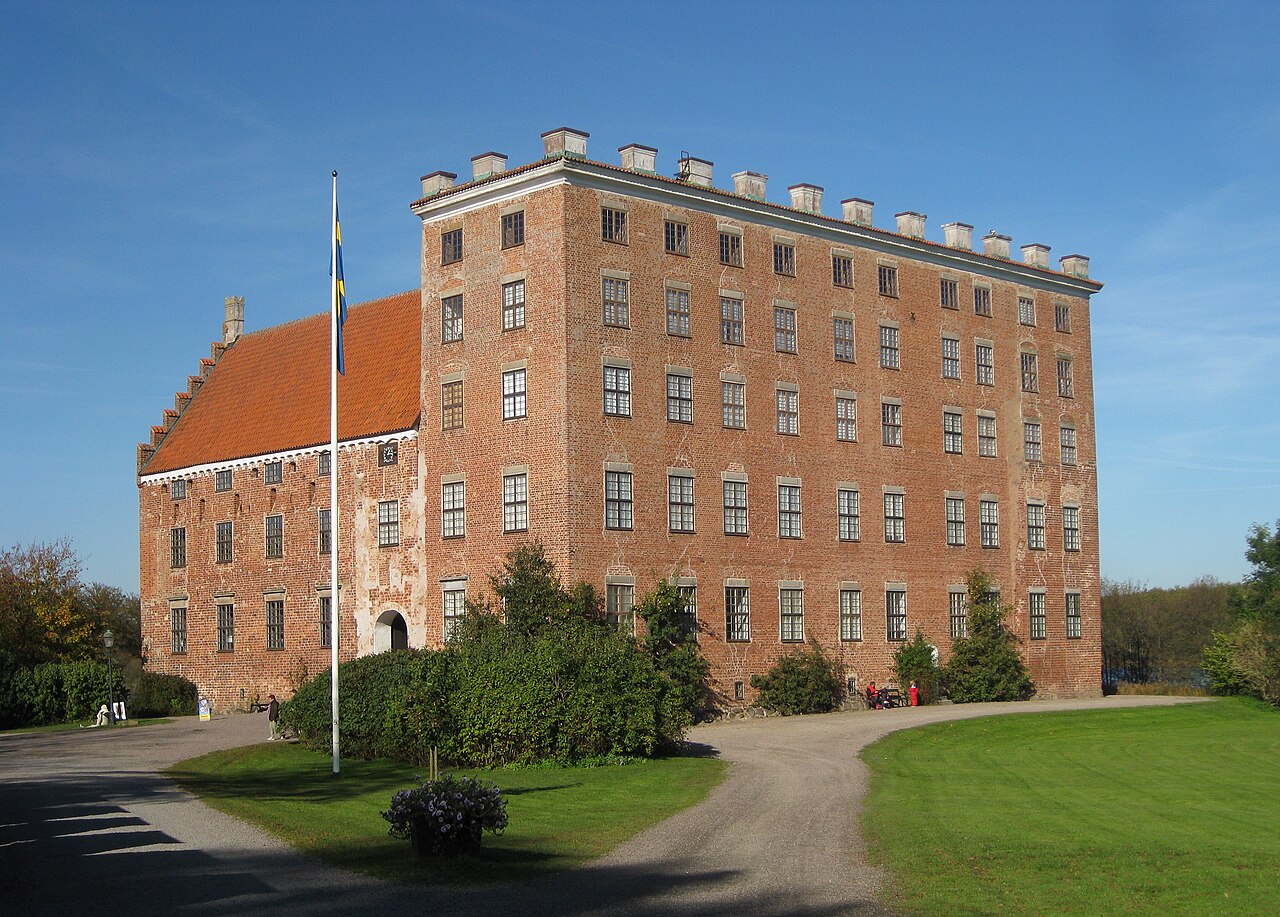
The parishes of Börringe and Lemmeströ were merged in 1741, leading to the demolition of their old churches and the construction of a new joint parish church, Gustav Parish. In 1745, the estate was acquired by the Beck-Friis family. The manor house and remaining structures from the former convent were demolished in 1763 to make way for the present castle, built in the post-Renaissance architectural style.
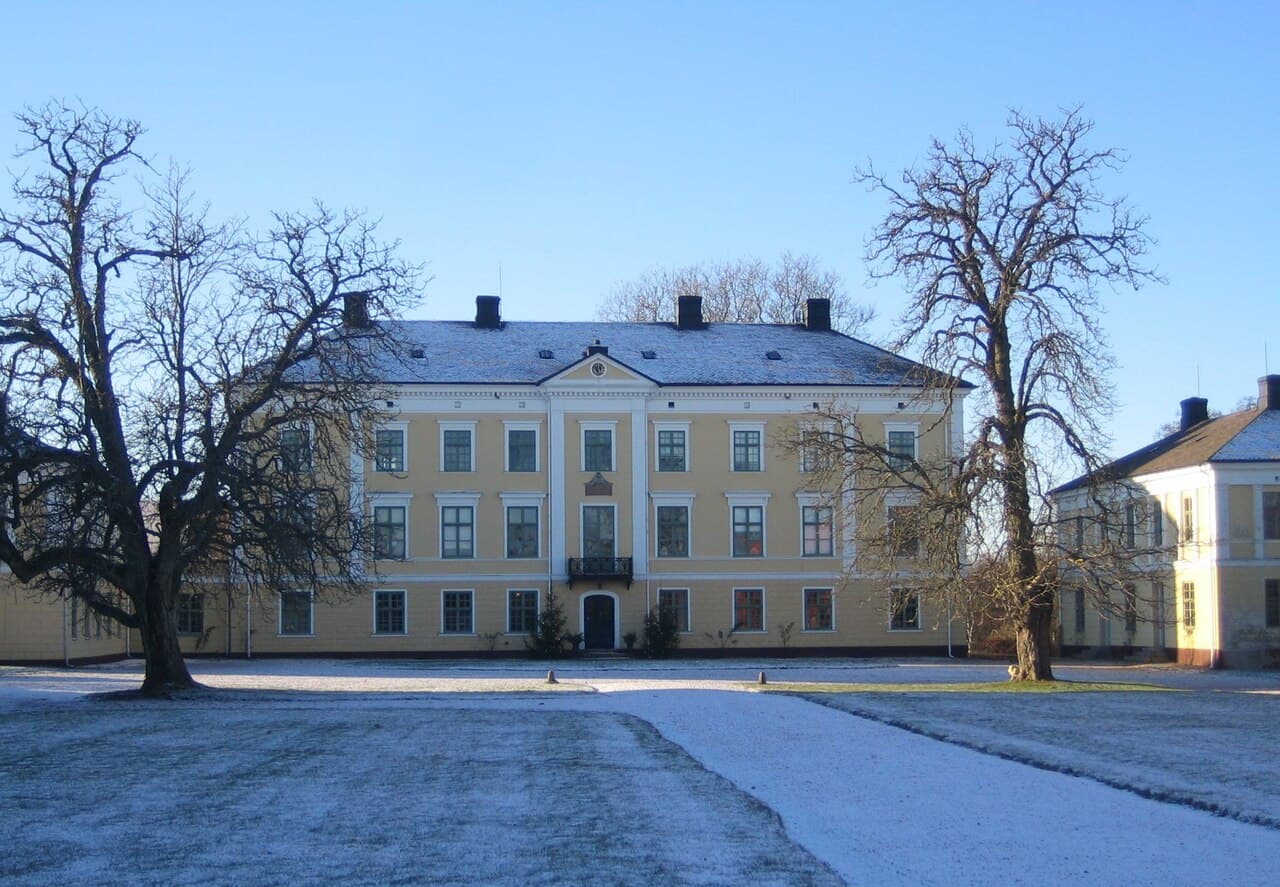
The castle underwent significant expansion and renovation in 1873, resulting in its current appearance. The estate was elevated to a joint county (earldom) with Fiholm Castle in Södermanland in 1791, and its owners were granted the Swedish noble title of Count. Although no significant ruins of the original priory remain, a few fragments from the monastic church survive in the Börringe burial ground, preserving the site's medieval legacy.
Architectural features and current status
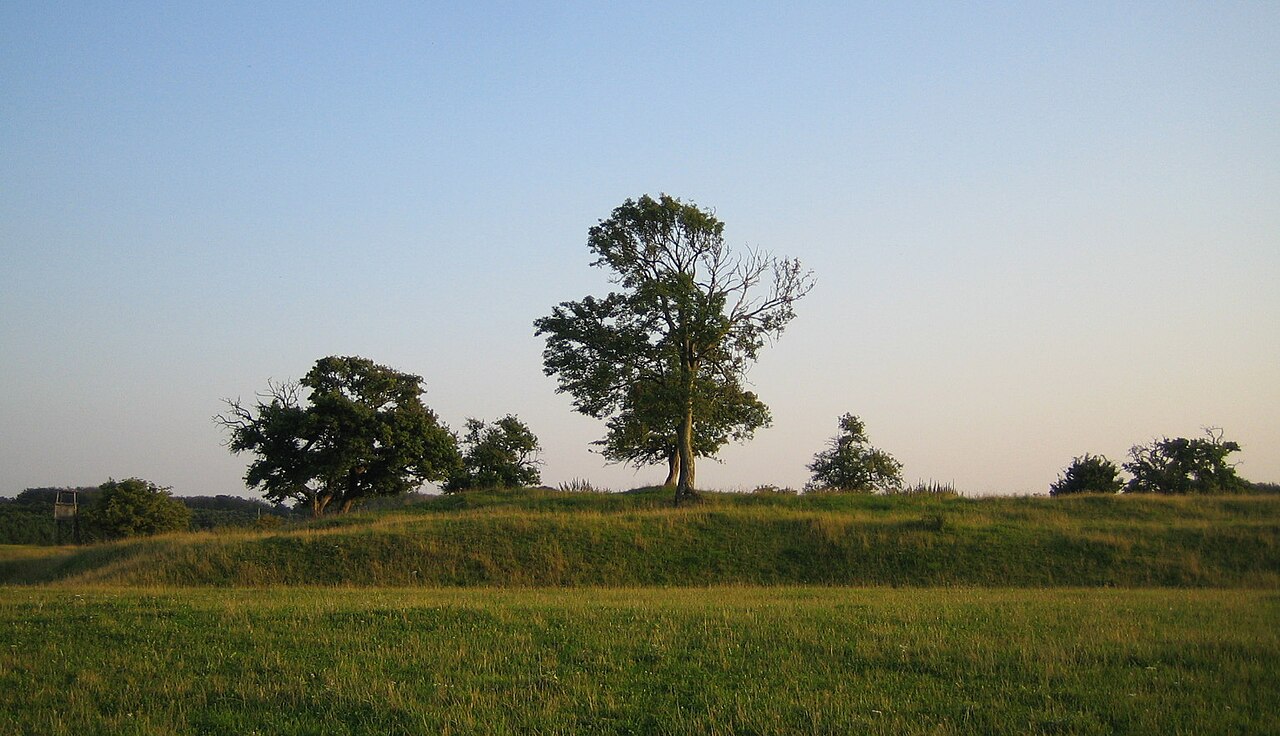
Börringekloster Castle is classified as a hill castle, reflecting its elevated position in the landscape. The current structure embodies the post-Renaissance style, characterized by symmetry and classical influences, typical of Swedish noble estates of the 18th century. The castle's well-preserved condition allows visitors to appreciate its historical layers, from medieval monastic origins to noble residence.
The castle grounds and surrounding area offer insight into the transformation of religious properties into secular estates following the Reformation. The site's history illustrates the complex interplay between religion, nobility, and politics in Scandinavian history.
Visiting and cultural significance
Today, Börringekloster Castle remains a significant cultural landmark in Scania, Sweden. Its rich history spanning from a Benedictine priory to a noble estate reflects broader historical shifts in the region. While the castle itself is private property and access may be limited, the nearby parish church and burial ground provide tangible connections to the site's medieval past.
Frequently asked questions (FAQ)
- How do I get to Börringekloster Castle?
- Börringekloster Castle is located in Börringe, Sweden, easily accessible by car or public transport. If you are driving, it is approximately a 20-minute drive from Malmö. Public transportation options include local buses that connect to nearby towns.
- What is the historical significance of Börringekloster Castle?
- Börringekloster Castle dates back to the early 14th century and has a rich history tied to Swedish nobility and architecture. Originally built as a monastery, it has undergone various transformations over the centuries, reflecting the changing styles and purposes. The castle is an important cultural landmark that showcases Sweden's medieval heritage.
- When was Börringekloster Castle built?
- The construction of Börringekloster Castle began in the early 1300s, making it one of the oldest castles in the region. Since its establishment, it has served various functions, including that of a monastery and a noble residence. Its long history makes it a fascinating site for those interested in Swedish history.
- Can I visit Börringekloster Castle?
- Yes, Börringekloster Castle is open to visitors, allowing you to explore its beautiful grounds and historic architecture. Guided tours are available to provide insights into the castle's history and significance. Be sure to check the schedule as tours may vary seasonally.
- Why is Börringekloster Castle considered an architectural gem?
- Börringekloster Castle showcases a unique blend of medieval and Renaissance architectural styles, which is rare in Sweden. Its well-preserved structures, including impressive stonework and ornate details, reflect the craftsmanship of its time. Visitors can appreciate both its aesthetic beauty and historical importance.
- Is it possible to hold events at Börringekloster Castle?
- Yes, Börringekloster Castle allows private events such as weddings and corporate gatherings. The picturesque setting and rich history provide a stunning backdrop for special occasions. It is advisable to contact the castle management for availability and specific arrangements.
- What are the opening hours for Börringekloster Castle?
- Börringekloster Castle typically opens to visitors from May to September, with varying hours throughout the week. During the peak summer months, the castle may offer extended hours for tours. It is recommended to check their official website for the most current opening times before your visit.
- What are the ticket prices for visiting Börringekloster Castle?
- Ticket prices for Börringekloster Castle vary depending on the season and the type of tour selected. Generally, adult tickets are reasonably priced, with discounted rates for children and seniors. Group rates may also be available, so it's worth inquiring ahead of your visit.
- What are some nearby attractions to Börringekloster Castle?
- Nearby attractions include the scenic Börringe Church and beautiful nature trails perfect for hiking. The city of Malmö, with its rich culture and vibrant city life, is also a short drive away. Visitors can easily plan a full day of exploration around the castle and its surroundings.
Photo gallery

Information
Loading map...
Visitor reviews
No reviews yet. Been here? Write the first review and help other travelers!
Write the first reviewVisited this castle? Share your experience
Your review helps other travelers and adds first-hand knowledge to our encyclopedia.