Näsbyholm Castle

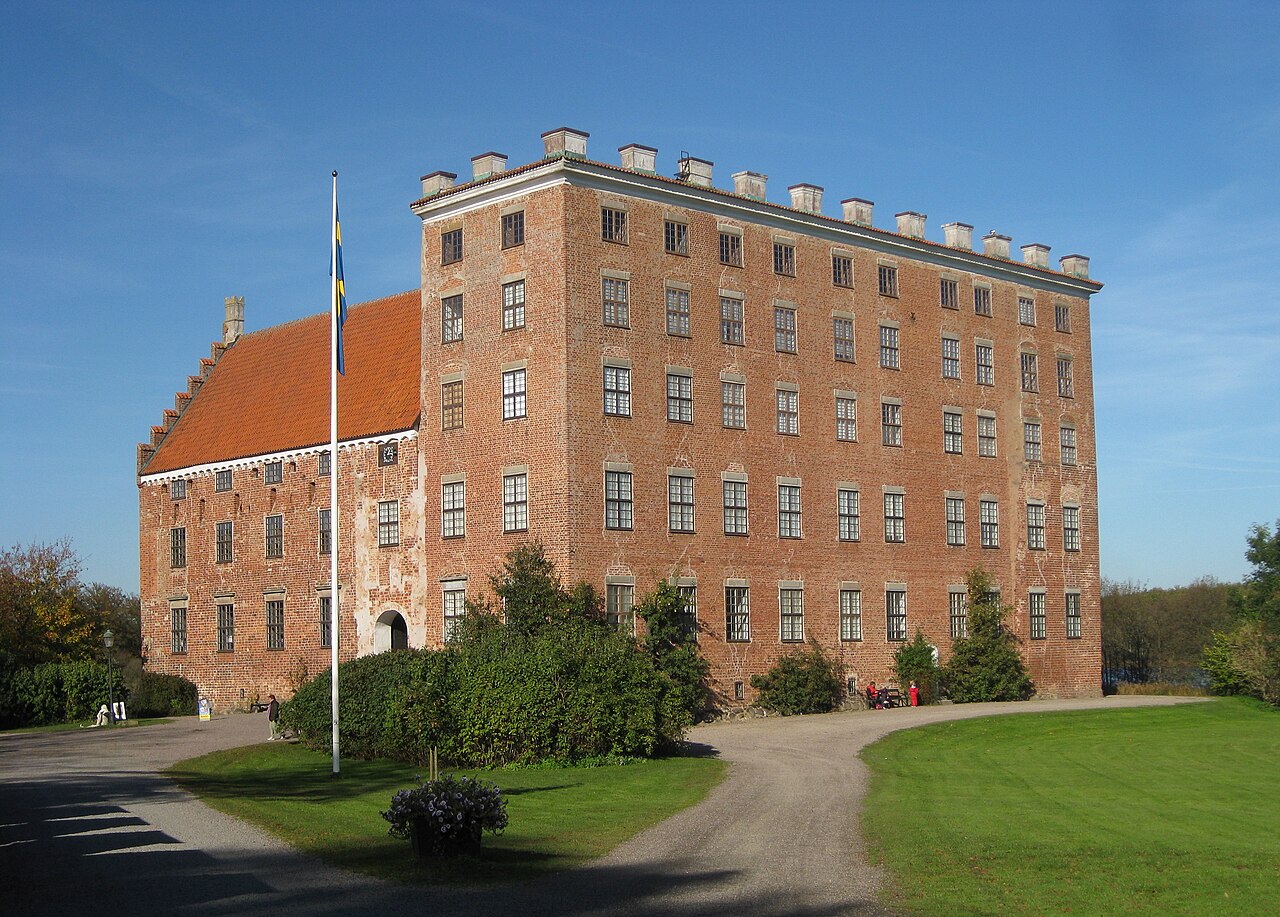
Näsbyholm Castle in Skurup, Sweden
Skurup, Sweden
Contemporary (20th–21st c.)
Well Preserved

Näsbyholm Castle in Skurup, Sweden, traces its origins back to the 14th century when it was first recognized as a fortified manor house. This early medieval establishment served as a defensive residence typical of the period, combining both habitation and protection. The original castle stood for several centuries before its demolition in 1865.

Historical background and evolution

The site of Näsbyholm Castle has a long-standing history rooted in medieval Swedish nobility. Originally constructed as a fortified manor, it reflected the architectural and social needs of the late medieval period in Scandinavia, where manorial estates often doubled as defensive strongholds. Over time, the castle underwent various modifications and ownership changes, adapting to the shifting political and military landscape of the region.

Despite its medieval origins, the original structure did not survive into the modern era, having been demolished in the mid-19th century. The demolition in 1865 marked the end of the old castle's physical presence but not its historical significance.

Reconstruction and architectural features of the 1957 building

The current main building, or corps de logis, was erected in 1957 on the original castle's land lot. This reconstruction does not replicate the medieval castle but rather represents a contemporary architectural interpretation suited to mid-20th century tastes and functions. The building serves as a residence and estate center, maintaining the site's historical legacy while adapting to modern needs.

The 1957 structure is characterized by a straightforward, functional design typical of its era, lacking the defensive features of the original medieval castle such as battlements, moats, or towers. It instead focuses on residential comfort and estate management, reflecting the transition from feudal fortification to modern habitation.

Location and landscape

Näsbyholm Castle is situated in the municipality of Skurup, within the region of Skåne County, southern Sweden. The estate is surrounded by agricultural land and natural scenery typical of the Swedish countryside, contributing to its peaceful and rural character. The location was originally chosen for strategic and economic reasons, typical of medieval manorial sites, offering control over local resources and trade routes.

Preservation and current status

Although the original medieval castle no longer exists, the site remains of cultural and historical interest. The current building is classified as a contemporary construction, and the estate is maintained as a private residence. There are no public visiting hours or ticketing information available, indicating limited or private access.

The historical significance of Näsbyholm Castle lies in its long-standing presence in Swedish history as a fortified manor and its evolution into a modern estate. It exemplifies the transformation of medieval fortifications into contemporary country houses, reflecting broader trends in Swedish architectural and social history.

Frequently asked questions (FAQ)

How do I get to Näsbyholm Castle?
Näsbyholm Castle is located in Skurup, Sweden, and can be reached by car or public transportation. If driving, there is parking available on-site. For public transport, check local bus schedules that connect to Skurup.
What is the historical significance of Näsbyholm Castle?
Näsbyholm Castle dates back to the 15th century and has played a crucial role in Swedish history, serving as a noble residence and later as a military headquarters. Its rich history includes various owners and architectural renovations that reflect the changing styles of different eras. Today, it stands as a testament to Sweden's feudal past.
When was Näsbyholm Castle built?
The original structure of Näsbyholm Castle was constructed in the late 1400s. Over the centuries, it has undergone several renovations and expansions, particularly during the 18th and 19th centuries, which have shaped its current appearance. This blend of architectural styles makes it a fascinating site for history enthusiasts.
Can I visit Näsbyholm Castle?
Yes, Näsbyholm Castle is open to visitors, offering guided tours that showcase its history and architecture. Make sure to check the castle's official website for tour availability and any special events. Group bookings can be arranged for a more personalized experience.
Why is Näsbyholm Castle considered architecturally significant?
Näsbyholm Castle features a unique blend of Renaissance and Baroque architectural styles, showcasing the evolution of design in Sweden. Its picturesque setting and well-preserved features, such as the moat and ornate interiors, make it a prime example of early Swedish castle architecture. This architectural significance attracts both tourists and historians alike.
Is it possible to host events at Näsbyholm Castle?
Yes, Näsbyholm Castle offers facilities for hosting events, including weddings, corporate meetings, and private gatherings. The scenic surroundings and historic ambiance provide a unique setting for memorable occasions. For more details on event hosting, it's best to contact the castle administration directly.
What are the opening hours for Näsbyholm Castle?
Näsbyholm Castle typically opens to visitors from April to October, with specific hours varying by season. During peak tourist months, the castle often has extended hours to accommodate more visitors. It is advisable to check the official website for the most current opening times before planning your visit.
What are the ticket prices for visiting Näsbyholm Castle?
Ticket prices for Näsbyholm Castle vary depending on age and whether you book a guided tour. Discounts may be available for students, seniors, and groups. For the latest pricing information, please refer to the castle's official website or contact their visitor center.
What is the best time to visit Näsbyholm Castle?
The best time to visit Näsbyholm Castle is during the summer months when the weather is pleasant and all tourist services are fully operational. Additionally, visiting during special events or guided tours can provide a richer experience. Spring and early autumn are also lovely times to enjoy the castle's gardens and surroundings.
Are there any nearby attractions to visit along with Näsbyholm Castle?
Yes, there are several nearby attractions, including beautiful parks, walking trails, and other historical sites in Skurup. The surrounding countryside offers scenic views and opportunities for outdoor activities. Additionally, the coastal town of Ystad, known for its charming streets and beaches, is just a short drive away.

Information

Lowland Castle

Loading map...

Visitor reviews

No reviews yet. Been here? Write the first review and help other travelers!

Write the first review

Visited this castle? Share your experience

Your review helps other travelers and adds first-hand knowledge to our encyclopedia.
Write a review

(5/5)

0/2000 characters

Your review will be visible after admin approval

Nearby castles

3.8 km
Svaneholm Castle — Sweden castle

Svaneholm Castle

Skurup, Sweden

Svaneholm Castle (Swedish: Svaneholms slott) stands as a significant Renaissance hill castle located near the town of Skurup in southern Sweden. Originally constructed in the 1530s by the Danish knight and royal advisor Mourids Jepsen Sparre, the castle exemplifies the architectural and historical evolution of noble residences in the region. Its strategic placement on an islet in Lake Svaneholmssjön reflects the defensive priorities of the period, while its later transformations illustrate shifts in aristocratic lifestyle and land use from fortification to agricultural reform and landscape aesthetics. The castle’s origins trace back to a fortified medieval residence called Skurdorp (Skudrup), situated adjacent to the local parish church. This earlier fortification, dating from the Middle Ages, was owned in the 15th century by the guardsman Henning Meyenstorp (Meinstrup). Through marriage, the estate passed to the influential Sparre family, who relocated the main residence to the island in the early 16th century, thus founding what is now known as Svaneholm Castle. Architectural design and features Structure and layout Svaneholm Castle is characterized by its four-winged layout arranged around a central courtyard, a common Renaissance design that balanced residential comfort with defensive capability. The primary construction material is brick, typical for Scanian castles of the era. The oldest wing, which includes the gate passage, dates from the initial 1530s construction and retains original defensive elements such as murder-holes embedded in the thick walls. Each wing originally rose to three floors, although modifications occurred in the late 17th century under the ownership of Axel Gyllenstierna. Between 1694 and 1705, the southeastern wing was heightened by two additional blind stories—non-functional upper floors—crowned with a prominent cornice and a decorative balustrade. The balustrade featured chimney-like wall supports inspired by Italian Baroque architecture, illustrating a blend of Renaissance and Baroque stylistic elements. Plans to extend these modifications to the other wings were halted by Gyllenstierna's death. Exterior and defensive elements The castle’s exterior exhibits restrained Renaissance influences, notably through its stepped gables and a slender white frieze encircling the facade near the roofline. Defensive features include the original moat, which was filled in during the late 18th century, and the upper-level attic shooting gallery equipped with loopholes and embrasures for archers and musketeers. Interior spaces Inside, the castle contains several historically significant rooms. The knights’ hall on the first floor served as a ceremonial and administrative space. Above it, the borgsal or ladies’ hall on the second floor functioned as a reception and social area. The extensive cellar housed the castle's garrison and storage facilities, reflecting the castle’s military and residential dual purpose. Historical ownership and significance Noble families and inheritance Following its establishment by Mourids Jepsen Sparre, Svaneholm Castle passed through several prominent noble families. In 1611, it came into the possession of the Prebend Gyllenstierna family, who maintained ownership throughout much of the 17th century. Axel Gyllenstierna, a notable figure, owned the castle until his death in 1705. Ownership then transferred to the Coyet family, including Axel Julius and Gustaf Julius Coyet, who managed the estate during the 18th century. Rutger macklean and agricultural reform A pivotal figure in Svaneholm’s history is Baron Rutger Maclean, who inherited the castle in 1782. Maclean is renowned as "the reformer of Scanian agriculture" for pioneering innovative farming practices that influenced Swedish agricultural legislation in the early 19th century. Under his direction, the castle’s defensive moat was filled in, and the surrounding grounds were transformed into an English-style landscape garden, marking a shift from military defense to aesthetic and productive land use. 19th and 20th-century transitions After Maclean’s death in 1816, the castle changed hands multiple times. Notable owners included Kjell Christoffer Bennet and chamberlain Carl Johan Hallenborg. In 1902, Count Carl Augustin Ehrensvärd acquired Svaneholm, retaining it until his death in 1934. Post-Ehrensvärd, the castle and its extensive grounds were purchased by the Svaneholm Castle Cooperative Society, which currently manages the property. Cultural and modern uses Museum and public access Today, Svaneholm Castle operates as a museum under the stewardship of the Wemmenhög Hundred’s Monuments and Home District Society. The museum showcases the castle’s rich history, architectural heritage, and the legacy of the noble families who resided there. Visitors can explore the preserved medieval defensive features, Renaissance architecture, and the elegant interiors that reflect centuries of Scandinavian aristocratic life. The rökhuset and ancillary buildings Across the lake and nestled within a beech forest stands the octagonal Rökhuset, constructed circa 1870 and likely designed by architect Carl Georg Brunius. This small building features Romanesque-style windows and a decorative roof frieze. Originally a thatched-roof henhouse, the Rökhuset has served various functions including a coachman’s residence, scout meeting place, café, and event venue, illustrating the adaptive reuse of estate buildings over time. Events and cultural significance The castle grounds host summer concerts, outdoor ceremonies, and cultural events, contributing to the local community’s engagement with its heritage. Svaneholm Castle has also appeared in popular media, notably serving as a filming location for the Swedish TV series Wallander, enhancing its cultural footprint beyond historical and architectural interest.

Renaissance (15th–17th c.)
Details
6.6 km

Jordberga Castle

Klagstorp, Sweden

Jordberga Castle is a historic estate located in Klagstorp, Sweden, with origins dating back to the mid-14th century. The estate was first documented in 1355, marking it as a site with centuries of Swedish noble heritage. The original castle structure, however, did not survive intact through the centuries; it was destroyed by fire in 1644 and subsequently rebuilt, reflecting the evolving architectural tastes and needs of its owners. Architectural evolution and the 20th-century reconstruction The current appearance of Jordberga Castle largely stems from a significant reconstruction undertaken between 1905 and 1908. This rebuilding was guided by the Danish architect Heneri Glaesel, who designed the castle's exterior in a distinctive Baroque style. The choice of Baroque architecture in the early 20th century reflects a revivalist trend, blending grandeur and classical elements to convey prestige and historical continuity. The castle's design features hallmark Baroque elements such as symmetrical façades, elaborate ornamentation, and grandiose proportions. This style contrasts with the original medieval structures that once stood on the site, indicating a shift from defensive architecture to a more stately, residential focus. Landscape and gardens The grounds of Jordberga Castle include an English-style garden that dates from the mid-19th century. This garden style emphasizes naturalistic landscaping, with rolling lawns, informal plantings, and carefully placed trees and shrubs to create a picturesque setting. The garden complements the castle's architectural elegance, providing a serene and scenic environment that enhances the estate's overall aesthetic. Historical significance and ownership Throughout its history, Jordberga Castle has been associated with Swedish nobility and political figures. Today, it remains a private estate owned by Otto von Arnold, a member of the Swedish Riksdag. This connection to contemporary political life underscores the castle's ongoing role as a site of cultural and historical importance within Sweden. Architectural and cultural context The castle exemplifies the transition from medieval fortifications to modern aristocratic residences. Its reconstruction in the early 1900s reflects broader European trends where historic styles were revived and adapted for new uses. Jordberga Castle's Baroque revival style, combined with its English garden, situates it within a tradition of stately homes designed to express wealth, status, and refined taste. Architectural details The castle's façade is characterized by balanced proportions and decorative elements such as pilasters, cornices, and window pediments. These features contribute to a sense of rhythm and elegance typical of Baroque architecture. Inside, although specific details are less documented, it is likely that the interiors were designed to match the exterior's grandeur, featuring spacious halls and ornate finishes. Preservation and condition Jordberga Castle is well preserved and remains in use as a private residence. Its condition allows visitors and scholars to appreciate the architectural qualities of early 20th-century Baroque revival in a Swedish context. The estate's maintenance reflects ongoing efforts to conserve Sweden's architectural heritage. Visiting and cultural access While Jordberga Castle is privately owned and not generally open to the public, its historical and architectural significance makes it a point of interest for those studying Swedish noble estates and Baroque revival architecture. The surrounding landscape and gardens contribute to the cultural landscape of the region.

Modern (19th–20th c.)
Details
8.5 km

Dybäck Castle

Skivarp, Sweden

Dybäck Castle is a historic estate located near Skivarp in southern Sweden. Its origins trace back to the 14th century, with the estate first mentioned in records during the 1300s. Over the centuries, Dybäck has been associated with several prominent Danish noble families, including the Munck, Bille, and Marsvin lineages, reflecting the region's complex history under Danish rule before becoming part of Sweden. Historical ownership and development The estate underwent significant changes in ownership and structure throughout its history. In 1684, the property was divided between two members of the Bille family, Jorgen and Christian Bille. The Bille family maintained ownership until 1857, marking nearly two centuries of stewardship. This long tenure contributed to the estate's preservation and development during the late medieval and early modern periods. Architectural evolution The oldest structures The oldest surviving structure on the estate is a barracks building dating from the late 15th century. This building exemplifies the functional military architecture of the period, likely serving as accommodation for guards or soldiers tasked with protecting the estate. Main building and expansions The main building of Dybäck Castle was originally constructed in the 16th century, reflecting architectural styles prevalent during the Renaissance period in Scandinavia. Approximately a century later, in the 17th century, the main building was enlarged, possibly to accommodate the growing needs of the noble family or to update the residence with contemporary design elements. Architectural style and features Dybäck Castle exhibits characteristics typical of late medieval and early Renaissance architecture in southern Sweden. The estate's buildings are constructed primarily of stone and brick, materials commonly used in the region to provide durability and defense. Architectural details likely include steeply pitched roofs, small mullioned windows, and fortified walls reflecting the estate's origins in a period marked by regional conflicts and the need for protection. Current status and access Today, Dybäck Castle remains privately owned and is not open to the public. Its preservation status is that of a well-preserved historic estate, retaining significant elements from its original construction and subsequent expansions. While visitors cannot access the interior, the castle's exterior and surrounding landscape contribute to the cultural heritage of the Skåne region. The cultural and historical significance of dybäck castle Dybäck Castle stands as a testament to the historical ties between Denmark and Sweden, particularly in the Skåne region, which was under Danish control until the mid-17th century. The castle's noble ownership history and architectural evolution provide insight into the lifestyle and defensive needs of the Scandinavian nobility during the late medieval and early modern periods. Its enduring presence enriches the understanding of regional history, showcasing how estates like Dybäck served as centers of power, residence, and military readiness. The castle's architectural features reflect the transition from medieval fortifications to more comfortable Renaissance residences, marking important shifts in design and function.

Late Medieval (14th–15th c.)
Details

