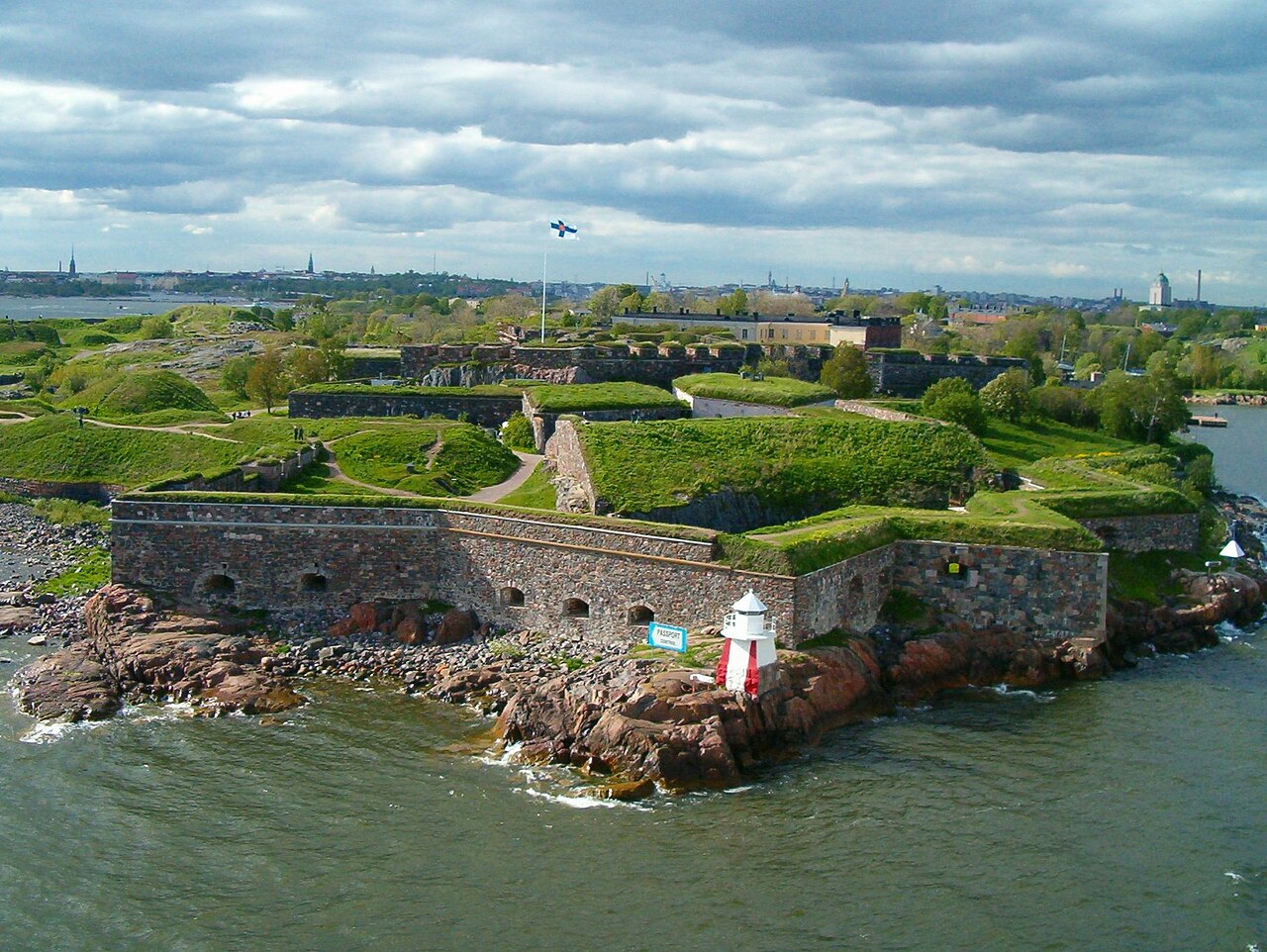
Suomenlinna Fortress
Suomenlinna Fortress, also known by its Swedish name Sveaborg, is a remarkable bastioned fortress located on a group of six interconnected islands off the coast of Helsinki, Finland. This sea fortress holds a unique place in history, having served as a military stronghold for three different sovereign states: the Kingdom of Sweden, the Russian Empire, and the Republic of Finland. Its strategic position guarding the maritime approaches to Helsinki made it a vital defense point in the Baltic Sea region.
Construction of Suomenlinna began in 1748 under Swedish rule, as part of Sweden's efforts to fortify its eastern borders following conflicts with Russia. The fortress was built over approximately 40 years, utilizing the natural rocky islands of the Susiluodot archipelago. The design reflects the bastioned fortress style, characterized by angular bastions and ramparts optimized for artillery defense, which was state-of-the-art military architecture in the 18th century.
Architectural design and fortifications
The fortress complex spans six islands: Susisaari, Kustaanmiekka (also known as Susiluoto), Iso Mustasaari, Pikku Mustasaari, Länsi-Mustasaari, and Särkkä. These islands are connected by bridges and causeways, creating a cohesive defensive network. The original strait between Susisaari and Kustaanmiekka was bridged to enhance connectivity and defense.
Suomenlinna's fortifications include massive bastions, curtain walls, moats, and ramparts designed to withstand cannon fire and resist siege warfare. The fortress layout is adapted to the rocky terrain, with fortifications taking advantage of natural elevations and sea access points. Key defensive waterways such as the Kustaanmiekka Strait and Särkänsalmi channel provide protected naval passage to Helsinki harbor, making the fortress a crucial maritime defense installation.
Military and civil structures
Within the fortress, there are numerous military buildings including barracks, armories, powder magazines, and gun batteries. Civilian structures have also been integrated over time, as Suomenlinna evolved into a residential district. Today, about 800 residents live within the fortress district, maintaining a vibrant community amidst the historic setting.
Historical significance and military history
Suomenlinna's history is deeply intertwined with the geopolitical struggles of Northern Europe. Initially built by Sweden to protect against Russian expansion, the fortress was captured by Russian forces during the Russo-Swedish War of 1808-1809. Following the war, Finland became an autonomous Grand Duchy under Russian control, and Suomenlinna (then known as Viapori) served as a major Russian naval base.
Throughout the 19th century, the Russians reinforced and expanded the fortress, adapting it to new military technologies and strategic needs. The fortress played a defensive role during various conflicts, including the Crimean War and World War I. After Finland declared independence in 1917, Suomenlinna became part of the Finnish defense system.
Modern use and preservation
Today, Suomenlinna is a UNESCO World Heritage Site, recognized in 1991 for its outstanding military architecture and cultural significance. It is managed by the Suomenlinna Management Board, a state agency under the Ministry of Education and Culture, which oversees its preservation and public access.
The fortress is a popular tourist destination, attracting around one million visitors annually before the pandemic. It offers a unique blend of historical exploration, cultural events, and natural beauty. Several cafes, restaurants, and museums operate within the fortress, enhancing the visitor experience.
The islands also host the Finnish Naval Academy on Pikku Mustasaari, maintaining a military presence. Additionally, Suomenlinna Prison, established in 1971 on Iso Mustasaari, is notable for involving inmates in the restoration and maintenance work of the fortress walls and buildings.
Cultural and community life
Beyond its military heritage, Suomenlinna functions as a vibrant community and cultural hub. The fortress district hosts numerous neighborhood events, festivals, and exhibitions throughout the year. Its unique setting provides a picturesque backdrop for concerts, art shows, and historical reenactments.
The living community of about 800 residents contributes to the ongoing life of Suomenlinna, balancing preservation with modern habitation. The integration of residential life within a historic fortress is a distinctive feature that adds to Suomenlinna's charm and appeal.
Access and visitor information
Suomenlinna is accessible by a short ferry ride from Helsinki's Market Square, making it an easy day-trip destination. Visitors can explore the extensive network of fortifications, museums, and walking trails. Guided tours are available to provide in-depth historical context.
The fortress is open year-round, with peak visitor season during the summer months. Facilities include cafes, restaurants, and visitor centers that enhance the experience. Preservation efforts ensure that the fortress remains a well-maintained cultural landmark.
Frequently asked questions (FAQ)
- How do I get to Suomenlinna Fortress?
- You can reach Suomenlinna Fortress by taking a ferry from the Market Square in Helsinki. The ferry ride takes about 15 minutes and offers stunning views of the archipelago.
- What is the historical significance of Suomenlinna Fortress?
- Suomenlinna Fortress, built in the 18th century, is a UNESCO World Heritage Site that played a crucial role in Finland's military history. It was originally constructed to protect the Kingdom of Sweden from Russian expansion and later served as a naval base.
- When was Suomenlinna Fortress built?
- Construction of Suomenlinna Fortress began in 1748 and continued for several decades. It was strategically built on six islands to fortify the coast and has since been expanded and developed over the years.
- Can I visit Suomenlinna Fortress year-round?
- Yes, Suomenlinna Fortress is open to visitors year-round, although some facilities may have reduced hours during the winter months. The best time to visit is during the summer when the weather is pleasant and all attractions are fully operational.
- Why is Suomenlinna Fortress a popular tourist destination?
- Suomenlinna Fortress is popular for its rich history, stunning architecture, and beautiful natural surroundings. Visitors can explore the old fortifications, museums, and enjoy scenic walks along the coastline.
- Is it possible to take guided tours at Suomenlinna Fortress?
- Yes, guided tours are available and highly recommended for a deeper understanding of the fortress's history and architecture. Tours are conducted in multiple languages and can be booked in advance.
- What are the opening hours of Suomenlinna Fortress?
- Suomenlinna Fortress is generally open from 6:00 AM to 10:00 PM, allowing ample time for exploration. However, specific attractions such as museums may have varying hours, so it's best to check in advance.
- Are there any nearby attractions to visit while at Suomenlinna?
- Yes, nearby attractions include the Suomenlinna Museum, the Great Courtyard, and the King's Gate, all of which provide insights into the fortress's history. Additionally, the beautiful natural landscapes around the islands offer great opportunities for outdoor activities.
- What are the ticket prices for visiting Suomenlinna Fortress?
- Entrance to the fortress itself is free, but some museums and guided tours may charge a fee. It's advisable to check the official website for the latest information on ticket prices and any special offers.
Information
Website
Visit websiteSources & official resources
Verify the information above using these authoritative references.
Loading map...
Visitor reviews
No reviews yet. Been here? Write the first review and help other travelers!
Write the first reviewVisited this castle? Share your experience
Your review helps other travelers and adds first-hand knowledge to our encyclopedia.