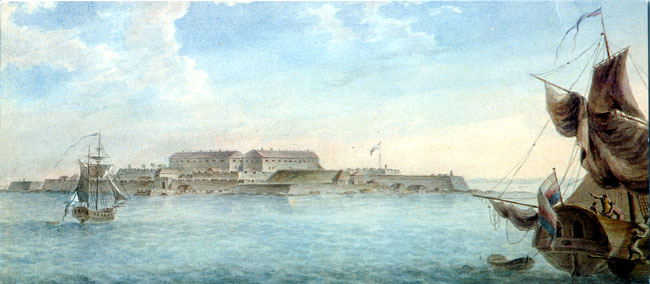
Porvoo Hill Fort
Porvoo hill fort, also known as Iso Linnamäki, is a significant historical site located in Porvoo, Finland, renowned for its extensive medieval fortifications and deep roots reaching back to the Iron Age and Viking Age. This hill castle stands on a moraine ridge overlooking the Porvoonjoki river, providing a commanding strategic position that was utilized for defense and settlement over many centuries.
The ancient origins and early human activity
Archaeological evidence reveals that the site of Iso Linnamäki was occupied as early as the Iron Age (7th to 9th centuries AD). Layers of burnt soil and burial grounds on the smaller adjacent hill, dating from the Roman Iron Age (0-400 AD), indicate long-standing human presence. The discovery of artifacts and trade goods from Estonia and Latvia highlights Porvoo’s role as a vibrant prehistoric trading center. This early activity was closely linked to the nearby Pikku Linnamäki cemetery, once an island in the estuary of the Porvoonjoki river, suggesting the area held both strategic and ritual significance.
Medieval fortifications and historical context
The main fortification phase of Iso Linnamäki dates to the late 14th century, reflecting the turbulent political landscape of medieval Finland. While no stone walls remain, the site was fortified with double dry moats and likely wooden palisades, which were common defensive features of the time. The fortifications were built by local medieval Finnish communities to protect the settlement and control river access.
Historical records first mention the hill fort in a complaint list from 1555-56, compiled by Jakob Teitin, confirming its recognized importance in post-medieval times. There is speculation that local noblemen such as Bo Joninpoika Grip or Jeppe Djäkn may have commissioned the fortifications. The site may correspond to the medieval place called Wartholm referenced in historical documents.
Although some theories link the site to the Danish crusades in Uusimaa during the late 12th and early 13th centuries, no direct archaeological evidence supports this. The fortress was likely used for only a few decades during the medieval period before its military significance declined.
Architectural features and archaeological remains
Iso Linnamäki occupies a roughly rectangular plateau measuring approximately 32 by 47 meters, surrounded by two deep dry moats that served as formidable earthwork defenses. These moats were labor-intensive to construct and were deepened in the early 20th century, slightly altering their original medieval profile.
No stone defensive structures have been found, indicating that the fortifications consisted mainly of wooden palisades and possibly other timber buildings. On the plateau, two large pits about 10 meters wide and 2 meters deep are interpreted as storage cellars, likely used for preserving food supplies.
Excavations have uncovered stone hearths used for heating or cooking, as well as iron tools and crossbow bolt heads dating from the 13th to 14th centuries, evidencing the site's military use. The presence of a German stoneware jug fragment from the mid-1300s points to trade connections beyond the immediate region.
Historical accounts suggest the plateau housed key buildings such as a manor house (linnantupa), a kitchen, and a smithy, highlighting the site’s role as a self-sufficient estate in addition to a defensive stronghold.
Landscape changes and later usage
The surrounding landscape has undergone significant changes over the centuries. The southern bay known as Maarin satama (Maarin harbor), once located just south of Iso Linnamäki, gradually silted up, altering the terrain and access to the river. In the early 20th century, the dry moats were deepened further, and sand extraction on the southern slope modified the medieval topography.
Artifacts such as coins and firearm parts found on the site indicate that the area retained some military or strategic function beyond the medieval period, although its prominence diminished over time.
Current preservation and cultural significance
Today, Iso Linnamäki is preserved as a protected cultural heritage site and forms part of a nationally important area alongside Old Porvoo. The site is surrounded by a pine forest and features modern pathways and informational signage to educate visitors about its rich history.
The area between the former harbor and the hill supports various plant species, including medicinal and spice plants such as wormwood, greater knapweed, and dark mullein, reflecting centuries of human influence on the landscape.
Iso Linnamäki stands as one of the largest and most significant hill forts in Finland, offering insight into medieval defensive architecture, settlement patterns, and the historical development of the Porvoo region.
Frequently asked questions (FAQ)
- How do I get to Porvoo hill fort?
- Porvoo hill fort is located in the town of Porvoo, easily accessible by car or local bus from Helsinki. The site is within walking distance from Porvoo's historic Old Town.
- What is the historical significance of Porvoo hill fort?
- Porvoo hill fort is one of the largest medieval hill forts in Finland, reflecting defensive strategies and settlement patterns from the Iron Age through the late medieval period.
- When was Porvoo hill fort built?
- The main fortifications of Porvoo hill fort date to the late 14th century, although the site was used for defense as early as the Viking Age.
- Can I visit the remains of Porvoo hill fort?
- Yes, the site is open to visitors year-round. There are walking paths and informational signs that help explore the remains of the double dry moats and storage pits.
- Are there any guided tours available at Porvoo hill fort?
- Guided tours may be available seasonally through the Porvoo municipality or local heritage organizations. It is recommended to check in advance for tour availability.
- What architectural features remain at Porvoo hill fort?
- Visitors can see the double dry moats, large storage cellars, and earthworks. No stone walls survive, but the wooden fortifications are understood from archaeological evidence.
Information
Sources & official resources
Verify the information above using these authoritative references.
Loading map...
Visitor reviews
No reviews yet. Been here? Write the first review and help other travelers!
Write the first reviewVisited this castle? Share your experience
Your review helps other travelers and adds first-hand knowledge to our encyclopedia.