Suncheon Castle
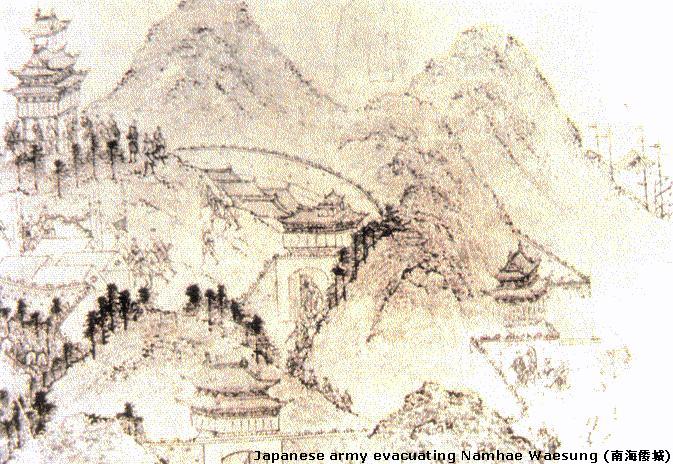
Suncheon Castle, also known as Suncheon Waeseong (Korean: 순천왜성) and by its Japanese name Juntenjō (順天城), is a significant hill castle located in South Jeolla Province, Republic of Korea. It stands as the only remaining Japanese-style fortress in the region, embodying the military architecture and strategic defensive designs introduced during the late 16th century. The castle is historically renowned for its connection to the Imjin War (1592–1598), particularly as the site from which the famed Korean naval commander Yi Sun-sin lured the Japanese general Konishi Yukinaga to the decisive Battle of Noryang Point.
Historical background and military significance
Constructed during the late 16th century as part of Japan's military expansion into the Korean Peninsula, Suncheon Castle served as a strategic stronghold for Japanese forces during the Imjin War. The castle's position atop a hill provided a commanding view of the surrounding landscape and coastline, facilitating control over maritime routes and land approaches. Its occupation by Japanese troops was critical in maintaining supply lines and defending against Korean counterattacks.
The castle's role in the Battle of Noryang Point in 1598 is particularly notable. This naval battle marked the final confrontation of the Imjin War, where Yi Sun-sin successfully engaged the Japanese fleet commanded by Konishi Yukinaga. The castle was used as a base from which Yi Sun-sin orchestrated his maneuvers, ultimately leading to a Korean victory that contributed to the withdrawal of Japanese forces from Korea.
Architectural features and design
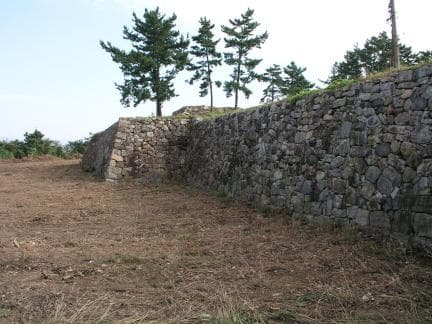
Suncheon Castle exemplifies the Japanese hill castle style, adapted to the Korean terrain. It features robust stone walls constructed to withstand both siege warfare and natural erosion. The walls are laid out to follow the contours of the hill, creating an irregular but effective defensive perimeter.
The castle complex includes multiple gates, watchtowers, and battlements, which were designed to provide overlapping fields of fire and surveillance. The use of earthen ramparts alongside stone fortifications reflects a hybrid approach to defense, combining traditional Japanese castle-building techniques with adaptations suited to local conditions.
Within the walls, the remains of residential quarters, armories, and command posts have been identified. These structures would have supported the garrison's operational needs during the castle's active military use.
Cultural and historical legacy
Today, Suncheon Castle is recognized as an important cultural heritage site that offers insight into the military history of Korea and Japan during a turbulent period. Its preservation allows visitors to explore the architectural and strategic elements of a Japanese fortress outside of Japan, illustrating the extent of Japanese influence during the late 16th century.
The castle grounds serve as a reminder of the Imjin War's impact on Korean history and the enduring legacy of Yi Sun-sin, whose naval tactics are studied for their ingenuity and effectiveness. The site attracts historians, scholars, and tourists interested in East Asian military architecture and the history of Korean-Japanese relations.
Visiting suncheon castle
Suncheon Castle is accessible to the public and offers a unique opportunity to experience a well-preserved example of Japanese hill castle architecture in Korea. Visitors can explore the stone walls, gates, and the castle's elevated position, which provides panoramic views of the surrounding landscape.
The site is particularly popular during spring and autumn when the natural scenery enhances the historical atmosphere. Informational plaques and guided tours help contextualize the castle's significance and its role in the Imjin War.
Nearby attractions
Suncheon Castle is located near the city of Suncheon, which offers additional cultural and natural attractions, including the renowned Suncheon Bay Wetland Reserve and traditional Korean gardens. These sites complement a visit to the castle by providing broader insight into the region's environment and heritage.
Frequently asked questions (FAQ)
- What is the historical significance of Suncheon Castle?
- Suncheon Castle was a key Japanese military stronghold during the Imjin War and played a role in the Battle of Noryang Point.
- Can visitors explore the castle ruins?
- Yes, visitors can explore the partially preserved stone walls, gates, and other structures of Suncheon Castle.
- Where is Suncheon Castle located?
- It is located in South Jeolla Province, Republic of Korea, near the city of Suncheon.
- What architectural style does Suncheon Castle represent?
- Suncheon Castle is an example of a Japanese hill castle with stone walls and earthen ramparts adapted to Korean terrain.
Photo gallery

Information
Loading map...
Visitor reviews
No reviews yet. Been here? Write the first review and help other travelers!
Write the first reviewVisited this castle? Share your experience
Your review helps other travelers and adds first-hand knowledge to our encyclopedia.