Namhae Japanese Castle
Namhae Japanese Castle, also known as Namhae Waeseong (Japanese: 南海 船所倭城; Korean: 남해 선소왜성), is a historic hill castle located on Namhaedo Island in the Republic of Korea. Constructed in the 16th century during the Imjin War (1592–1598), this fortress is a prime example of a waeseong, a type of Japanese castle built on foreign soil during military campaigns.
Historical context and military significance
The Imjin War, also known as the Japanese invasions of Korea, was a conflict initiated by the Japanese warlord Toyotomi Hideyoshi with ambitions to conquer the Korean Peninsula and eventually China. During this period, the Japanese constructed several fortresses on Korean territory to secure their supply lines and establish strongholds for their forces. Namhae Japanese Castle was one such fortress, strategically positioned on Namhaedo to control maritime routes and support Japanese military operations.
Architectural features and design
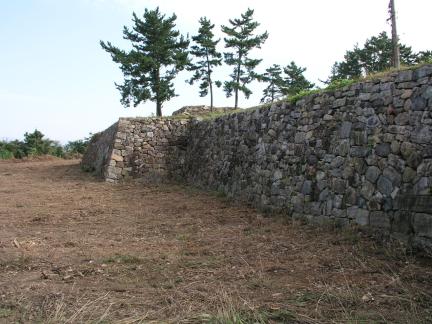
Namhae Japanese Castle exemplifies the typical characteristics of Japanese military architecture adapted to Korean terrain. Built primarily as a hill castle, it utilized the natural elevation of the island to enhance defensive capabilities. The castle's walls were constructed using stone and earthworks, forming robust ramparts designed to withstand sieges and artillery attacks.
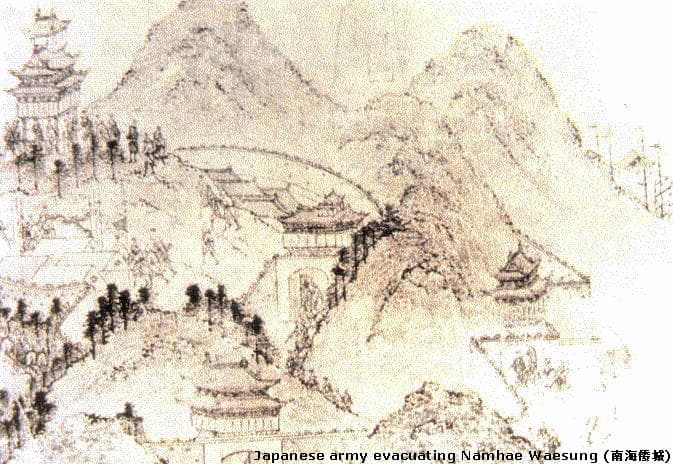
The layout of the castle includes fortified gates, watchtowers, and battlements that provided vantage points for surveillance and defense. The design reflects a practical approach focused on military functionality rather than ornamental style, consistent with the urgent needs of wartime construction.
Defensive structures
The fortress incorporated moats and earthen embankments to impede enemy advances. The walls were angled and reinforced at key points to deflect cannon fire, a response to the evolving warfare technology of the late 16th century. The castle's position on a hill also allowed defenders to observe and control the surrounding sea lanes, crucial for resupply and communication.
Role during the Imjin War
During the Imjin War, Namhae Japanese Castle served as a critical base for Japanese forces. It functioned as a logistical hub and a defensive stronghold against Korean and Ming Chinese counterattacks. The castle's presence on Namhaedo enabled Japanese troops to maintain a foothold in the southern coastal region, facilitating operations and troop movements.
The fortress witnessed several skirmishes and sieges as Korean forces attempted to reclaim territory. Despite these efforts, the castle remained under Japanese control until the end of the war in 1598, after which it was abandoned.
Current condition and cultural significance
Today, Namhae Japanese Castle exists primarily as archaeological ruins. Portions of the stone walls and earthworks remain visible, offering valuable insights into the military architecture of the period. The site is recognized for its historical importance as a tangible reminder of the Imjin War and the complex interactions between Korea and Japan during the late 16th century.
Preservation efforts focus on maintaining the ruins and promoting public awareness of this chapter in Korean history. The castle attracts historians, archaeologists, and visitors interested in the military heritage of East Asia.
Visiting Namhae Japanese Castle
Visitors to Namhae Japanese Castle can explore the remnants of the fortress set amidst the natural landscape of Namhaedo Island. The site offers a glimpse into the strategic military planning of the Renaissance period in East Asia. While facilities may be limited due to the site's archaeological nature, the castle remains accessible for those interested in history and castle architecture.
Frequently asked questions (FAQ)
- When was Namhae Japanese Castle built and for what purpose?
- Namhae Japanese Castle was built in the 16th century during the Imjin War to serve as a military fortress for Japanese forces on Namhaedo Island.
- What are the main architectural features of Namhae Japanese Castle?
- The castle features stone walls, earthworks, fortified gates, watchtowers, and battlements designed for defense and surveillance on a hilltop location.
- Can visitors access Namhae Japanese Castle today?
- Yes, visitors can explore the archaeological ruins of Namhae Japanese Castle on Namhaedo Island, though facilities may be limited due to its preservation status.
- Why is Namhae Japanese Castle historically significant?
- The castle represents Japanese military presence during the Imjin War and illustrates 16th-century fortress construction adapted to Korean terrain.
Photo gallery

Public domain
Information
Loading map...
Visitor reviews
No reviews yet. Been here? Write the first review and help other travelers!
Write the first reviewVisited this castle? Share your experience
Your review helps other travelers and adds first-hand knowledge to our encyclopedia.