Sučiansky hrad — Slovakia castle

Sučiansky hrad

Sučiansky hrad: hill castle ruins in Slovakia
High Medieval (11th–13th c.)
Ruins

Sučiansky hrad is a historic hill castle located in Slovakia, known primarily for its medieval origins and its position atop a prominent elevation, which provided strategic defensive advantages. Although the exact city or town where it stands is not definitively recorded, the castle's remains are a significant part of Slovakia's medieval heritage.

Historical context and origins

The castle dates back to the High Medieval period, a time when many fortifications were constructed across Central Europe to secure territories and control important trade routes. Sučiansky hrad was likely built during the 13th or 14th century, a common era for hill castles in the region, serving both as a military stronghold and a noble residence.

Its location on a hilltop was typical for castles of this period, allowing for extensive views of the surrounding landscape and early detection of approaching enemies. The castle played a role in local defense and administration, although detailed historical records about its specific owners or significant events remain scarce.

Architectural features

As a hill castle, Sučiansky hrad was constructed to utilize the natural terrain for defense. The remains suggest it had a compact layout, likely consisting of a keep or donjon as the central stronghold, surrounded by curtain walls and possibly a bailey or courtyard area.

The castle's fortifications would have included defensive elements such as battlements, arrow slits, and possibly a moat or ditch adapted to the hillside. The use of local stone materials is typical, contributing to the castle's endurance despite its current state.

Current condition and preservation

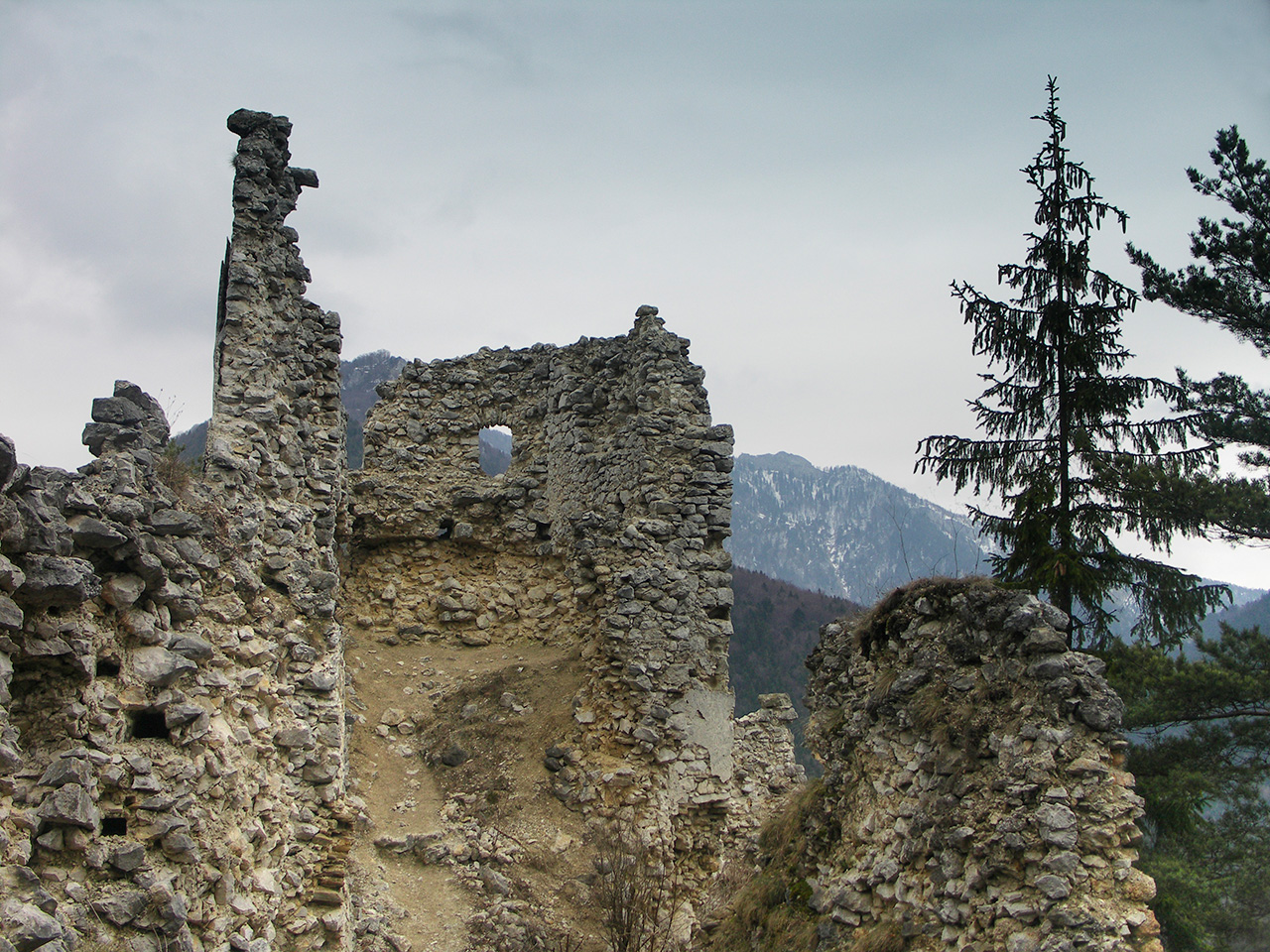
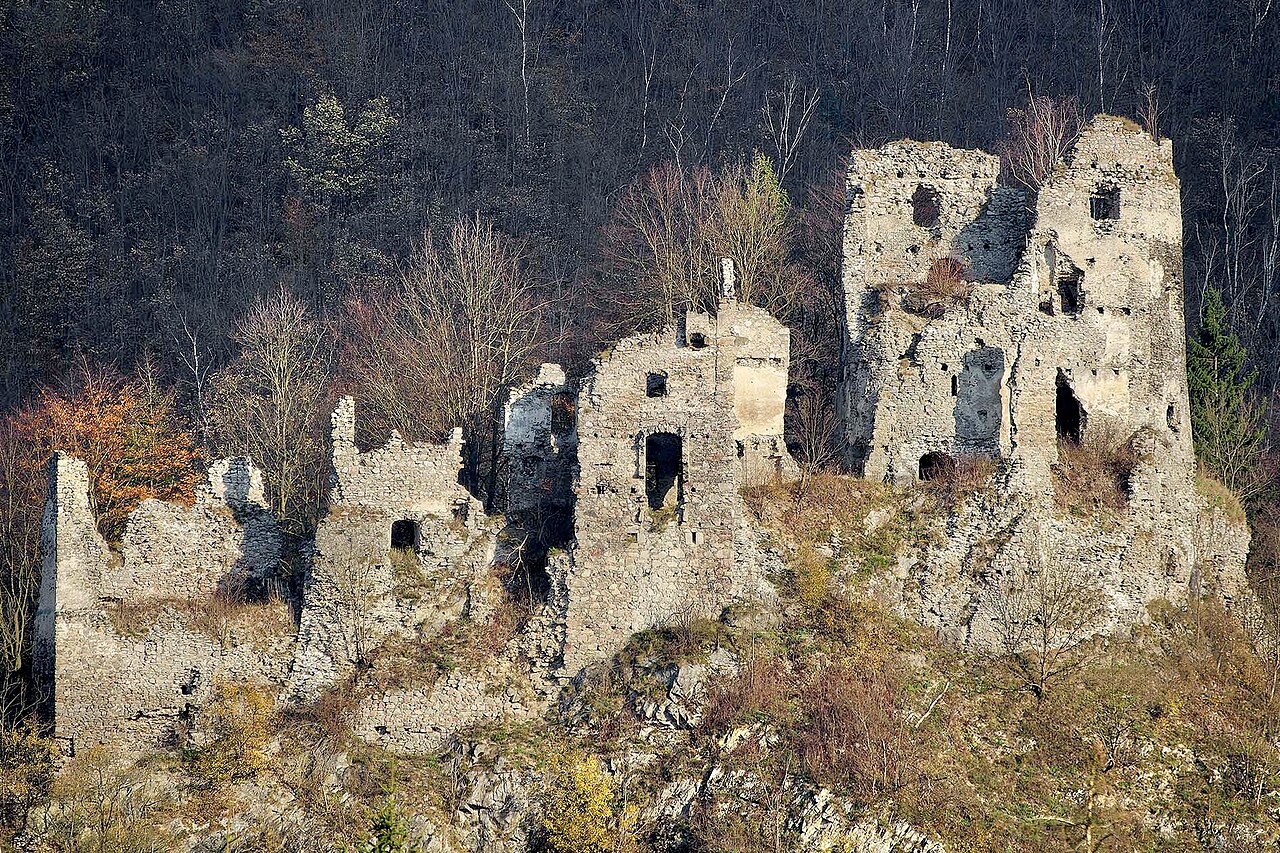
Today, Sučiansky hrad exists as ruins, with only partial walls and foundations visible. The site reflects the common fate of many medieval hill castles in Slovakia, where centuries of neglect, weathering, and possible conflict have reduced the structure to remnants.

Despite this, the ruins provide valuable insight into medieval military architecture and the historical landscape of the region. Efforts to preserve and study such sites contribute to cultural heritage and tourism.

Significance and cultural heritage

Sučiansky hrad is part of Slovakia's rich collection of medieval castles that illustrate the country's feudal past and strategic importance in Central Europe. Hill castles like Sučiansky were instrumental in controlling local territories and safeguarding trade routes during the Middle Ages.

The castle's remains attract historians, archaeologists, and visitors interested in medieval fortifications and Slovak history. While it may not be as extensively restored or visited as some larger castles, it holds a place in the narrative of regional defense and settlement patterns.

Visiting information

Access to Sučiansky hrad is generally possible for visitors interested in exploring castle ruins and hiking in natural surroundings. Due to its ruined state and hillside location, visitors should be prepared for uneven terrain and limited facilities.

There is no widely published information about specific opening hours or ticket prices, suggesting that the site may be open to the public without formal entrance fees. Visitors are encouraged to respect the site and its preservation efforts.

Frequently asked questions (FAQ)

How do I get to Sučiansky hrad?
Sučiansky hrad is located in the beautiful region of Slovakia, easily accessible by car or public transport. If traveling by train, the nearest station is in the town of Sučany, from where you can take a short taxi ride to the castle.
What is the historical significance of Sučiansky hrad?
Sučiansky hrad, also known as Sučany Castle, dates back to the 13th century and played a crucial role in the defense of the region. Its strategic location allowed it to serve as a stronghold for various noble families throughout history.
When was Sučiansky hrad built?
The construction of Sučiansky hrad began in the early 13th century, with significant modifications and expansions occurring in the subsequent centuries. The castle has witnessed numerous historical events, making it a key landmark in Slovak heritage.
Can I visit Sučiansky hrad year-round?
Yes, Sučiansky hrad is open to visitors throughout the year, although hours may vary by season. It's advisable to check the official website or contact local tourism offices for the most up-to-date information on visiting hours.
Why is Sučiansky hrad an important architectural site?
Sučiansky hrad features a mix of Gothic and Renaissance architectural styles, showcasing the evolution of castle design over the centuries. Its well-preserved structure offers insights into medieval fortification techniques and the lifestyle of the nobility during that era.
Is it possible to take guided tours of Sučiansky hrad?
Yes, guided tours are available and highly recommended for visitors who want to learn more about the castle's rich history and architecture. Knowledgeable guides provide engaging narratives that enhance the experience of exploring this historical site.
What are the ticket prices for Sučiansky hrad?
Ticket prices for Sučiansky hrad are generally affordable, with discounts available for children, students, and seniors. For the latest pricing information, it's best to check the official website or inquire at the ticket office upon arrival.
What is the best time to visit Sučiansky hrad?
The best time to visit Sučiansky hrad is during the spring and early autumn when the weather is pleasant and the surrounding landscape is particularly beautiful. Additionally, these seasons tend to be less crowded, allowing for a more enjoyable experience.
Are there any nearby attractions to visit along with Sučiansky hrad?
Yes, there are several nearby attractions, including beautiful hiking trails and other historical sites such as the town of Martin, famous for its cultural heritage. Exploring the surrounding area can enhance your visit to Sučiansky hrad and provide a fuller experience of Slovak history.

Photo gallery

Sučiansky hrad
Click to view

Photo by Alekme•CC BY-SA 4.0

1 photo • Click any image to view in full screen

Information

Hill Castle

Loading map...

Visitor reviews

No reviews yet. Been here? Write the first review and help other travelers!

Write the first review

Visited this castle? Share your experience

Your review helps other travelers and adds first-hand knowledge to our encyclopedia.
Write a review

(5/5)

0/2000 characters

Your review will be visible after admin approval

Nearby castles

4.1 km
Sklabina Castle Ruins — Slovakia castle

Sklabina Castle Ruins

Martin, Slovakia

Sklabina Castle ruins stand as a testament to the rich medieval heritage of Slovakia, located near the town of Martin in the Turiec region. Established in the 13th century, this hill castle was a significant stronghold and administrative center for the Turiec county throughout the High medieval and Renaissance periods. The castle's remains reveal a complex architectural evolution, reflecting its military, administrative, and residential functions over several centuries. The foundation and early history of Sklabina Castle The castle's origins trace back to the early 1200s, likely built on the site of an earlier fortified settlement. The first documented mention of the castle dates to 1242, with a more detailed record appearing in 1309 through a decree signed by the founder, the župan Donč. This early phase established Sklabina as a key regional fortress within the medieval Kingdom of Hungary. By 1328, the castle had become the seat of the Turiec county administration, known locally as Turčianska stolica or župa. When Turiec was formally recognized as a distinct county in 1339, the castle's castellan also served as the county head, emphasizing its dual role as a military bastion and a center of local governance. Architectural development and fortifications Medieval fortifications and expansions Sklabina Castle's layout was adapted to the natural terrain, featuring an irregular plan centered on an inner courtyard. The oldest section, called the upper castle, included residential buildings and utility structures surrounded by defensive walls. A water cistern was an essential feature, providing a reliable water supply during sieges. Between 1460 and 1480, the castle underwent significant fortification enhancements, including the addition of a fortified outer bailey with a continuous ring wall. This expansion introduced two polygonal bastions on the northwest side, designed to improve defense against artillery and siege tactics. The main entrance was controlled by a wedge-shaped gate tower on the northern side, later supplemented by further defensive layers. Renaissance additions and the manor house In the early 17th century, the castle's military function was complemented by the construction of a Renaissance-style manor house, or kaštel, commissioned by Peter Révai between 1610 and 1612. This one-story residence, built within the outer bailey, featured a richly decorated entrance portal with inscriptions honoring its builders. The manor blended comfort and style with defensive elements, reflecting the architectural trends of the Renaissance period. The castle also incorporated Renaissance architectural details such as window frames, entrance portals, and vault ribs, which enriched the aesthetic and functional qualities of the complex. Historical significance and ownership Throughout its history, Sklabina Castle was a focal point of regional power and administration. It changed hands among several prominent noble families, including the Balický family, Jan Hunyady, Matthias Corvinus, Jan Arnošt Budinský, Jan Zápolský, and the Révai family, who held it from the mid-16th century until the 20th century. The castle endured a notable attack during the Hussite wars when it was burned in 1436, but it was subsequently repaired and expanded. After the Battle of Mohács in 1526, Emperor Ferdinand I granted half of the castle and its estates to František I Révai, who reunited the property by 1540, establishing a long period of stable ownership. Serving as the Turiec county's administrative center until the mid-18th century, Sklabina housed county archives, a prison, and hosted county assemblies. The castle's administrative role diminished after the construction of a dedicated county house in Martin. Decline, destruction, and preservation efforts The Renaissance manor house remained in use until 1944 when it was destroyed by Wehrmacht troops during the Slovak National Uprising in World War II. This event marked the beginning of the castle's decline, with the ruins falling into disrepair over the following decades. Since the late 20th century, conservation and archaeological efforts have been undertaken to stabilize the ruins and preserve the site's historical value. The local civic association Donjon took over management in 2000 and acquired ownership in 2020. Their work includes structural stabilization, archaeological research, and the establishment of a museum within a reconstructed economic building in the third bailey. The castle grounds now host cultural events such as the annual Castle Feast, celebrating the site's history and engaging the local community. A nature trail through the castle area offers visitors a scenic experience of the historic landscape. Architectural remains and notable features Fortifications and bastions The castle's defensive system comprised multiple polygonal bastions and artillery towers, some designed primarily for decoration but others serving strategic military functions. The second circle of walls included a southern bastion with battlements, providing elevated defensive positions. The second outer bailey, added in the mid-16th century, was protected by an earthen embankment and a third wall, with a cylindrical bastion guarding the entrance road. A polygonal artillery bastion in the northwest section was later incorporated into the Renaissance manor house. Religious and administrative structures A chapel built in 1468 stands just outside the eastern walls of the upper castle, constructed on the site of a former 15th-century tower. Remnants include rib vaulting, decorative shafts, Gothic window frames, and plaster fragments, illustrating the castle's religious functions. The southern section of the second wall circuit housed a large rectangular building adapted as the meeting place for county assemblies by the 1600s, highlighting the castle's civic importance. Current condition and visitor experience Today, visitors to Sklabina Castle can explore the ruins of the chapel, towers, palaces, economic buildings, fortification walls, bastions, and the Renaissance manor house. Some walls stand several meters tall, while others survive as ground traces, all stabilized through ongoing conservation efforts. The reconstructed economic building now serves as a museum, providing educational exhibits on the castle's history and architecture. The site offers a blend of historical exploration and cultural engagement, making it a significant heritage destination in Slovakia.

High Medieval (11th–13th c.)
Details
16.5 km
Blatnica — Slovakia castle

Blatnica

Blatnica, Slovakia

Blatnica Castle is a striking example of a medieval hill castle located on a limestone ridge at 685 meters above sea level, near the village of Blatnica in Slovakia. Constructed in the 13th century, it was strategically positioned to guard an important trade route running from Nitra through Liptov and Orava to Poland. The castle's location atop a narrow ridge provided natural defenses with steep cliffs to the east and north, making it a formidable stronghold in its time. Early history and strategic importance The origins of Blatnica Castle likely date back to the mid-13th century, although archaeological evidence suggests the site may have been used earlier as a Great Moravian fortified settlement. Its primary function was to protect the vital trade corridor that connected the southern regions of present-day Slovakia with northern territories. The first written record of the castle appears in 1300, naming Piotr of Brezovica as its owner. In 1321, the castle was seized by the forces of King Charles Robert of Anjou, marking its transition into royal hands. However, the castle's military significance declined after the main trade route was redirected through Mošovce and Martin, diminishing Blatnica's strategic value. Architectural features and layout Originally, Blatnica Castle occupied only the narrow summit ridge of the hill, featuring a long building ending in semi-circular towers. The western tower was considerably larger than the eastern one, due to the natural protection offered by steep cliffs on the east and north sides. This western tower served as the main defensive structure guarding the castle entrance, accessible via a winding staircase. Below the hilltop castle lay the outer bailey or lower castle, which housed the economic buildings and was later fortified with walls and artillery towers during the Renaissance period. The entrance to the castle complex was from the west, crossing a rock-cut moat, emphasizing its defensive design. Ownership and historical events Throughout its history, Blatnica Castle changed hands frequently due to political turmoil and conflicts. After King Charles Robert's forces took control in 1321, the castle was often pledged and passed between various owners. Between 1450 and 1470, it was owned by the Polish knight Piotr Komorowski. His involvement in a rebellion against King Matthias Corvinus led to the loss of the castle and other estates in the Spiš, Liptov, and Orava regions. In 1540, the wealthy Révay family acquired Blatnica Castle and undertook significant expansions in the second half of the 16th century. They adapted the towers for the use of firearms by installing artillery positions, reflecting the changing nature of military technology. The outer bailey was transformed into a fortified lower castle with walls reinforced by three artillery towers. The castle suffered damage in 1678 during a fire caused by the kuruc rebels led by Emeric Thököly. It was again occupied in 1703 by forces loyal to Francis II Rákóczi during another uprising. Despite these setbacks, the Révay family regained the castle in 1708 but found parts of it uninhabitable due to the damage sustained. In 1744, Jozef Révay attempted a partial reconstruction of the castle, but by 1790 it was abandoned and gradually fell into ruin. Current condition and accessibility Today, Blatnica Castle remains as ruins nestled within a forest on the hill of Plešovica, which divides the Turiec Basin from the Greater Fatra mountain range. The remnants include partial walls of the Gothic residential building and both towers on the upper castle, as well as the defensive walls of the lower castle visible among the trees below. The site is freely accessible via a marked hiking trail from the village of Blatnica. Visitors can explore the ruins and enjoy views of the Gader Valley and the prominent Tlstá Mountain opposite the castle. Architectural significance Blatnica Castle exemplifies the evolution of medieval fortifications adapting to Renaissance military innovations. The transformation of towers to accommodate artillery and the fortification of the lower castle with bastions illustrate this shift. The castle's location on a narrow ridge with natural cliffs provided a strong defensive advantage, typical of hill castles in Central Europe. Cultural heritage and tourism As a cultural monument, Blatnica Castle offers insight into the medieval history of Slovakia and the region's role in trade and military affairs. Its ruins are a popular destination for hikers and history enthusiasts interested in exploring authentic medieval architecture and the landscape of the Greater Fatra region.

Late Medieval (14th–15th c.)
Details
17.5 km
Starhrad Castle Ruins — Slovakia castle

Starhrad Castle Ruins

Strečno, Slovakia

Starhrad castle, located in Strečno, Slovakia, is a significant high medieval fortress built in the 13th century to guard the vital old road leading through the Povazie region. First mentioned in historical records in 1267, the castle's strategic position allowed it to control movement along this important trade and military route. The earliest and most prominent part of the castle was its stone tower, which served both as a lookout and a defensive stronghold.Medieval origins and royal ownershipThroughout the 14th century, Starhrad castle came under royal ownership, reflecting its importance in the region's defense system. During this period, the castle complex expanded beyond the original tower to include residential houses and farm buildings, indicating a shift from purely military use to a more mixed residential and administrative function. These additions likely supported the castle's garrison and the local community dependent on its protection.The pongracovce family and declineFrom 1443, the castle was predominantly owned by the Pongracovce family, a noble lineage influential in the area. Under their stewardship, the castle continued to serve as a local seat of power. However, by the 16th century, the castle's military relevance diminished, leading to its abandonment and gradual decay. This decline was typical of many medieval fortresses as advancements in warfare and political changes rendered such castles less critical.Later history and wartime significanceBy the early 18th century, Starhrad castle was largely deserted, with only a few guards remaining to oversee the ruins. Despite its dilapidated state, the site retained strategic value during the Second World War. German troops used the castle area as a defensive position against local partisan fighters, marking the ruins' involvement in 20th-century military conflicts.Architectural features and current stateToday, Starhrad castle stands as archaeological ruins, with remnants of its original stone tower and sections of defensive walls still visible. The castle's layout reflects typical high medieval military architecture, adapted to the topography of the site to maximize defense. Visitors can explore the ruins to gain insight into medieval fortification techniques and the castle's historical role in the region.Cultural heritage and tourismStarhrad castle is a protected cultural monument in Slovakia, attracting history enthusiasts and tourists interested in medieval architecture and Slovak history. Its location near the Váh River and the surrounding natural landscape offers scenic views and hiking opportunities. The castle's ruins provide a tangible connection to the region's medieval past and its evolving role through centuries of political and military change.

High Medieval (11th–13th c.)
Details